

In today’s digital world, a patient’s journey to finding a healthcare provider almost always begins with a search engine. Mastering search engine optimization, or SEO, is no longer optional for medical practices, clinics, and hospitals. It is the most effective way to connect with patients actively seeking your services. This comprehensive SEO guide for healthcare will walk you through everything you need to know, from foundational principles to advanced strategies, to improve your online visibility and grow your practice.
At a Glance: Why Healthcare SEO Matters in 2026
Healthcare SEO is the strategic optimization of medical websites to improve visibility in search engine results and AI-generated overviews. In 2026, the primary goal is to establish EEAT (Experience, Expertise, Authoritativeness, and Trustworthiness) so that your practice is cited as a trusted source.
Key Stat: 77% of patients begin their journey with a search engine.
The 2026 Shift: SEO has evolved into GEO (Generative Engine Optimization), focusing on being the cited answer in AI-driven summaries.
Core Requirement: All medical content must be verified by a credentialed professional to rank for "Your Money or Your Life" (YMYL) queries.
What is Healthcare SEO?
Healthcare SEO is the process of optimizing your medical website to rank higher in search engine results for relevant health related queries. It’s about making sure that when a potential patient searches for medical information or a local doctor, your website appears prominently. This involves improving your site’s content, technical performance, and online authority to meet the standards of search engines like Google.
Why is this so important? The numbers speak for themselves. About 5% of all Google searches are health related, which translates to tens of millions of queries every single day. Furthermore, a staggering 77% of patients use search engines before booking appointments. If your practice isn’t visible in those results, you are missing a massive opportunity. A well executed strategy is the key to getting found. This SEO guide for healthcare will provide the map you need.
EEAT and YMYL: Google’s High Stakes for Healthcare
Google holds healthcare websites to a much higher standard than other industries. This is because medical information falls into a category Google calls “Your Money or Your Life” (YMYL). YMYL content can directly impact a person’s health, happiness, or financial stability. Because the stakes are so high, Google demands that these sites demonstrate high levels of EEAT, which stands for Experience, Expertise, Authoritativeness, and Trustworthiness.
Experience: Show that the content comes from someone with real, firsthand experience. This could be a doctor sharing clinical insights or a patient sharing their journey (with permission, of course).
Expertise: Your content must be written or reviewed by qualified medical professionals. Clearly display author credentials, degrees, and affiliations, and implement author schema to reinforce the expertise behind each page.
Authoritativeness: This refers to the overall reputation of your practice and website. Awards, affiliations with reputable hospitals, and links from other trusted medical sites all build authority.
Trustworthiness: Your site must be secure (using HTTPS), provide accurate information, cite reputable sources, and make contact information easy to find.
For medical SEO, demonstrating strong EEAT is not just a suggestion, it is a requirement for ranking well.
Understanding the Patient Journey
Patient journey mapping is the process of outlining the steps a person takes from first realizing a health need to becoming a patient and beyond. Understanding this journey is crucial for creating a successful SEO guide for healthcare because it allows you to create content that meets patients at every stage.
A typical journey includes:
Awareness: The person experiences a symptom and searches for information (e.g., “why does my knee hurt when running?”).
Consideration: They research conditions, treatments, and local providers (“knee injury treatments,” “best orthopedic surgeon near me”).
Decision: They choose a provider and look for information to book an appointment (“Dr. Smith reviews,” “schedule appointment with City Orthopedics”).
Post Care: They might look for recovery information or leave a review.
Your SEO strategy should target keywords and create content for each of these stages, guiding the user smoothly from their initial question to your appointment calendar.
Optimizing for "Dr. Siri" and "Hey Google"
Patients no longer just type "Knee Doctor." They ask, "Who is the best orthopedic surgeon near me that takes Blue Cross?"
Target Natural Language: Use long-tail phrases in your H2 headers.
Focus on Proximity: Ensure your Google Business Profile is updated with "Micro-Location" data (neighborhood names, nearby landmarks).
Direct Answers: Use the "Answer-First" format: Provide a one-sentence answer to a question, then follow with the detailed medical explanation.
Keyword and Content Strategy
A powerful content strategy is the heart of any successful SEO guide for healthcare. It all starts with understanding what your potential patients are searching for.
Keyword Research for Healthcare
Keyword research is the process of finding the search terms people use when looking for health information. The key is to think like a patient, not a doctor. Patients use everyday language, not medical jargon. They search for “high blood pressure,” not “hypertension.” A good strategy involves brainstorming how patients describe their problems. Remember, half of all search queries are four words or longer, so focus on specific, long tail questions and phrases—then organize those terms into a cohesive keyword cluster to build topical relevance across your site.
The Value of First Party Keyword Data
First party keyword data comes from your own website’s analytics, primarily Google Search Console. This data is a goldmine because it shows you the exact queries that are already bringing people to your site. You’ll often discover highly specific, long tail keywords that generic tools might miss. This data tells you precisely what your audience is looking for, allowing you to refine your content to better meet their needs. Start by identifying your core primary keywords for each service and FAQ page, then expand into supporting terms.
Developing a Content Strategy for Healthcare
Your content strategy is your plan for creating and managing all the content on your site. It should be built around your keyword research and your understanding of the patient journey. Create a simple content mapping framework to align topics with awareness, consideration, and decision stages. A consistent publishing schedule, or cadence, signals to Google that your site is active and up to date. For busy practices that need to publish at a high velocity, services like Rankai’s AI assisted SEO program can handle the entire content workflow, from planning topics to publishing over 20 pages per month.
Creating Patient Focused Content and FAQs
All of your content should be patient focused. This means writing in clear, easy to understand language and addressing the questions and concerns real patients have. A great way to do this is by creating Frequently Asked Questions (FAQ) sections on your service pages or in blog posts. Answering common questions like “Does LASIK hurt?” or “What is the recovery time for knee surgery?” not only helps patients but also aligns perfectly with how they search online, which is great for SEO.
Optimizing Your Service Pages
Service pages (e.g., “Cardiology,” “Physical Therapy”) are among the most important on your site because they target users who are close to making a decision. Optimize these pages by:
Providing comprehensive, detailed information about the service.
Using keywords that patients would search for.
Including clear calls to action, like “Schedule an Appointment.”
Displaying trust signals, such as doctor bios, patient testimonials, and professional affiliations.
The Role of a Blog for Doctors
A blog is a powerful tool for demonstrating expertise and attracting patients in the early stages of their journey. A doctor’s blog can cover topics from wellness tips to explanations of common conditions. Each post is a new opportunity to rank for specific keywords and build trust with your audience. Websites that blog regularly receive 55% more visitors on average than those that do not, making it a vital part of a modern SEO guide for healthcare.
On Page SEO for Healthcare Websites
On page SEO involves optimizing the individual elements of your webpages to make them more friendly for search engines and users.
Site Architecture and Internal Linking
Site architecture is how your website’s pages are organized. A logical, hierarchical structure makes it easy for both users and search engines to find content. Internal linking, or linking between pages on your own site, helps distribute authority and shows Google how your content is related. For practical guardrails on how many internal links per page, follow best‑practice ranges by page type. For instance, a blog post about post surgery recovery should link to your physical therapy service page.
Page Title Optimization
The page title is the clickable headline that appears in search results. It’s a critical SEO element. Your title should be compelling, include your primary keyword near the beginning, and stay around 50 to 60 characters to avoid being cut off. Use an on-page SEO checklist to standardize titles, metas, and headers across service pages. The #1 organic search result gets an average of 28.5% of all clicks, and an optimized title helps you get there.
Meta Description Optimization
The meta description is the short snippet of text that appears under your title in search results. While not a direct ranking factor, a well written meta description acts like an ad for your page, persuading users to click. It should accurately summarize the page content and include a call to action.
Header Tag Optimization
Header tags (H1, H2, H3, etc.) structure your content like an outline. The H1 is your main page title, while H2s and H3s are used for subheadings. They break up text, improve readability, and help search engines understand the key topics of your page.
Image Alt Text
Image alt text is a short, written description of an image in your site’s code. It serves two main purposes: it allows screen readers to describe the image to visually impaired users (accessibility), and it helps search engines understand what the image is about, which can help you rank in image search.
Anchor Text Best Practices
Anchor text is the clickable text in a hyperlink. For internal links, use descriptive anchor text that tells users and search engines what the linked page is about. For example, use “learn about our physical therapy services” instead of a generic “click here.”
Footer Optimization
The footer at the bottom of every page is a valuable space. Use it to display your practice’s name, address, and phone number (NAP) for local SEO consistency. You can also include links to important pages like your contact page, patient resources, and privacy policy.
Technical SEO: The Foundation of Your Site
Technical SEO focuses on improving the backend infrastructure of your website so search engines can crawl and index it efficiently. Run a periodic technical SEO audit to catch crawl issues, speed bottlenecks, and schema gaps before they affect patients.
Site Speed and Core Web Vitals
Site speed is a critical ranking factor. A slow website frustrates users and can hurt your rankings. According to Google, 53% of mobile users will abandon a site if it takes more than 3 seconds to load. Core Web Vitals are specific metrics Google uses to measure a site’s loading performance, interactivity, and visual stability. Improving these can give you a competitive edge.
Mobile Optimization
With over half of all web traffic coming from mobile devices, having a mobile friendly website is essential. Google uses mobile first indexing, meaning it primarily looks at the mobile version of your site for ranking. Your site should use a responsive design that automatically adapts to any screen size.
Accessibility Compliance
Web accessibility means ensuring people with disabilities can use your website. This is not only ethically important but also a potential legal requirement for healthcare providers. Practices like providing alt text for images, ensuring high color contrast, and making your site navigable by keyboard improve the user experience for everyone and align with SEO best practices.
Crawlability and Indexing
Crawlability refers to a search engine’s ability to access the content on your site. Indexing is the process of storing that content in its database. If your site has technical issues that prevent crawling, your pages will never be indexed and will not appear in search results.
XML Sitemap and Robots.txt
An XML sitemap is a file that lists all the important URLs on your site, acting as a roadmap for search engine crawlers. A robots.txt file gives instructions to these crawlers about which parts of your site they should or should not access. Both are fundamental tools for managing how search engines interact with your website.
Structured Data Schema for Healthcare
Structured data, or schema markup, is a type of code you can add to your website to help search engines better understand your content. There are specific schema types for healthcare, including MedicalOrganization, MedicalClinic, Hospital, and Physician. Using this markup can help Google accurately display your information in search results and knowledge panels. This is a technical but powerful part of a modern SEO guide for healthcare.
2026 Healthcare Technical Benchmarks
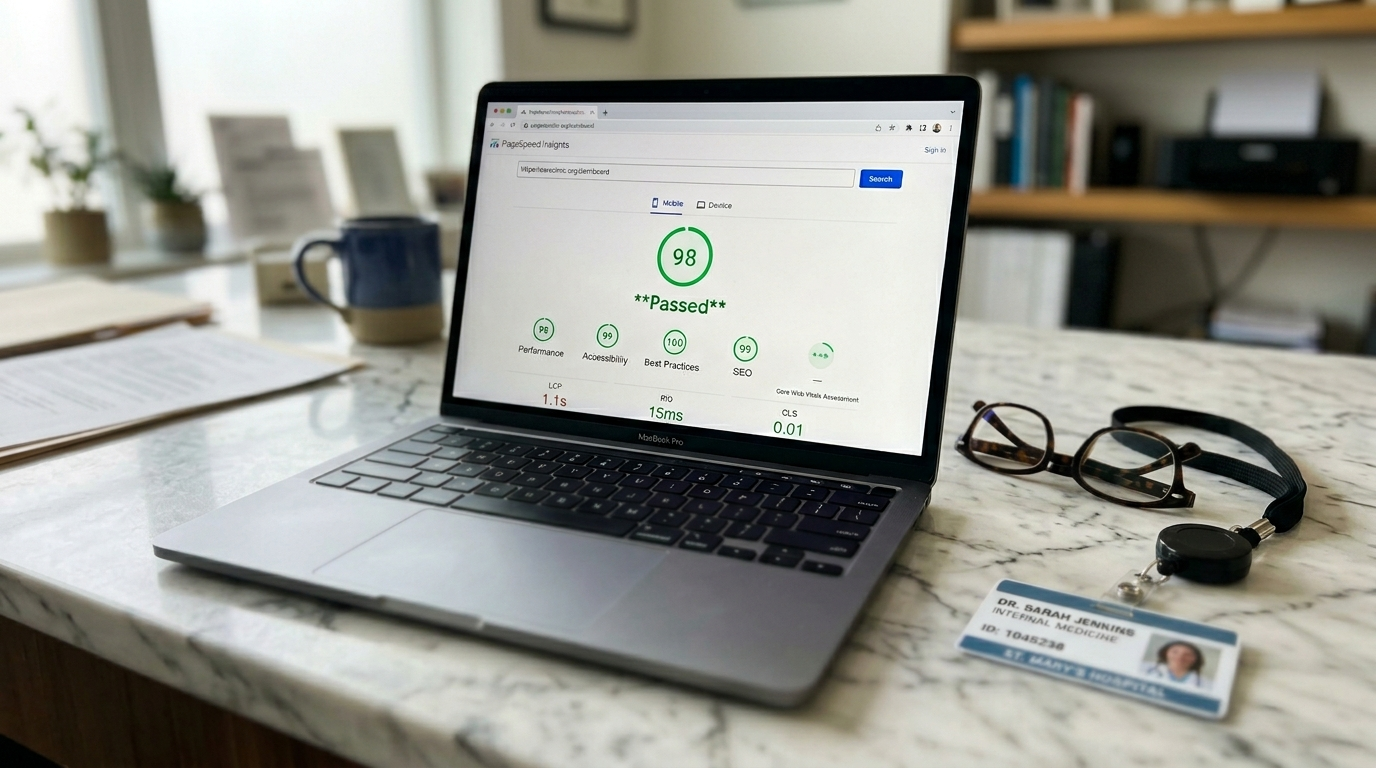
To rank in the current landscape, your site must meet these specific performance thresholds. If your site is slow, patients—and Google—will move on.
Metric | Target | Why It Matters for Patients |
LCP (Loading) | Under 2.5s | Ensures your main content appears almost instantly. |
INP (Responsiveness) | Under 200ms | Measures how quickly the site reacts when a patient clicks "Book Now." |
CLS (Stability) | Under 0.1 | Prevents text from "jumping" while a patient is reading symptoms. |
Security | HTTPS | Non-negotiable for HIPAA and user trust. |
Implementing Medical Schema
In 2026, search engines don't just read your text; they "scan" your code for specific data. You should implement the following Schema types to gain Rich Snippets:
MedicalOrganization: To define your practice name and logo.
Physician: To link individual doctors to their specific NPI numbers and board certifications.
FAQPage: To help your questions appear directly in the search results.
LocalBusiness: To power your "near me" rankings.
Local SEO for Healthcare Practices
For most healthcare providers, local SEO is the most important component of their strategy. It’s a non-negotiable part of any modern SEO guide for healthcare, focused on increasing your visibility to patients in your specific geographic area. Since about 46% of all Google searches have local intent, mastering this is key to attracting new patients.
Google Business Profile Optimization
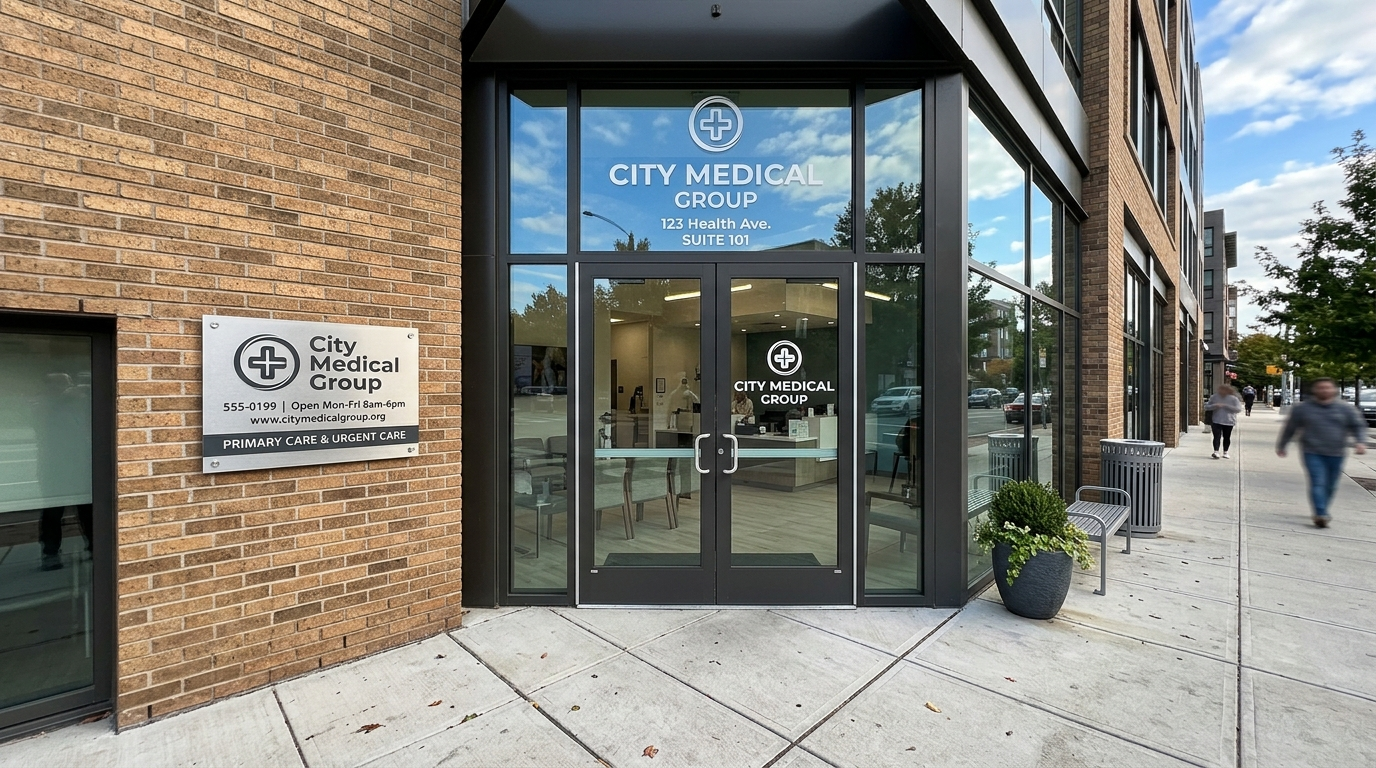
Your Google Business Profile (GBP) is your most valuable local SEO asset. It’s the listing that appears in Google Maps and the local 3 pack. Optimizing your GBP involves:
Ensuring your name, address, and phone number (NAP) are correct.
Choosing the right business categories.
Uploading high quality photos of your practice and staff.
Encouraging and responding to patient reviews.
NAP Consistency and Citations
NAP consistency is crucial. Your practice’s name, address, and phone number should be identical across all online directories and websites (known as citations). Inconsistent information can confuse search engines and erode patient trust. Make sure your listings on sites like Yelp, Healthgrades, and Vitals are all accurate.
Local Keyword Research
Local keyword research involves finding search terms that include geographic modifiers, like “pediatrician in Brooklyn” or “urgent care near me.” Optimize your website’s content and your GBP listing to target these terms to attract patients in your service area.
Online Review Management (HIPAA Compliant)
Online reviews heavily influence both patients and search engine rankings. A proactive review management strategy involves encouraging happy patients to leave reviews and responding to all feedback professionally. When responding, you must be HIPAA compliant. This means you should never acknowledge that a reviewer is a patient or mention any protected health information. Keep responses generic and offer to take the conversation offline.
Key Directory Listings (Healthgrades, Zocdoc, Vitals)
Beyond Google, patients use healthcare specific directories like Healthgrades, Zocdoc, and Vitals to find doctors. Claiming and optimizing your profiles on these platforms is essential. It ensures your information is accurate, builds trust through third party reviews, and gives you more control over your online reputation.
Off Page SEO and Reputation Management
Off page SEO involves actions taken outside of your own website to improve its authority and rankings.
Link Building for Healthcare
Backlinks, or links from other websites to yours, are like votes of confidence. A link from a reputable source like a local news site, university, or professional association can significantly boost your site’s authority. Earn these links by creating valuable content that others want to cite, building local partnerships, and contributing to your community. If you need outside help, compare reputable link building services tailored to your niche.
Using Press Releases for Backlinks
Press releases can be a tool for earning backlinks, but only when you have genuinely newsworthy information, like opening a new facility or offering a groundbreaking treatment. The goal is for a journalist or blogger to see the release and write their own story, linking back to you as the source.
Reputation Management
Reputation management is the broad practice of monitoring and influencing the online perception of your practice. This includes managing reviews, ensuring search results for your name are positive, and proactively publishing content that highlights your expertise and achievements.
The Role of Social Media Signals
While social media activity (likes, shares) is not a direct ranking factor, it can indirectly support your SEO. An active social media presence can drive traffic to your content, lead to more backlinks, and build brand awareness, all of which are positive signals for search engines.
Advanced Topics and Maintenance
An effective SEO strategy is ongoing. It requires continuous monitoring and adaptation.
International SEO and Hreflang
If your practice serves a multilingual patient base or has international locations, international SEO is necessary. This involves using technical signals like the hreflang tag to tell Google which language or country specific pages are for, ensuring the right users see the right content.
Measurement and KPI Tracking
You can’t improve what you don’t measure. Track Key Performance Indicators (KPIs) to gauge the success of your SEO efforts. Important KPIs for healthcare include organic traffic, keyword rankings, and, most importantly, the number of appointment requests or phone calls generated from organic search. Consistent reporting from a partner like Rankai can provide clear insights into ROI and guide future strategy.
Content Refresh and Update Cadence
Medical information changes, and content can become outdated. A content refresh involves updating old posts and pages with new information to keep them accurate and competitive. Having a regular cadence for both creating new content and refreshing old content is essential for long term SEO success.
Frequently Asked Questions about this SEO Guide for Healthcare
What is the most important part of an SEO guide for healthcare?
While all components are important, the foundation is EEAT (Experience, Expertise, Authoritativeness, Trustworthiness). Without creating high quality, trustworthy content that demonstrates real medical expertise, it is very difficult to rank for competitive health queries.
How long does it take for healthcare SEO to show results?
SEO is a long term strategy. You may see some initial improvements in a few months, but it typically takes 6 to 12 months of consistent effort to see significant results in traffic and patient acquisition.
Can I do healthcare SEO myself or do I need an agency?
You can certainly learn and implement the basics yourself. However, given the complexity and the high stakes of EEAT, many practices find it more effective to partner with a specialized agency. A service that offers a complete, done for you program, like Rankai, can save time and ensure best practices are followed.
How does Google’s EEAT framework specifically affect healthcare websites?
EEAT forces healthcare websites to prove their credibility. Google’s algorithms and human quality raters look for signals like author credentials, citations from reputable sources, positive reviews, and a secure website. Content that seems unscientific, lacks evidence, or is written by non experts will struggle to rank.
What is the difference between local SEO and general SEO for a clinic?
General SEO focuses on ranking for broad, informational keywords that could be searched from anywhere. Local SEO, the more critical piece for most clinics, focuses on ranking for service and location based keywords (e.g., “dentist in Chicago”) to attract patients in a specific geographic area.
Is a blog really necessary for a doctor’s website?
Yes, a blog is one of the most effective tools for healthcare SEO. It allows you to target a wide range of patient questions, demonstrate your expertise on various topics, build a library of helpful content, and attract users who are early in their patient journey.