

Welcome to your complete SEO guide for dentists. If you feel like your dental practice is invisible online, you’re in the right place. Local Search Engine Optimization, or SEO, is the process of making your practice show up when potential patients in your neighborhood search for a dentist. With nearly everyone turning to Google to find local services, mastering SEO is no longer optional; it’s essential for a steady flow of new patients.
Direct Answer: How do dentists improve their local SEO in 2026? To rank a dental practice in 2026, you must optimize for three core pillars: Google Business Profile (GBP) Prominence (categories, reviews, and proximity), Topical Authority (detailed service pages with FAQ schema), and Trust Signals (verified patient testimonials and high-speed mobile performance). Practices that combine accurate NAP data with consistent, high-quality video content and structured data (Schema) are 75% more likely to appear in Google’s AI Overviews and the Local Map Pack.
This SEO guide for dentists will walk you through everything you need to know, from the basics of your Google Business Profile to advanced strategies for content and link building. It might seem like a lot, but understanding these concepts will empower you to attract more local patients. And if it feels overwhelming, remember there are services like Rankai’s done for you SEO program that can handle it all, letting you focus on what you do best: patient care.
Local SEO Overview for Dentists
Local SEO is all about optimizing your online presence to attract more patients from relevant local searches. For a dentist, this means making sure your practice appears when someone nearby searches for “dentist near me” or “dental clinic in [Your City].” It involves improving your visibility in Google’s Map Pack (the map and three business listings at the top of local results) and in the regular organic search results. Since 46% of all Google searches have local intent, being visible locally is critical.
Importance of Local SEO for Dentists
Why is local SEO so important? It directly connects you with high intent patients in your community. When someone has a toothache, they aren’t just browsing; they’re looking for a solution right now. Consider that 99% of consumers have used the internet to find information about a local business in the last year. If your practice isn’t showing up, you’re missing out on nearly all of them. These searchers act fast, too. A staggering 76% of people who search for a nearby business on their smartphone visit one within a day. For dentists, this translates directly into more calls, appointments, and patients walking through your door.
Google Business Profile Optimization
Your Google Business Profile (GBP) is the cornerstone of your local SEO. It’s the free listing that appears in Google Maps and the Map Pack, showing your practice name, address, phone number, hours, and reviews. Optimizing it means filling out every single section with accurate, keyword rich information. A complete profile makes your business appear 2.7 times more reputable to customers. Key steps include choosing the right categories, writing a compelling description, adding your services, and uploading plenty of high quality photos. This is the single most valuable part of any local SEO guide for dentists.
NAP Consistency and Citation Management
NAP stands for Name, Address, and Phone number. NAP consistency means ensuring this information is listed in the exact same format across every online platform, from Google and Yelp to dental specific directories. Citations are mentions of your business online. Managing them is crucial because Google cross references this data to verify your legitimacy. Inconsistent information can confuse search engines and erode patient trust. In fact, 73% of consumers lose trust in a local business when they find conflicting information online.
Online Review Management
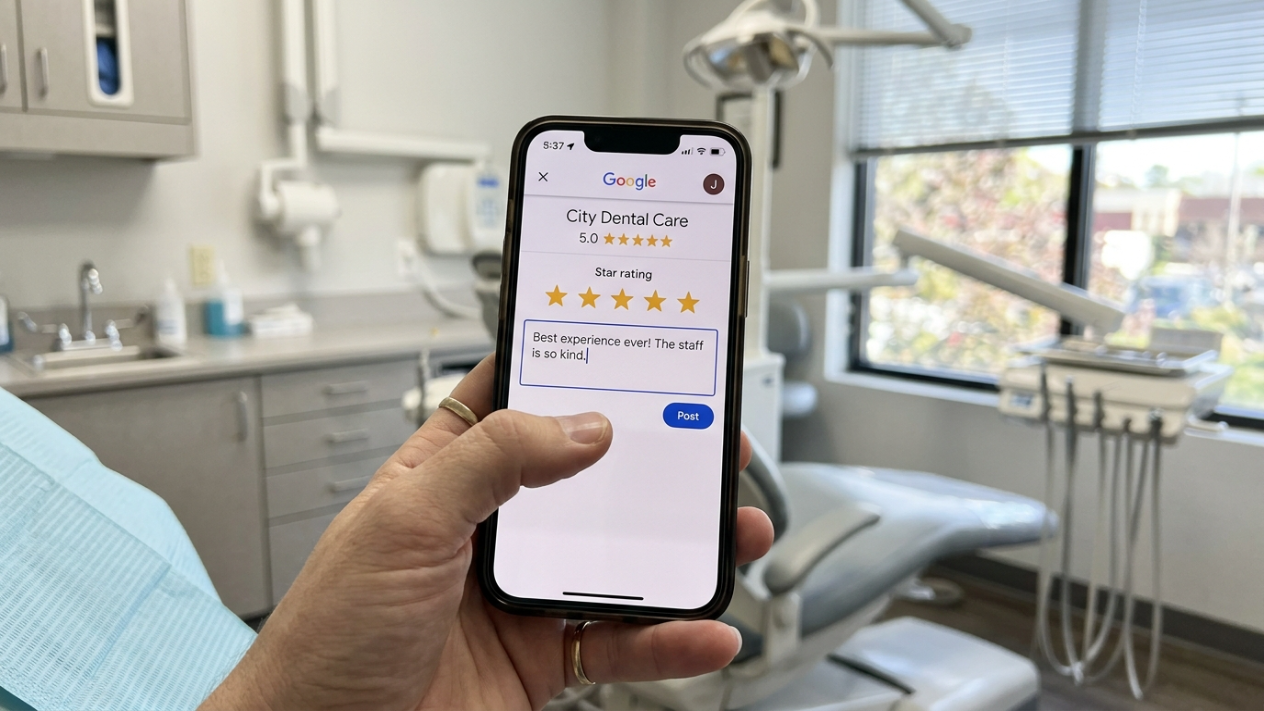
Online reviews are the modern word of mouth. Your strategy should involve proactively asking happy patients for reviews, monitoring feedback across platforms like Google and Yelp, and responding to every review. Reviews heavily influence patient decisions, with 76% of consumers trusting online reviews as much as personal recommendations. A strong rating is non negotiable; 57% of consumers will only consider a business if it has four or more stars. Responding to reviews, both good and bad, shows you care and can build significant trust.
On Page SEO for a Dental Website
On page SEO involves optimizing the content and HTML of your website to be search engine friendly. Use an on-page SEO checklist to make sure titles, headings, and meta data are handled consistently. For your dental site, this means having dedicated pages for each service (like cleanings, implants, Invisalign), using local keywords in page titles and headings, and writing unique meta descriptions, while making sure you avoid keyword stuffing. A logical site structure with internal links per page planned intentionally (for example, linking from your dental implants page to your bone grafting page) is also key. Experts agree that having a dedicated page for each service is one of the most impactful factors for ranking well, a critical takeaway from this SEO guide for dentists.
Local Keyword Research
Before you can optimize your site, you need to know what your potential patients are searching for. Local keyword research is the process of finding these terms. Start by building a keyword cluster to group related dental topics and map them to pages. It goes beyond “dentist in [Your City].” You’ll want to find phrases like “emergency dentist open Saturday,” “kids dentist [Neighborhood],” or “Invisalign cost [City].” Pay special attention to “near me” searches, which have exploded in popularity. This research forms the foundation of a smart local SEO strategy, ensuring the rest of this seo guide for dentists is applied effectively.
Location Specific Content Creation
Creating content tailored to your specific geographic area helps you connect with the local community and strengthens your SEO. This could mean creating individual pages for each office location or service area you cover, complete with local testimonials and driving directions. You can also write blog posts with a local angle, like “How [Your City]’s Summer Festivals Can Affect Your Smile.” This signals to Google that you are an active part of the community. In one study, a brand that created city specific landing pages saw a massive 1,132% increase in new users.
Service Page Optimization for Patient Intent
Each page on your website describing a service, like teeth whitening or root canals, should be optimized for patient intent. This means anticipating and answering the questions a potential patient has when they land on that page. What is the procedure? How much does it cost? What is the recovery like? Providing clear, comprehensive answers not only helps convert visitors into patients but also allows you to naturally include relevant keywords. Well optimized service pages are a critical component of any dental SEO plan and a core principle in this SEO guide for dentists.
Schema Markup for Dentists and Local Businesses
Schema markup is a type of code you add to your website to help search engines understand your content more deeply. If you’re new to structured data, start with this guide to author schema to understand how entities and credibility signals work. For a dental practice, you can use Dentist or LocalBusiness schema to label your name, address, phone number, hours, and even patient reviews. This can make you eligible for rich snippets in search results, like star ratings or FAQ dropdowns appearing directly under your listing. As search becomes more driven by AI, providing this kind of structured data is becoming increasingly important.
Mobile Optimization
Your website must look great and function perfectly on a smartphone. Google uses a mobile first index, meaning it primarily ranks your site based on its mobile version. A huge portion of local searches happen on mobile devices, and these searchers are ready to take action. Critically, 61% of mobile searchers are more likely to contact a local business if it has a mobile friendly site. Ensure your text is readable, buttons are easy to tap, and your site loads quickly. A slow or clunky mobile experience will send potential patients straight to your competitors.
Hyperlocal and Location Page Strategy
A hyperlocal strategy focuses on targeting very specific geographic areas, like a single neighborhood or zip code. This is often done by creating dedicated location pages for each office or distinct community you serve. Each page should feature unique content relevant to that area, such as photos of the local office, testimonials from neighborhood patients, and information on nearby landmarks. This approach helps you dominate search results for the patients who are physically closest to your practice.
Website Content Strategy for Dentists
A content strategy is your plan for publishing useful, relevant information that attracts and engages potential patients. This includes a mix of detailed service pages and informational blog posts that answer common questions (e.g., “Braces vs. Invisalign: Which is Right for You?”). Creating helpful content positions you as a trusted authority in oral health.
Plan clusters that build topical authority around core treatments like implants, Invisalign, and emergency care. It also allows you to target a wide range of keywords that patients search for at different stages of their journey. A service like Rankai can supercharge this by consistently creating and optimizing dozens of content pieces each month.
Building Expertise (E-E-A-T)
Google’s "Your Money or Your Life" (YMYL) guidelines are strictly applied to dental sites. To rank, you must prove you are a medical authority:
Detailed Bios: Include NPI numbers, board certifications, and professional memberships (e.g., ADA).
Medical Review: If a staff member writes a blog post, add a "Medically Reviewed by [Doctor Name]" tag at the top.
Case Studies: Use "Before and After" galleries with descriptions of the clinical challenge and the solution to demonstrate real-world experience.
Measuring Local SEO Success (Calls, Directions, Bookings)
How do you know if your SEO is working? You need to track the actions that matter. Here’s how to tell if your SEO strategy is working and which signals to watch. Success isn’t just about traffic; it’s about new patient inquiries. Key metrics to measure include:
Phone Calls: How many calls did your Google Business Profile and website generate?
Direction Requests: How many people clicked for directions to your office? This is a strong signal of intent to visit.
Online Bookings: How many appointments were scheduled through your website’s contact form or booking tool?
An increase in these actions is a clear sign your local SEO efforts are paying off.
2026 Dental SEO Performance Benchmarks
Metric | 2026 Target Goal | Why It Matters |
GBP Interaction Rate | > 5% | High clicks for directions/calls signal relevance to Google. |
Page Load Speed | Under 2.5 Seconds | Essential for "Core Web Vitals" and mobile ranking. |
Review Velocity | 2-5 New Reviews / Month | Consistency is now more important than total volume. |
Organic Click-Through | > 3% | High CTR tells Google your meta titles match patient intent. |
Common Local SEO Mistakes
Many dental practices make avoidable errors that hurt their online visibility. Some of the most common mistakes include:
Not claiming or fully optimizing your Google Business Profile. This is a massive missed opportunity.
Having inconsistent Name, Address, and Phone (NAP) information across different websites.
Ignoring online reviews or responding unprofessionally to negative feedback.
Having a website that is not mobile friendly.
Thinking of SEO as a one time task. It requires ongoing effort to maintain and improve rankings.
AI Search and Generative Engine Optimization Considerations
The rise of AI chatbots like ChatGPT and Google’s Search Generative Experience is changing how people find information; review Google’s AI Overview to understand how these summaries may impact dental search visibility. While traditional search isn’t going away, optimizing for these new platforms is wise, and this SEO guide for dentists will prepare you for what’s next. This means having well structured, authoritative content that an AI can easily understand and use to answer a user’s question. Clear FAQ sections, detailed service pages, and schema markup all help. Your Google Business Profile and patient reviews are also key data sources that AI may pull from, making their accuracy and quality more important than ever.
Align Website Listing and GBP Signals
Your website and your Google Business Profile should tell the same story. This alignment means ensuring your name, address, phone number, hours, and services are perfectly consistent between the two. Google uses your website to verify the information in your GBP, so any discrepancy can create confusion and weaken your SEO. Link your GBP to the most relevant page on your site (usually the homepage or a location page) and make sure that page reinforces all the key details of your practice.
Photo and Media Optimization for Trust
High quality photos and videos are powerful tools for building trust. A Google Business Profile with compelling images of your office, your team, and your technology will always outperform one with no photos. In fact, businesses with photos on their GBP receive 42% more requests for driving directions and 35% more clicks through to their websites. Use professional photos of your clean, welcoming office and friendly staff to make a great first impression and encourage potential patients to take the next step.
Leveraging Video for Local Authority
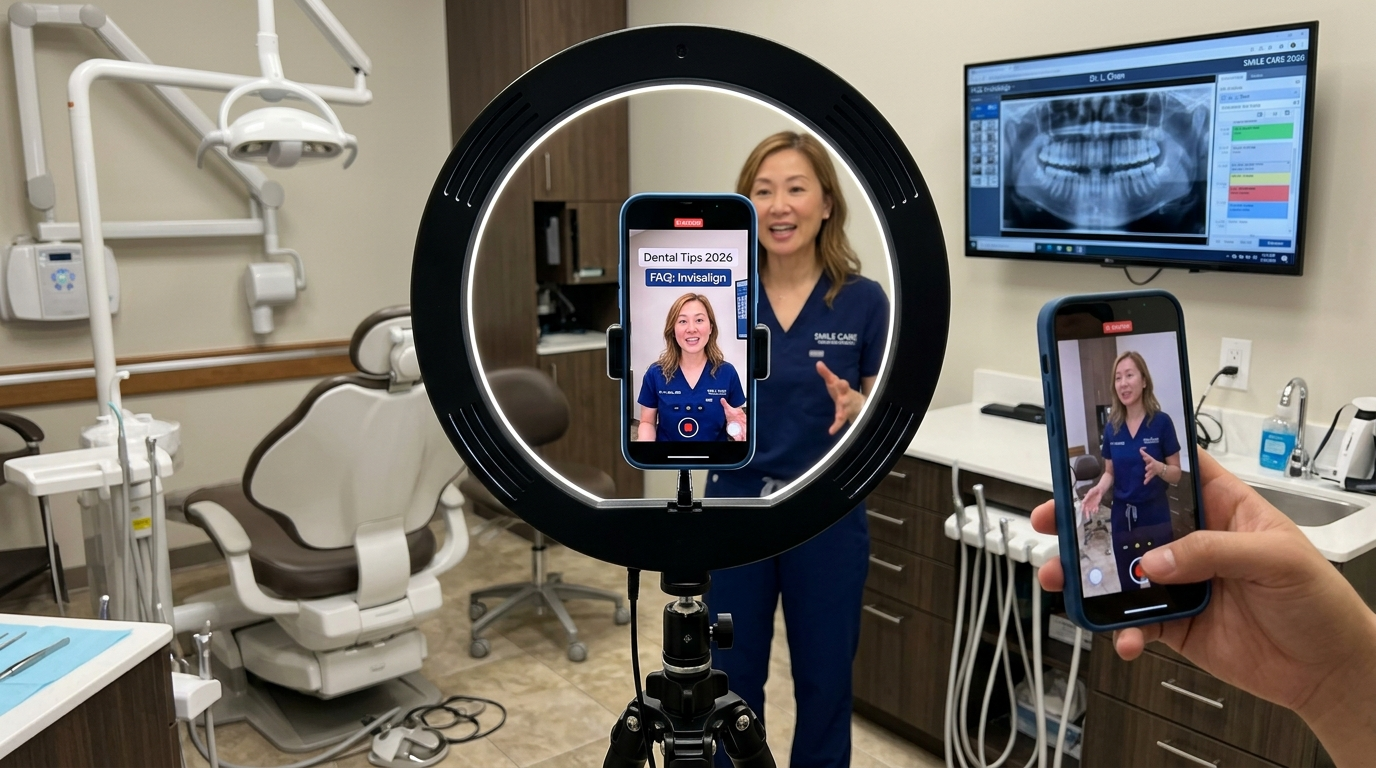
In 2026, video is no longer a "nice-to-have." Google frequently pulls short-form video clips directly into search results for queries like "how does Invisalign work?"
The 30-Second FAQ: Record yourself answering one common patient question per week.
Office Tours: A 15-second "walk-in" video helps anxious patients feel comfortable before they arrive.
Video Testimonials: Written reviews are great, but a video of a smiling patient is the ultimate trust signal for AI search engines looking for "authentic experience."
Social Media Strategy for Local Visibility
While social media isn’t a direct ranking factor, it plays a vital role in local visibility and brand awareness. An active presence on platforms like Facebook and Instagram helps you connect with your community, share patient testimonials, and drive traffic to your website. Your social profiles also rank in Google, helping you control more of the search results for your practice name. It’s another way to show you are an active, engaged, and trusted local business.
Backlink and Local Link Building
Backlinks are links from other websites to yours. Google views them as votes of confidence. Local link building focuses on earning links from other reputable websites in your area, such as the local chamber of commerce, community blogs, or news sites. Sponsoring a local charity event or being featured in a news story are great ways to earn these powerful local links, which signal to Google that your practice is a prominent and trusted part of the community.
GBP Category and Service Selection
Choosing the right categories in your Google Business Profile is absolutely critical. Your primary category (e.g., “Dentist,” “Cosmetic Dentist,” or “Orthodontist”) has a massive impact on the searches you show up for. In fact, experts consider the primary GBP category the number one ranking factor for the local Map Pack. Be as specific and accurate as possible, and use additional categories to cover all your main specialties. Then, fill out the “Services” section with a detailed list of every treatment you offer.
Accurate Location and Service Area Setup
Your physical address is a cornerstone of local SEO. You must ensure your address is listed correctly on your GBP and that the pin is placed accurately on the map. Google heavily weighs proximity, so if its data about your location is wrong, you won’t show up for nearby searches. For a typical dental practice where patients visit you, your verified address is all you need. The “service area” feature is generally for businesses that travel to their customers, so most dentists should leave it blank to ensure their address remains visible.
Responding to Reviews Professionally and Safely
How you respond to reviews is almost as important as the reviews themselves. Always respond to both positive and negative feedback. For positive reviews, a simple thank you is enough. For negative reviews, respond professionally, empathetically, and without violating patient privacy (HIPAA). A thoughtful response can turn a negative situation into a positive impression for future patients who see that you take feedback seriously. A remarkable 80% of consumers are more likely to use a business if they see it responds to reviews.
Monitoring and Updating Content
SEO is not a one and done task. A key part of any ongoing seo guide for dentists is monitoring your website’s content and keeping it fresh and accurate. Regularly update service pages with new information, add new team member bios, and refresh old blog posts. Google rewards websites that show signs of life and provide up to date information.
This ongoing effort can be time consuming, which is why many practices turn to a continuous service. For instance, Rankai not only creates new content but constantly rewrites underperforming pages until they rank, ensuring your website never becomes stale.
Frequently Asked Questions (FAQ)
1. How long does local SEO take to show results for a dental practice?
While you can see some quick wins from optimizing your Google Business Profile, significant results from a comprehensive local SEO strategy typically take 3 to 6 months. SEO is a long term investment that builds momentum over time.
2. What is the most important part of this SEO guide for dentists?
If you only have time for one thing, focus on your Google Business Profile. Claim it, fill out every section completely and accurately, upload at least 10 high quality photos, and start actively gathering patient reviews. It provides the biggest impact for the least amount of effort.
3. Can I do dental SEO myself or should I hire an agency?
You can certainly implement many of the basics from this guide yourself. However, a consistent, high level strategy that involves content creation, technical SEO, and link building requires significant time and expertise. Many dentists find that hiring an expert or using a service allows them to get better results while they focus on patient care.
4. How much should I budget for local SEO?
Costs can vary widely depending on your market’s competitiveness and the scope of work. Some agencies charge thousands per month. Newer, more efficient models like Rankai’s flat monthly program offer a comprehensive and affordable alternative designed to provide a clear return on investment without long term contracts.
5. How do I get more patient reviews on Google?
The best way is to ask! Create a simple process to ask happy patients for a review at the end of their appointment. You can also send a follow up email or text message with a direct link to your Google review page to make it as easy as possible for them.