
If you’re a contractor, plumber, HVAC technician, or any other home service professional, your customers are looking for you online. Right now, someone in your neighborhood is typing “emergency plumber near me” or “best roofer in [Your City]” into Google. The question is, are they finding you or your competition? This is where local Search Engine Optimization (SEO) comes in. It’s the process of making your business more visible in local search results.
This comprehensive seo guide for home services will walk you through everything you need to know, from setting up your digital foundation to advanced strategies that turn searchers into paying customers. Let’s get started.
Quick Takeaway: How to Rank for Home Services in 2026
To rank #1 in 2026, home service businesses must focus on three pillars:
GBP Authority: A 100% complete Google Business Profile with weekly photo updates.
Localized Service Pages: Dedicated pages for every service + city combination (e.g., "Water Heater Repair in [City]").
AI Search Readiness: Using "Atomic Answers" (concise 40-60 word summaries) under question-based headings to feed Google’s AI Overviews.
Part 1: Building Your Foundation
Before you can rank, you need a solid foundation. These are the non negotiable first steps for any home service business.
Local SEO Fundamentals
Think of this as your essential checklist. Local search is how most people find service providers today. In fact, 97% of people learn more about a local company online than anywhere else. The fundamentals ensure you’re even in the game. They include:
A verified Google Business Profile.
A mobile friendly website optimized with local keywords.
Consistent business information (Name, Address, Phone) across the web.
A steady stream of positive customer reviews.
Nailing these basics is the first step in any effective seo guide for home services.
Google Business Profile Optimization
Your Google Business Profile (GBP) is often the first impression a customer has of your business. It’s the information box that appears in Google Maps and the local “Map Pack” results. Optimizing it is one of the highest impact activities you can do.
Why? Because customers are 2.7 times more likely to consider a business reputable if it has a complete Google Business Profile. A complete profile includes your correct business name, address (or service area), phone number, hours, and website. Crucially, it also means adding photos. Businesses with photos get 42% more requests for driving directions and 35% more clicks to their websites.
GBP Category Selection
When setting up your GBP, choosing the right category is critical. This tells Google exactly what you do and which searches you are relevant for. Your primary category is one of the most important local ranking factors.
Google has a predefined list of thousands of categories, so be specific. If you offer water damage restoration, choose “Water Damage Restoration Service,” not just “Contractor.” You can select one primary category (your main service) and up to nine additional categories to cover everything else you do.
Local Citation Building
A “citation” is any online mention of your business’s Name, Address, and Phone number (NAP). Think of directories like Yelp, Angi, Yellow Pages, and industry specific sites. Building citations means getting your business listed on these platforms with perfectly consistent information.
Consistency is key. Google uses these citations to verify that your business is legitimate and located where you say it is. Inconsistent information confuses search engines and erodes trust. According to one study, 68% of consumers lose trust in a local business when they see inconsistent information online.
Common Mistakes to Avoid
As you build your foundation, be aware of common pitfalls that can sink your efforts. This part of our seo guide for home services is about what not to do.
Forgetting to Claim Your GBP: Nearly half of all Google Business Profiles are incomplete or unclaimed. Don’t be one of them.
NAP Inconsistency: Your business name, address, and phone number must be identical everywhere.
Ignoring Reviews: Not responding to reviews (both good and bad) makes you look disconnected and can deter customers.
Using Fake Locations: Setting up a P.O. box or virtual office to rank in another city is against Google’s guidelines and can get your listing suspended.
Table: 2026 Local SEO Priority Matrix
Strategy Element | Implementation Effort | Ranking Impact | Best For... |
GBP Optimization | Low | High | Map Pack Visibility |
Local Citations | Medium | Medium | Business Legitimacy |
Location Pages | High | High | Organic City Rankings |
Atomic Answers | Medium | High | AI Overviews & Snippets |
Review Velocity | Ongoing | High | Conversion & Trust |
Part 2: Dominating the Google Map Pack
The “Map Pack” (or Local Pack) is the block of three business listings that appears under a map in Google’s search results. It’s prime real estate. Getting here can transform your business. If you’re new to how different result types work, see our guide to Google SERP features.
Google Map Pack Optimization
Since about 42% of local searchers click on a result in the Google Map Pack, ranking here is a primary goal. The top factors that influence Map Pack rankings are proximity to the searcher, your primary GBP category, and positive reviews. You can’t change your location, but you can control your profile optimization and review strategy.
Google Maps Optimization Steps
Optimizing specifically for Google Maps involves many of the same steps as general GBP optimization, but with a focus on engagement within the Maps interface.
Claim and Verify Your Profile: This is step zero. You can’t manage what you don’t own.
Ensure 100% Accuracy: Double check your address, pin location, hours, and phone number.
Upload High Quality Photos: Show your team, your vehicles, and examples of your best work.
Encourage and Respond to Reviews: Actively ask satisfied customers for reviews on Google.
Use Google Posts and Q&A: Regularly post updates, offers, or tips. Proactively add common questions and answers to the Q&A section.
Service Area and Proximity Strategy
For businesses that travel to customers, like plumbers and electricians, you operate as a Service Area Business (SAB). In your GBP, you can hide your physical address and define a service area by listing cities or zip codes.
However, it’s crucial to understand that Google still uses your hidden, verified physical address to calculate proximity for ranking purposes. Simply adding a city to your service area list doesn’t guarantee you’ll rank there. To rank farther from your physical location, you must build up your “prominence” with great reviews, location specific content on your website, and local links.
Review Management
Online reviews are the modern word of mouth. They are a massive trust signal for both customers and Google. A steady stream of positive reviews can significantly boost your Map Pack ranking and convince searchers to choose you.
Actively ask every happy customer to leave a review.
Make it easy for them by sending a direct link to your Google review page.
Respond to every review, good or bad. Thank positive reviewers and address concerns in negative ones professionally.
Part 3: Optimizing Your Website for Local Customers
Your website is your digital headquarters. It’s where you have the most control to tell your story, showcase your work, and convert visitors into leads. This section of our seo guide for home services focuses on your owned property.
On-Page SEO for Your Home Service Website
On page SEO refers to optimizing the content and structure of your own website pages. It’s about making it crystal clear to Google what you do and where you do it. Use internal links to connect service and location pages and to reinforce topical relevance. Key elements include using local keywords, creating dedicated service pages, and ensuring your site is logically structured. One of the top local organic ranking factors is having a dedicated page for each service you offer.
Keyword Research for Local Intent
You need to speak your customers’ language. Keyword research is the process of finding the exact phrases people use when searching for your services locally. These searches often have strong buying intent. Understanding keyword intent helps you prioritize which topics to tackle first.
Searches with local intent are huge, making up 46% of all Google searches. Look for terms like:
“[service] in [city]” (e.g., “roof repair in Dallas”)
“[service] near me”
Long tail questions (“how much does ac repair cost in Austin”)
Use these keywords to guide the content you create for your website.
Service Page and Location Page Optimization
Your website should have a separate, dedicated page for each core service you provide. If you’re an HVAC company, you should have distinct pages for AC Repair, AC Installation, Furnace Repair, etc. This allows each page to become highly relevant for a specific search.
Similarly, if you serve multiple distinct cities or have multiple physical locations, creating dedicated location pages is essential. A page titled “Plumbing Services in Springfield” will be far more effective for Springfield searches than a generic homepage.
Title, Meta, and Header Optimization
Title Tags: This is the clickable headline in search results. It’s a powerful SEO signal. Your title should include your primary service and location (e.g., “Emergency Electrical Repair in Plano | Bolt Electric”).
Meta Descriptions: This is the short summary under the title. While not a direct ranking factor, a compelling meta description acts like ad copy, encouraging users to click your result over a competitor’s.
Header Tags (H1, H2, H3): These structure your page content like an outline. Your main page title should be an H1 tag. Use H2 and H3 tags for subheadings, and include relevant keywords to signal what each section is about.
Part 4: Advanced Strategies and Technical Health
With a solid foundation and optimized pages, you can move on to more advanced tactics that build authority and ensure a great user experience.
Content Strategy and Calendar
Consistently publishing helpful, locally focused content establishes you as a topical authority. A content strategy for a home service business might include blog posts on maintenance tips, project case studies, or answers to common customer questions. Companies that prioritize blogging are 67% more likely to see increased lead generation.
A content calendar helps you plan and execute this strategy, ensuring a steady flow of fresh content that signals to Google your site is active and relevant. For businesses that need to scale this, working with a team can be a game changer. If scale is your bottleneck, explore programmatic SEO to publish high‑quality, templated pages at volume. For example, Rankai’s service includes publishing over 20 optimized pages per month, building topical authority fast.
Local Link Building for Authority
Backlinks (links from other websites to yours) are like votes of confidence. The quality and authority of websites linking to you is one of the most powerful ranking factors. For local SEO, focus on getting links from other local sources:
The local Chamber of Commerce
Sponsorships of local events or sports teams
Local news sites or community blogs
Partnerships with other non competing local businesses
Technical SEO, Mobile Experience, and Core Web Vitals
Technical SEO ensures your site’s infrastructure is sound. This means your site should be secure (HTTPS), have no broken links, and be easy for Google to crawl and index. For a step‑by‑step checklist, follow this technical SEO audit guide.
A huge part of this is user experience, especially on mobile devices. A slow or clunky mobile site will drive customers away; in fact, 61% of mobile searchers are more likely to contact a local business if the site is mobile friendly. Google’s Core Web Vitals measure page experience, focusing on loading speed, interactivity, and visual stability. A fast, smooth website is no longer a luxury, it’s a necessity for ranking well.
Schema Markup and Answer Engine Optimization
Schema markup is a type of code you add to your website to help search engines understand your content in greater detail. You can use it to specify your business hours, services offered, reviews, and more. Don’t forget author schema on blog content to reinforce E‑E‑A‑T signals. This can lead to “rich snippets” in search results, like star ratings or FAQ dropdowns, which make your listing stand out.
This ties into Answer Engine Optimization (AEO). As more people use voice search (“Hey Google, find a plumber near me”), having structured, clear answers on your site becomes more important. Nearly 46% of voice searches have local intent, and search engines often pull answers directly from well structured website content. Schema helps provide that structure. To prepare for AI‑generated summaries, get familiar with Google AI Overview and how it surfaces content.
The "Need for Speed" in 2026
Google’s Core Web Vitals now place heavy weight on Interaction to Next Paint (INP). For home services, where customers are often stressed (e.g., a burst pipe), a slow site equals a lost lead.
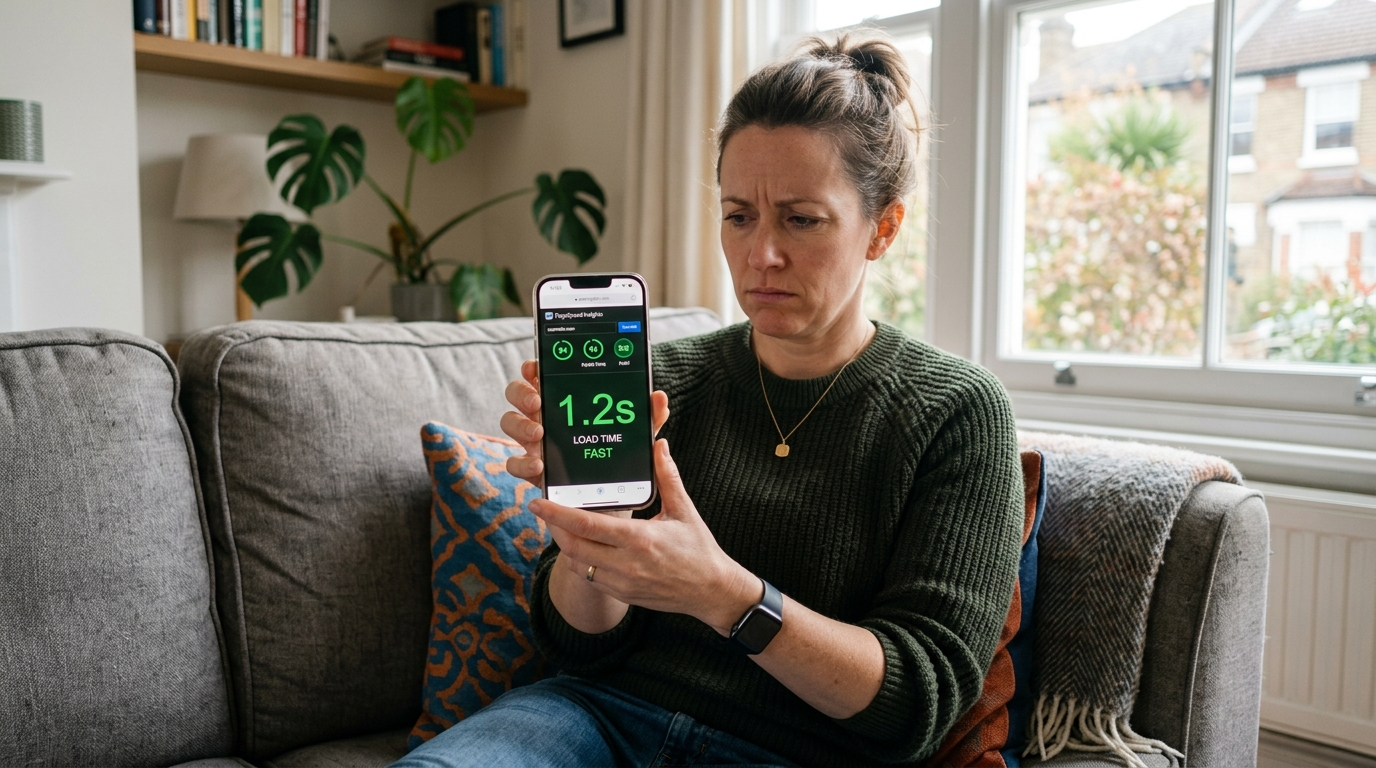
Goal: Mobile load time under 1.8 seconds.
Feature: Implement "Click-to-Text" alongside "Click-to-Call," as 65% of homeowners in 2026 prefer an instant text response over a phone call.
Part 4.5: Winning the AI Overview (GEO Strategy)
Search is no longer just "10 blue links." In 2026, Google’s AI Overviews provide answers before a user even clicks. To be the source the AI cites, you need to implement Generative Engine Optimization (GEO).
The "Atomic Answer" Rule: For every H2 heading phrased as a question (e.g., "How much does a new HVAC cost?"), provide a direct 50-word answer immediately below it.
Structured Data: Use LocalBusiness and Service Schema to tell AI exactly what you do, your price range, and your service area.
Information Gain: AI ignores repetitive content. Add unique data, such as a "Local Price Table" or "Common Issues in [Your City]" to provide value that AI hasn't seen elsewhere.
Part 5: Turning Traffic into Business
Getting to the top of Google is great, but it doesn’t pay the bills. The final part of this seo guide for home services is about converting your newfound visibility into actual jobs.
Conversion-Focused Page Elements
Once a visitor lands on your site, you must make it incredibly easy for them to contact you. This means using clear conversion elements:
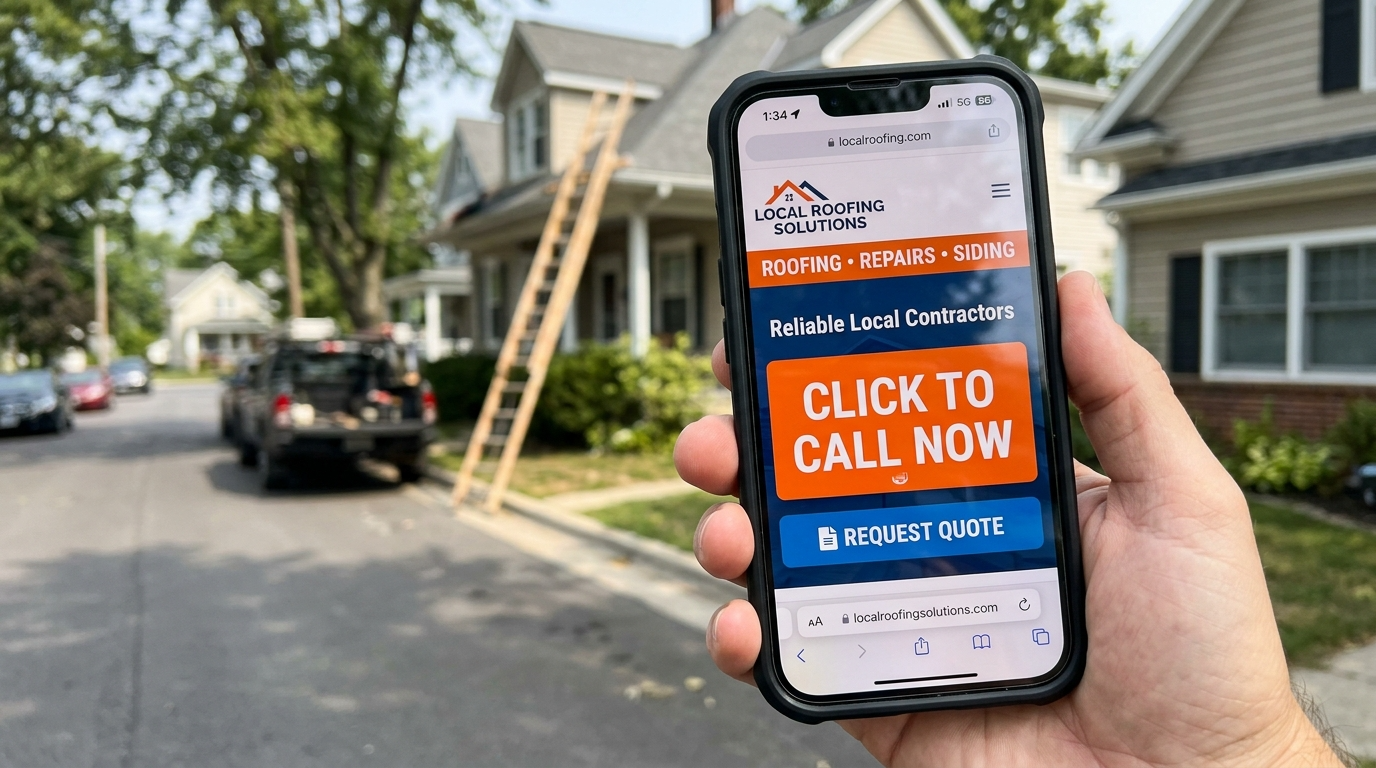
Calls to Action (CTAs): Obvious buttons like “Request a Free Quote” or “Schedule Service Now.”
Click to Call Phone Numbers: Your phone number should be prominent, especially on mobile, so users can tap to call.
Simple Forms: Keep contact forms short and easy to fill out. Up to 81% of users abandon a web form after starting it, usually because it’s too long or complex.
Tracking, Analytics, and PPC Interplay
You can’t improve what you don’t measure. Use tools like Google Analytics and Google Search Console to track your performance. Not sure what “good” looks like? Here’s how to tell if your SEO strategy is working. Key metrics to watch are:
Organic traffic growth.
Keyword rankings for your main terms.
Conversions (phone calls and form fills from organic search).
Google Business Profile Insights (how many calls and direction requests you get).
While SEO builds long term, sustainable traffic, Pay Per Click (PPC) ads can provide immediate leads. The two work well together. You can use data from your PPC campaigns to inform your SEO strategy, and as your SEO improves, you can rely less on paid ads for core terms. Being visible in both the paid and organic sections builds immense brand trust.
SEO Timeline and Realistic Expectations
SEO is a marathon, not a sprint. While you might see some quick wins, it typically takes 3 to 6 months to see significant, measurable results, and 12 months or more to achieve strong, consistent rankings for competitive terms. The results are cumulative; the work you do today builds the authority you’ll benefit from for years to come.
This long timeline and the complexity of a full strategy is why many business owners seek help. A continuous optimization plan, like the one offered by Rankai, ensures the work is done consistently, adapting and even rewriting content until it ranks, which removes the burden from your shoulders.
Conclusion
Mastering local search is one of the most powerful things you can do to grow your home service business. By following this seo guide for home services, you can build a powerful online presence that attracts a steady stream of high intent local customers.
Focus on building a solid foundation with your Google Business Profile and a well optimized website. Earn trust through consistent information and positive reviews. Create helpful content that establishes you as the local expert. And finally, measure your results so you can double down on what works. It’s an ongoing process, but the return on investment is a pipeline of customers who need your services and are ready to hire.
Frequently Asked Questions
What is the most important part of this SEO guide for home services?
While every part is important, the single most critical element for a local business is claiming, verifying, and thoroughly optimizing your Google Business Profile. It is your digital storefront and has the biggest impact on your visibility in the Map Pack.
How long does it really take to see results from local SEO?
Be prepared to invest for the long term. You may see small improvements in 3 months, but significant gains in traffic and leads typically take 6 to 12 months of consistent effort. Patience and persistence are key.
Can I do local SEO myself?
Yes, many business owners can handle the basics, like optimizing their GBP and requesting reviews. However, a comprehensive strategy involving technical SEO, content creation, and link building can be very time consuming. Many business owners eventually partner with an agency or consultant to handle the more complex and ongoing tasks.
Is a website necessary if I have a good Google Business Profile?
Yes, absolutely. Your GBP is essential for visibility in Google’s ecosystem, but your website is the property you fully own and control. It’s where you can provide in depth information about your services, build your brand, and capture leads directly. They work together for maximum effect.
What is the difference between local SEO and regular SEO?
Regular SEO focuses on ranking for keywords nationally or globally. Local SEO adds a geographical component. It’s about ranking for searches that have “local intent,” like “plumber near me” or “landscaper in Miami,” where Google knows the user wants a result from their immediate area. This is the focus of any good seo guide for home services.
How much should I budget for local SEO?
Costs can vary widely depending on your market’s competitiveness and whether you do it yourself, hire a freelancer, or work with an agency. Agency services can range from a few hundred to several thousand dollars per month. Look for transparent programs like Rankai’s flat monthly plan that offer clear deliverables for a set price.