
What is LLM SEO?
LLM SEO (sometimes LLMO, short for LLM Optimization) is the practice of optimizing content and brand signals to win citations inside large language model answers. The engines in scope: ChatGPT, Claude, Gemini, Perplexity, Microsoft Copilot, Grok, DeepSeek, Meta AI, plus Google's AI Overviews and AI Mode, which are increasingly LLM-driven.
LLM SEO overlaps with both GEO and AEO. The framing differs because LLM SEO emphasizes the language-model layer specifically, including how LLMs build entity associations, where their training data comes from, and which citation patterns they reinforce.
The output of LLM SEO: when a buyer asks an LLM about your category, your brand shows up named, optionally linked, and described in line with your positioning. The absence of any of these three things is failure.
Why LLM SEO matters now
Three forces:
1. LLMs intercept high-intent buying journeys. "Which X should I buy?", "X vs Y for [use case]", "best X for startups": all the queries that used to drive demo signups now happen inside chat. Brands missing from the answer never get the demo.
2. LLM citation patterns are sticky. Once an LLM associates your brand with a category, repeated retrieval reinforces it. Brands that establish citation moats early benefit disproportionately as adoption grows.
3. The cost of waiting compounds. Every quarter without LLM SEO discipline, your competitors who do it pull further ahead in the citation graph. By the time you start, you're paying to catch up on associations they built for free.
How LLMs find and cite content
Three retrieval mechanisms operate in 2026, often in combination:
Training-time embedding
LLMs learned what brands exist in what categories from their training data: historical web crawls of news, blogs, Wikipedia, Reddit, GitHub, and documentation sites. Brands frequently mentioned alongside category keywords got embedded as "known answers" for those queries. This is why brand mentions on high-signal sites disproportionately matter.
Live web retrieval
ChatGPT, Perplexity, Gemini, and others now run live web search behind the scenes for fresh queries. The retrieval layer crawls and indexes pages similarly to Google but with different ranking signals. Pages with crisp answer extraction, recent updates, and clean schema tend to surface here.
Citation reinforcement
When a model cites a source successfully (the answer is correct and well-formed), future queries on similar topics are more likely to retrieve that source. This is the citation moat effect, where early winners keep winning.
Content structure for LLM optimization
The format LLMs reliably extract from:
- Definition-led openings. First sentence after each H2 answers the heading as a one-line definition. Glossary-style.
- Q/A blocks for long-tail intents. FAQ blocks with discrete question/answer pairs covering the "people also ask" variants.
- Comparison tables for evaluative queries. For "X vs Y" and "best X", structured tables get cited far more than equivalent prose.
- Numbered steps for how-to. Ordered lists with concise step descriptions extract cleanly as numbered cards.
- Bolded key phrases. Within longer paragraphs, bolding the actual answer phrase improves extraction odds.
- Self-contained passages. Avoid "as discussed in the previous section" cross-references. Each paragraph should be quotable on its own.
For commercial-intent surfaces (alternatives pages, best lists, comparison articles), the format is the optimization. Content quality plus the right structure earns most of the citation lift.
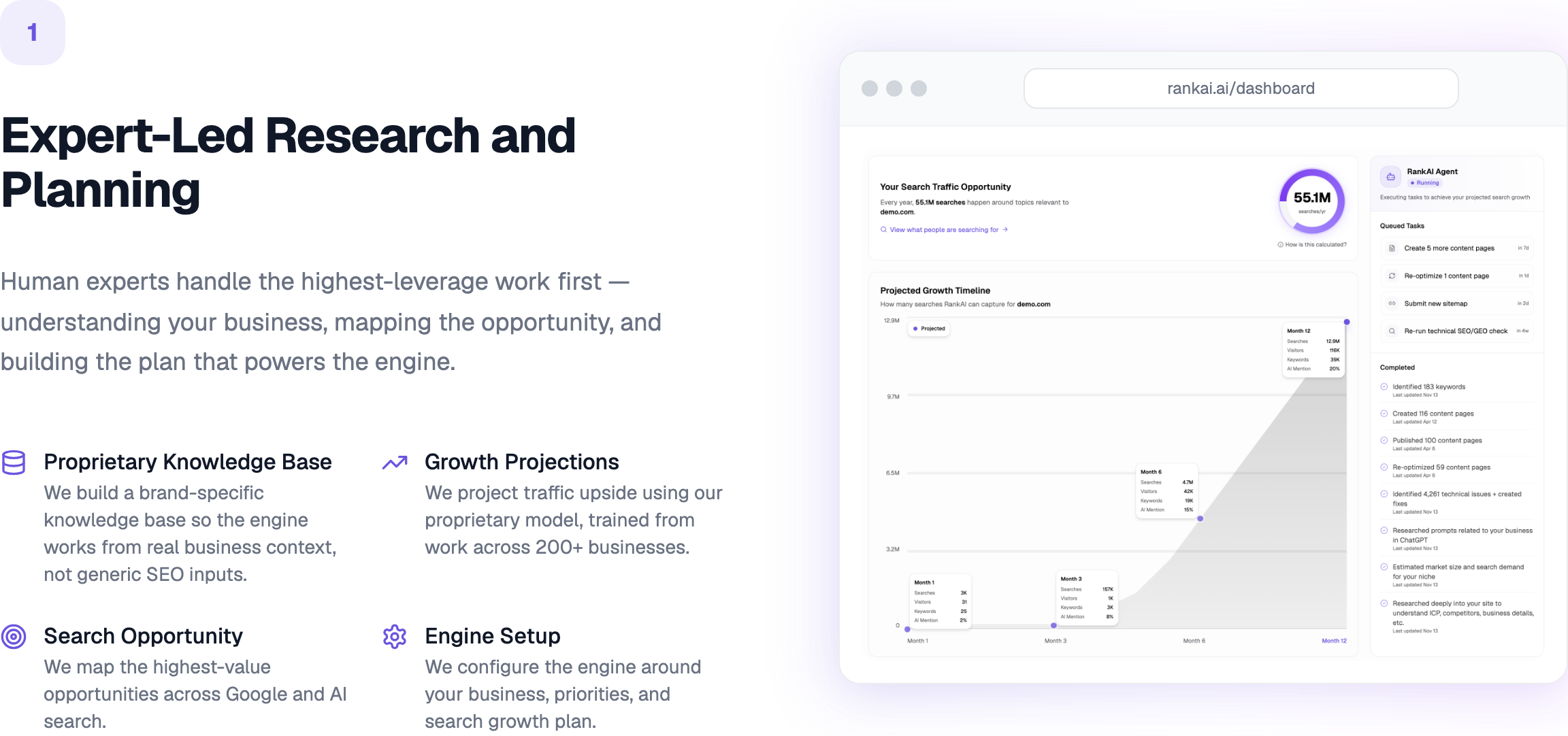
Brand mentions and entity signals (off-page LLM SEO)
On-page optimization tops out at a certain point. The compounding wins come from off-page signals: what other sites say about your brand and how often.
LLMs build entity associations across the web. If your brand is mentioned alongside "AI visibility tools" on 50 different sites, the model embeds that association strongly. If it's mentioned 5 times, the association is weak. This is the digital PR layer of LLM SEO.
Sources that disproportionately seed LLMs
- Reddit. Major source for retrieval-time freshness signal, especially on commercial queries.
- YouTube. Transcripts are indexed; videos with clear category titles influence brand-category associations.
- GitHub README files and docs sites. For developer-tool categories specifically.
- Mid-to-high-authority editorial sites. The kind that already rank well on Google. Citations there cross-pollinate into LLM retrieval.
- Comparison and review sites. G2, Capterra, TrustRadius, plus category-specific reviews. LLMs lean on these heavily for "best X" answers.
A coordinated digital PR push targeting these sources typically moves citation share faster than equivalent on-site work.
Schema and structured data for LLMs
LLMs use the same structured data Google does: Schema.org markup, OpenGraph, and consistent metadata. The five schema types that matter most:
- FAQPage. The single most reliable extraction format.
- HowTo. For step-by-step instructional content.
- Article with full Author, datePublished, and dateModified. Gives engines the context to decide whether to trust the page.
- Product / SoftwareApplication. For commercial pages, adds pricing and rating data that engines use in commercial answers.
- Organization with sameAs links. Establishes your brand entity clearly. The sameAs property linking to your LinkedIn, Twitter, and Crunchbase helps engines tie disparate mentions to one entity.
Test every schema implementation in Google's Rich Results Test. Broken schema is worse than no schema.
Measurement frameworks for LLM SEO
Three measurement layers, from leading-indicator to lagging:
Citation share (leading)
Track 50-100 prompts in your category. For each, measure whether your brand is cited, in what position, by which engine. Aggregate monthly. See the AI Visibility Tools roundup for tools that automate this.
Branded query lift (mid)
When you start appearing in LLM answers, branded search volume rises a few weeks later. Track branded query volume in Search Console plus the AI-referrer share of sessions.
Pipeline attribution (lagging)
The hard part. Self-reported attribution on demo forms ("How did you hear about us?" including ChatGPT / Perplexity / AI search as options) is the single highest-signal pipeline metric. Add it.
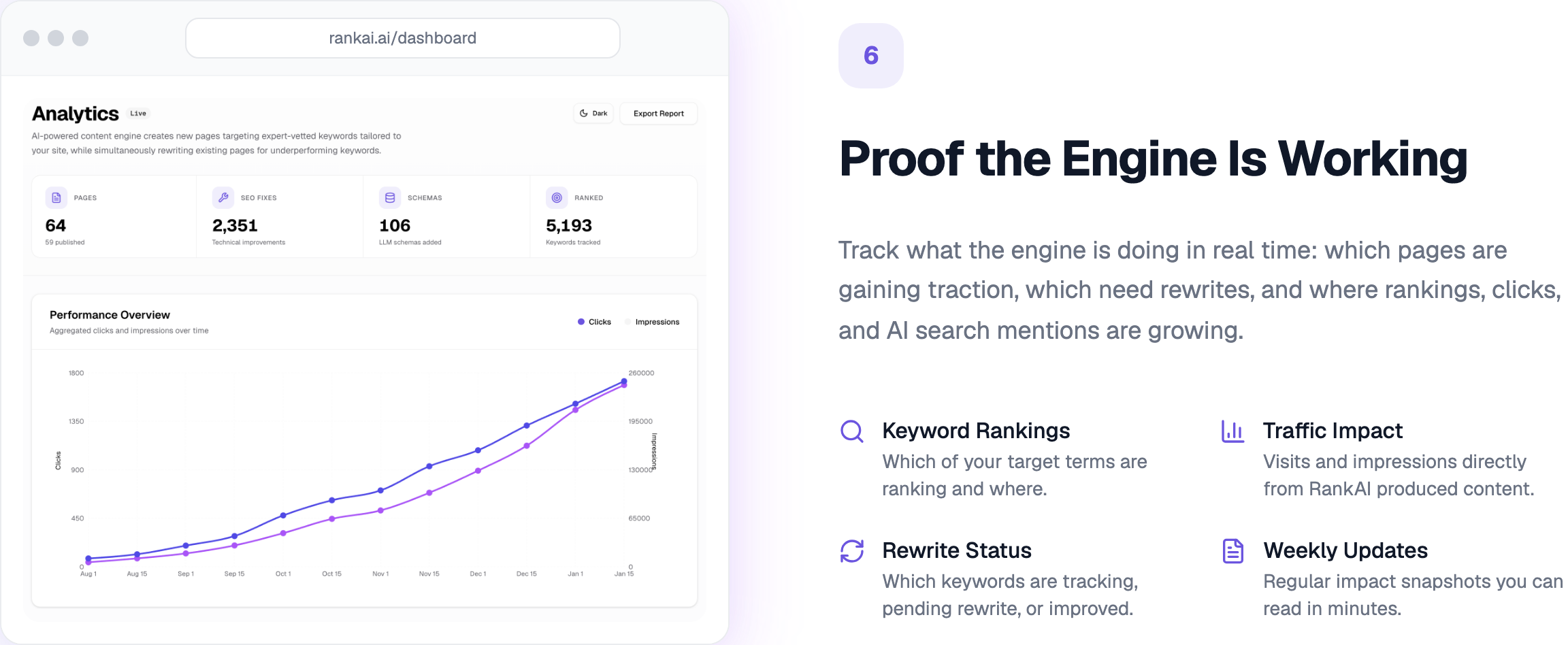
A practical LLM SEO workflow
An eight-week sequence that compounds:
Weeks 1-2: Audit and baseline
Pick a monitoring tool, track 50-100 prompts, document baseline citation share by engine. Audit top 20 commercial-intent pages for structural readiness (definition-led openings, FAQ blocks, schema, comparison tables).
Weeks 3-4: Ship the missing surfaces
For each high-volume buyer query where you're not cited, identify whether you need a new page, a rewrite, or a structural fix. Programmatic page generation (which platforms like RankAI handle) closes long-tail gaps at scale; one-off writing handles the top of the funnel.
Weeks 5-6: External signal push
Identify the 5-10 high-authority sites your category relies on for citations. Earn one mention on each via guest posts, expert quotes, podcast appearances, or G2/Capterra updates.
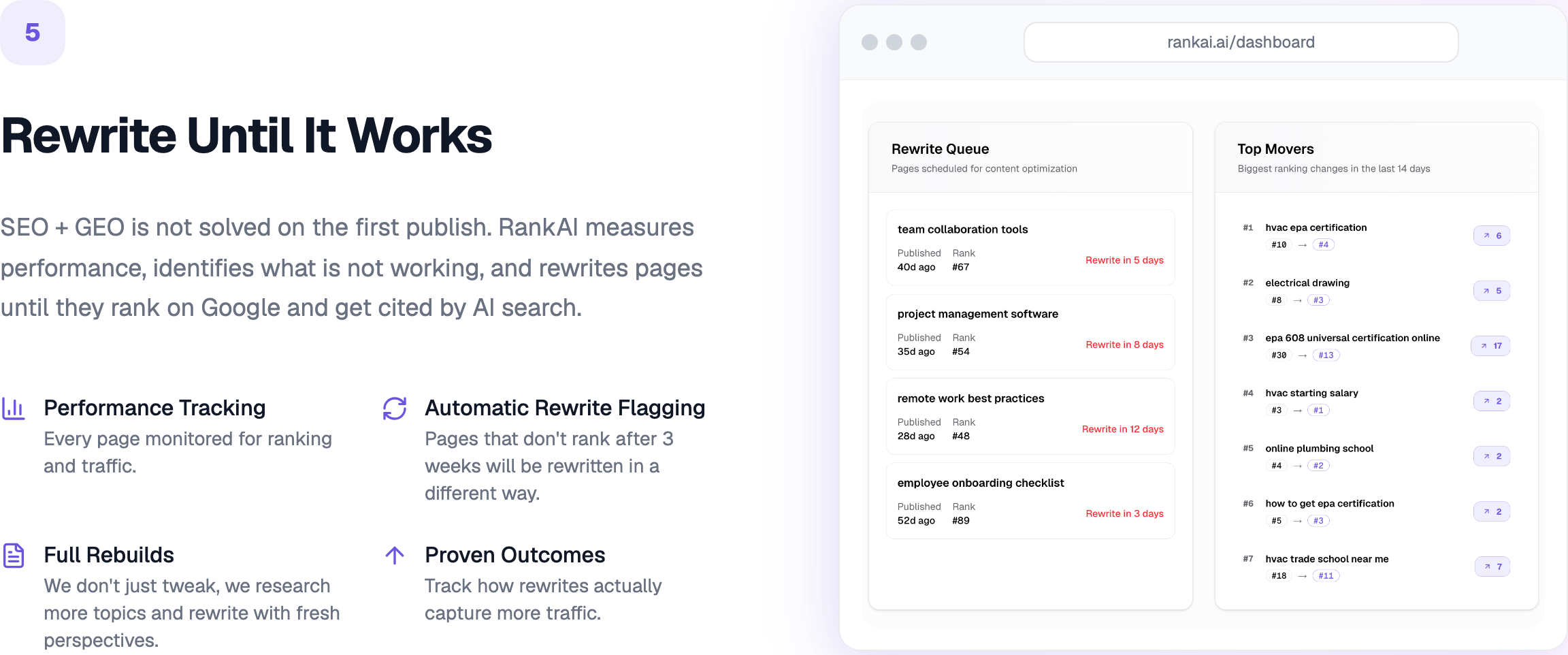
Weeks 7-8: Re-measure and iterate
Compare citation share against week 1. Pages that gained: double down on the tactics that worked. Pages that didn't: rewrite or re-pitch. Schedule a quarterly cadence going forward.
Everything in the LLM SEO: How to Rank in Large Language Models in 2026 library
The deep-dive articles that go with this guide — competitor comparisons, tool roundups, and tactical breakdowns.
Tools & agencies
The LLM SEO execution stack.
- Best LLM SEO Tools in 2026 — Eight LLM SEO tools compared on LLM engine coverage, execution depth, and price.
- Best LLM SEO Agencies — Seven agencies specialized in winning LLM citations across ChatGPT, Claude, Gemini, Perplexity.
- Best AI SEO Tools in 2026 — Ten AI SEO platforms compared on execution depth, content workflow, and pricing.
How-to playbooks
Step-by-step guides for shipping LLM SEO work.
- How to Increase Organic Traffic — A 6-stage playbook for growing organic traffic in the AI search era.
- How to Get High-Quality Backlinks — The modern external-signal playbook that feeds both Google rankings and LLM citations.
Adjacent topic guides
- Generative Engine Optimization (GEO) — The complete GEO playbook, the overlapping discipline focused on the engine layer.
- AI Search Visibility — The umbrella guide covering citations across all major AI engines.