11 Best SEO Campaign Tools and Services to Grow Organic Traffic in 2026
TL;DR: An SEO campaign is a repeatable system of keyword research, technical fixes, content production, and ongoing rewrites designed to grow organic traffic and leads. Most small businesses struggle not with knowing what to do, but with having the time and team to actually do it. This guide compares 11 tools and services by campaign job (execution, measurement, research, content optimization, technical audits, and more) so you can pick the right path for your budget and skill level. If you want a campaign run for you, Rankai handles strategy, content, technical fixes, and rewrites for $499/month.
SEO campaigns fail for a predictable reason: too much planning, not enough execution.
A small business owner reads about keyword research, technical audits, content clusters, and backlinks. They subscribe to a tool. Maybe two. Then the tools sit there, generating dashboards nobody acts on.
The problem is not information. It’s capacity. Semrush and Ahrefs will tell you exactly which keywords to target. They will not write the pages, fix the crawl errors, or rewrite the article that landed on page four instead of page one.
This guide breaks down 11 ways to run an SEO campaign, organized by what they actually do and what they don’t. Whether you need full execution, a free scoreboard, a research platform, or a technical crawler, the goal is to help you choose the option that turns SEO from a to-do list into results.
If you want the campaign run for you, explore Rankai’s done-for-you SEO execution model.
What Is an SEO Campaign?
An SEO campaign is a coordinated, goal-driven set of actions designed to improve a website’s organic visibility, rankings, qualified traffic, and conversions over time. It’s not a single task. It’s a system.
Semrush describes an SEO campaign as an organized plan that includes keyword targeting, helpful content, backlinks, and technical audits. That tracks with how most practitioners think about it: you pick goals, identify keywords with real buyer intent, fix what blocks search engines from indexing your site, then publish and improve content until it performs.
What separates a campaign from random SEO activity is the feedback loop. You publish a page, monitor how it performs in Google Search Console over three to four weeks, then decide whether to rewrite, expand, consolidate, or leave it. Without that loop, you’re just producing content and hoping.
Google’s own documentation confirms that its best practices for SEO remain relevant for AI features like AI Overviews and AI Mode. The fundamentals still hold: make pages crawlable, make them useful, make them specific, and make them easy to cite.
What Should a Real SEO Campaign Include?
Every SEO campaign, whether you run it yourself or hire someone, needs six jobs done.
1. Strategy. Identify your market, competitors, target keywords, and campaign goals. A local plumber targeting “emergency plumber Austin” needs a different approach than a SaaS company targeting “project management software.”
2. Technical foundation. Your site has to be crawlable and indexable. That means fixing broken links, redirect chains, slow page speeds, missing metadata, and structural issues. If Google can’t find your pages, nothing else matters. A solid technical SEO audit is the starting point.
3. Content production. New service pages, blog posts, category pages, location pages. The pages need to be genuinely useful, not keyword-stuffed filler. Google says its ranking systems are designed to prioritize helpful, people-first content, not content created mainly to manipulate rankings.
4. Authority building. Backlinks, digital PR, local citations, review signals, and partnerships. Authority still matters, but many small businesses overweight it relative to getting their on-site content right first.
5. Measurement. Google Search Console, Google Analytics, rank tracking, lead tracking. Use first-party data as your source of truth.
6. Iteration. This is the part most SEO services skip. Refresh underperformers, rewrite pages that stalled, consolidate thin content, and strengthen internal links. A campaign that stops after publishing is half a campaign.
Quick Comparison: Best SEO Campaign Tools and Services
| Option | Best For | Starting Price | Execution Model | Key Strength | Main Tradeoff |
|---|---|---|---|---|---|
| Rankai | SMBs wanting done-for-you execution | $499/month | AI + human expert service | 20 pages/month, rewrites until ranking, technical fixes | Not link-building-heavy; case proof is anonymized |
| Google Search Console | Measuring owned SEO performance | Free | Google tool | Crawl, indexing, click, and query data | No competitor research or execution |
| Semrush | All-in-one campaign management | $139.94/month (Pro) | Software platform | Keyword research, audits, rank tracking, reporting | Expensive for small teams; data without execution |
| Ahrefs | Backlink and competitor research | $29/month (Starter) | Software platform | Backlink intelligence, competitive research | Pricing and credit limits for freelancers |
| Surfer | On-page content optimization | $99/month (Standard) | Content optimization software | Content editor with SERP-based recommendations | Can encourage score-chasing over quality |
| MarketMuse | Content strategy and topical planning | Free tier; paid from $99/month | Content intelligence software | Topic gaps, content briefs, topical authority | Overwhelming for small teams; expensive tiers |
| Screaming Frog | Technical SEO audits | Free (500 URLs); $279/year | Desktop crawler | Deep crawl diagnostics and structured data | Requires technical knowledge to act on |
| GrowthBar | Beginner AI writing + SEO | Varies (verify current pricing) | AI writing software | Fast drafts, keyword research | Smaller review base; limited depth |
| Byword | Bulk AI article generation | $99/month | AI article generation | High-volume content workflows | Requires editorial QA; thin content risk |
| Local SEO service | Location-based businesses | $400 to $1,500+/month | Service (agency) | GBP optimization, citations, local pages | Doesn’t replace broader content strategy |
| Custom SEO agency | Complex or enterprise campaigns | $1,500 to $10K+/month | Full-service agency | Custom strategy, link building, digital PR | Expensive; quality varies by account team |
1. Rankai
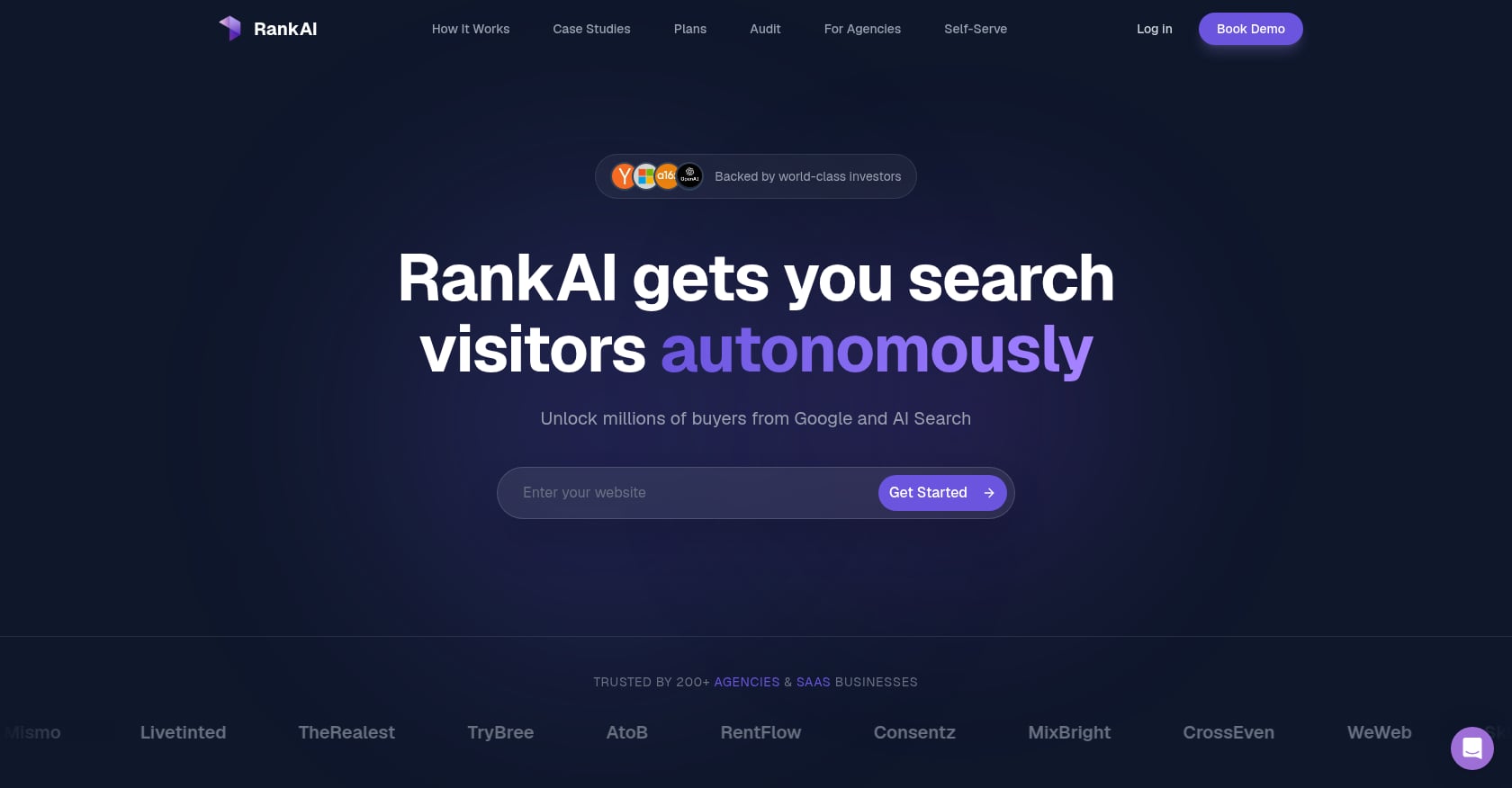
Best for: Small businesses, startups, and ecommerce stores that want SEO campaign execution without building an in-house team.
Pricing: $499/month (Early Bird). Includes 20 pages per month, continuous rewrites until pages rank, technical SEO fixes, human-expert-vetted keyword and topic selection, and cancel-anytime billing.
Key features:
- Smart keyword selection vetted by human SEO experts, updated monthly
- 20+ pages per month with internal links, metadata, visuals, and CTAs
- Continuous rewrite workflow: underperforming pages are flagged after approximately three weeks and rebuilt
- Technical SEO fixes included in the monthly service
- Weekly reporting on rankings, traffic impact, and rewrite status
- CMS compatibility with WordPress, Shopify, Squarespace, Webflow, and Wix
Why it stands out: Most tools give you data. Most agencies give you a strategy deck and a handful of pages per month. Rankai combines human-vetted strategy with AI-assisted production to publish at a pace (20+ pages/month) that would cost several thousand dollars at a traditional agency. The “rewrite until it ranks” commitment is the meaningful differentiator, because it turns publishing from a one-shot gamble into an iterative process.
The company is YC-backed (S23) and originally launched a fully automated SEO agent before pivoting to a hybrid model. According to the founders, automation handled about 60% of the tedious work but missed the strategic judgment that separates pages ranking from pages that don’t. The current model pairs AI production speed with human editorial oversight.
Anonymized Google Search Console data from their site shows a creative agency gaining 400% traffic growth, a SaaS platform reaching six-figure visitors and seven-figure impressions in under a year, and a local business going from zero to 70,000 visitors with 6 million impressions.
Tradeoffs:
- At $499/month for 20+ pages, quality concerns are natural. Rankai mitigates this with human vetting, editing, and iterative rewrites, but businesses with strict brand voice standards may need to provide feedback.
- Off-page authority building (link acquisition, digital PR) is not highlighted in their service description. Competitive niches that need backlink campaigns may need complementary work.
- Published case studies are anonymized, not named-client references.
Verdict: Choose Rankai if your bottleneck is execution capacity, not SEO knowledge. Skip it if your primary need is enterprise-scale link building or digital PR.
Book a demo to see how Rankai runs an SEO campaign for you.
2. Google Search Console
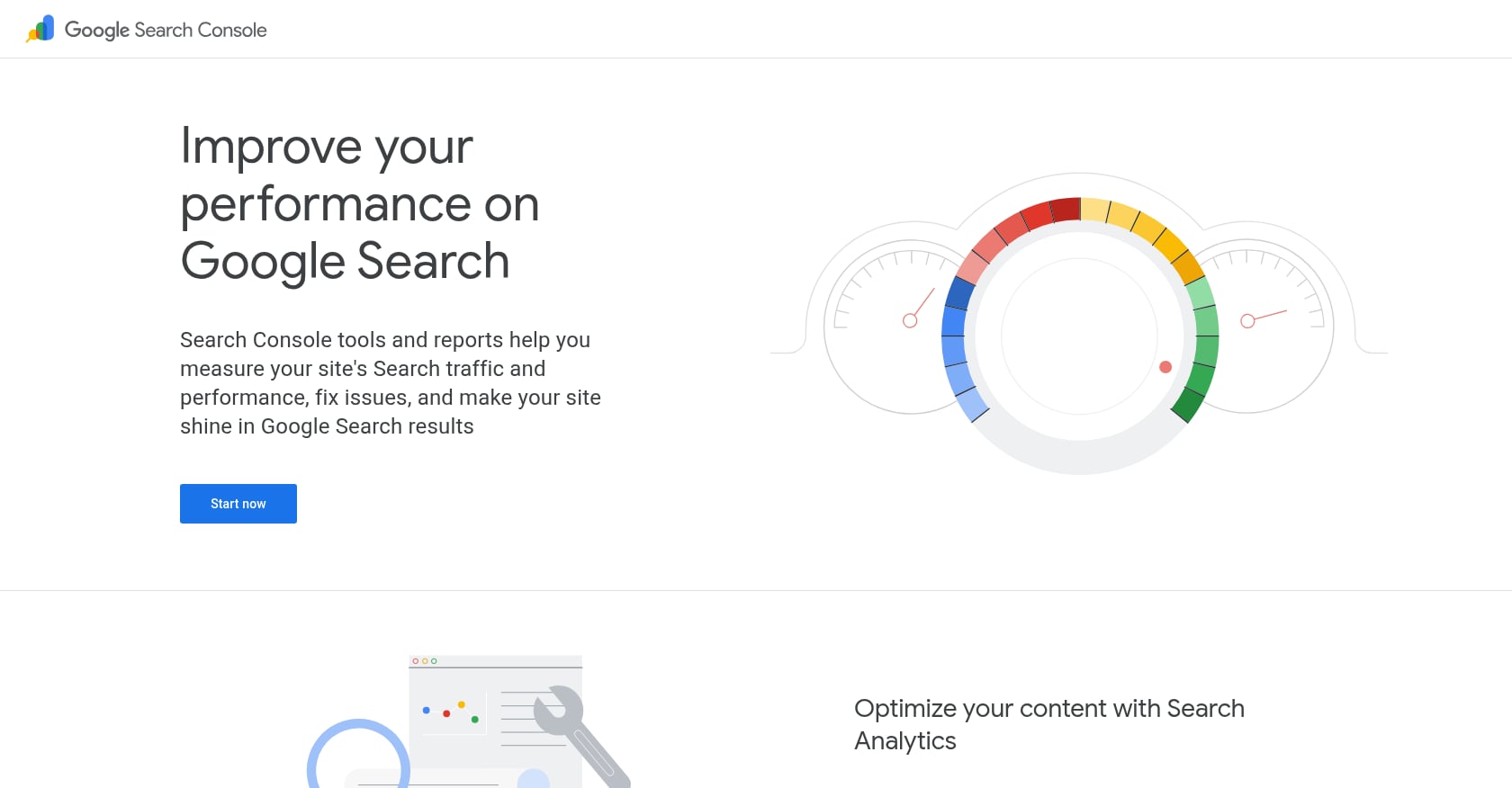
Best for: Every website running an SEO campaign. This is your scoreboard, not your strategy tool.
Pricing: Free. Google describes Search Console as a free service for site owners.
Key features:
- Confirms whether Google can find and crawl your site
- Shows search query, impression, click, and click-through-rate data
- Helps fix indexing problems and request re-indexing
- Sends alerts for spam, indexing, and other search issues
- Shows which external sites link to your website
Why it matters: Practitioners on Reddit consistently report that third-party SEO tools can be significantly out of sync with actual Google data. One user shared an example where Ahrefs estimated far more organic visits than Search Console and Google Analytics confirmed. The takeaway: use third-party tools for competitive research and discovery, but treat Search Console as the source of truth for your own performance.
Tradeoffs:
- No competitor research capabilities
- Does not create content or fix issues automatically
- No native AI Overview citation tracking
Verdict: Use Search Console regardless of what else you choose. It’s the only tool on this list that shows you exactly what Google sees.
3. Semrush
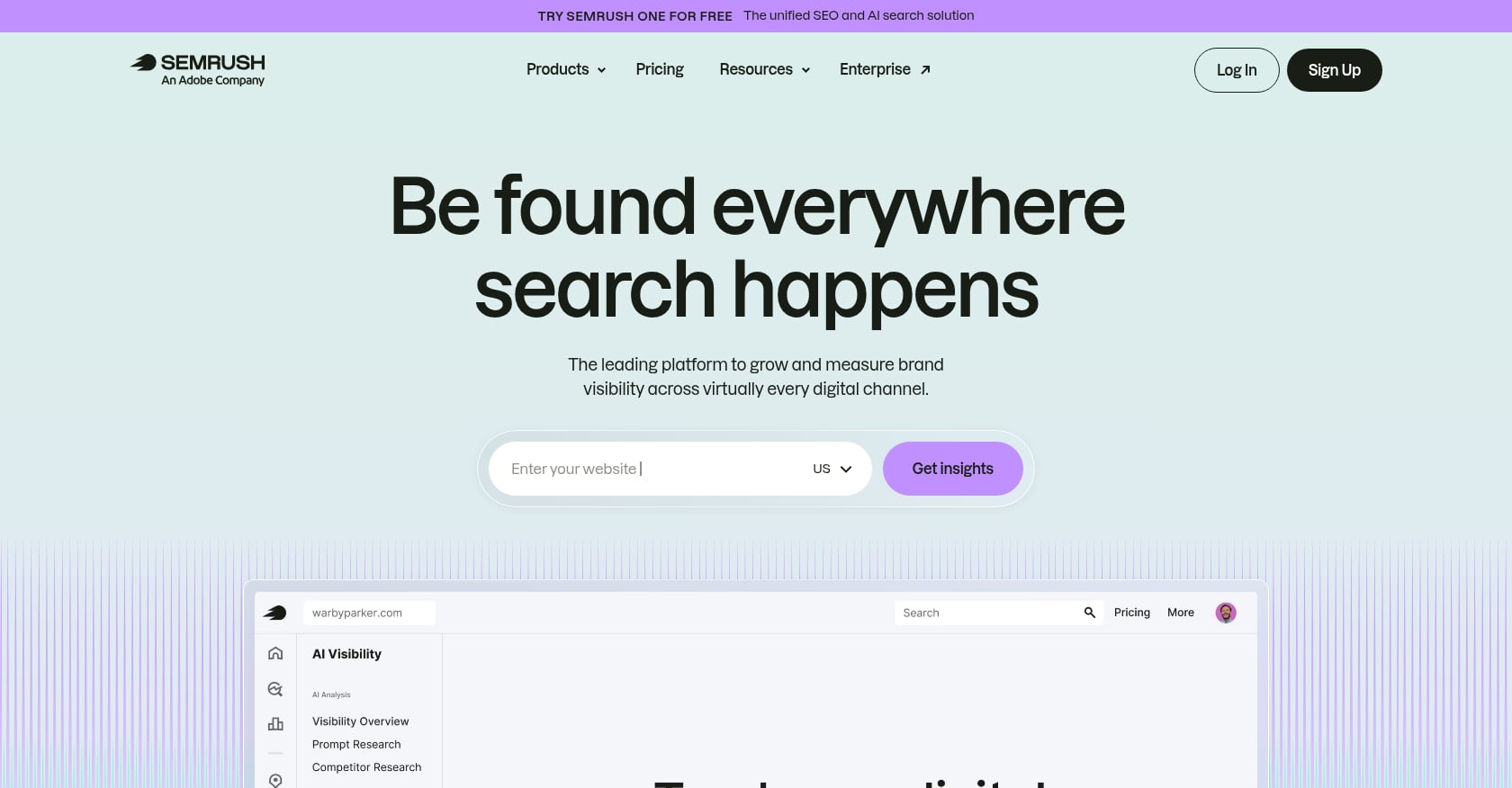
Best for: In-house marketers and agencies that need one platform for keyword research, competitor analysis, site audits, rank tracking, and reporting.
Pricing: Pro starts at $139.94/month, Guru at $249.95/month, Business at $499.95/month (per G2).
Key features:
- Keyword research and keyword gap analysis
- Technical site audits
- Rank tracking across keywords and locations
- Competitor domain analysis
- Link-building workflows
- Reporting dashboards and integrations with Google Analytics, Search Console, and more
User perspective: G2 rates Semrush 4.5 out of 5 from over 3,300 reviews. Users praise its depth of SEO data, competitor analysis, and keyword research. The recurring complaint is pricing. Reddit users discussing recent price increases (from $139 to $199 on some plans) frequently say the cost is hard to justify for freelancers and small businesses that only use a fraction of the features.
Tradeoffs:
- Semrush provides data and workflows, not execution. Someone still has to write, publish, and fix.
- Small businesses often pay for enterprise-grade features they never use.
- Advanced tiers required for some newer features push costs higher.
Verdict: Choose Semrush if you have someone on the team who will turn the data into published pages, technical fixes, and rewrites. Without that person, it becomes an expensive dashboard.
4. Ahrefs
Best for: SEOs who prioritize backlink intelligence, competitive keyword discovery, and content gap analysis.
Pricing: Free tier available. Starter from $29/month, Lite from $129/month (per G2). Higher plans can reach $1,499/month.
Key features:
- Industry-leading backlink index and analysis
- Keyword research with traffic estimates and difficulty scores
- Competitive research and content gap analysis
- Site audits for technical SEO issues
- Rank tracking
User perspective: G2 rates Ahrefs 4.5 out of 5 from 690 reviews. Its backlink data is widely considered the most comprehensive available. On the other hand, practitioners on Reddit describe the pricing as increasingly difficult to justify for solo SEO work, with credit limits on lower plans restricting how much research you can do in a month.
Tradeoffs:
- Strongest as a research platform, not an execution tool
- Credit and report limits can matter for heavy users on lower tiers
- Does not write content, fix technical issues, or manage publishing
Verdict: Choose Ahrefs if backlink analysis and competitor keyword research are your campaign bottleneck. Don’t expect it to run the campaign for you.
5. Surfer
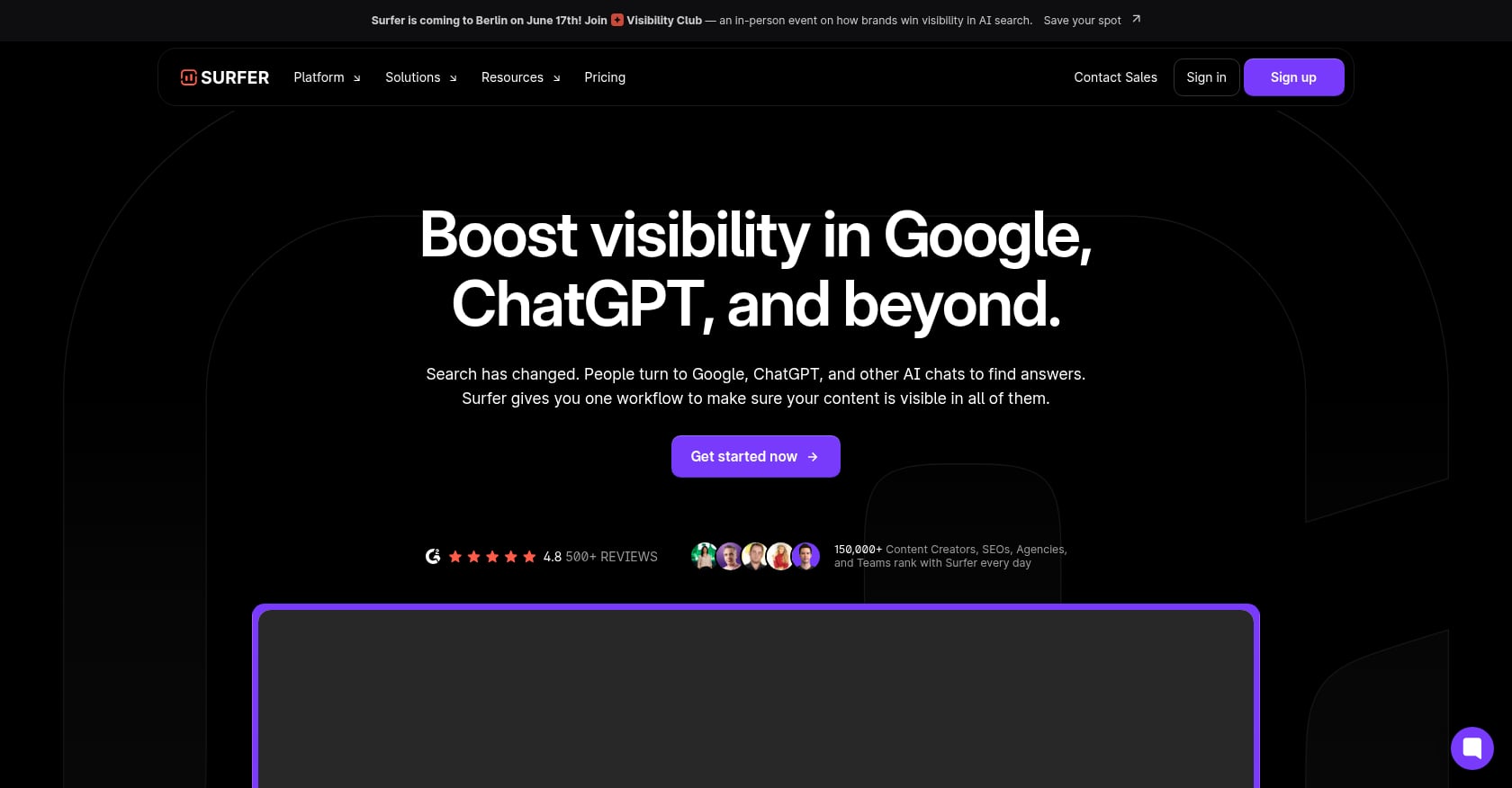
Best for: Writers and content teams that need on-page optimization guidance for new and existing articles.
Pricing: Standard from $99/month, Pro from $182/month (per G2).
Key features:
- Content Editor with SERP-based recommendations for word count, structure, and topical coverage
- Topic Explorer for keyword discovery
- Content Audit for optimizing existing pages
- Internal link suggestions
- Integrations with WordPress, Jasper, and Google Docs
User perspective: Surfer holds a 4.8 out of 5 rating on G2 from 541 reviews. Users praise the content editor and real-time feedback. The common criticism, both on G2 and in Reddit discussions, is that content scoring can become a trap. Writers start optimizing for the score rather than for the reader, which can lead to keyword-stuffed or generic copy. One Reddit thread specifically warned that blindly chasing Surfer’s content score produces “technically optimized” articles that feel unnatural to read.
Tradeoffs:
- Best used as an editorial guardrail, not the final arbiter of content quality
- Does not handle strategy, technical SEO, publishing, or link building
- Pricing can add up alongside other tools in the stack
Verdict: Choose Surfer if you already have writers and need a structured optimization workflow. Use the scores as guidance, not gospel.
6. MarketMuse
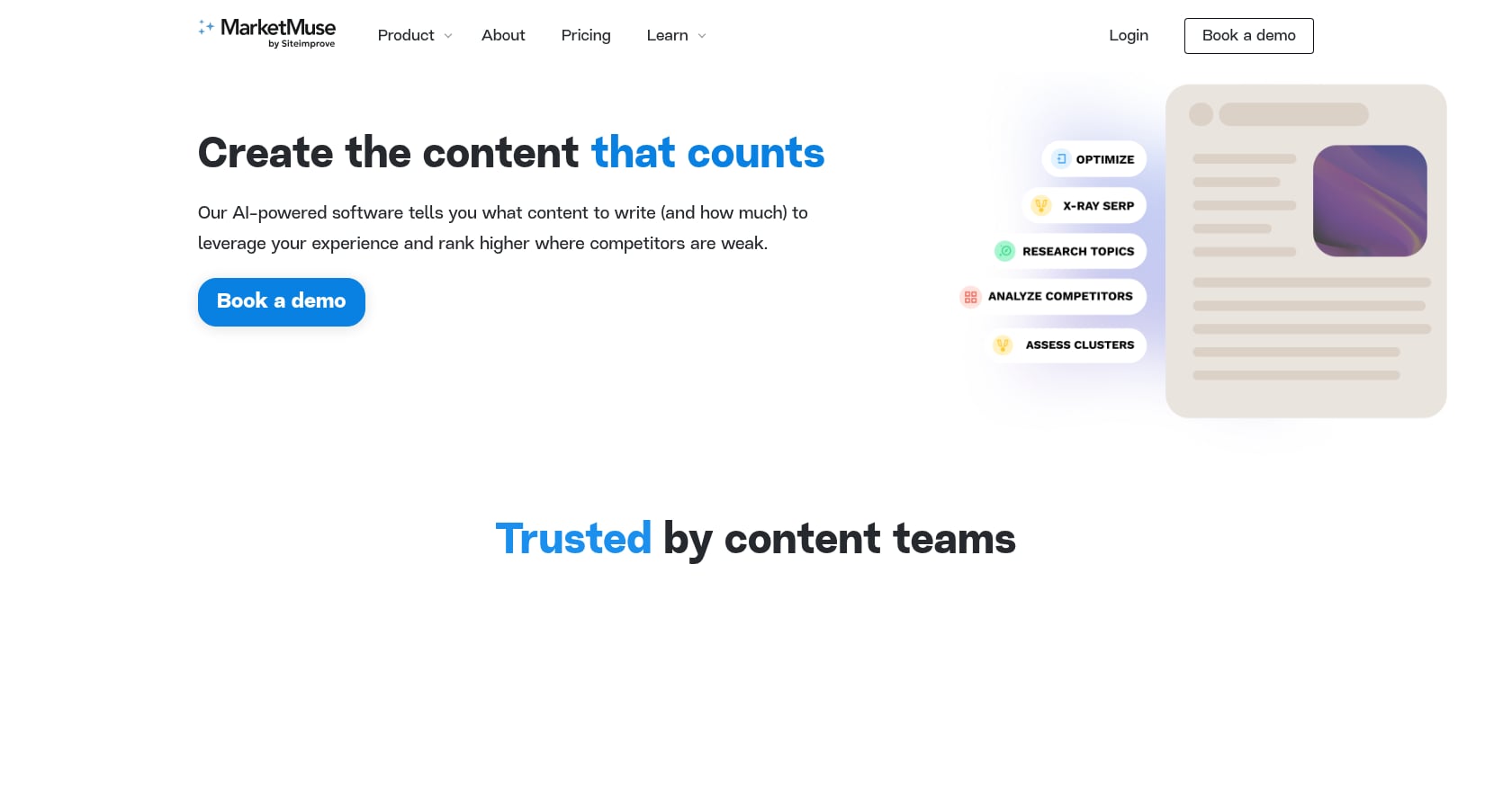
Best for: Content strategists planning topic clusters, content inventories, and topical authority across a site.
Pricing: Free tier available. Paid plans start at $99/month (Optimize), $249/month (Research), and $499/month (Strategy) per TechRadar.
Key features:
- Content inventory analysis and topic gap identification
- Competitive SERP analysis with SERP X-Ray
- Automated content briefs
- Personalized content metrics and difficulty scoring
- Real-time content optimization within the platform
User perspective: G2 rates MarketMuse 4.6 out of 5 from 216 reviews. Users praise its ability to surface quick wins, identify topic gaps, and plan content that builds authority across a cluster. Common complaints include a steep learning curve and pricing that feels high for smaller operations.
Tradeoffs:
- Better for strategy and planning than raw content production
- Most valuable when you already have a large content inventory to analyze
- Small businesses publishing 5 to 10 articles per month may not need this depth
Verdict: Choose MarketMuse if your campaign problem is “what should we write and why,” not “we need 20 pages shipped this month.”
7. Screaming Frog SEO Spider
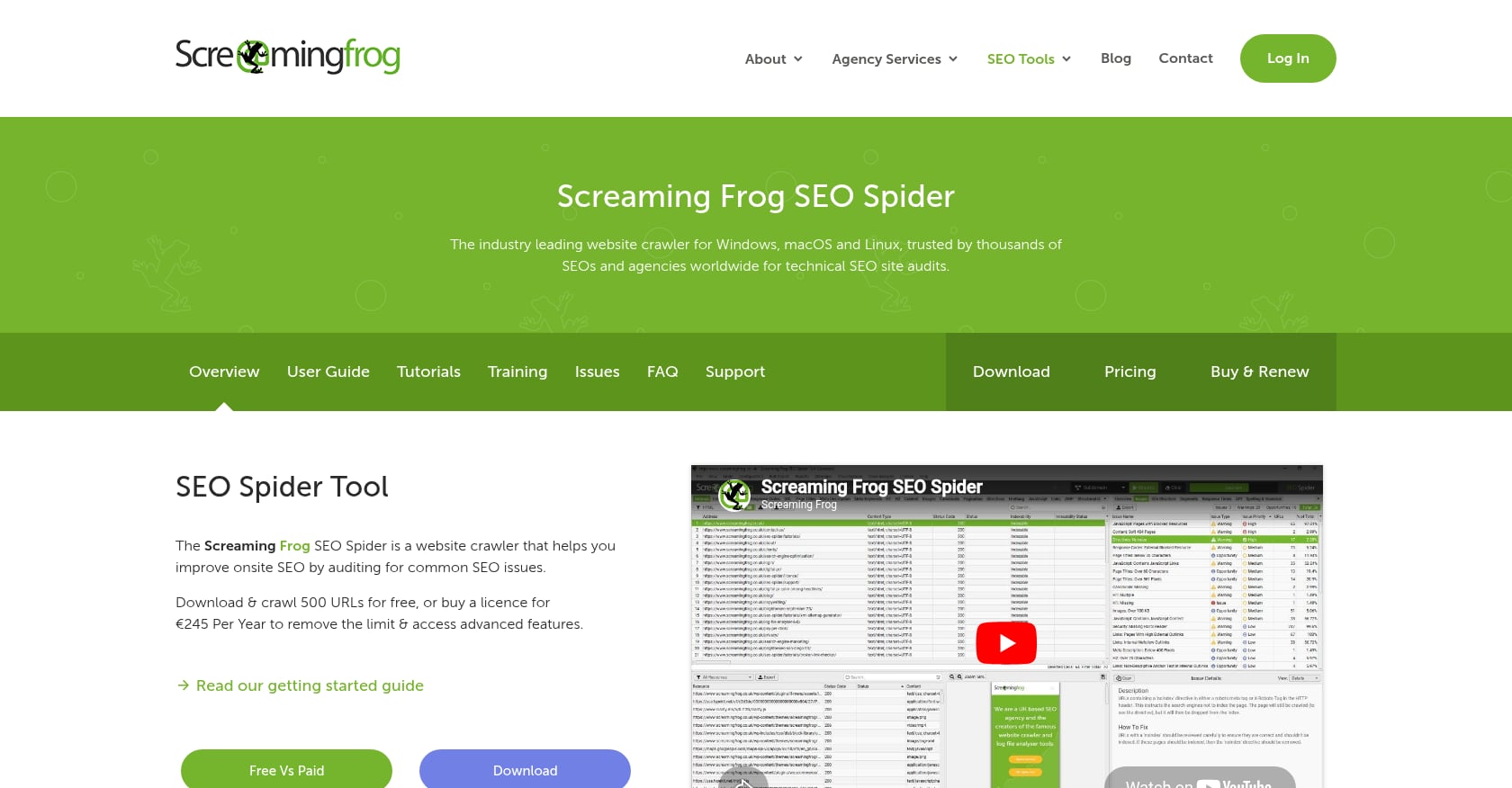
Best for: Technical SEO audits on sites with crawl errors, redirect chains, missing metadata, or indexation issues.
Pricing: Free for up to 500 URLs. Paid plan at $279 per user per year.
Key features:
- Crawls websites to find broken links, redirect chains, and duplicate content
- Analyzes page titles, meta descriptions, and heading structures
- Reviews robots.txt and meta robots directives
- Validates structured data and schema markup
- Generates XML sitemaps
- Integrates with Google Analytics, Search Console, and PageSpeed Insights
User perspective: Practitioners on Reddit describe Screaming Frog as one of the most underrated tools in SEO. Multiple threads call it “quietly powerful” for technical work, and the $279/year price is consistently praised as strong value relative to what it delivers. A TechRadar review highlights recent integrations with AI APIs (OpenAI, Gemini, Anthropic) for generating metadata and descriptions at scale.
Tradeoffs:
- Produces diagnostic data, not strategy or implementation
- Non-technical users will find the interface overwhelming
- Someone still has to prioritize and fix the issues it identifies
Verdict: Choose Screaming Frog if your SEO campaign is stalled by technical problems. Pair it with someone who knows how to interpret and fix the results.
8. GrowthBar
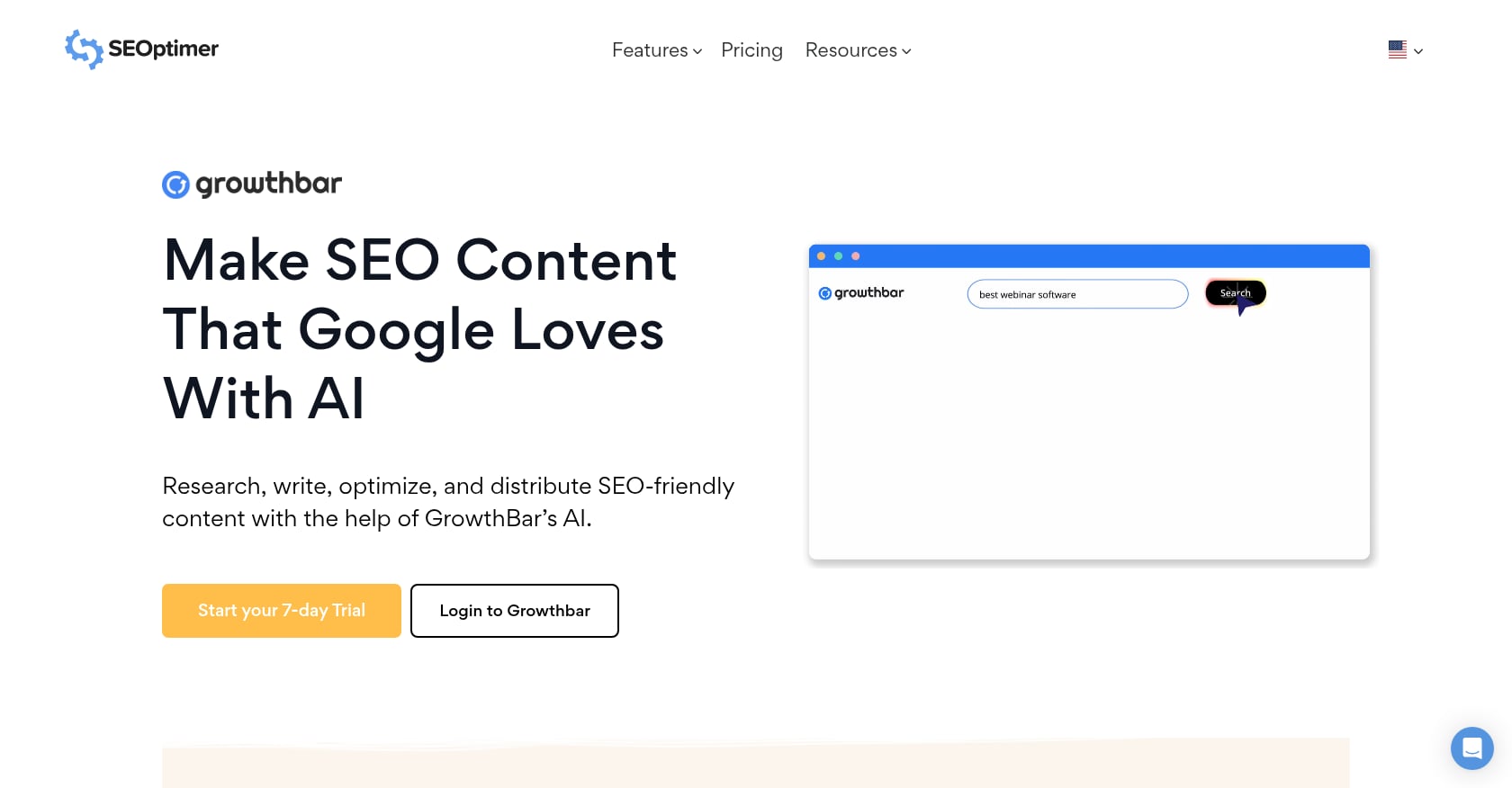
Best for: Bloggers, solo marketers, and small teams that want AI-assisted blog drafts plus basic SEO guidance without the complexity of Semrush or Ahrefs.
Pricing: Pricing has shifted (some users report changes from $69/month to $120/month). Verify current plans before purchasing.
Key features:
- AI writing with a “2-minute first draft” builder
- Keyword research with search volume and difficulty data
- SEO recommendations for content structure and length
- Internal link suggestions
- AI copy for product descriptions, emails, and other formats
User perspective: G2 rates GrowthBar 4.8 out of 5, though the review base is small (33 reviews). Users praise the simplicity and beginner-friendliness. The main limitation is that users want deeper competitor analysis and more advanced campaign features.
Tradeoffs:
- Smaller community and review base than established tools
- Not suitable for complex technical SEO or enterprise campaigns
- AI-generated content still needs human editing for quality and accuracy
Verdict: Choose GrowthBar if you want a simpler, cheaper entry point for AI-assisted SEO writing. Skip it if you need deep technical audits, backlink intelligence, or multi-site campaign management.
9. Byword
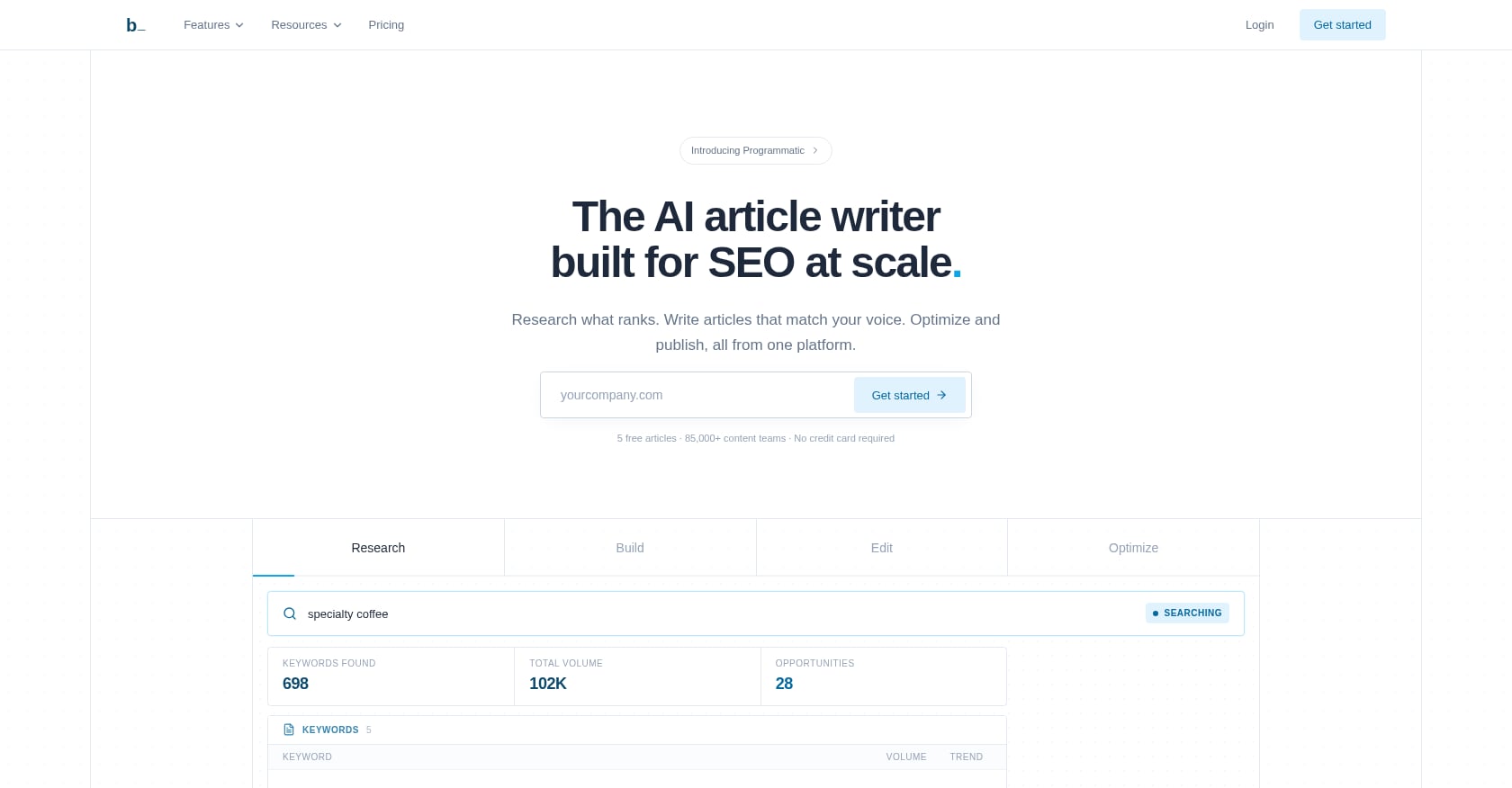
Best for: Sites running programmatic or high-volume content workflows where speed matters more than one-off editorial polish.
Pricing: Plans start at $99/month per third-party reviews.
Key features:
- Bulk AI article generation from keyword lists
- SEO-focused article structure
- CSV-style workflows for high-volume publishing
User perspective: Third-party reviewers flag limited market validation and recommend testing before committing. Broader Reddit discussions about bulk AI content tools consistently emphasize one risk: without unique data, expert editing, and proper internal linking, AI-generated articles tend to be thin and interchangeable with thousands of similar pages already indexed.
This matters because Google’s spam policies explicitly target scaled content abuse when pages are generated mainly to manipulate search rankings rather than help users.
At the same time, Google’s guidance on AI content confirms that AI-produced content is not automatically penalized. The deciding factor is whether the content is original, high-quality, and people-first. For a deeper look at what that means in practice, read about Google’s stance on AI content and rankings.
Tradeoffs:
- Bulk generation without editorial QA risks thin, generic content
- Not a complete SEO campaign system; it handles content production only
- Hallucinations, factual errors, and lack of original insight are common in unedited AI output
Verdict: Choose Byword only if you already know what to publish and have a rigorous human QA process. Bulk AI articles are not an SEO campaign by themselves.
10. Local SEO Campaign Service
Best for: Plumbers, dentists, lawyers, clinics, salons, roofers, and other location-dependent businesses where “near me” searches and Google Maps visibility drive leads.
Pricing: Varies widely. Ranking competitor pages cite $400 to $1,500/month as typical for small-business local SEO, though some sources put “real affordable SEO packages” at $1,000 to $3,000/month.
What a local SEO campaign typically includes:
- Google Business Profile optimization
- Local citation building (directories, aggregators)
- Review generation strategy
- Location-specific landing pages
- Service plus city keyword targeting
- Call tracking and lead tracking
User perspective: Reddit threads about local SEO campaigns show practitioners consistently separating GBP and map-pack work from broader traditional SEO campaigns. That distinction matters: a dentist in Portland may get most of their leads from the map pack, not from blog traffic. The first campaign should focus on local money pages and GBP before investing in informational content.
Tradeoffs:
- Local SEO does not replace content strategy for national or ecommerce growth
- Cheap local packages often over-focus on citations and reports while ignoring conversion pages
- Map pack visibility depends heavily on proximity, reviews, and local competition
Verdict: Choose a local SEO campaign if your customers search “[service] + [city]” or “near me.” Get your local money pages solid before investing in national content strategies.
11. Custom SEO Agency
Best for: Ecommerce catalogs, multi-location brands, B2B companies in competitive verticals, and sites with heavy technical debt, migrations, or international SEO needs.
Pricing: SeoProfy analyzed 629 Clutch-verified agencies and found the most common hourly band was $100 to $149/hour. Project costs can run from $10,000 to $50,000+ depending on scope.
What you typically get:
- Custom SEO strategy and competitive analysis
- Technical audits and implementation
- Content strategy and production (usually at lower volume than productized services)
- Link building and digital PR
- Analytics, reporting, and conversion optimization
User perspective: OuterBox, a page currently ranking for SEO service queries, gives a useful buyer warning: the cheapest option can waste months while the most expensive agency may be more than a small business needs. They recommend asking exactly what will happen in months one, two, and three before signing any contract.
Tradeoffs:
- Expensive, especially for early-stage businesses
- Slower onboarding and ramp-up compared to productized services
- Quality depends entirely on the actual account team, not the agency’s brand
- Many agencies sell strategy but underdeliver on content volume and iteration
Verdict: Choose a custom agency when the website, market, and competition justify the investment. If you mainly need consistent pages, technical fixes, and iteration at a reasonable price, a productized service is more efficient.
How Much Does an SEO Campaign Cost?
There is no single “correct” SEO campaign cost. It depends on what’s included and, more importantly, what actually gets executed.
DIY with free tools ($0 to $100/month). Google Search Console, Google Analytics, and a free-tier keyword tool. Works if you have the skills and time to do everything yourself.
Software stack ($100 to $500+/month). Semrush, Ahrefs, Surfer, or some combination. You get data and workflows, but you still need a person (or team) to act on them. The real cost is software plus the writer, editor, and developer time required to execute.
Productized execution ($500 to $1,500/month). Services like Rankai that combine strategy, content production, technical fixes, and reporting into a flat monthly fee. This tier works for businesses that need execution capacity more than another dashboard.
Custom agency ($1,500 to $10,000+/month). Full-service agencies handling everything from strategy to link building to conversion optimization. Best for complex or competitive situations where a one-size-fits-all approach won’t work.
Market data from pages currently ranking for SEO services backs these ranges. Blackbird Digital cites $400 to $1,500/month as typical for small businesses. BelVG breaks affordable SEO into $250 to $1,500/month depending on scope. Knapsack says “real affordable SEO packages” are often $1,000 to $3,000/month.
The right question is not “how much should I spend?” but “does this option include strategy, content, technical fixes, measurement, and iteration?” For a deeper comparison of services by price point, see this roundup of affordable SEO services for small businesses.
SEO Campaign Red Flags to Avoid
Not every SEO campaign offer is worth the money. Watch for these warning signs.
“Page one in 30 days for $99.” No legitimate service can guarantee rankings on a specific timeline. Google’s algorithm considers hundreds of factors, and fast results from cheap providers usually mean black-hat tactics that lead to penalties.
Backlink quantity promises without relevance. “500 backlinks per month” means nothing if the links come from spam directories and unrelated sites.
AI content at scale with no human review. Publishing hundreds of AI-generated pages without expert editing, original data, or useful substance risks triggering Google’s scaled content abuse policies. AI content can rank, but only when it’s genuinely helpful.
No Search Console access shared with you. If your SEO provider won’t show you Search Console data, you have no way to verify their claims.
Reporting only keyword rankings. Rankings without conversion data are vanity metrics. A page ranking number three for a keyword nobody converts on is not progress. As one practitioner resource put it, providers sell deliverables like “50 backlinks” or “12 blogs/month” because they’re easier to explain than outcomes, but deliverables are not the campaign. Outcomes are.
No rewrite or refresh process. Any SEO campaign that publishes content and never revisits it leaves results on the table. The iteration loop, refreshing old content that isn’t performing, is what separates good campaigns from mediocre ones.
No explanation of which pages matter commercially. Practitioners on Reddit who have grown sites from zero consistently say the biggest wins came from long-tail, low-competition content that solved specific problems people actually searched for. If your provider can’t explain why they’re targeting a particular keyword, that’s a problem.
How to Choose the Right SEO Campaign Option
The right tool or service depends on what you already have and what’s actually holding your SEO back.
If you have no SEO skill and no time: Choose done-for-you execution. Rankai handles keyword selection, content production, technical fixes, and rewrites in one monthly service.
If you have SEO skill but no content bandwidth: Pair a research tool (Semrush or Ahrefs) with a content optimization tool (Surfer) and a writing resource.
If you have an in-house marketer and budget for tools: Build a stack with Semrush or Ahrefs, Screaming Frog for technical audits, and Surfer or MarketMuse for content. But budget for the human time to act on the data, too.
If your site has technical problems: Start with Screaming Frog and a developer. Fixing crawl and indexation issues often unlocks rankings you already “earned” but aren’t getting credit for.
If you’re a local service business: Start with local SEO. Google Business Profile, location pages, citations, and reviews. Don’t pay for a national content campaign until your local money pages are solid.
If your campaign needs measurement guidance: Use Search Console as your baseline and track clicks, impressions, conversions, and revenue by page type. For a complete framework, see how to measure SEO results that connect to actual business outcomes.
One more point worth noting: Pew Research Center found that about one in five Google searches in March 2025 produced an AI summary, and users were less likely to click result links when one appeared. That means your SEO campaign measurement should track more than rankings. Impressions, clicks, conversions, and page-level revenue all matter more than position alone.
If you’re wondering what to expect in the first 90 days of a managed SEO program, the pattern is consistent: audit and fix in weeks one through two, publish highest-intent pages in weeks three through four, scale content in month two, then rewrite underperformers and strengthen internal links in month three.
For small businesses that want a campaign executed, not just planned, Rankai is the strongest fit on this list. It combines human-vetted keyword strategy, high-volume content production, technical SEO fixes, and ongoing rewrites in one monthly service at $499/month.
See if the plan is right for your business.
FAQs
What is an SEO campaign?
An SEO campaign is a coordinated plan to improve organic visibility through keyword research, technical SEO, content creation, internal linking, authority building, measurement, and ongoing content updates. It’s a system with a feedback loop, not a one-time project.
How long does an SEO campaign take to show results?
Most campaigns start showing measurable signals (impressions, early rankings) within 4 to 8 weeks. Meaningful traffic and lead growth typically takes 3 to 6 months, depending on competition, site authority, and execution speed. Campaigns that include a rewrite loop tend to compound results faster because they improve underperforming pages instead of abandoning them.
How much does an SEO campaign cost for a small business?
Costs range from free (DIY with Search Console) to $10,000+/month (custom agency). Most small businesses spend between $500 and $3,000/month on outsourced execution or tool stacks. Rankai’s done-for-you service starts at $499/month and includes 20 pages, technical fixes, and rewrites.
Can AI-generated content rank on Google?
Yes. Google’s guidance states that success in search depends on producing original, high-quality, people-first content, regardless of how the content is produced. AI content is not automatically penalized, but scaled content published mainly to manipulate rankings violates Google’s spam policies.
Should I hire an SEO agency or use SEO software?
It depends on your execution capacity. Software gives you data but requires someone to act on it. An agency or done-for-you service handles execution. If nobody on your team will write, publish, fix, and rewrite, software alone won’t produce results.
What tools do I need for an SEO campaign?
At minimum: Google Search Console (free, essential) and a keyword research tool. Beyond that, the right stack depends on your bottleneck. Use Semrush or Ahrefs for research, Surfer for content optimization, and Screaming Frog for technical audits. Or skip the tool stack entirely and use a done-for-you execution service.
What should happen in the first 90 days of an SEO campaign?
Days 1 to 14: audit the site, review Search Console data, fix technical blockers, and cluster target keywords. Days 15 to 30: publish or refresh the highest-intent pages and improve internal linking. Days 31 to 60: scale content production and monitor early impressions. Days 61 to 90: rewrite underperformers, prune thin content, and evaluate conversions.
Are backlinks still important for SEO campaigns?
Yes, but they are one factor among many. Many small businesses get better ROI from fixing technical issues and producing targeted content than from buying backlinks. Authority is built over time through useful content, digital PR, and genuine relationships, not through bulk link packages.