

Most small businesses begin seeing measurable results in 3 to 6 months. Local businesses can often outrank larger national competitors by building stronger local relevance and trust signals in a defined geographic area.
Small business SEO in 2026 is one of the most valuable and accessible growth strategies available to local businesses. Research shows that 53 percent of all website traffic comes from organic search, yet fewer than half of small businesses have a formal SEO strategy in place. That gap is your opportunity.
Search Engine Optimization is not reserved for large companies with large budgets. It is a learnable system that helps your website appear when people in your area search for what you offer. Unlike paid ads that stop working the moment you stop paying, SEO builds lasting visibility that compounds over time. A local bakery, law firm, or HVAC company can outrank national chains in their own city when the right strategy is applied.
This guide covers the complete small business SEO process for 2026, from your first audit to tracking real revenue results. Whether you have two hours a week or twenty, you will find a clear path forward.
What Does Small Business SEO Cost and How Long Does It Take?
Small business SEO typically costs between 500 and 3,000 dollars per month when handled by an agency or consultant. DIY SEO costs primarily your time plus optional tool subscriptions ranging from free to around 130 dollars per month. Most small businesses begin seeing measurable improvements in local rankings within 3 to 6 months. Businesses in competitive markets or major cities may need 6 to 12 months to reach page one for their primary keywords.
The three factors that affect your timeline the most are how competitive your local market is, how optimized your website currently is, and how consistently you publish new content and earn reviews.
What Is Small Business SEO?
Small business SEO is the process of improving your website and online presence so your business appears higher in Google and Google Maps when people search for your products or services.
Unlike enterprise SEO, small business SEO focuses heavily on local visibility, nearby customers, and service-based searches such as:
“plumber near me”
“best dentist in Las Vegas”
“roof repair in Henderson”
The goal is not to rank for every keyword in the country. The goal is to rank for the searches most likely to turn into calls, visits, and customers.
Small Business SEO vs Traditional SEO
Factor | Small Business SEO | Traditional / Enterprise SEO |
|---|---|---|
Geography | Local or regional | National or global |
Main Goal | Calls, leads, store visits | Traffic, brand awareness |
Best Tactics | Google Business Profile, reviews, local pages | Content marketing, link building |
Typical Budget | $500–$3,000/mo | $5,000–$50,000+/mo |
Competition | Local competitors | National competitors |
Why Local Businesses Can Beat Larger Competitors in Search
One of the most consistent findings in local SEO is that smaller, locally focused businesses frequently outrank national chains for city-specific and neighborhood-specific searches. The reason is local relevance. Google's algorithm prioritizes businesses that demonstrate genuine ties to a specific community, and a national company with one generic location page cannot compete with a local business that has pages for every neighborhood it serves, consistent citations in local directories, and a steady stream of reviews from real customers in that city.
A business that has been operating in Las Vegas for 10 years, has 80 Google reviews, is listed in 40 local directories, and publishes content about the local community will almost always rank above a national chain with a single location page and no local content. This is the central advantage that every small business owner should understand before investing in SEO.
Small Business SEO vs Google Ads
Many business owners wonder whether they should invest in SEO or Google Ads. The truth is that both can work together, but they serve different purposes.
Factor | SEO | Google Ads |
|---|---|---|
Time to Results | 3–6 months | Immediate |
Cost | Lower long-term | Ongoing monthly spend |
Traffic | Long-term, compounding | Stops when ads stop |
Trust | Higher | Lower |
Best For | Sustainable growth | Fast leads |
Best approach:
Use Google Ads for immediate traffic
Build SEO for long-term, lower-cost leads
Use ad data to discover your best SEO keywords
SEO for Small Business: 2026 Quick Start To rank a small business in 2026, focus on these five pillars:
Entity Authority: Claim your Google Business Profile (GBP) and ensure NAP (Name, Address, Phone) consistency across all 40+ major directories.
Local Relevance: Create "Hyper-Local" content that mentions specific neighborhoods, landmarks, and community events.
Technical Hygiene: Maintain a mobile load time under 2.5 seconds (LCP) and implement LocalBusiness Schema.
Review Velocity: Generate at least 2–5 new Google reviews per month to signal active business status.
AI Alignment: Use clear, conversational headings (H2s and H3s) that directly answer "Who, What, Where" to appear in AI-generated overviews.
Building Your Foundation: Strategy and Planning
Before you touch a single line of code or write a blog post, a successful SEO journey begins with a strong strategy. This foundational phase is about understanding where you are, where you want to go, and how you’ll get there.
Your First 90 Days: Priority Action Checklist
Month 1: Foundation (Weeks 1-4)
Week 1: Complete SEO audit using Screaming Frog or Semrush Week 2: Claim and fully optimize Google Business Profile Week 3: Conduct keyword research (target 20-30 primary keywords) Week 4: Audit and fix NAP consistency across top 15 directories
Month 2: On-Page Optimization (Weeks 5-8)
Week 5: Optimize homepage and top 5 service pages (titles, headers, content) Week 6: Create location-specific landing pages for each service area Week 7: Add schema markup (LocalBusiness, Service, Review) Week 8: Improve site speed (target: under 3 seconds mobile load time)
Month 3: Content & Authority (Weeks 9-12)
Week 9: Publish first 4 blog posts (local + service-focused) Week 10: Request reviews from 10-15 satisfied customers Week 11: Build 5-10 local citations and backlinks Week 12: Set up tracking and establish baseline KPIs
Start with an SEO Audit: Your Digital Checkup
Think of an SEO audit as a comprehensive health check for your website. It’s the first step in any serious SEO effort because it reveals what’s working and what’s holding you back. An audit examines everything from technical issues like slow page speeds and broken links to on‑page elements like your page titles and content quality. Use this on‑page SEO checklist to cover the basics.
Identifying these problems is critical. For instance, if your site is slow to load on a phone, you’re losing customers. Research shows that 53% of mobile users will abandon a website if it takes more than three seconds to load. An audit provides a clear roadmap of what to fix first, giving you the biggest impact for your effort.
Analyze Your Local Market
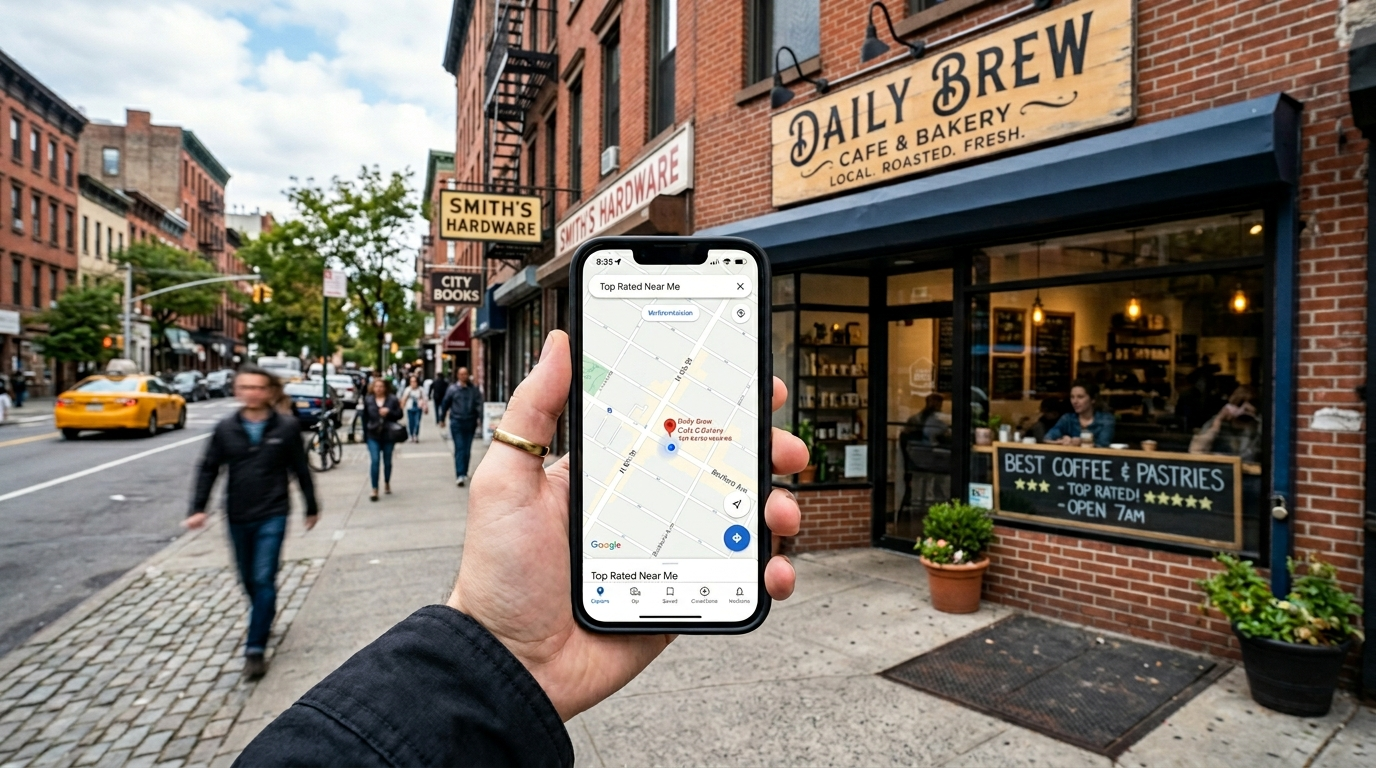
For most small businesses, the world is not your oyster, your city is. A local market analysis involves digging into the online search landscape in your specific geographic area. You need to understand who your local competitors are in search results and what local customers are actually searching for.
This means looking for “near me” queries and city specific keywords. Consumer behavior confirms this is vital, as around 87% of people used Google to research local businesses in 2022. By understanding local search patterns, you can tailor your content and strategy to capture customers right in your neighborhood who are ready to buy.
Content Type | Target Keyword Example | SEO Purpose |
Neighborhood Page | "Best Plumber in [Neighborhood Name]" | Capture high-intent, ultra-local traffic. |
Local Project Gallery | "[Service] Project in [Zip Code]" | Proves local experience and builds trust. |
Community Guide | "Guide to [Local Event] in [City]" | Builds top-of-funnel local brand awareness. |
Master Keyword Research
Keywords are the bridge between a customer’s problem and your solution. Keyword research is the process of finding the exact words and phrases people type into Google, then organizing them into keyword clusters you can target with focused pages. Your goal is to find terms that are relevant to your business, have a decent number of people searching for them, and aren’t impossible to rank for.
Small businesses should pay special attention to long tail keywords. These are longer, more specific phrases like “emergency plumber in downtown Austin” instead of just “plumber”. These longer queries make up the vast majority of all Google searches and often convert better because the keyword intent is much clearer.
Map Keywords to the Right Pages
One of the biggest SEO mistakes small businesses make is targeting multiple keywords on the same page or creating pages without a clear purpose.
Each important keyword should map to one page type:
Keyword Type | Best Page Type | Example |
|---|---|---|
Service keyword | Service page | “Emergency Plumbing Services” |
City + service keyword | Location page | “Plumber in Summerlin” |
Question keyword | Blog post | “How Much Does Roof Repair Cost?” |
Comparison keyword | Comparison page | “SEO vs Google Ads for Small Business” |
Brand keyword | Homepage | “ABC Plumbing Las Vegas” |
Example keyword map:
Keyword | Recommended Page |
|---|---|
emergency plumber las vegas | /emergency-plumber-las-vegas/ |
water heater repair henderson | /water-heater-repair-henderson/ |
how much does a plumber cost | Blog article |
Develop a Content Plan
Once you have your keywords, you need a plan to target them. A content plan is an editorial calendar that outlines what content you will create, when you’ll publish it, and what SEO goal each piece serves (ideally guided by content mapping so each page serves a clear role). This ensures every blog post, service page, or video has a purpose.
Consistency is key. One study found that companies blogging 11 or more times per month generated three to four times more traffic than those who only blogged occasionally. A content plan prevents random acts of content and transforms your website into a reliable resource that continually attracts new visitors.
Create a Site Update Plan
A website is not a brochure that you print once and forget. It’s a living digital asset. A site update plan is a schedule for maintaining and improving your existing website. This includes refreshing old blog posts with new information, fixing any technical errors that pop up, and ensuring your site remains fast and secure. Google tends to reward websites that are regularly updated because it signals that the content is fresh and relevant.
Choose the Right SEO Tools
Essential SEO Tools Comparison
Tool | Best For | Cost | Key Feature |
|---|---|---|---|
Google Search Console | Technical monitoring | Free | Index status, search queries |
Google Analytics | Traffic analysis | Free | User behavior, conversion tracking |
Google Business Profile | Local visibility | Free | Maps listings, reviews |
Semrush | All-in-one research | $129.95/mo | Keyword research, competitor analysis |
Ahrefs | Backlink analysis | $129/mo | Link building, content gaps |
Moz Local | Citation management | $14/mo | Listing distribution, NAP consistency |
Screaming Frog | Technical audits | Free (500 URLs) | Crawl errors, on-page issues |
You don’t have to do all this work manually. There is a huge ecosystem of SEO tools that can help with everything from keyword research to technical audits. Many small businesses can start with powerful free tools like Google Analytics and Google Search Console. As you grow, you might invest in all in one platforms like Semrush or Ahrefs. The right tools provide the data and automation you need to make smart decisions and execute your strategy efficiently.
Optimizing Your Online Presence: Execution
With a solid plan in place, it’s time to roll up your sleeves and get to work. This phase is all about executing on page and local optimizations to make your digital properties as visible as possible.
Essential Schema Types for Small Business
Local Business schema - Shows Google your hours, location, services Review schema - Displays star ratings in search results FAQ schema - Can earn featured snippet placements Service schema - Highlights specific services offered
Use Google's Structured Data Markup Helper (free) to generate code.
Fine Tune Your Website for Local Business
Local website optimization means tailoring your site’s content to rank for local searches. This involves adding your city, neighborhood, or service area to key places like page titles, headings, and body text. You should also display your Name, Address, and Phone number (NAP) clearly on your site, preferably on every page in the footer.
Embedding a Google Map on your contact page is another strong local signal. With 76% of people who conduct a local search on their phone visiting a business within a day, making your site a helpful resource for local searchers directly translates into foot traffic and sales.
Create Service Area Pages
If you serve multiple cities, neighborhoods, or ZIP codes, create a dedicated page for each area.
Good examples:
/plumber-las-vegas/
/plumber-henderson/
/water-heater-repair-summerlin/
Each location page should include:
Unique intro about the city or neighborhood
Services offered in that area
Local testimonials
Local landmarks or neighborhoods
Google Map embed
FAQ specific to that area
Avoid creating thin duplicate pages by only changing the city name.
Local Search Behavior by Industry (2025 Data)
Business Type | "Near Me" Search Volume | Avg. Conversion Rate | Typical Decision Time |
|---|---|---|---|
Restaurants | 68% of all searches | 18-22% | Under 1 hour |
Home Services (plumber, electrician) | 83% of all searches | 12-15% | Same day to 3 days |
Medical/Dental | 71% of all searches | 8-12% | 1-7 days |
Retail Stores | 59% of all searches | 14-18% | 1-3 hours |
Professional Services (lawyer, accountant) | 44% of all searches | 6-10% | 1-4 weeks |
Source: Google Local Search Study 2025 & BrightLocal
Master Your Google Business Profile

Your Google Business Profile (GBP) is arguably your most important local SEO asset. It’s the information box that appears in Google Search and on Google Maps, showing your reviews, hours, photos, and address. Optimizing it is non negotiable.
A complete profile builds trust. Google has stated that businesses with detailed profiles are 2.7 times more likely to be considered reputable by consumers. This involves filling out every section, uploading high quality photos, and actively encouraging and responding to customer reviews. A well managed GBP is a customer magnet.
Publish Locally Relevant Content
Go beyond just mentioning your city on your service pages. Local publishing means creating content specifically for your local audience. Write blog posts about community events, create guides to local attractions, or partner with other local businesses on a project. This shows Google and potential customers that you are an active, engaged member of the community, which builds both relevance and trust.
Build an Internal Linking Strategy
Internal links help Google understand which pages are most important and help visitors find related content.
Every blog post should:
Link to 1–2 service pages
Link to at least one city page
Link to another related blog post
Example internal linking structure:
Page Type | Should Link To |
|---|---|
Blog Post | Service page + city page |
Service Page | Related services + testimonials |
City Page | Service page + contact page |
Homepage | Top service pages + main city pages |
Manage Your Business Listings
Beyond your own website and GBP, your business information appears in dozens of online directories like Yelp, Apple Maps, and Bing Places. Business listing management is the process of ensuring your NAP information is accurate and consistent across all these platforms.
Inconsistencies confuse search engines and frustrate customers. According to one study, 68% of consumers would stop using a local business if they found incorrect information in online directories. Using a tool or service to manage these listings ensures you are present and correct everywhere people are looking.
Build Your Reputation and Authority
What others say about you online matters immensely. This part of the seo guide for small business covers two key areas: reputation and authority.
Reputation Management: This is all about online reviews. With 98% of people reading online reviews for local businesses, your star rating is your digital curb appeal. Actively encourage happy customers to leave reviews and always respond professionally to both positive and negative feedback.
Link and Citation Building: Backlinks (links from other websites to yours) are like votes of confidence for Google. The more high quality, relevant sites that link to you, the more authoritative your site appears. Citations are mentions of your business NAP online, even without a link. Both are crucial for building your site’s credibility.
Engage on Social Media
While social media signals like likes and shares are not a direct Google ranking factor, an active social presence is an important supporting player. Sharing your content on social platforms gets it in front of more people, which can lead to more traffic, brand awareness, and even natural backlinks. Your social profiles also often rank for your brand name, giving you more control over your first page search results.
Measuring, Scaling, and Getting Help
SEO is a continuous process of execution and refinement. This final section of our seo guide for small business covers how to track your results, prepare for the future, and know when it’s time to call in the professionals.
Track Performance with Analytics
You can’t improve what you don’t measure. Performance measurement involves using tools like Google Analytics and Google Search Console to track your progress and to tell if your SEO strategy is working in. These platforms provide a wealth of data on how many people are visiting your site from search, which keywords they are using, and what they do once they arrive. Analyzing this data turns raw numbers into actionable insights, allowing you to double down on what works.
Define Your Key Performance Indicators (KPIs)
To avoid getting lost in data, you need to define your Key Performance Indicators, or KPIs. These are the specific metrics that matter most to your business goals. For some, it might be the total number of organic visitors. For others, it could be the number of phone calls generated from their Google Business Profile or the conversion rate of organic traffic. Tracking the right KPIs ensures your SEO efforts are tied directly to business growth.
Integrate Paid Media
SEO and paid advertising (like Google Ads) work better together. Paid media integration means using both channels in a coordinated way. For example, you can use paid ads to get immediate visibility for a competitive keyword while you work on ranking for it organically. The data from your paid campaigns can also reveal which keywords convert best, helping you prioritize your SEO content efforts.
Prepare for the Future: AI Search
The world of search is changing with the rise of AI assistants and generative search experiences like Google’s AI Overviews. Generative Engine Optimization (GEO) is an emerging field focused on getting your business information featured directly in AI generated answers. This involves creating clear, factual, and well structured content that is easy for AI models to digest and cite. While still new, preparing for an AI first search future will be a key competitive advantage.
Optimization for Generative Search (GEO) In 2026, people don't just "search"—they "ask." To ensure your business is cited by AI assistants (like Gemini or ChatGPT), implement these three tactics:
Direct Answer Prose: Use the "Question-Answer" format. Start paragraphs with a direct answer to a common customer question.
Structured Data (Schema): Don't just list services; use Service Schema to tell AI exactly what you charge and where you operate.
First-Person Experience: Use phrases like "In our 10 years serving [City]..." Google's 2026 algorithm rewards content that proves a human actually did the work.
Know When to Hire an SEO Expert
This entire seo guide for small business might seem overwhelming, and that’s okay. Many business owners reach a point where they lack the time, expertise, or resources to execute SEO effectively. If you’re not seeing results, are in a highly competitive market, or simply can’t dedicate consistent hours to SEO, it might be time to hire a consultant or agency.
For many startups and small businesses, a hands off approach is ideal. Services that offer a complete, done for you SEO program can handle everything from keyword planning to content publishing and technical fixes, allowing you to focus on running your business. This often provides a better return on investment than trying to juggle it all yourself.
Simple ROI Formula for Small Business SEO
Formula Component | Description |
|---|---|
Formula | (Monthly SEO Cost / New Customers from Organic) / Average Customer Value = ROI % |
Real-World Example
Item | Calculation |
|---|---|
SEO Investment | $1,500 / month |
New Organic Customers | 15 / month |
Average Customer Value | $250 |
Monthly Revenue from SEO | 15 × $250 = $3,750 |
ROI | ($3,750 – $1,500) ÷ $1,500 = 150% ROI |
Expected Timeline by Competition Level
Market Competition | Time to First Page | Time to Top 3 | Monthly Investment Needed |
|---|---|---|---|
Low (small town, niche service) | 2–4 months | 4–6 months | $500–$1,500 |
Medium (mid-size city) | 4–6 months | 6–9 months | $1,500–$3,000 |
High (major metro, competitive industry) | 6–9 months | 9–14 months | $3,000–$7,000 |
Plan Your SEO Roles and Management
Finally, as you grow, it’s important to have a clear plan for who is responsible for SEO. This is SEO management and role planning. Will you hire an in house specialist, rely on an agency, or use a hybrid model? A clear structure ensures accountability and consistency. Many businesses find that partnering with an agency provides access to a team of experts for less than the cost of a single senior employee. If managing the complexities of a full strategy feels daunting, a service like Rankai can act as your dedicated SEO department, simplifying your role to just setting goals and watching your organic traffic grow.
An effective seo guide for small business shows that SEO is not a one time project but an ongoing investment in your company’s digital future. By following these steps, you can build a powerful engine for sustainable, long term growth.
7 Costly SEO Mistakes Small Businesses Make
Targeting Keywords That Are Too Broad
Trying to rank for “plumber” or “lawyer” is usually unrealistic. Focus on long-tail local keywords such as “emergency plumber in Las Vegas.”
Not Creating Service + City Pages
If you serve multiple locations but only have one generic service page, you are missing local search traffic.
Inconsistent NAP Information
Your business name, address, and phone number must match exactly across your website, Google Business Profile, Yelp, Apple Maps, and other directories.
Ignoring Google Reviews
Reviews are one of the strongest local SEO signals. Businesses that consistently get new reviews often rank higher in the local pack.
Creating Thin Content
Pages under 300–500 words rarely rank well. Aim for:
800–1,500 words on service pages
1,200–2,000 words on blog posts
Neglecting Internal Links
Pages with no internal links often struggle to rank.
Ignoring Mobile Speed
Most local searches happen on phones. A slow website means fewer calls and lower rankings.
Who This Guide Is For and How It Was Created
This guide is intended for small business owners, marketing managers, and entrepreneurs who want to grow their organic search traffic without relying entirely on paid advertising. It is also useful for freelancers and consultants who manage SEO for local clients.
The recommendations in this guide are based on direct experience working with local businesses across service industries including home services, healthcare, legal, and retail. The strategies reflect what has produced consistent results in competitive local markets in 2025 and 2026.
Frequently Asked Questions
1. How long does SEO take to show results for a small business?
SEO is a long term strategy. While some quick wins can happen in the first 1 to 3 months (especially with local SEO), most businesses should expect to see significant, meaningful results in 6 to 12 months. Consistency is the most important factor.
2. What is the most important part of this SEO guide for a business on a tight budget?
If you have a limited budget, focus on the essentials with the highest local impact. Fully optimize your Google Business Profile, ensure your website NAP is correct everywhere, and encourage your happiest customers to leave reviews. These actions are low cost and deliver powerful results for local businesses.
3. Can I do SEO myself using this guide?
Absolutely. This seo guide for small business is designed to give you a clear framework. It requires a significant investment of time and a willingness to learn, but many business owners successfully manage their own SEO. The key is to be consistent and patient.
4. How much does small business SEO cost?
Costs vary widely. DIY SEO costs your time plus the price of any tools you use. Hiring a freelancer or consultant could range from a few hundred to several thousand dollars per month. A full service agency retainer typically starts around $1,500 to $5,000 per month. Some modern services offer more accessible flat monthly rates, making expert SEO management affordable for smaller companies.
5. What’s the difference between on page SEO and off page SEO?
On page SEO refers to optimizations you do on your own website, like improving content, optimizing title tags, and increasing site speed. Off page SEO refers to actions taken outside of your website to build its authority, primarily through earning backlinks and managing online reviews and business listings. Both are critical for a successful strategy.
6. Should I focus on Google or other search engines?
Google dominates with 91.9% market share, but don't ignore Bing (3.0%) and local directories. Complete your Bing Places profile and ensure Apple Maps has your information—together these can drive 8-12% additional traffic for local businesses.
What is local pack ranking and why does it matter?
The "local pack" is the map with 3 business listings shown at the top of local search results. Ranking here drives 42% of all clicks for local searches. To appear: optimize your Google Business Profile, earn reviews consistently, maintain NAP accuracy, and build local backlinks.
How many backlinks do I need to rank?
Quality matters more than quantity. A single link from a respected local news site or chamber of commerce can outweigh 100 low-quality directory links. For small businesses, aim for 5-10 high-quality local backlinks in year one (local blogs, news sites, supplier sites, business associations).
Do I need a blog if I'm a local service business?
Yes. Businesses that blog get 55% more website visitors and 67% more leads than those that don't. For local services, focus on 2-4 posts per month answering customer questions ("How much does X cost in [city]?") and local content ("Best time to [service] in [region]").
What's the difference between SEO and SEM?
SEO (Search Engine Optimization): Unpaid organic rankings through content and optimization. Takes longer but builds long-term traffic.
SEM (Search Engine Marketing): Paid ads like Google Ads. Immediate results but stops when you stop paying.
Best approach: Run both simultaneously—ads for quick wins while SEO builds momentum.
Related Guides
To go deeper, read these related guides:
Local Business SEO Guide
Google Business Profile Optimization Guide
SEO Guide for Dentists
SEO Guide for Law Firms
SEO Guide for Home Services
SEO Guide for Restaurants
SEO Guide for Real Estate
SEO Guide for Healthcare
Technical SEO Checklist
Local Content Marketing Guide
Final Thoughts
Small business SEO is not about competing with every company in the country. It is about becoming the most visible and trusted business in your local market.
If you optimize your Google Business Profile, create strong service and city pages, improve your website, and consistently publish helpful content, you can generate more traffic, more calls, and more customers without relying entirely on ads.
The best next step is to start with your Google Business Profile and your top service page, then work through the 90-day checklist one step at a time.