TL;DR
SEO competitor analysis is the process of identifying which websites win your target search visibility, understanding why they rank, and turning that data into better content, links, and technical SEO. The best tool depends on your bottleneck: Rankai for done-for-you execution, Semrush for all-in-one research, Ahrefs for backlink depth, SE Ranking for value, and several others for specific use cases. This guide compares 9 options on pricing, features, user sentiment, and tradeoffs, then walks through a practical workflow for converting competitor data into rankings.
Why Most SEO Competitor Analysis Fails Before It Starts
SEO competitor analysis is not the act of exporting a keyword gap report and handing it to a writer. That is data collection. The real work starts when someone decides which gaps are worth pursuing, creates the content, fixes the technical issues, builds internal links, and rewrites the pages that underperform.
Most articles about SEO competitor analysis tools compare dashboards. This one compares outcomes. If you have a full SEO team ready to execute, tools like Semrush, Ahrefs, and SE Ranking will give you the data. If you do not have the team to act on that data, a done-for-you SEO service may be the stronger choice.
Search Engine Land’s 2026 workflow on AI-assisted competitor analysis makes this point directly: AI can cluster and summarize competitor data quickly, but it cannot replace the strategic judgment needed to validate intent, prioritize opportunities, and actually ship the work. Practitioners on Reddit echo the same frustration. One commenter in a thread on competitor analysis platforms described the biggest mistake as buying Semrush or Ahrefs and then never turning the insights into a plan.
This guide covers what to look for in a competitor analysis tool or service, how to choose based on your bottleneck, and how to turn competitor data into ranked pages.
At-a-Glance Comparison
| Tool/Service | Best For | Starting Price | Execution Included? | User Rating | Main Tradeoff |
|---|---|---|---|---|---|
| Rankai | SMBs/startups wanting analysis turned into execution | $499/mo | Yes (20 pages/mo + fixes + rewrites) | Anonymized GSC case studies | Not a self-serve dashboard |
| Semrush | All-in-one SEO, PPC, competitive research | $139.95/mo | No | G2 praises comprehensive insights | Expensive for small teams |
| Ahrefs | Backlinks and competitive content gaps | $29/mo (Starter) | No | 4.7/5 on Capterra (579 reviews) | Higher tiers needed for full access |
| SE Ranking | Agencies wanting value all-in-one | $129/mo | No | TechRadar: “punches above its price” | Smaller backlink database |
| SpyFu | Budget SEO/PPC competitor spying | $39/mo | No | 4.6/5 on G2 (518 reviews) | Less comprehensive than premium suites |
| Similarweb | Traffic intelligence, channel benchmarking | $99/mo | No | 4.4/5 on G2 (1,167 reviews) | SEO features in higher tiers only |
| Screaming Frog | Technical competitor site analysis | Free / $279/yr | No | 4.9/5 on Capterra (133 reviews) | Not a keyword or backlink tool |
| Moz Pro | Beginners and small teams | $49/mo | No | 4.3/5 on G2 (608 reviews) | Limited for advanced users |
| Surfer | Content optimization vs. SERP competitors | ~$79/mo (annual) | No | G2 praises Content Editor | Not a full research suite |
How to Choose by Bottleneck
The right SEO competitor analysis tool depends on what is actually slowing you down.
| Your Bottleneck | Best Option |
|---|---|
| No time or team to execute SEO | Rankai |
| Need one dashboard for SEO, PPC, content, reports | Semrush |
| Need backlink and content gap depth | Ahrefs |
| Need a lower-cost all-in-one suite | SE Ranking |
| Need cheap competitor keywords and PPC history | SpyFu |
| Need to estimate competitor traffic channels | Similarweb |
| Need to inspect competitor site structure | Screaming Frog |
| New to SEO, want simpler workflows | Moz Pro |
| Need to optimize existing content against top pages | Surfer |
Practitioners on Reddit consistently note that serious competitor analysis often requires a stack, not one tool. One commenter in r/DigitalMarketing explained that competitor analysis means combining SEO, social, and content performance insights, not picking a single platform and hoping it covers everything.
For teams doing the work themselves, a keyword gap analysis is typically the first step. But knowing the gap and closing it are two different problems.
The 9 Best SEO Competitor Analysis Tools and Services
1. Rankai
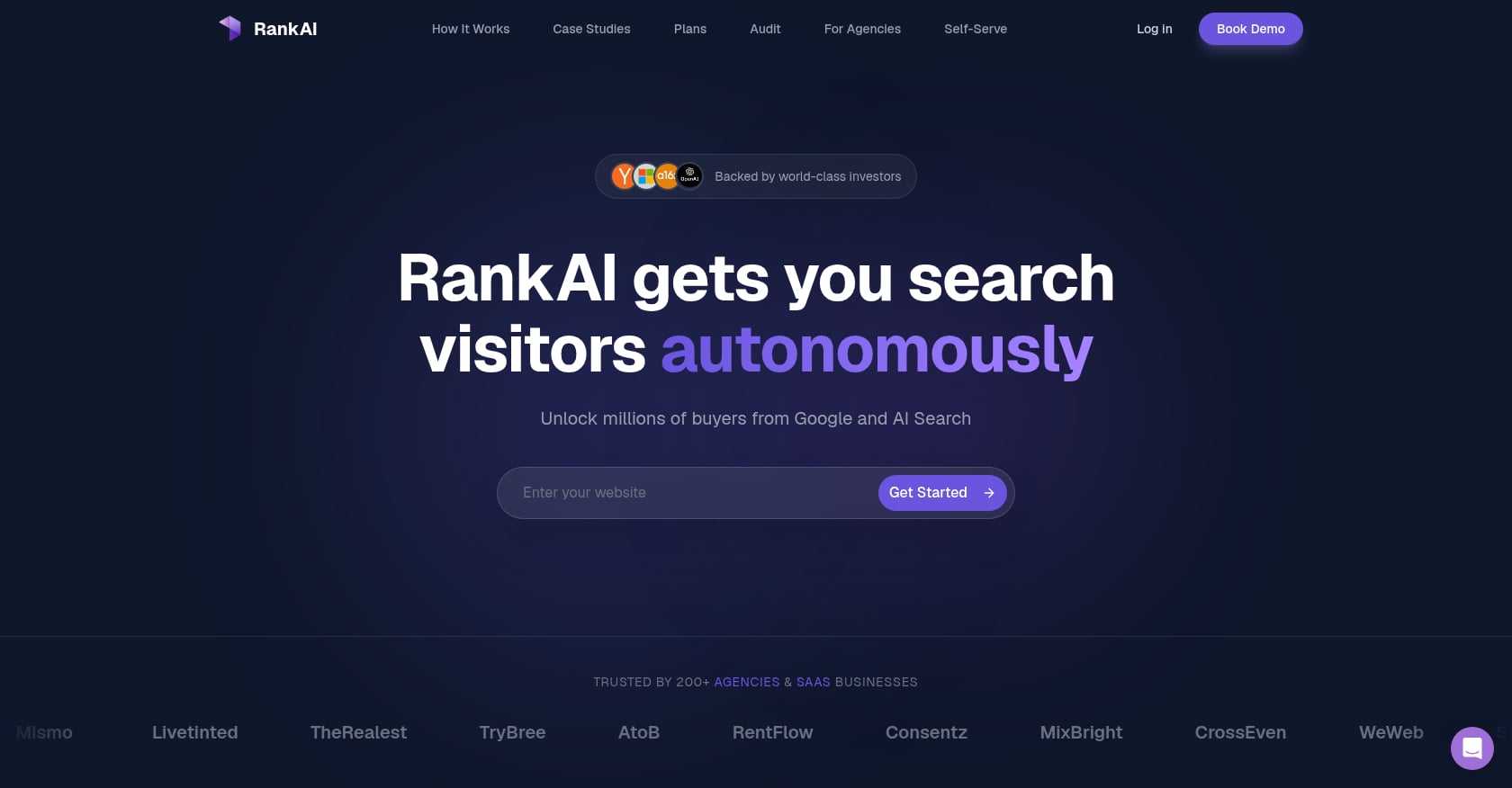
Best for: SMBs, startups, ecommerce stores, and local businesses that want competitor insights turned into published pages and technical fixes.
Pricing: $499/month (Early Bird). Includes 20 pages per month, continuous rewrites until pages rank, technical SEO fixes, human-expert-vetted keyword and topic selection. Cancel anytime.
What it does:
- Human-vetted keyword and topic selection informed by competitor gap analysis
- 20+ pages per month with metadata, internal links, visuals, and CTAs
- Technical SEO fixes included in the monthly retainer
- Continuous performance monitoring and rewrites for underperforming pages
- Weekly reporting focused on rankings, traffic impact, and rewrite status
- Compatible with WordPress, Shopify, Squarespace, Webflow, and Wix
- YC-backed (S23) with a hybrid model: AI content engines plus human SEO strategists and editors
Where it falls short:
- Not a self-serve dashboard for teams that want to run all analysis internally
- Off-page link building is not highlighted as a core service, so highly competitive niches may need complementary authority-building
- Case examples use anonymized GSC screenshots rather than named public case studies
Choose it if your bottleneck is publishing, fixing, and rewriting, not finding more gaps. Most SMBs do not fail because they lack competitor data. They fail because nobody turns that data into consistent SEO output month after month.
Skip it if you have an experienced SEO team and prefer running tools and analysis yourself.
Explore done-for-you SEO to see how this execution model works in practice.
2. Semrush
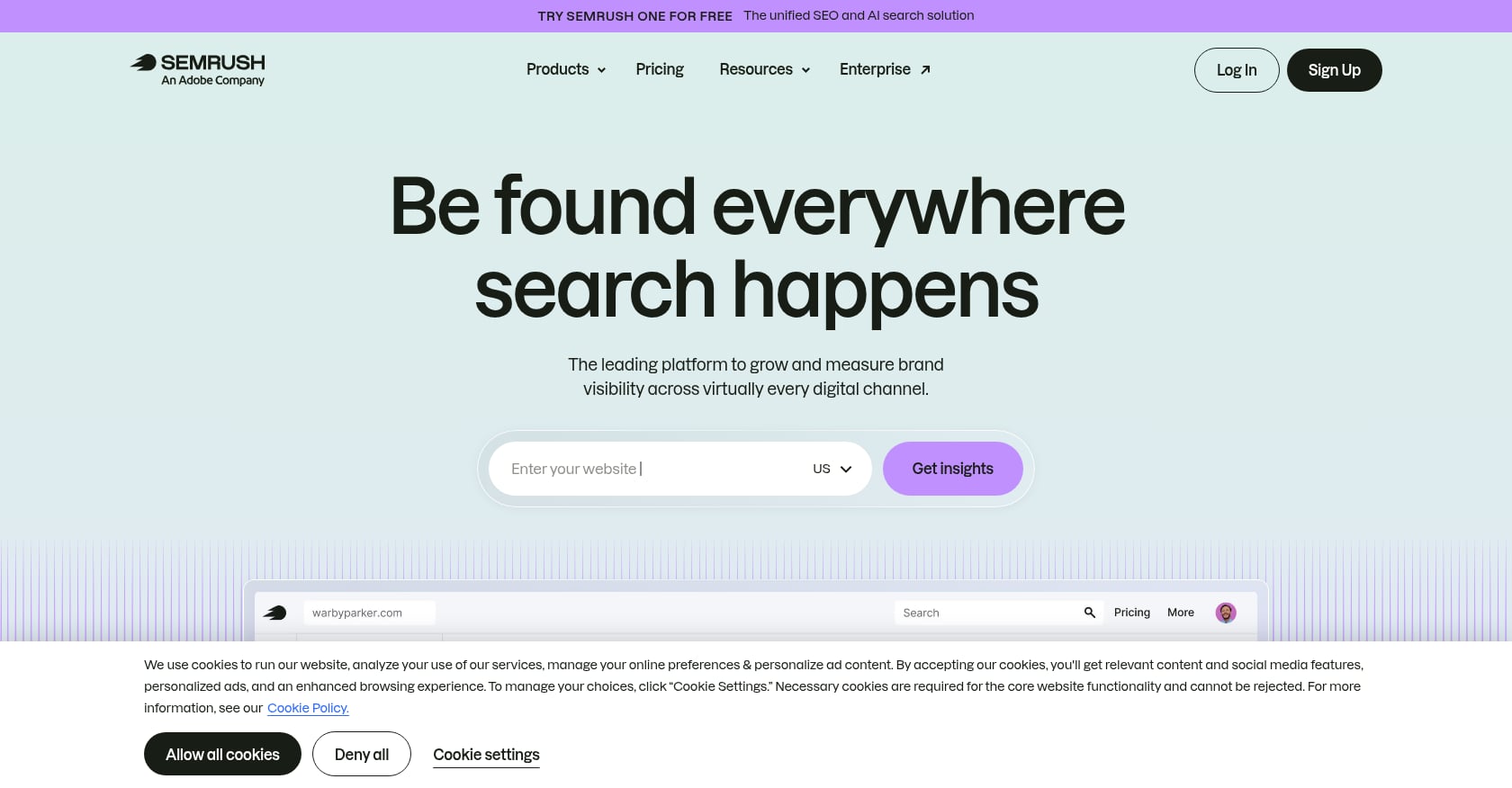
Best for: In-house teams and agencies that want one broad platform for SEO, PPC, content marketing, and competitive intelligence.
Pricing: Pro at $139.95/month, Guru at $249.95/month, Business at $499.95/month. Semrush One starts at $199/month with AI visibility tracking bundled. The AI Visibility Toolkit can be added separately at $99/month per domain, with extra costs for additional domains, users, and prompt tracking (TechRadar).
What it does:
- Domain overview and organic competitor discovery
- Keyword Gap and Backlink Gap tools
- Site audit and rank tracking
- PPC and ad intelligence
- Content marketing toolkit on higher tiers
- AI visibility tracking through Semrush One
Where it falls short:
- Expensive for freelancers and SMBs, especially once add-ons pile up
- Feature breadth can overwhelm new users
- Tool exports still require a strategist, writer, and developer to act on them
User sentiment: G2 reviewers consistently praise Semrush for comprehensive insights and consolidating multiple SEO tasks in one place. The recurring downside is cost, with G2 tags including “Expensive,” “High Pricing,” and “Learning Curve” (G2).
Choose it if you manage multiple clients or need SEO plus paid search intelligence in one dashboard. Skip it if you are a small team without someone who will convert reports into action.
3. Ahrefs
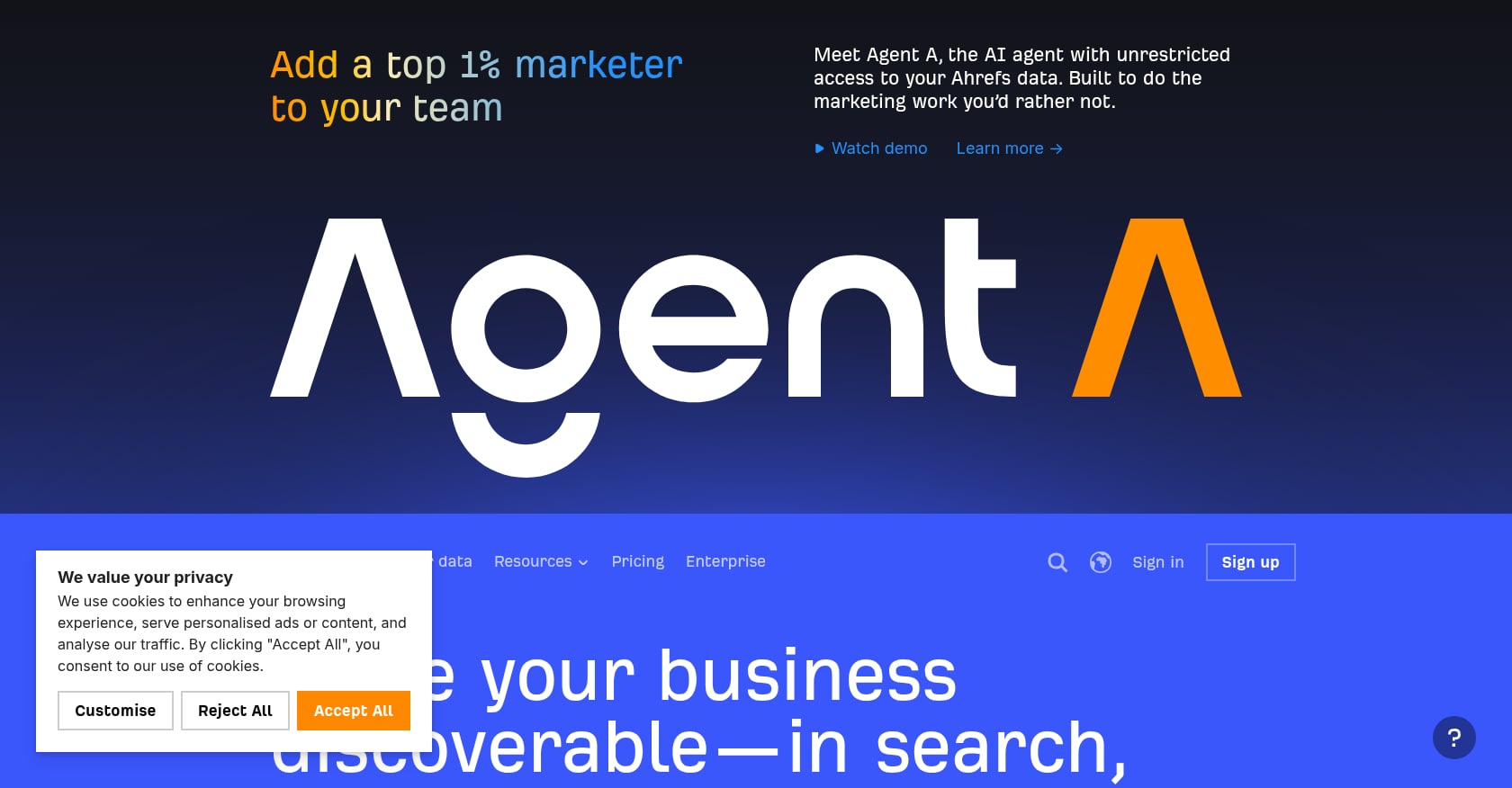
Best for: Link builders, content-led SEO teams, and practitioners who care deeply about competitor backlink sources and content gaps.
Pricing: Free tier available. Starter at $29/month, Lite at $129/month, Standard at $249/month, Advanced at $499/month, Enterprise at $1,499/month.
What it does:
- Site Explorer for competitor pages and backlinks
- Content Gap analysis across multiple domains
- Top Pages report showing competitors’ best-performing URLs
- Keyword Explorer with SERP history
- Rank Tracker and Site Audit
Where it falls short:
- Price can be hard to justify for casual or occasional users
- Not as broad as Semrush for PPC, social, or marketing operations
- Like every tool on this list, it identifies opportunities but does not create the content
User sentiment: Capterra lists Ahrefs at 4.7/5 from 579 reviews, describing it as a global SEO toolset for competitive research, link building, content marketing, audits, and rank tracking (Capterra).
Choose it if the main question is “Why are competitors stronger than us in links and content authority?” Skip it if you need PPC intelligence or a broader marketing platform.
Understanding keyword intent is critical when reviewing content gap data from any tool, since volume alone does not tell you whether a gap is worth pursuing.
4. SE Ranking
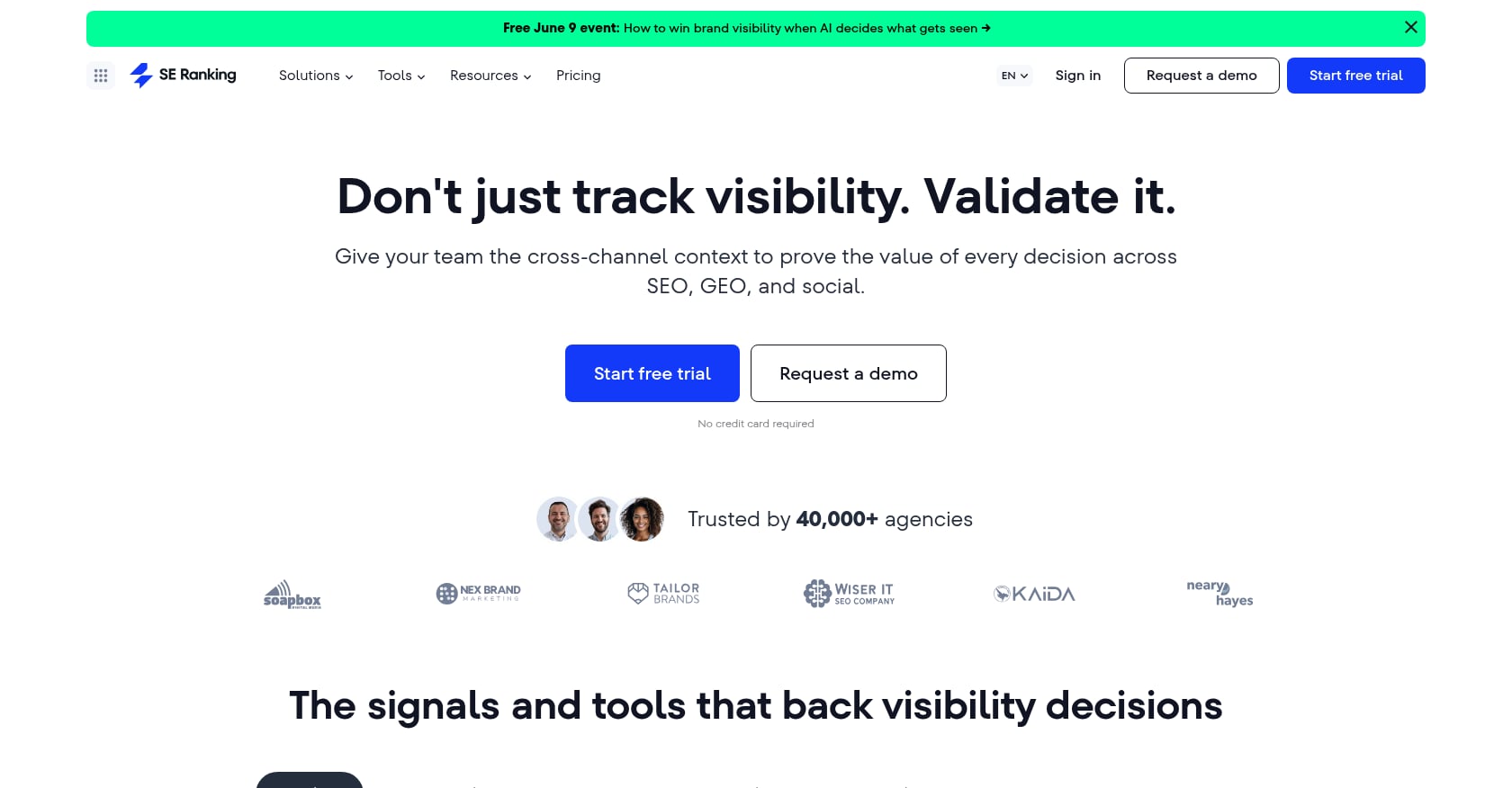
Best for: Agencies and freelancers wanting a value-oriented all-in-one SEO suite without premium-tier pricing.
Pricing: Core at $129/month ($103.20/month billed annually), Growth at $279/month ($223.20/month annually), Enterprise custom. Optional add-ons include Agency Pack from +$69/month, AI Search from +$71.20/month, and API from +$149/month (TechRadar).
What it does:
- Rank tracking and competitive research
- Website audit and keyword research
- Backlink analysis
- AI search visibility tracking (add-on)
- Integrations with Google Analytics, Search Console, Looker Studio, and Matomo
Where it falls short:
- Backlink database is smaller than Ahrefs
- API access only available on the Growth tier
- Key agency features may require paid add-ons
User sentiment: TechRadar’s 2026 review says SE Ranking “punches well above its price point” and highlights in-depth competitor analysis alongside newer AI search visibility tools. The 14-day free trial lowers the barrier.
Choose it if Semrush and Ahrefs feel too expensive but you still want a proper SEO suite with rank tracking and competitor research. Skip it if backlink depth is your primary need.
5. SpyFu
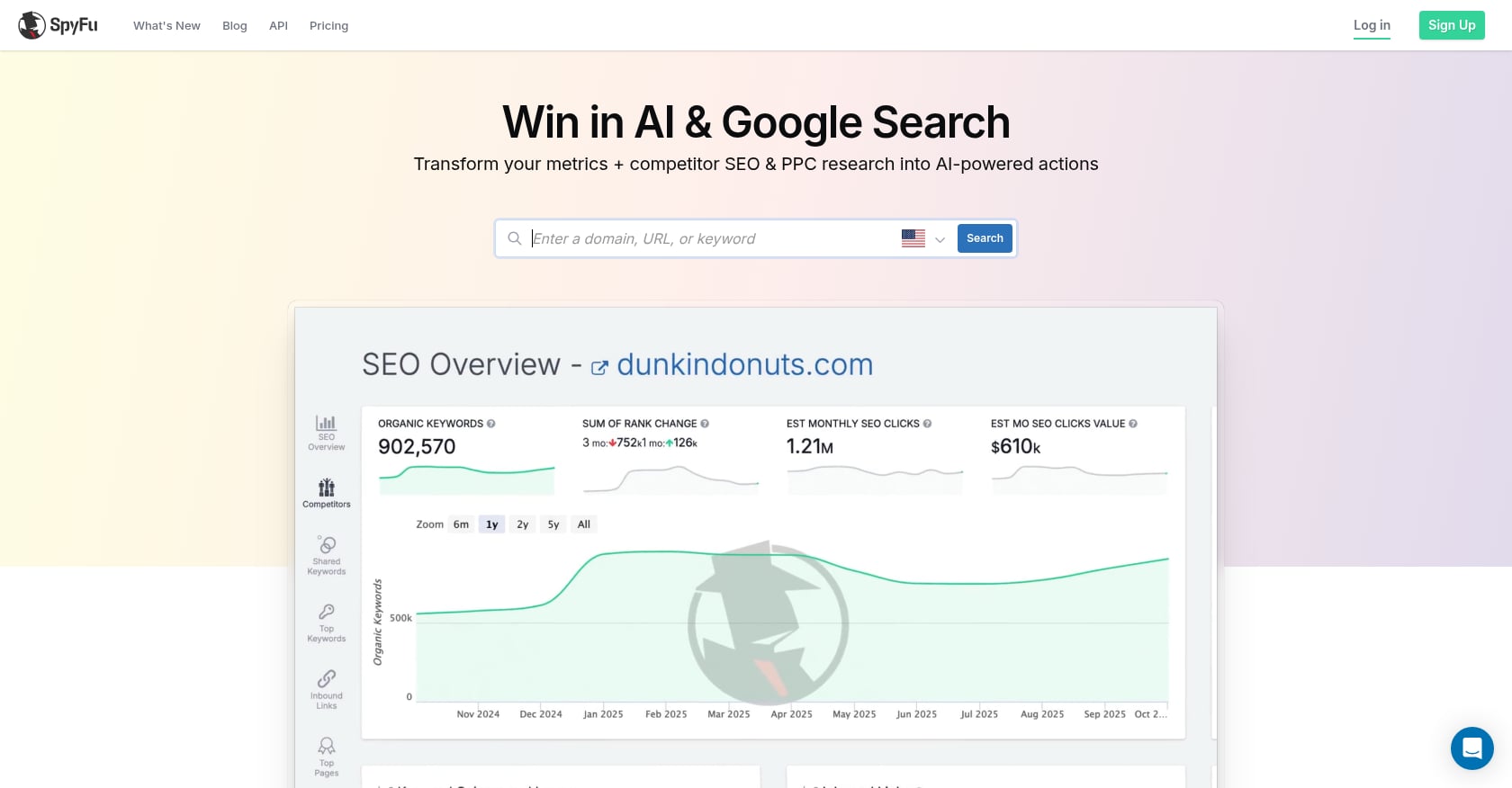
Best for: Bootstrapped founders, freelancers, and small teams that want quick competitor keyword and PPC intelligence on a budget.
Pricing: Basic at $39/month, Pro + AI at $119/month, Team/Agency at $249/month. No free trial, but there is a 30-day money-back guarantee (G2).
What it does:
- Competitor SEO and PPC keywords with full history
- Google Ads and organic ranking history
- Unlimited keywords and domain results on Basic
- Unlimited data exports
- Weekly rank tracking up to 5,000 keywords on Basic
- Pro + AI adds RivalFlow AI, branded reporting, and API access
Where it falls short:
- Less comprehensive than Semrush or Ahrefs for broad SEO operations
- Better for discovery and spying than end-to-end SEO management
- Lighter on technical SEO audits and site crawling
User sentiment: G2 lists SpyFu at 4.6/5 from 518 reviews, with small businesses praising the price-to-depth ratio for competitive intelligence.
Choose it if you want budget-friendly competitor keyword data before committing to a premium suite. Skip it if you need full audits, backlink analysis, and enterprise reporting.
6. Similarweb
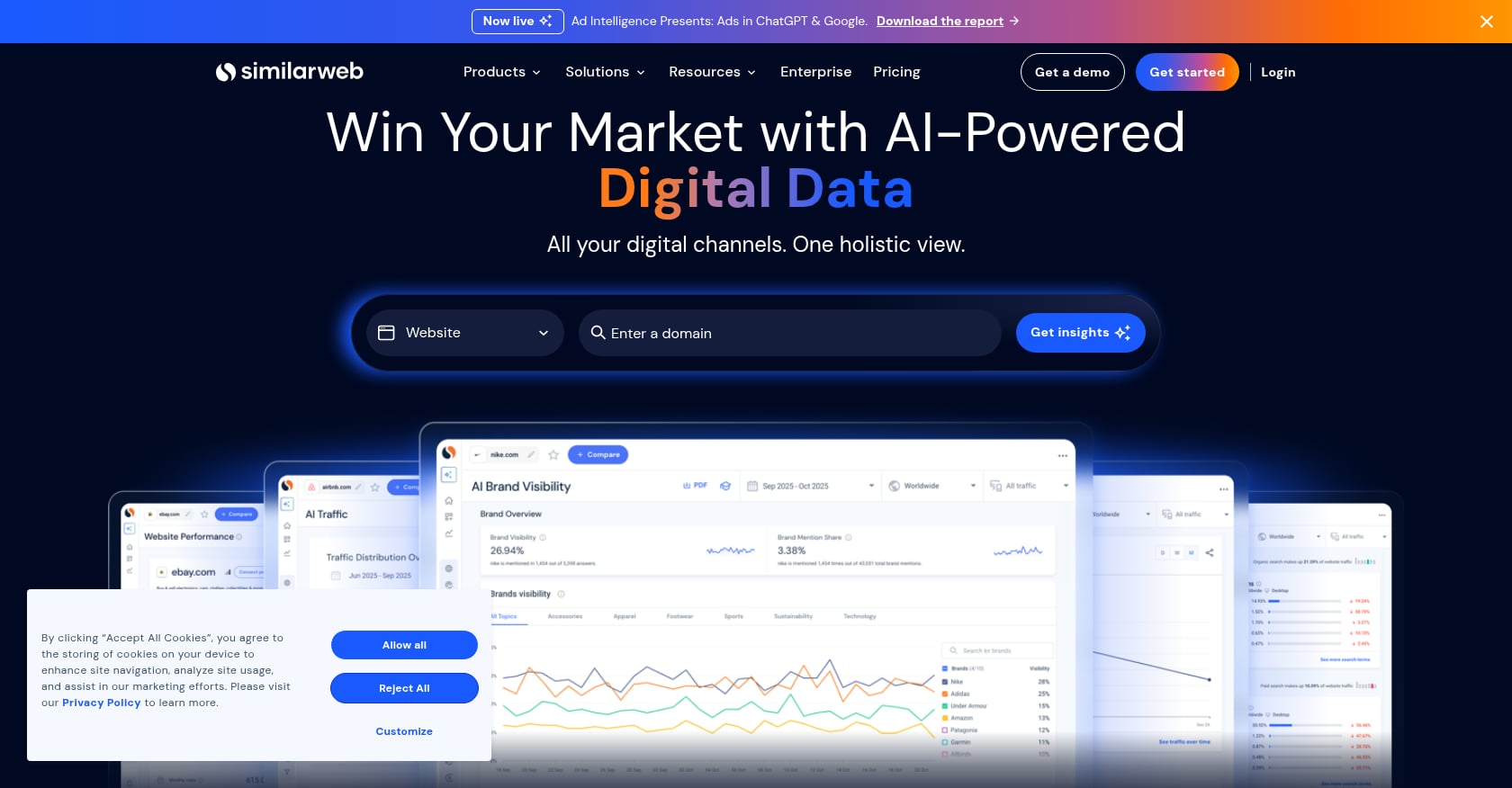
Best for: Market research teams, growth marketers, and anyone who needs to understand competitor traffic mix across channels.
Pricing: AEO Intelligence at $99/month, Competitive Intelligence at $125/month, Competitive Intel + SEO + AEO at $335/month, full suite with Ads at $540/month (G2).
What it does:
- Traffic and engagement estimates by competitor
- Customer demographics and audience data
- Marketing channel overview (organic, paid, referral, social, direct)
- Competitor alerts
- Keyword research and rank tracking on higher tiers
- AI brand visibility, sentiment, and citation analysis on AEO tiers
Where it falls short:
- True SEO features sit in higher tiers, not the base plan
- Traffic estimates are directional, not first-party data
- Expensive if you only need keyword gaps
User sentiment: G2 lists Similarweb at 4.4/5 from 1,167 reviews. Mid-market and enterprise teams praise it broadly, but small business owners frequently flag pricing as a barrier.
Choose it if the question is bigger than SEO: “Where do competitors get their demand?” Skip it if you primarily need keyword and backlink gap data.
7. Screaming Frog SEO Spider
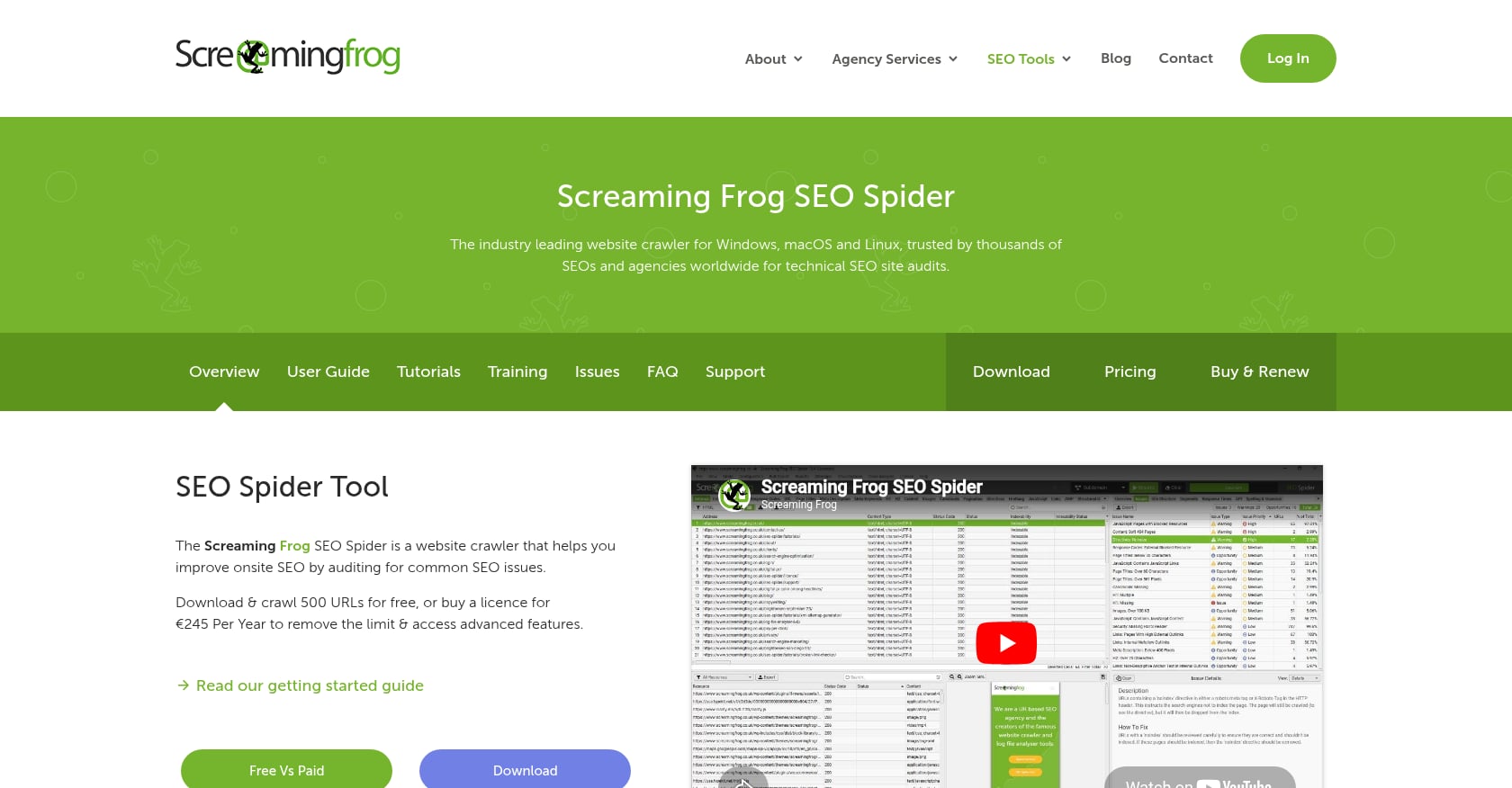
Best for: Technical SEOs and agencies that need to crawl and compare competitor site architecture, internal linking, and on-page structure.
Pricing: Free tier limited to 500 URLs per crawl. Paid license at $279/user/year for 1 to 4 licenses, with volume discounts at higher quantities.
What it does:
- Crawl competitor sites for titles, meta descriptions, headings, canonicals, status codes, redirects, internal links, crawl depth, and structured data
- Integration with Google Analytics, Search Console, and PageSpeed Insights
- AI API integration on paid licenses (requires separate API key)
Where it falls short:
- Not a keyword research tool, rank tracker, or backlink database
- More technical than beginner-friendly dashboard tools
- Does not reveal which keywords competitors rank for
User sentiment: Capterra lists Screaming Frog at 4.9/5 from 133 reviews (Capterra), making it one of the highest-rated SEO tools on the platform.
Choose it if you need to understand how competitor sites are built, crawled, and structured. Skip it if you want keyword gap data or broader competitive intelligence. For a deeper look at technical analysis, see this guide on performing a technical SEO audit.
8. Moz Pro
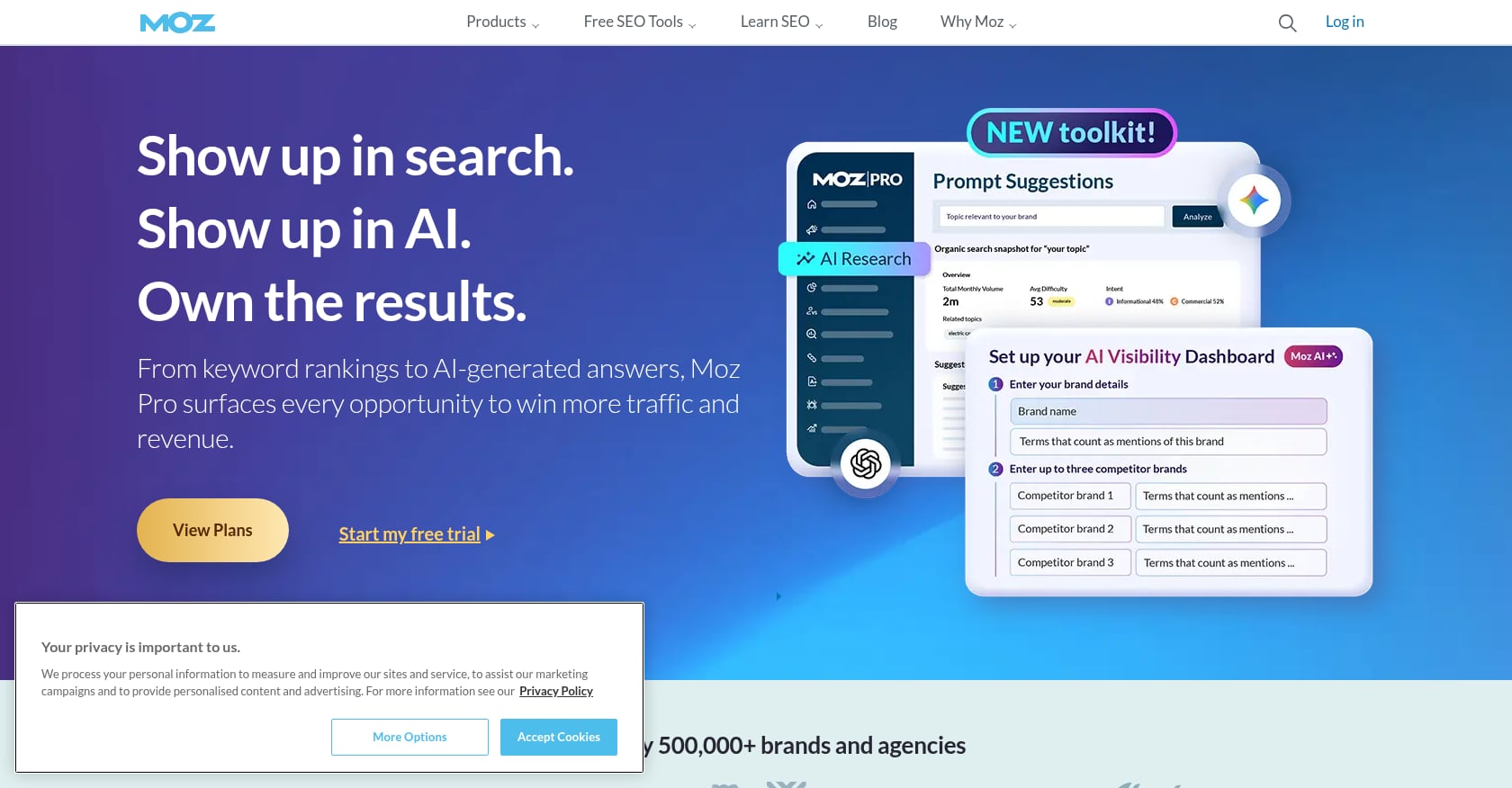
Best for: Beginners and small teams that want accessible SEO competitor research without the complexity of larger suites.
Pricing: Free trial available. Starter at $49/month, Standard at $99/month, Medium at $179/month, Large at $299/month. Annual billing drops Starter to $39/month (G2).
What it does:
- Competitive research and domain overview
- Keyword rankings and backlink queries
- Site crawls and on-page grader
- MozBar Premium browser extension
- Domain Authority and Page Authority metrics
Where it falls short:
- Less powerful for advanced competitor research than Ahrefs or Semrush
- Lower tiers impose strict caps that may force upgrades
- Data depth and freshness can feel limited to advanced practitioners
User sentiment: G2 lists Moz Pro at 4.3/5 from 608 reviews. One small-business reviewer praised page-by-page scoring and prioritized errors but noted Moz feels limited compared with Ahrefs.
Choose it if you are new to SEO competitor analysis and want a gentler learning curve. Skip it if you need the depth and data freshness of premium tools.
9. Surfer
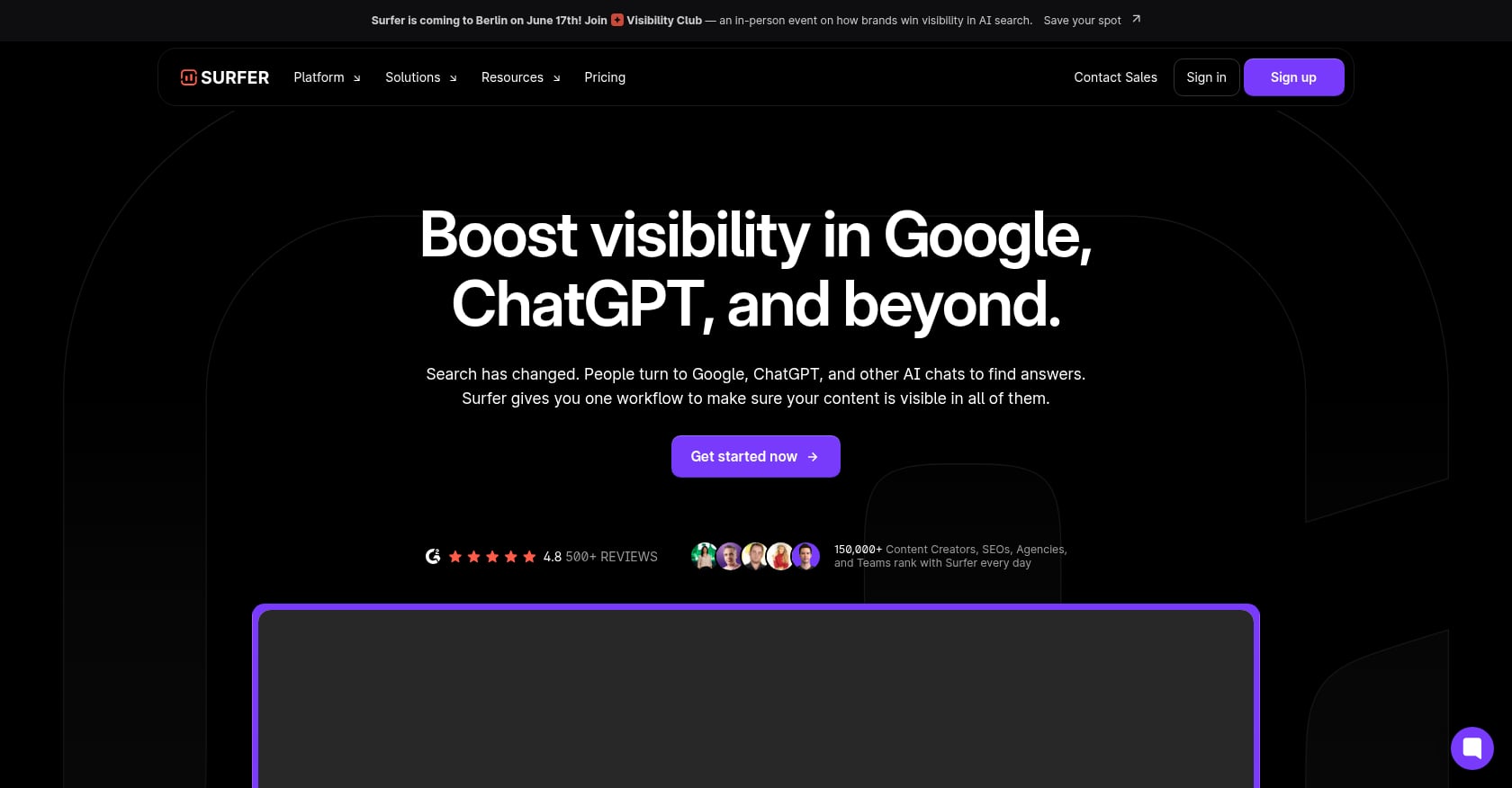
Best for: Content teams and writers who need to optimize pages against current top-ranking SERP competitors.
Pricing: Plans start around $79/month when billed annually for the Essential tier.
What it does:
- Content Editor with SERP-based guidelines
- NLP-driven on-page optimization recommendations
- Auto-optimize features for existing pages
- Keyword, structure, and content length recommendations
- Useful for refreshing underperforming pages against current competitors
Where it falls short:
- Not a full competitor research suite (no keyword gaps, backlinks, traffic, or technical analysis)
- Can push writers toward “score chasing” instead of serving readers
- Credit limits and pricing complaints are common
User sentiment: G2 reviewers praise Surfer’s Content Editor for reducing guesswork. Recurring complaints include pricing, credit issues, and the risk that competitive niches still require manual SEO judgment beyond tool suggestions (G2).
Choose it if you have already identified a target keyword and need to optimize the page. Skip it if you have not yet done the research to know which gaps to pursue.
What Is SEO Competitor Analysis, Really?
SEO competitor analysis is the process of identifying which websites and pages compete for your target search visibility, analyzing why they rank or get cited, and using those insights to improve your own content, links, technical SEO, and publishing cadence.
A critical distinction: your SEO competitors are not always your business competitors. Your SEO competitor is any page taking the search visibility you want. That could be a marketplace listing, a publisher article, a Reddit thread, a YouTube video, or an AI-cited source. A SaaS company might find that its real SEO competitors are G2, Capterra, and a few content publishers rather than direct product rivals.
This is why starting with manual SERP checks matters. Search your priority keywords and look at what actually shows up. Competitor analysis in SEO should also consider multiple layers:
- Business competitors vs. SERP competitors. Who you compete with for customers is not always who you compete with for rankings.
- Content competitors vs. backlink competitors. A site might outrank you because of better content, or because of more referring domains. Sometimes both.
- AI citation competitors. LinkedIn practitioners writing about competitor analysis in 2026 increasingly note that a brand can rank modestly in Google but still appear frequently in AI-generated responses from ChatGPT, Perplexity, or Google AI Overviews. This creates reach that traditional SEO metrics do not capture.
What to Analyze in a Competitor SEO Audit
A thorough competitor analysis covers seven areas. Skipping any of them leaves blind spots in your strategy.
1. Keyword gaps. Missing keywords, weak keywords, and near-striking-distance terms where small improvements could move the needle. Not all gaps are equal, though. Classify them by business value: core commercial terms, adjacent commercial terms, informational authority terms, and competitor-branded terms you should skip or handle carefully.
2. Content gaps. Topics, page types, formats, freshness, depth, examples, and original data your competitors have that you do not. For a structured approach, see this content gap analysis guide. The best competitor content analysis goes beyond keywords to examine the shape of each page: is it a comparison, a how-to, a product page, a glossary entry?
3. Backlink gaps. Referring domains, linkable assets, directories, podcast mentions, PR placements, partnerships, and resource pages pointing to competitors but not to you.
4. Technical gaps. Site architecture, crawl depth, indexability, canonicals, internal links, duplicate content, schema markup, and page speed. These structural advantages are invisible in keyword reports.
5. SERP feature gaps. Featured snippets, People Also Ask, local packs, shopping results, images, videos, forum inclusions, and AI Overviews. A page can rank in the top three and still get minimal clicks if SERP features absorb most of the attention.
6. AI visibility gaps. Which brands get mentioned in AI-generated responses? Which third-party sources do AI systems cite? Tools offering AI visibility tracking now include Semrush One, SE Ranking’s AI Search add-on, and Similarweb’s AEO tiers.
7. Conversion gaps. CTAs, comparison pages, alternatives pages, pricing pages, proof elements, and trust signals. A competitor might rank for the same keyword and convert at a higher rate because their page is better designed for the buyer.
Google’s helpful content guidance asks whether content provides original information, substantial descriptions, and first-hand expertise. Your competitor analysis should assess these qualities, not just keyword presence.
A 6-Step SEO Competitor Analysis Workflow
This framework turns data into action. Most tools help with steps 1 through 3. Execution happens in steps 4 through 6.
Step 1: Discover. Find your actual search competitors. Search your priority keywords manually. Pull organic competitors from a tool. Check directories, marketplaces, Reddit, YouTube, and review pages. Distinguish between business competitors and SERP competitors.
Step 2: Decompose. Break competitors into assets. Look at their top pages, keyword clusters, backlink sources, content formats, internal link hubs, technical templates, and SERP features they own. Keyword clustering is particularly useful here, because competitors often win entire topic clusters rather than isolated keywords.
Step 3: Diagnose. Explain why they win. Better intent match? Stronger topical coverage? More referring domains? Better internal linking? Better page type for the SERP? Faster update cadence? The “why” matters more than the “what.”
Step 4: Decide. Prioritize gaps using a scoring model:
SEO opportunity score = Business fit x Intent value x SERP openness x Competitor weakness x Execution feasibility
Score each opportunity on these five dimensions. A keyword with 50,000 monthly searches is worthless if the SERP is dominated by ads, shopping carousels, and AI Overviews that leave no room for organic clicks. Search Engine Land’s workflow warns that raw keyword gap lists are not strategy, partly because SERP features can absorb clicks even when a page ranks well (Search Engine Land).
Step 5: Deploy. Turn analysis into execution. Create new pages. Rewrite underperforming ones. Improve titles and meta descriptions. Add internal links. Fix technical blockers. Build comparison and alternatives pages. Add FAQs and schema where appropriate.
Step 6: Iterate. Re-check rankings and clicks. Compare query impressions vs. CTR. Update weak pages. Consolidate cannibalized pages. Expand winning clusters. Prune content that does not move. For more on knowing what is working, see this guide on measuring your SEO results.
Common Mistakes in SEO Competitor Analysis
1. Treating business competitors as SEO competitors. The sites ranking for your target keywords may include publishers, directories, and forums, not just rival companies.
2. Exporting keyword gaps without checking intent. A keyword with 10,000 monthly searches is worthless if the intent does not match what you sell.
3. Chasing volume instead of business fit. High-volume informational queries rarely convert directly. Commercial and transactional terms usually matter more for revenue.
4. Ignoring SERP features and AI Overviews. Ranking third means less when ads, shopping results, videos, and AI summaries push organic results below the fold.
5. Copying competitor content instead of finding the better angle. Google rewards original, helpful content. Slight rewrites of what already ranks will not cut it.
6. Buying a premium tool with no execution capacity. Practitioners on Reddit call this out repeatedly. One commenter’s simple workflow was: pick 5 to 10 competitors, track money keywords plus top-of-funnel questions, write comparison and alternatives pages, review monthly, and prune what is not moving. Simple, but it requires someone doing the work.
7. Forgetting to rewrite and update. Competitor analysis is not a one-time project. The SERP changes. Competitors update their pages. Your analysis should trigger ongoing rewrites and improvements, not just a burst of initial publishing.
Do You Need a Tool or a Done-for-You Service?
This is the question most comparison articles ignore. The tool subscription is not the SEO budget. The real budget is subscription plus strategist plus writer plus editor plus technical implementation plus reporting time.
Choose a tool if you have an SEO strategist, a writer or editor, a developer or technical SEO specialist, and monthly bandwidth to execute consistently.
Choose a done-for-you service if you need keyword selection, content production, technical fixes, rewrites, and reporting handled for you. At $499/month with 20 pages, continuous rewrites, and cancel-anytime terms, Rankai packages the execution that most SMBs lack.
Choose a hybrid approach if you have strategy in-house but need outsourced publishing velocity.
Reddit practitioners discussing affordable SEO setups mention that free stacks (Google Search Console, Screaming Frog’s free tier, manual SERP reviews) can get early-stage teams started. But the bigger bottleneck is always execution, not data access.
See what to expect from a flat monthly retainer if you want execution handled for you.
Conclusion
If you have SEO operators on your team, choose the tool that matches your bottleneck. Semrush for broad research. Ahrefs for backlinks. SE Ranking for value. SpyFu for budget keyword and PPC spying. Similarweb for traffic intelligence. Screaming Frog for technical analysis. Moz Pro for beginner workflows. Surfer for page-level content optimization.
If you are an SMB, startup, ecommerce store, or local business that needs SEO competitor analysis turned into shipped work every month, start with Rankai. Competitor analysis only matters when it becomes execution.
Frequently Asked Questions
What is SEO competitor analysis?
SEO competitor analysis is the process of identifying which websites compete for your target search visibility, analyzing why they rank (content depth, backlinks, technical structure, SERP features, AI citations), and using those insights to prioritize your own content creation, technical fixes, internal links, and page updates.
How often should I run a competitor analysis?
A full analysis should happen quarterly. Lighter checks, such as monitoring keyword positions, reviewing SERP changes, and scanning competitor new pages, should happen monthly. In fast-moving niches, weekly spot checks make sense.
Which tool is best for SEO competitor analysis on a budget?
SpyFu at $39/month offers unlimited keyword and domain results for competitor spying. For free options, Google Search Console covers your own performance, and Screaming Frog’s free tier lets you crawl up to 500 URLs on any competitor site.
Can I do competitor analysis without paying for a tool?
Yes, but it is slower. You can manually search priority keywords, review competitor pages in the SERPs, use free browser extensions like MozBar, and analyze your own data in Google Search Console. Paid tools automate data collection and speed up pattern recognition.
What is the difference between a keyword gap and a content gap?
A keyword gap identifies specific search terms your competitors rank for that you do not. A content gap is broader: it includes missing topics, page types, formats, and depth that competitors cover and you do not.
Do I need to check AI search visibility in my competitor analysis?
Increasingly, yes. Tools like Semrush One, SE Ranking’s AI Search add-on, and Similarweb’s AEO tiers now track which brands and pages get cited in AI-generated responses. A competitor can rank modestly in traditional search but appear frequently in ChatGPT, Perplexity, or Google AI Overviews.
Should I hire an agency or just buy a tool?
It depends on your team. If you have someone who can analyze data, create content, fix technical issues, and rewrite underperforming pages consistently, a tool is sufficient. If not, a done-for-you service handles the full loop from analysis through execution and iteration.
What is the biggest mistake people make with competitor analysis tools?
Buying a tool and never acting on the data. The value comes from the decisions and execution that follow, not from the dashboard itself.