
Software as a Service (SaaS) is one of the most competitive industries online. With thousands of solutions competing for attention, organic search is not just a marketing channel, it is a critical growth engine. But how do you move from zero to thousands of monthly visitors and qualified leads? The answer often lies in deconstructing the success of others. By examining a detailed SaaS SEO case study, you can uncover repeatable frameworks and proven tactics that drive exponential growth. This article breaks down the common patterns, actionable steps, and key metrics found in the most successful campaigns, providing a blueprint you can adapt for your own business.
What Is a SaaS SEO Case Study?
A SaaS SEO case study is more than just a graph showing an upward traffic trend. It is a comprehensive narrative that details a company’s journey to achieving significant organic growth. A truly valuable case study outlines the initial problem, the specific strategies implemented, the execution process, and the measurable business outcomes. It should connect SEO activities like keyword targeting and content creation directly to results like increased monthly recurring revenue (MRR), trial signups, and a lower customer acquisition cost (CAC). Think of it as a playbook that reveals not just what worked, but why it worked.
How Can SaaS SEO Case Studies Help You?
Studying a well documented SaaS SEO case study offers several powerful advantages for founders, marketers, and SEO professionals.
- Discover Proven Strategies: You get a firsthand look at tactics that have successfully driven growth for other SaaS companies, from building topical authority to executing programmatic SEO.
- Set Realistic Benchmarks: Case studies provide real world timelines and results, helping you set achievable goals for your own campaigns. For example, seeing a company reach 10,000 monthly visitors in nine months gives you a tangible benchmark.
- Justify SEO Investment: Concrete data on traffic, lead generation, and ROI from a relevant SaaS SEO case study can help you make a compelling argument for securing budget and resources.
- Avoid Common Mistakes: By learning from the challenges others faced and overcame, you can sidestep common pitfalls like targeting keywords with the wrong intent or neglecting technical SEO.
Winning Patterns Seen Across SaaS SEO Case Studies
When you analyze enough SaaS growth stories, clear patterns emerge. The most successful companies do not rely on secret hacks. They consistently execute on fundamental principles at a high level.
High Content Velocity
A recurring theme is the sheer volume of high quality content. Companies that publish consistently, often multiple times per week, build topical authority much faster. HubSpot research shows that compounding blog posts, which are posts that see their traffic grow over time, make up 10% of all blog posts but generate 38% of overall traffic. Services that produce content at scale, like Rankai’s program of 20+ pages per month, are designed to leverage this compounding effect.
Bottom of Funnel Focus
Many winning strategies start by targeting “money” keywords. These are terms with high purchase intent, often called transactional keywords, like “best crm for small business” or “zapier alternative”. While these are competitive, they convert at a much higher rate. A successful SaaS SEO case study often shows an early focus on these product led topics before expanding to broader, top of funnel content.
Technical Soundness
You can publish amazing content, but if Google cannot crawl and index your site properly, it will not rank. Successful SEO campaigns always include a technical component (ideally validated by a periodic technical SEO audit). This means ensuring fast page speed, a clean site structure, proper schema markup, and no crawl errors. A platform that bundles technical fixes with content creation prevents these issues from becoming a bottleneck.
Iterative Improvement
Content is not a “set it and forget it” asset. The best SEO strategies involve continuous monitoring and optimization. Pages that fail to rank within a certain timeframe are rewritten and improved. This “rewrite until it ranks” philosophy is a core differentiator, ensuring that every piece of content is working towards its full potential.
Implementation Checklist: Turn Insights Into an Action Plan
Inspired by a great SaaS SEO case study? Here is how to translate that inspiration into action.
- Conduct a Content and Technical Audit: Before building something new, assess your current state. Use tools like Google Search Console and Ahrefs to identify underperforming content, technical issues, and existing keyword rankings.
- Perform Deep Keyword and Competitor Research: Identify the keywords your customers are searching for at every stage of their journey and organize them into keyword clusters. Analyze what your competitors are ranking for and find gaps you can exploit. This strategic work is crucial for ROI.
- Build a Content Roadmap: Plan your content for at least a quarter using content mapping. Prioritize topics based on business relevance and search opportunity. A good roadmap balances bottom of funnel articles with broader, authority building pieces.
- Establish a Publishing Cadence: Consistency is key. Whether it is two articles a month or twenty, commit to a schedule and stick to it. If your team lacks the bandwidth, consider a done for you service to maintain velocity. You can explore a powerful and affordable option with Rankai.
- Monitor, Iterate, and Rewrite: Track your keyword rankings and traffic closely. After a few weeks, identify pages that are not performing. Analyze why (e.g., wrong intent, not enough depth) and completely rewrite them. This iterative loop is what separates good SEO from great SEO.
Top 10 SaaS SEO Case Study Examples
While mastering technical theory is essential, observing these strategies in practice provides the concrete evidence needed to refine your own organic growth roadmap. This curated selection of case studies showcases how diverse SaaS companies leveraged programmatic SEO, content refreshes, and competitive comparisons to drive significant traffic increases. By analyzing these real-world examples, you can identify the high-impact tactics most applicable to your specific product category and scaling goals.
1. Case Study 4: How EventsAir Scaled SEO for Global Growth and Achieved 182% More Page 1 Keywords
EventsAir, a comprehensive platform for enterprise event planners, was expanding across North America, APAC, and EMEA, but internal bandwidth and slow publishing throttled growth. The mandate was clear: scale organic visibility globally and capture high-intent traffic that fuels pipeline in new regions without diluting quality.
The play: product-led comparison pages + international technical SEO + localized intent, not just translation.
What they shipped
- Revenue mapping: Prioritized bottom-funnel and “alternative” keywords to intercept ready-to-buy searches.
- Product-led scaling: Launched comparison/feature pages at speed to showcase value to regional buyers.
- International tech SEO: Implemented hreflang and regional CDNs to lift performance and discoverability.
- Topical authority: Built functional clusters with contextual internal links into high-converting product pages.
- Localized intent: Adapted content for regional search behavior instead of one-click machine translation.
Impact in numbers
- +182% Page 1 keywords in six months.
- #1 rankings for high-value competitor terms in 30 to 60 days.
- Hit niche industry KPI targets four months early.
Steal this
- Target “alternative” keywords → convert decision-stage buyers.
- Leverage specialized partners → overcome content bandwidth caps.
- Localize infrastructure (hreflang/subfolders) → compound global scale.
2. How Omniful.ai generated 40+ demo bookings in 30 days using programmatic SEO and localized targeting
Omniful.ai, a unified supply chain and logistics platform for EMEA, had just 35 static pages and was battling incumbents like SAP. They needed a fast path from zero to booked demos by owning high-intent regional searches across the Middle East and Africa.
The play: programmatic localization + bottom-funnel focus + early Answer Engine visibility.
What they shipped
- Programmatic localization: Deployed 180+ “Service + Location” pages to win hyperlocal, high-intent queries.
- AI-powered ops: Mapped keywords to Webflow templates to publish at speed without a large team.
- Hub-and-spoke: Linked long-tail pages to core product pillars to distribute authority.
- BOFU prioritization: Targeted terms like “Best ERP for 3PL” to lift demo quality now.
- Answer Engine Optimization: Structured content to surface in ChatGPT and Perplexity.
Impact in numbers
- 40+ qualified demos in 30 days.
- 7% conversion on long-tail programmatic pages.
- 5 demos attributed directly to AI-search queries.
Steal this
- Ship 100+ “Service + City” pages → outrank global brands locally.
- Map AI templates to BOFU pains → accelerate pipeline.
- Add schema for Answer Engines → capture AI-driven demand.
3. Case Study 2: How Checkwriters Achieved #1 Rankings for Competitive Keywords in 2 Months
Checkwriters, a payroll platform serving mid-market HR teams, was outgunned on head terms by giants like ADP. To cut PPC spend and win share quickly, they reoriented around high-intent commercial queries and rebuilt the experience buyers actually want.
The play: concentrate authority on money pages + mirror SERP intent + prove expertise.
What they shipped
- High-intent pivot: Optimized core landers for terms like “Payroll Services,” not just blog traffic.
- Content pruning: Consolidated thin pages into Power Pages to kill cannibalization.
- Strategic linking: Directed authority from blogs into commercial pages with descriptive anchors.
- Intent matching: Added comparison tables and feature blocks aligned to B2B SERP layouts.
- E-E-A-T upgrades: Expert commentary to satisfy YMYL standards for finance/payroll.
Impact in numbers
- #1 for “Payroll Services” and “Payroll Software” in 2 months.
- +113% organic traffic to commercial pages.
- +50% organic demo requests; +42% Top 3 keyword growth.
Steal this
- Enrich product pages with educational depth → beat blog-first rivals.
- Prune zero-traffic pages → concentrate authority.
- Insert early, contextual commercial links → pass equity where it converts.
4. How FlowForma achieved 152% visibility growth by optimizing existing underperforming content
FlowForma, a no-code process automation solution for Microsoft 365, had a solid library but plateaued on page two for key terms. Rather than chase net-new content, they leaned into a performance-led refresh model to unlock “striking distance” gains.
The play: refresh what’s close to winning + realign intent + route links where revenue happens.
What they shipped
- Striking distance sprints: Re-optimized position 4–20 URLs using semantic entities and fresh data.
- Content pruning: Merged thin/cannibalizing posts into master pillars to consolidate equity.
- Intent realignment: Rewrote headers to match ICP Jobs-to-be-Done, not generic definitions.
- Targeted backlinks: Pointed high-DR links at lagging pages to beat entrenched competitors.
- Internal linking: Pushed equity from blogs into conversion-focused product pages.
Impact in numbers
- +152% visibility and +126% clicks in 6 months.
- +52% Top 3 rankings for core commercial terms.
- Higher demo-to-SQL conversion via tighter intent match.
Steal this
- Refresh “striking distance” pages monthly → push into Top 3.
- Prioritize decaying winners over new drafts → reclaim faster.
- Point new links at BOFU pages → tie SEO to revenue.
5. Case Study 1: How WildSparq Achieved #1 Rankings for Alternative Keywords in 30 Days
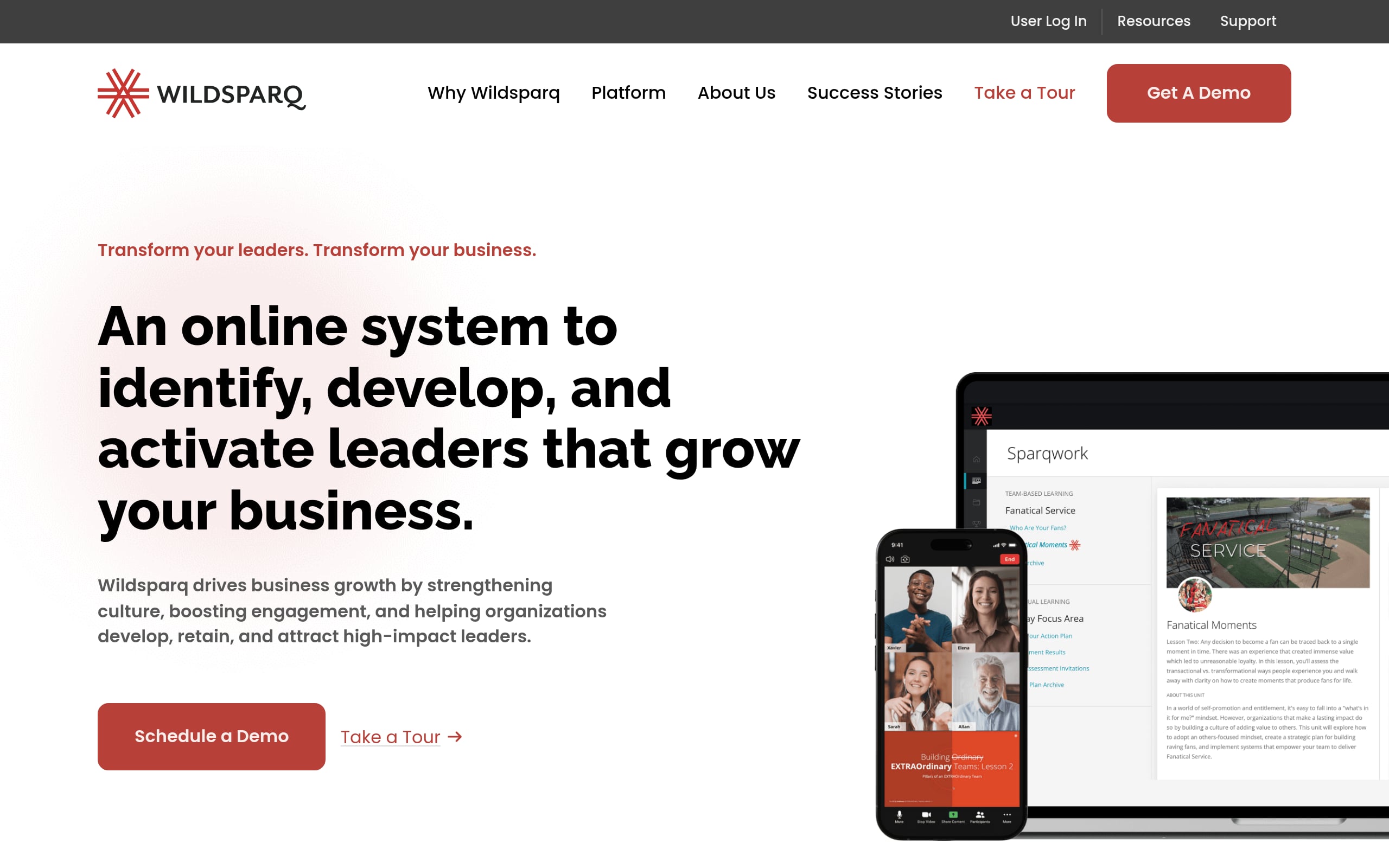
WildSparq, a leadership development platform for HR leaders, was losing broad industry terms to legacy consultancies. By pivoting to decision-stage searches, they met buyers already comparing options, and moved to the front of the line.
The play: dominate “[Competitor] alternatives” + build buyer-first comparisons + force fast indexation.
What they shipped
- Alternative capture: Targeted “[Competitor Name] Alternatives” to intercept switch-ready users.
- Money keyword mapping: Prioritized purchase-stage terms used by HR decision-makers.
- Comparison landers: Highlighted WildSparq’s leader-led model vs. automated competitors.
- Technical acceleration: Audited and force-indexed new BOFU pages within days.
- Link architecture: Rerouted authority from popular blogs into bottom-funnel assets.
Impact in numbers
- #1 for multiple “alternative” keywords in 30 days.
- Noticeable lift in qualified leads comparing to industry leaders.
- Page 1 dominance on critical competitor terms from a zero baseline.
Steal this
- Target “[Competitor] Alternative” terms → catch ready-to-buy traffic.
- Prioritize intent over volume → optimize for demos, not vanity.
- Force-index BOFU pages → compress time-to-rank to ~30 days.
6. Case Study 5: ClickHouse Increased Organic Search Users by 31%
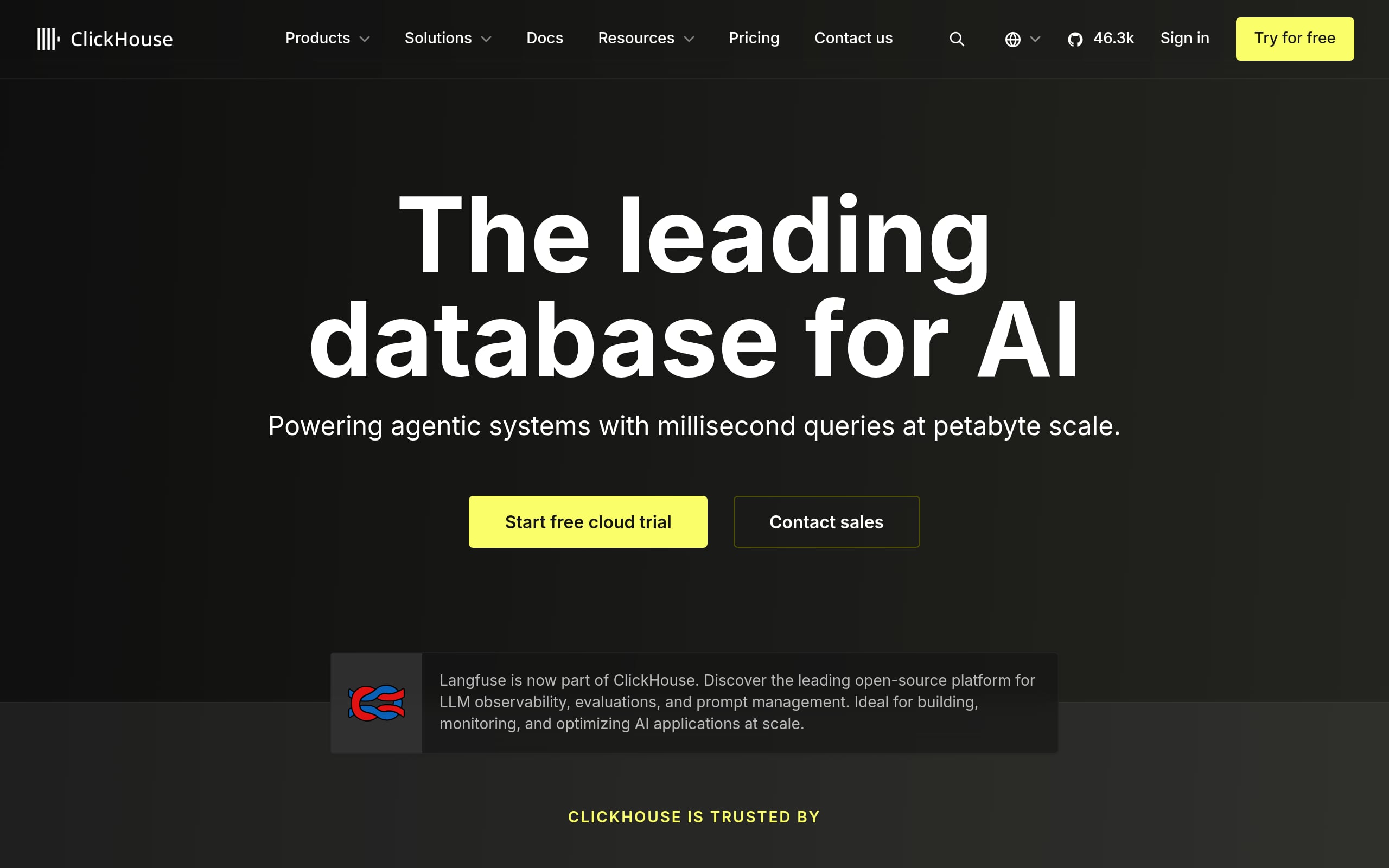
ClickHouse, the real-time analytical database, needed to lower CAC and win developer searches against Snowflake and BigQuery. The strategy married technical credibility with buyer-stage capture to convert research into Cloud sign-ups.
The play: competitor comparisons + flawless performance + authoritative technical content.
What they shipped
- Competitor mapping: Built “vs” and “alternative” pages for Snowflake/BigQuery comparisons.
- CWV tune-up: Optimized Core Web Vitals to reflect the product’s real-time promise.
- Authority guides: Published deep technical whitepapers for OLAP use cases (E-E-A-T).
- Internal linking: Funneled blog authority into bottom-funnel product pages.
- Advanced schema: Added FAQ and SoftwareApplication to expand SERP real estate.
Impact in numbers
- +31% organic users in 6 months.
- Top 3 rankings for high-intent comparison keywords.
- Measurable growth in organic demos and Cloud sign-ups.
Steal this
- Target “Alternative” modifiers → win dissatisfied incumbent users.
- Tune site speed/CWV → earn trust with developers.
- Refresh positions 4–11 → secure quick-win traffic.
7. Case Study 6: How Cerbos Increased Organic Impressions by 48.3% and Ranked for Competitive Keywords
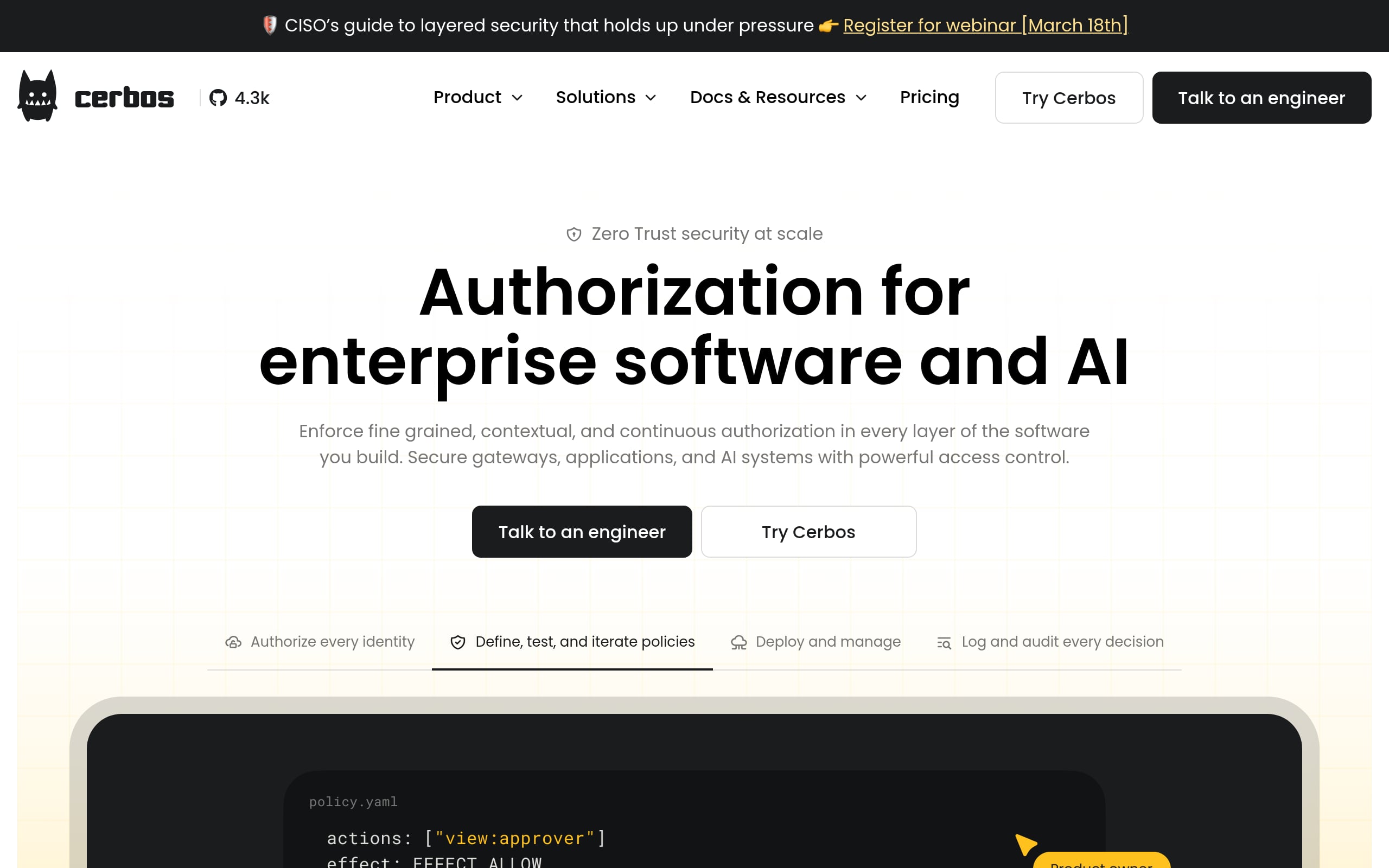
Cerbos, an open-source authorization layer for B2B developers, needed visibility on non-branded technical terms like ABAC to accelerate adoption. The team out-authored incumbents and fixed discoverability to meet developers where they search.
The play: own technical comparisons + rank documentation + specialize BOFU pages for architecture choices.
What they shipped
- Comparison capture: Targeted “ABAC vs. RBAC” and similar evaluation queries.
- Definitive guides: Produced deeper, more technical content than legacy security providers.
- Docs discoverability: Resolved crawlability and improved page speed for deep-link indexing.
- BOFU specialization: Built pages for Policy-as-Code and adjacent architectures.
- Community backlinks: Leveraged dev forums and communities to grow domain authority.
Impact in numbers
- +48.3% YoY monthly organic impressions.
- Page 1 rankings for 15+ competitive core terms.
- Significant visibility gains within 12 months.
Steal this
- Build acronym/standards primers → steal topical authority.
- Publish architecture comparisons → capture high-intent evaluators.
- Optimize docs for long-tail API/gRPC queries → compounding dev traffic.
8. Signeasy’s strategy for building authority through competitor comparisons and region-specific content
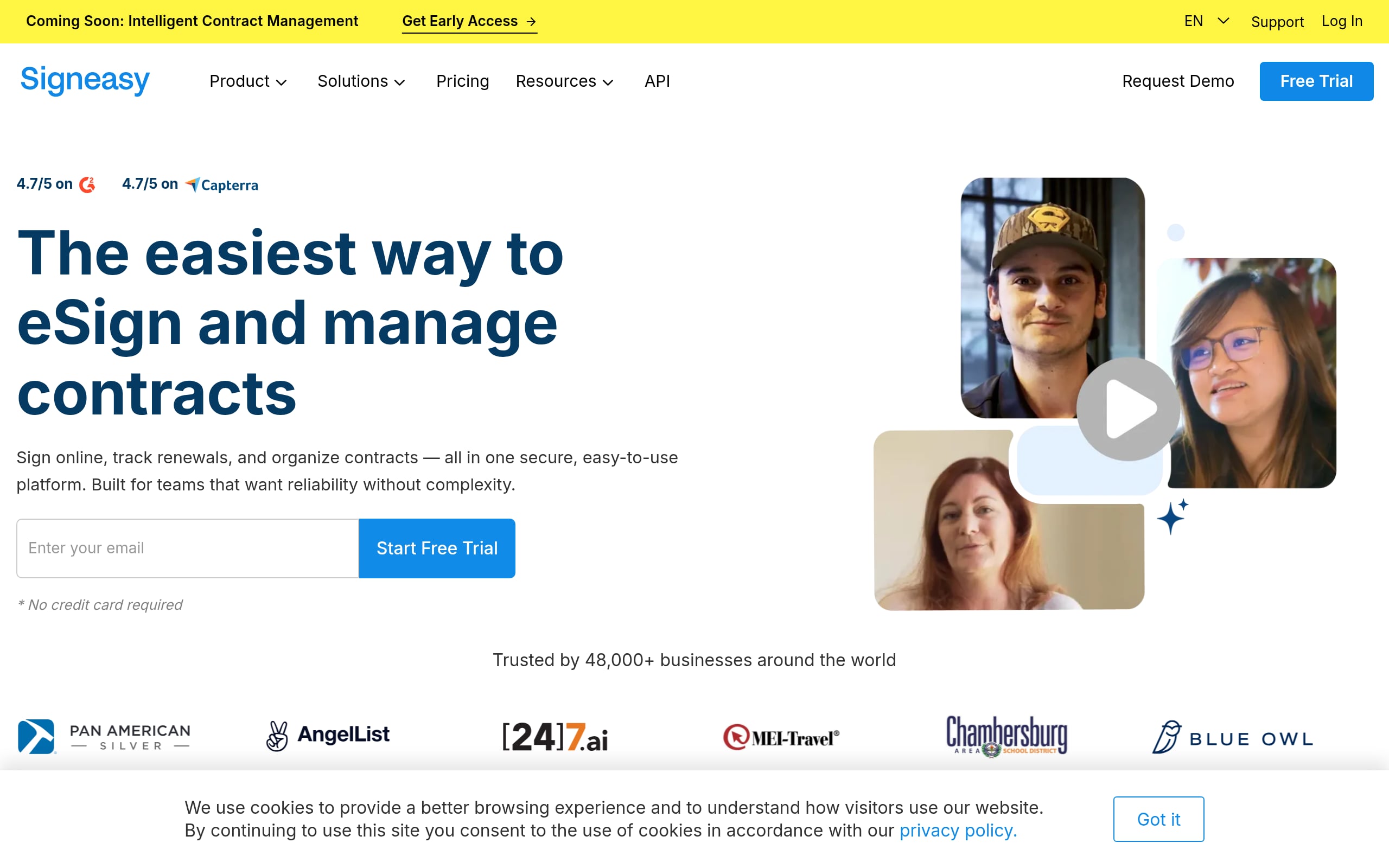
Signeasy, a mobile-first e-signature tool for SMBs, stalled near 34k monthly visitors. Up against DocuSign-level authority and over-reliant on a handful of converting pages, they needed diversified, high-intent entry points across markets.
The play: tiered competitor comparisons + regional compliance hubs + interactive how-tos.
What they shipped
- Comparison engine: Built 1:1, 1:vMany, and pricing pages to capture switch-intent traffic.
- Global compliance hubs: Localized legality pages for 50+ countries to match regional intent.
- Interactive guides: Schema-backed “how to sign PDFs”–style content for snippet wins.
- Revitalization: Refreshed page-two laggards with better metas and internal links.
Impact in numbers
- +21% organic traffic (33k → 40k+) in 6 months.
- 70% of a $100k organic pipeline goal sourced via hubs.
- Comparison experiments generated $5,000 in pipeline in 60 days.
Steal this
- Build a comparison matrix (1v1, 1vMany) → catch switchers.
- Launch regional compliance folders → solve local pains, earn links.
- Use interactive guides → funnel problem-aware users to product.
9. Case Study 7: How HubSpot Built the Largest Corporate Blog
HubSpot’s prolific publishing hit diminishing returns as content bloat outpaced gains. The shift to a topic-first model, paired with relentless refreshes and consolidation, reignited growth and set the standard for SaaS content engines.
The play: pillar-cluster architecture + historical optimization + snippet-first formatting.
What they shipped
- Pillar-cluster model: Reorganized into authoritative pillars supported by tightly linked cluster posts.
- Historical optimization: Allocated ~50% of output to refreshing legacy winners.
- Snippet hijacking: Structured headers, definitions, and lists to win Position Zero.
- Consolidation: 301s/deletions to reclaim crawl budget and clean cannibalization.
- Gap analysis: Filled buyer-stage and intent gaps exposed by competitors.
Impact in numbers
- +50% organic traffic in 12 months via clustering.
- Scaled to 7M+ monthly visitors across 4.8M keywords.
- Cluster content converted at 2x the rate of general posts.
Steal this
- Use a 10:1 cluster-to-pillar ratio → signal depth.
- Refresh top performers weekly → reverse decay.
- Add 50-word H2 summaries → capture featured snippets.
10. How Docupilot grew from 1.3K to 8K monthly visitors with a multi-format content strategy
Docupilot, a document automation SaaS, struggled with a minimalist site overshadowed by brands like PandaDoc. To unlock consistent signups, they expanded entry points beyond the homepage and met users at intent-rich moments.
The play: pain-point content + utility tools + comparison and template-led landing pages.
What they shipped
- Pain-point cadence: Published 8 posts/month balancing BOFU needs and broader doc-management queries.
- Utility tools: Built “X to Y” converters (e.g., Excel → PDF) as high-intent doors.
- Template-led SEO: Tutorial pages for high-volume terms like “automated invoice templates.”
- Comparison mapping: Systematically targeted “Alternative” and “Vs” keywords.
- 60-day tune-ups: Bimonthly meta and on-page audits to push page-two terms upward.
Impact in numbers
- +515% traffic (1.3k → 8k/mo) in 9 months.
- +1,200% impressions (61k → 800k+).
- 2.6x platform signups with 200+ quality conversions/month.
Steal this
- Launch utility tools → capture high-intent, low-friction traffic.
- Target competitor “Alternative” terms → siphon demand.
- Refresh top URLs every 60 days → compound near-win gains.
Deep Dives on Featured Tactics
Beyond the basics, many impressive case studies feature more advanced tactics that create a competitive moat.
Programmatic SEO (pSEO)
Programmatic SEO involves creating hundreds or thousands of pages at scale by using a template and a database. Think of sites like Zillow or Zapier. A SaaS company might use pSEO to create pages for every integration they offer, like “[Your Tool] + Salesforce Integration” or “[Your Tool] + Slack Integration”. This tactic can capture enormous amounts of long tail traffic.
Content Hubs and Topic Clusters
Instead of writing random blog posts, a topic cluster strategy involves creating a main “pillar” page for a broad topic and a series of “cluster” pages that cover related subtopics in more detail. All cluster pages link back to the pillar page, signaling to Google that you have deep expertise on the subject. This is a powerful way to build topical authority and rank for competitive head terms.
Internal Linking
A smart internal linking structure is one of the most underrated SEO tactics. It helps Google understand your site architecture, passes authority between your pages, and guides users to relevant content. Every SaaS SEO case study that shows strong results has a deliberate internal linking strategy behind it.
Measurement, KPIs, and ROI for SaaS SEO
How do you measure success and prove the value of your SEO efforts? Learn how to tell if your SEO strategy is working and focus on the metrics that matter to the business, not just vanity metrics.
- Key Performance Indicators (KPIs):
- Organic Traffic: The total number of visitors from search engines.
- Keyword Rankings: Tracking your position for target keywords, especially commercial intent terms.
- Conversions from Organic Traffic: This is the most important one. How many trial signups, demo requests, or paid subscriptions originated from organic search?
- Connecting SEO to ROI:
To calculate ROI, you need to know the Customer Lifetime Value (LTV) and the cost of your SEO investment. The formula is simple: (LTV from Organic Customers - SEO Investment) / SEO Investment. A positive ROI proves that SEO is not a cost center, but a profit driver. A great SaaS SEO case study will always tie efforts back to revenue.
Common Pitfalls and How to Avoid Them
Even with a great plan, it is easy to make mistakes. Here are some common pitfalls and how to steer clear of them.
- Inconsistent Publishing: Losing momentum is the fastest way to kill an SEO campaign. Google rewards freshness and consistency.
- How to Avoid: Create a realistic content calendar and use an accountability system. If you cannot do it in house, outsource it. A service like Rankai guarantees high velocity publishing every month.
- Ignoring Technical SEO: Technical issues like slow page speed or broken links can completely undermine your content efforts.
- How to Avoid: Run regular technical audits or use a service that includes technical fixes as part of their package.
- Targeting the Wrong Keywords: Going after keywords with huge volume but zero commercial intent will bring you traffic that never converts.
- How to Avoid: Prioritize keywords that signal a user is looking to solve a problem your software addresses. Ensure every piece of content has a clear business purpose.
- Giving Up Too Soon: SEO is a long term game. According to an Ahrefs study, only 5.7% of all newly published pages get to the top 10 search results within a year. Seeing a SaaS SEO case study with massive results can be inspiring, but remember it took time.
- How to Avoid: Set realistic expectations. Look for leading indicators of success like ranking improvements and impressions growth in Google Search Console before you see a huge traffic spike.
Conclusion
A SaaS SEO case study is a powerful tool for learning and growth. It demystifies the process of scaling organic traffic and proves that with the right strategy and consistent execution, incredible results are possible. The winning formula is clear: combine a deep understanding of your customer with high velocity content production, a technically sound website, and a relentless focus on iteration. By applying these lessons, you can turn SEO into your most scalable and profitable acquisition channel.
Ready to write your own success story? See how Rankai combines AI efficiency with human expertise to deliver the content velocity and iteration needed to dominate search.
FAQ
What should I look for in a good SaaS SEO case study?
Look for specifics. A great SaaS SEO case study provides details on the initial challenges, the exact strategies used (e.g., topic clusters, keyword choices), the timeline for results, and a clear connection between SEO activities and business metrics like trial signups or MRR, not just traffic.
How long does it take to get results like a typical SaaS SEO case study?
While it varies, most case studies show meaningful traction within 6 to 12 months. Initial positive signals, like an increase in impressions and keyword rankings for long tail terms, can often be seen within 90 days. Consistency is the most important factor.
Can a small SaaS startup achieve SEO success?
Absolutely. SEO is one of the most effective channels for startups because it does not require a massive ad budget. By focusing on a specific niche, targeting long tail keywords, and publishing helpful content consistently, small companies can effectively compete with larger players.
Is link building necessary for SaaS SEO success?
While high quality backlinks are always beneficial, many modern SaaS SEO case study examples show incredible growth primarily through on page SEO, which includes content and technical optimization. Building topical authority with a high volume of quality content can often be enough to rank for many valuable keywords.
How is AI changing SaaS SEO strategies?
AI is accelerating the content creation and optimization process. AI tools can help with keyword research, content drafting, and identifying optimization opportunities. Services that blend AI for scale with human experts for strategy and quality control, like the model used at Rankai, allow companies to achieve results much faster than with traditional methods.
What’s more important: content quantity or quality?
You need both. Quality is the price of entry; your content must be accurate, helpful, and satisfy user intent. Quantity, or velocity, is how you scale. Publishing one perfect article a year will not build a growth engine. The goal is to produce the highest quality content possible at the highest sustainable velocity.