Getting your Shopify store to the top of Google is non negotiable for long term growth. While Shopify handles some SEO basics out of the box, you need dedicated tools to truly compete and capture organic traffic. To increase traffic in 2026, the best SEO apps for Shopify are those that automate technical fixes, streamline on-page optimization, and add crucial structured data. They help you fix technical issues, optimize product pages, and build the topical authority needed to rank. With over 1.75 million merchants using the platform, standing out requires a smart SEO strategy powered by the right applications. This guide breaks down the top options to help you make an informed decision and start climbing the search rankings.
How We Selected and Tested These Apps
To find the best SEO apps for Shopify, we focused on what truly moves the needle for an ecommerce business. Our process was not just about reading reviews. We looked at a core set of criteria for each application, including its impact on site speed, the breadth of its features, its ease of use for busy store owners, and its overall value. We prioritized apps that offered comprehensive solutions covering on‑page optimization, technical SEO, and structured data, because a fragmented approach often leads to slower sites and missed opportunities. We also considered the quality of customer support and the clarity of their reporting.
What To Look For in a Shopify Friendly SEO App
When evaluating the best SEO apps for Shopify, it’s crucial to look beyond a single feature. A truly great app should offer a suite of tools that work together to improve your store’s visibility.
Here are the key things to look for:
- On Page Optimization Tools: The app should make it easy to edit meta titles, descriptions, and alt text for products, collections, and blog posts. Bulk editing features are a massive time saver.
- Technical SEO Fixes: Look for features that can automatically find and fix broken links, manage redirects, and improve your site structure. A clean, crawlable site is fundamental for SEO success.
- Structured Data (Schema Markup): Rich snippets like product ratings, price, and availability can significantly increase your click through rate in search results. The app should simplify adding this complex code.
- Site Speed Impact: More apps can mean a slower store, and a slow store kills conversions. Check reviews and documentation for any mention of the app’s performance impact. Sometimes, a single service is better than ten separate apps.
- Keyword Research and Tracking: While some apps specialize, having basic keyword research and rank tracking capabilities helps you measure what’s working without needing another subscription.
- Ease of Use: As a store owner, you don’t have time for a steep learning curve. The interface should be intuitive, with clear instructions and actionable recommendations.
For many businesses, juggling multiple apps to cover these areas becomes a major headache. An alternative approach is a done for you service that handles everything from keyword strategy to content creation and technical fixes in one package. If you want to see how an integrated solution compares, check out what Rankai offers.
10 Best SEO Apps for Shopify (2026)
With the foundational elements of store optimization in place, choosing the right automated tools is the next step toward scaling your organic reach. This curated selection highlights the most effective Shopify apps for 2026, grouped together for their proven ability to handle technical metadata, image compression, and schema requirements effortlessly.
1. Smart SEO (by Sherpas) - Best for Technical SEO at scale
Smart SEO pulls the heavy technical lifting into one place, including metadata, structured data, broken links, sitemaps, and image SEO, so lean teams can move fast. With OS 2.0 app-embeds and smart bulk rules, it turns sprawling catalogs into tidy, search-ready pages that earn richer results and ship fixes in hours, not weeks.
What it automates
- Bulk meta titles/descriptions using templates, tokens, and AI generation
- Automated JSON-LD for products/collections to unlock rich snippets
- 404 discovery with one‑click 301s and archived product redirect automation
- Sitemap controls with direct Google Search Console submission
- Image SEO: ALT automation, compression, and AI filename optimization
- Instant page preloading for snappier navigation and better UX signals
- SEO Audit workspace with direct edits to native Shopify fields
Pricing & Shopify App Store rating
- Free plan/trial: Yes (Free plan + 7‑day trial)
- Paid plans: From $14.99/month (Pro); Business $24.99; Premium $49.99
- Shopify rating: 4.9/5 (919 reviews); Built for Shopify: Yes
Pros
- Rapid OS 2.0 setup and smooth bulk automation for large catalogs
- Strong JSON‑LD and sitemap controls streamline technical fixes
-
- Weekly backlink monitoring surfaces easy external win opportunities
Cons
- JSON‑LD features start at Pro tier
- Redirect behavior still bound by Shopify core limits
- Template‑based schema may need manual overrides for edge cases
2. SEO Manager (by Venntov) - Best for Bulk on‑page edits and redirects
SEO Manager is a battle‑tested workhorse for teams juggling high‑volume edits. It makes templates, CSV workflows, and wildcard redirects feel effortless while layering in schema and monitoring. Expect faster fixes, fewer 404 headaches, and steady gains in rich results with minimal setup.
What it automates
- Bulk meta title/description editing with dynamic template variables
- Automated JSON‑LD for products and local business
- Advanced 404 detection with alerts and error‑to‑redirect workflows
- Wildcard pattern redirects and CSV import/export for migrations
- Google Search Console integration for simple performance insights
- IndexNow support to speed up discovery of new/updated URLs
- Out‑of‑stock redirect automation to recapture intent
Pricing & Shopify App Store rating
- Free plan/trial: 7‑day free trial
- Paid plans: From $9/month (Starter, Essential, Professional)
- Shopify rating: 4.6/5 (480 reviews); Built for Shopify: No
Pros
- Scales neatly with templates, CSVs, and rollback‑friendly workflows
- Powerful wildcard redirect toolkit for complex site changes
- Code‑free GSC and IndexNow setup accelerates feedback loops
Cons
- Strongest automation gated to higher tiers
- Occasional schema overlap with themes or other apps
- Lacks the Built for Shopify badge
3. SearchPie - Best for All‑in‑one automation + speed
SearchPie wraps the core pillars of Shopify SEO (structured data, metadata, 404s, images, and speed) into one approachable suite. Its automation and onboarding help SMBs move quickly from audit to action, unlocking rich snippets and better Core Web Vitals without heavy dev work.
What it automates
- JSON‑LD (Product, FAQ, Breadcrumbs) for enhanced SERP features
- AI‑powered meta tags and bulk ALT‑text for fast catalog coverage
- Automatic 404 monitoring and long‑URL redirect cleanup
- Speed toolkit: image compression, instant loading, and AMP
- Real‑time audits with prioritized health checks and indexing status
- Integrations with Google Search Console and Merchant Center
- Multilingual support + ChatGPT‑assisted content suggestions
Pricing & Shopify App Store rating
- Free plan/trial: Yes (Free plan + 7‑day trial)
- Paid plans: From $39/month (usage limits for AI/images)
- Shopify rating: 4.9/5 (2,320 reviews); Built for Shopify: Yes
Pros
- True one‑app coverage reduces stack bloat and context switching
-
- Dependable 24/7 support keeps momentum high
- Solid automation for 404s and metadata at scale
Cons
- Advanced features reserved for higher tiers
- Busy interface takes a moment to learn
- Free plan quotas run out fast on larger catalogs
4. Plug In SEO - Best for Pragmatic audits and quick fixes
Plug In SEO is a practical toolkit that flags what matters, then helps you fix it fast. With automated scans, clear checklists, and one‑click remedies for broken links and metadata, lean teams can secure structured data wins and tidy up technical debt without getting lost in menus.
What it automates
- Storewide SEO audits with prioritized fixes and health tracking
- Bulk meta title/description updates via customizable templates
- Robust JSON‑LD to unlock rich results and snippets
- One‑click redirects to resolve 404s and preserve equity
- Image optimization: ALT automation and compression
- AI‑assisted keyword research and rank tracking in Shopify
- GSC integration with speed/performance reporting
Pricing & Shopify App Store rating
- Free plan/trial: No free plan; 14‑day free trial
- Paid plans: From $29.99/month (Lite) to $79.99/month (Premium)
- Shopify rating: 4.7/5 (670 reviews); Built for Shopify: Yes
Pros
- All‑in‑one technical coverage with intuitive, guided fixes
- Built‑in AI keyword tools reduce dependency on separate SaaS
- Fast path to rich results and cleaner site health
Cons
- No permanent free tier
- Scan and usage limits on lower plans
- Potential schema overlap with other apps/themes
5. TinyIMG - Best for Image SEO and Core Web Vitals
TinyIMG turns slow, heavy product imagery into fast, search‑friendly assets. It compresses at scale, writes ALT text and filenames automatically, and sprinkles in technical SEO like JSON‑LD. The result: better Core Web Vitals, cleaner SERPs, and a faster storefront without theme breakage.
What it automates
- Bulk image compression with WebP/AVIF and safe backups
- ALT text and file‑naming rules for image search visibility
- JSON‑LD automation and IndexNow for technical SEO coverage
- Lazy loading, preloading, and CSS/JS minification
- 404 monitoring with 301 redirect management
- GSC integration for performance reporting
Pricing & Shopify App Store rating
- Free plan/trial: Yes (50 images/month)
- Paid plans: From $14/month (tiers by image volume/advanced schema)
- Shopify rating: 5.0/5 (2,211 reviews); Built for Shopify: Yes
Pros
- Quick, measurable Core Web Vitals improvements
- Strong automation for image metadata at scale
-
- Responsive 24/7 support
Cons
- Overage fees can add up on very large catalogs
- Some theme assets may still need manual tuning
6. Tapita SEO & Speed Optimizer - Best for Guided audits + speed boosts
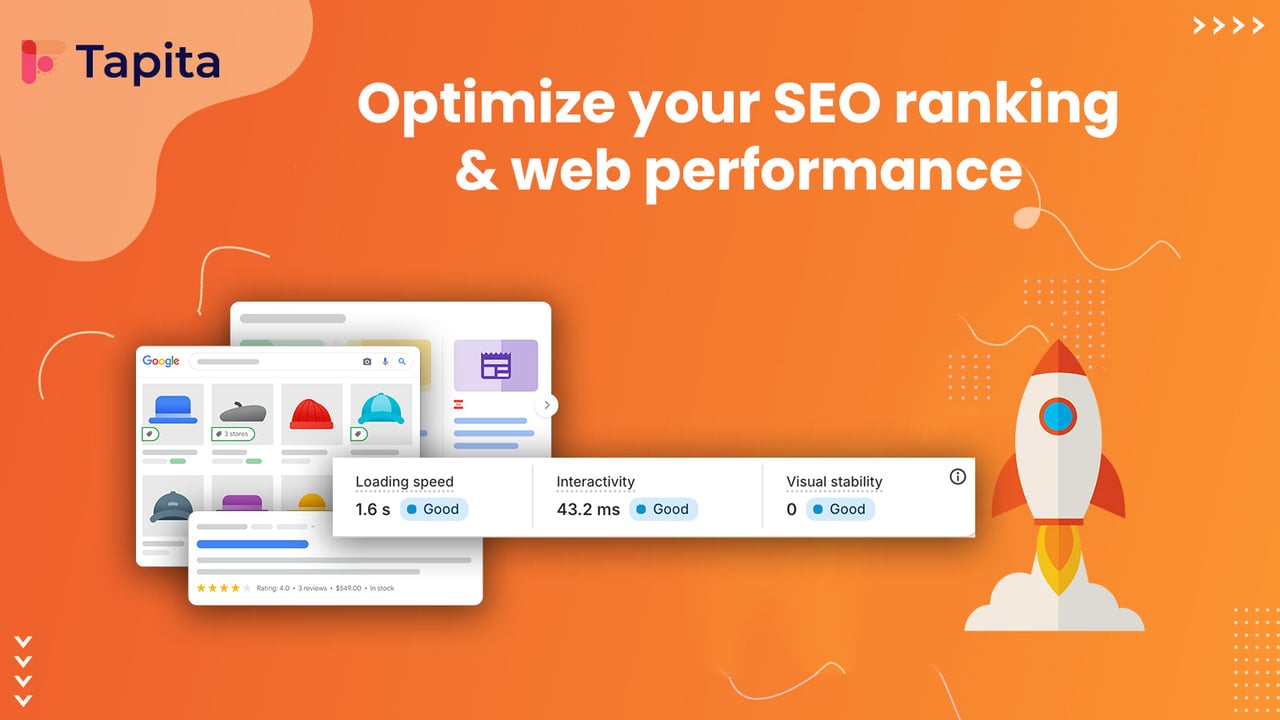
Tapita bundles the essentials like metadata, schema, redirects, and speed behind a clean dashboard and an AI SEO Agent that points you to the next best fix. It’s a swift path to richer snippets and faster pages, letting small teams clear audits and ship improvements on day one.
What it automates
- AI SEO Agent for prioritized audits and step‑by‑step fixes
- Full JSON‑LD/Schema automation for rich results
- Bulk AI metadata editing with custom rules
- Image SEO: ALT tags and filename optimization
- Broken link detection with auto/manual redirects
- Speed Booster tools (preloading, asset optimization)
- GSC integration for sitemap submission and monitoring
Pricing & Shopify App Store rating
- Free plan/trial: Yes, a free plan is available
- Paid plans: From $39.99/month; Ultimate $299.99/month
- Shopify rating: 5.0/5 (2,453 reviews); Built for Shopify: Yes
Pros
- One‑click optimizations deliver immediate wins
- Broad feature set reduces the need for multiple apps
-
- Helpful, responsive 24/7 support
Cons
- Advanced schema options gated to higher tiers
- Redirects sometimes better handled manually for accuracy
- Disables overlapping schema from other apps to prevent conflicts
7. Avada SEO & Image Optimizer - Best for Shopify-native bulk rules and safe rollbacks
Avada covers the everyday wins like meta rules, schema, images, and 404s, and does it with Shopify‑native workflows that feel familiar. Safe speed-up modes and easy rollbacks make it practical for SMB teams who want reliable automation without risking their theme.
What it automates
- Meta title/description rules for products, collections, and blogs
- JSON‑LD for Product, FAQ, and Reviews rich results
- Bulk image compression, ALT text automation, and renaming
- 404 monitor and redirect manager
- Page‑speed optimizer with safe theme duplication for testing
- GSC integration and Instant Indexing API setup
Pricing & Shopify App Store rating
- Free plan/trial: Yes (Free plan + 7‑day trial)
- Paid plans: From $34.95/month (unlimited image optimization)
- Shopify rating: 4.9/5 (4,360 reviews); Built for Shopify: Yes
Pros
- Consolidates core SEO tasks into one dependable toolkit
- Shopify Flow integration supports rule‑based automation
- Safe rollbacks minimize risk during speed optimization
Cons
- Top features live behind paid tiers
- Possible schema collisions with certain themes
- Speed changes still benefit from manual verification
8. Booster SEO & Image Optimizer - Best for Set-and-forget automation
Booster takes a hands‑off approach with AutoPilot scanning and fixes, while still offering robust controls for teams who want them. It cleans up metadata, schema, broken links, and images so your store runs faster and looks richer in search without constant oversight.
What it automates
- Bulk meta titles/descriptions with reusable templates
- JSON‑LD for product rich snippets and breadcrumbs
- Image compression, lazy loading, and auto‑ALT text
- Broken link monitoring with automated 301s
- Sitemap management and GSC indexing assistance
- AI AutoPilot for background technical health checks
- URL keyword optimization and bulk cleanup tools
Pricing & Shopify App Store rating
- Free plan/trial: Yes (Free plan; 14‑day trial on paid tiers)
- Paid plans: From $39/month; Premium $69/month (higher image quotas)
- Shopify rating: 4.8/5 (4,283 reviews); Built for Shopify: Yes
Pros
- “Set‑and‑forget” automation saves hours each month
- Shopify‑native UI and strong 24/7 support
- Comprehensive bulk editing tools when you need control
Cons
- Most powerful actions reserved for Premium tiers
- Aggressive compression settings can affect image quality if unchecked
9. Schema Plus for SEO - Best for Rich Results/Schema depth
Schema Plus zeros in on structured data and does it exceptionally well. It cleans up conflicts from themes and other apps, syncs review stars, and expands to Video, FAQ, and Local Business markup, giving small teams professional-grade rich result eligibility without touching code.
What it automates
- JSON‑LD for Products, Reviews, Breadcrumbs, and Organization
- Deep review integrations with Judge.me and Loox
- Advanced schema: Video, FAQ, Local Business, Merchant Listings
- Internal Google Search Console performance tracking
- Conflict resolution to remove duplicate/incorrect markup
- Merchant Listing support (shipping/returns policy schemas)
- 24/7 expert support with hands‑on onboarding
Pricing & Shopify App Store rating
- Free plan/trial: No / 14‑day free trial
- Paid plans: From $10.99/month (Lite) to $26.99/month (Premium); limits apply
- Shopify rating: 4.9/5 (523 reviews); Built for Shopify: No
Pros
- Top‑tier schema coverage and conflict cleanup
- Excellent, fast technical support
- Smooth review app syncing for star ratings in SERPs
Cons
- No bulk meta or redirect tooling
- Feature limits on lower plans
- Rich results never guaranteed by Google
10. Ilana’s JSON-LD for SEO - Best for Clean, conflict-free schema
Ilana’s JSON‑LD focuses on one thing, world-class structured data, and makes it effortless. It generates comprehensive, conflict‑free markup that plays nicely with Shopify and major review apps, helping stores win rich results and fix Merchant Center issues without ongoing maintenance.
What it automates
- JSON‑LD for Products, FAQs, Articles, and Recipes from native data
- Merchant Center readiness with unique IDs and variant pricing
- Deep review integrations (20+ apps, including Judge.me)
- Subscription schema for Shopify Checkout‑integrated plans
- Bing information‑rich results and Pinterest Rich Pins support
- Lightweight App Embeds that avoid speed degradation
Pricing & Shopify App Store rating
- Free plan/trial: No / 7‑day free trial
- Paid plans: $399/year (annual billing only)
- Shopify rating: 4.9/5 (420 reviews); Built for Shopify: No
Pros
- Exceptional Merchant Center compatibility and monitoring
- True set‑and‑forget schema with owner‑led support
- Clean, conflict‑averse implementation
Cons
- Single‑purpose: no meta, image, or redirect features
- Higher upfront annual cost
- Requires manual App Embed activation
How To Choose and Combine Apps for Your Store
Choosing the best SEO apps for your Shopify store is not about installing as many as possible. It’s about creating a lean, effective toolkit that addresses your specific needs without slowing down your website. Start by identifying your biggest SEO weakness. Is it technical issues? A lack of optimized content? Or poor on page fundamentals?
Select a primary, all in one SEO app to handle the basics like meta tags, image optimization, and schema. Then, if needed, add a specialized app for a specific function, like advanced keyword tracking or backlink analysis. Always ask yourself: “Does this app provide a function my primary app is missing?” This prevents overlap and reduces “app bloat,” which is a leading cause of slow Shopify stores. For many startups and SMBs, the complexity and cost of managing multiple apps is a significant drain. It’s often more efficient to use a single, comprehensive service that manages all aspects of SEO, from content to technical fixes, for a flat monthly fee.
Your Shopify SEO Routine (Implementation Roadmap)
Having the best SEO apps for Shopify is only half the battle; you need a consistent routine to see results. An effective implementation plan turns your tools into a growth engine.
Here is a simple roadmap you can follow:
- Weekly: Check your SEO app’s dashboard for any new critical errors like broken links or indexing issues. Spend 30 minutes reviewing the performance of your top 10 most important keywords.
- Monthly: Conduct a full technical SEO audit using your primary SEO app. Dedicate a few hours to implementing the recommended fixes for meta titles, descriptions, and image alt text. Review your keyword strategy and identify new content opportunities based on what’s trending.
- Quarterly: Perform a content audit and refresh your content map. Identify pages that are underperforming and create a plan to update or rewrite them. Analyze your competitors’ top pages to find gaps in your own strategy.
This routine can feel like a lot for a busy entrepreneur. That’s why services that include continuous optimization and performance based content rewrites are so valuable. A hands off approach like the one offered by Rankai builds this iteration directly into the service, ensuring your content is always working to rank higher without you managing the day to day process.
Common SEO App Mistakes to Avoid
Installing a few of the best SEO apps for Shopify does not guarantee success. Many store owners make common mistakes that limit their effectiveness or even harm their site’s performance. The most common mistake is installing too many apps. Each app adds code to your store, and the cumulative effect can drastically slow down your page load times, which is a critical ranking factor and conversion killer.
Another frequent error is the “set it and forget it” mentality. SEO apps provide tools and data, but they require action. You must regularly review their recommendations and implement changes. Simply having an app run in the background is not enough. Finally, focusing exclusively on technical fixes while neglecting how to scale your content is a recipe for stagnation. SEO is a holistic discipline; you need high quality, keyword optimized content to rank, something most standalone apps do not provide. An integrated approach that combines technical fixes with a high volume of quality content is typically more effective.
Conclusion: Pick Purpose Built Apps, Keep Your Store Fast, and Focus on Fundamentals
Ultimately, the best SEO apps for Shopify are the ones that help you execute the fundamentals of SEO consistently and efficiently without compromising your user experience. Focus on tools that solve specific problems, whether it’s cleaning up technical errors, optimizing your on page elements, or adding proper schema. Always prioritize site speed, as a slow store will undercut any SEO gains you make. Remember that apps are just tools; they are most powerful when combined with a smart keyword strategy and a commitment to creating valuable content for your customers.
If you’d rather focus on running your business than managing a suite of SEO apps, a fully managed SEO service might be the perfect fit. Learn more about how Rankai’s AI powered, human guided approach can grow your Shopify store at Rankai.ai.
Frequently Asked Questions
What is the best SEO app for Shopify?
There is not a single “best” app for every store, as needs vary. The best SEO apps for Shopify typically offer a comprehensive suite of tools for on page optimization, technical audits, schema, and image optimization. The ideal choice depends on your budget, technical comfort level, and specific SEO goals.
Do I really need an SEO app for Shopify?
While Shopify has solid built in SEO features, an app is highly recommended for any serious business. SEO apps automate complex tasks, provide critical insights, and give you the granular control needed to effectively optimize your site for search engines and outrank competitors.
Can SEO apps for Shopify hurt your store?
Yes, if used incorrectly. The biggest risk is installing too many apps, which can significantly slow down your site’s loading speed. It’s crucial to choose a few high quality, multipurpose apps and uninstall any that you are not actively using to maintain optimal performance.
How much should I spend on Shopify SEO apps?
Costs can range from free to over a hundred dollars per month. Many of the best SEO apps for Shopify operate on a freemium model, with paid plans unlocking advanced features. A typical store might spend between $20 and $50 per month on a primary SEO application.
What’s the difference between an SEO app and an SEO service?
An SEO app is a do it yourself tool that you manage. An SEO service, like Rankai, is a done for you solution. A service handles the strategy, content creation, technical fixes, and ongoing optimization for you, which is ideal for business owners who lack the time or expertise to manage SEO themselves.
How long does it take to see results from Shopify SEO?
SEO is a long term strategy. While you can see initial improvements from technical fixes within a few weeks, it typically takes 3 to 6 months of consistent effort in content creation and optimization to see significant, sustained growth in organic traffic and rankings. If you’re unsure how to measure progress, see our guide on how to tell if your SEO strategy is working.