
7 Best AI Content Planning Tools and Services for 2026
TL;DR: AI content planning means using AI to decide what to publish, when, and why, not just to generate faster drafts. The right choice depends on whether you need done-for-you SEO execution, topic authority modeling, content briefs, editorial optimization, or a social calendar. This guide compares seven options with transparent pricing, real user sentiment, and honest tradeoffs. Rankai leads for SMBs that want planning and publishing handled together, while self-serve tools like Surfer and Frase work better for teams with existing writers.
Planning content used to mean brainstorming topics in a spreadsheet, checking keywords one at a time, guessing what competitors missed, and hoping the calendar eventually turned into traffic. AI changed content creation. First drafts got faster and cheaper. But that created a different problem: everyone can now publish more generic content on any topic, at any time.
The bottleneck moved. It is no longer “Can we generate ideas?” It is “Can we choose the right topics, publish consistently, and fix what underperforms?”
That is what AI content planning solves when it works well. But the tools and services in this space are not interchangeable. Some help you build keyword clusters. Others optimize existing drafts. A few manage social calendars. And one category handles the whole process, from planning through publishing, monitoring, and rewriting. This guide compares the best AI content planning tools and services for 2026 across different use cases, with each option evaluated on planning depth, execution support, pricing transparency, and what real users actually report.
If your bottleneck is publishing rather than brainstorming, Rankai’s done-for-you service is worth evaluating first.
What Is AI Content Planning?
AI content planning is the use of artificial intelligence to decide:
- What topics to cover and which keywords to target
- How topics cluster together for topical authority
- Which pages should link to each other
- What format each piece should take (blog post, landing page, comparison, FAQ)
- When content should be published
- Which existing pages need refreshing or rewriting
- How content should be structured for Google, AI Overviews, and LLM answer engines
The critical distinction is that AI content planning is not the same as AI writing or AI optimization. Here is how they differ.
| Concept | What It Does | Main Risk |
|---|---|---|
| AI content generation | Produces drafts, captions, outlines, or full articles | Generic output, hallucinations, weak differentiation |
| AI content optimization | Scores content against SERPs or semantic terms | Over-optimization, writing for a score |
| AI content planning | Chooses topics, clusters, calendar order, briefs, internal links, and update triggers | Bad inputs produce a bad calendar faster |
| Done-for-you AI SEO | Combines planning, writing, publishing, technical fixes, and rewriting | Requires trust in an external team |
Understanding keyword intent sits at the foundation of any content plan built with AI. Without it, even sophisticated tools will recommend topics that attract the wrong audience or match the wrong stage of the buyer journey.
Google’s position supports this: content should provide original information, comprehensive coverage, insightful analysis, and value compared with other search results, per its helpful content guidance. AI is not penalized. Thin, scaled, unhelpful pages are.
How We Evaluated These AI Content Planning Tools
Not every tool on this list does the same job. We evaluated them across seven criteria:
- Planning depth. Does it help with keyword clusters, briefs, content calendars, gap analysis, or update priorities?
- Execution support. Does it only recommend topics, or does it help publish and improve content over time?
- SEO fit. Does it support search intent mapping, internal linking, topic authority, and SERP analysis?
- AI-search readiness. Does it account for AI Overviews, ChatGPT citations, or Perplexity references?
- Pricing clarity. Is the starting price clear? Are usage limits and add-ons transparent?
- User sentiment. Do real users praise the workflow, or complain about complexity, costs, or generic output?
- Best-fit user. Is the tool built for SMBs, agencies, solo creators, or enterprise teams?
Each option below gets the same treatment: best for, pricing, key features, limitations, and what actual users say.
At-a-Glance Comparison
| Option | Best For | Starting Price | Planning Depth | Execution? | G2 Rating |
|---|---|---|---|---|---|
| Rankai | SMBs wanting done-for-you SEO planning + publishing | $499/mo | Human-vetted keyword/topic selection | Yes: 20+ pages/mo, rewrites, technical fixes | N/A |
| MarketMuse | Site-wide topic authority, enterprise strategy | Free; paid from $249/mo | Topic modeling, content gaps, briefs | No | 4.6/5 (216) |
| Surfer | SERP-based briefs and optimization | $99/mo | Topical maps, Content Editor | Partial | 4.8/5 (541) |
| Frase | Affordable briefs and SERP research | $45/mo | Brief builder, topic research | Partial | 4.8/5 (302) |
| Clearscope | Premium editorial optimization | $129/mo | Keyword/entity grading, inventory | No | 4.9/5 (92) |
| Semrush | All-in-one SEO data and competitive analysis | Free; Pro $139.94/mo | Keyword research, Topic Research, templates | No | 4.5/5 (3,381) |
| Jasper | Brand-consistent campaign copy | $59/seat/mo | Campaign and brand voice planning | Partial | 4.7/5 (1,270) |
Best AI Content Planning Tools and Services
1. Rankai
Best for: SMBs, startups, local businesses, ecommerce stores, and agencies that want SEO planning, content production, technical fixes, and rewrites handled for them.
Pricing:
- Standard Plan: $499/month (Early Bird)
- Includes 20+ pages per month, continuous rewrites until pages rank, technical SEO fixes, human-expert-vetted keyword and topic selection
- Cancel anytime, no long-term contract
- 7-day refund window after purchase
- Demo available via Calendly
Key planning features:
- Human-vetted keyword selection with monthly re-evaluation as trends shift
- Competitor gap analysis built into the planning cycle
- Internal links planned before pages are drafted
- 20+ pages published per month with metadata, visuals, and CTAs
- Technical SEO fixes (crawlability, indexation, metadata) included
- Rewrite-until-it-ranks workflow: underperformers are flagged after roughly three weeks and rebuilt
- Weekly reporting focused on rankings, traffic impact, and rewrite status
- CMS compatibility: WordPress, Shopify, Squarespace, Webflow, Wix
What users report:
On-site Google Search Console screenshots show results including +400% traffic for a creative marketing agency, 0 to 70k visitors with 6M impressions for a local business, and six-figure visitors with seven-figure impressions for a SaaS platform in under a year. The founder shared on Reddit that an earlier fully automated product onboarded 300+ clients before pivoting to a human-guided model after learning that automation handled roughly 60% of tedious work but missed the strategic judgment that drives real SEO performance.
Limitations:
- Not a self-serve software dashboard. If you want to click around a tool yourself, this is not that.
- Brand voice alignment depends on onboarding quality. Clarify tone and editorial standards early.
- Off-page authority (link building, digital PR) is not a highlighted feature. Very competitive niches may need complementary efforts.
- Case study proof uses anonymized GSC screenshots rather than named client logos.
Verdict: Rankai is the strongest fit when the bottleneck is not “I need more ideas” but “I need an SEO plan that turns into published pages and gets improved until it performs.” Most AI content planning tools stop at recommendations. Rankai turns those recommendations into live content, monitoring, and iterative rewrites.
Book a Rankai demo to see how planning connects directly to publishing.
2. MarketMuse
Best for: Mature content teams and enterprise publishers managing large sites with hundreds or thousands of pages.
Pricing:
- Free plan: 10 queries/month
- Paid Research plan: $249/month billed monthly, with lower rates on annual billing, per TechRadar
- G2 rating: 4.6/5 from 216 reviews
Key planning features:
- Topic modeling and site-wide content inventory
- Automated cluster analysis and content gap identification
- AI-generated content briefs with competitive gap analysis
- Topic authority scoring to prioritize what to cover next
- Helps decide whether existing pages should be updated, consolidated, or expanded
What users report:
A G2 reviewer said MarketMuse makes it easier to find questions people ask about a topic and develop content with fuller topical coverage, but called the monthly subscription “incredibly expensive.”
Limitations:
- Too expensive and complex for most small businesses
- Planning and briefing tool only; does not write, publish, or manage content
- Can be overkill unless the site already has enough content to analyze meaningfully
- Still requires writers, editors, CMS publishing, and refresh workflows
Verdict: MarketMuse is the right tool when the question is not “What blog post should we write?” but “Where are the topical authority gaps across the entire site?” For a systematic approach to identifying those gaps, see this content gap analysis guide.
3. Surfer
Best for: Content teams, SEO freelancers, and bloggers that want SERP-based outlines, content scoring, and optimization workflows.
Pricing:
- Standard: $99/month
- Pro: $182/month
- Peace of Mind: $299/month
- Annual billing available at lower rates
- G2 rating: 4.8/5 from 541 reviews
Key planning features:
- Content Editor with real-time scoring against SERP competitors
- Topical maps and content gap visualization
- SERP-based keyword and structure recommendations
- AI article writer
- Google Docs and WordPress integrations
What users report:
On G2, one reviewer praised Surfer’s topical authority maps for making content gaps visible at a glance. Another described using it for a 50-page optimization campaign, crediting the shared scoring workflow for keeping multiple editors aligned, but criticized some AI-assisted changes for sounding like “typical AI voice.” Practitioners on Reddit are more direct: one thread argued Surfer can become an “expensive checklist” that traps users into writing for a content score instead of for the reader.
Limitations:
- Good for briefs and optimization, not a full SEO strategy or execution service
- Score-chasing is a genuine risk; a high content score does not guarantee a well-targeted page
- AI writing and higher usage tiers increase costs
- Does not replace human search intent analysis
Verdict: Surfer is strong when you already know the keyword and need a data-backed brief or optimization pass. It falls short when you need someone to choose the right topics for your business, publish them, and rewrite underperformers.
4. Frase
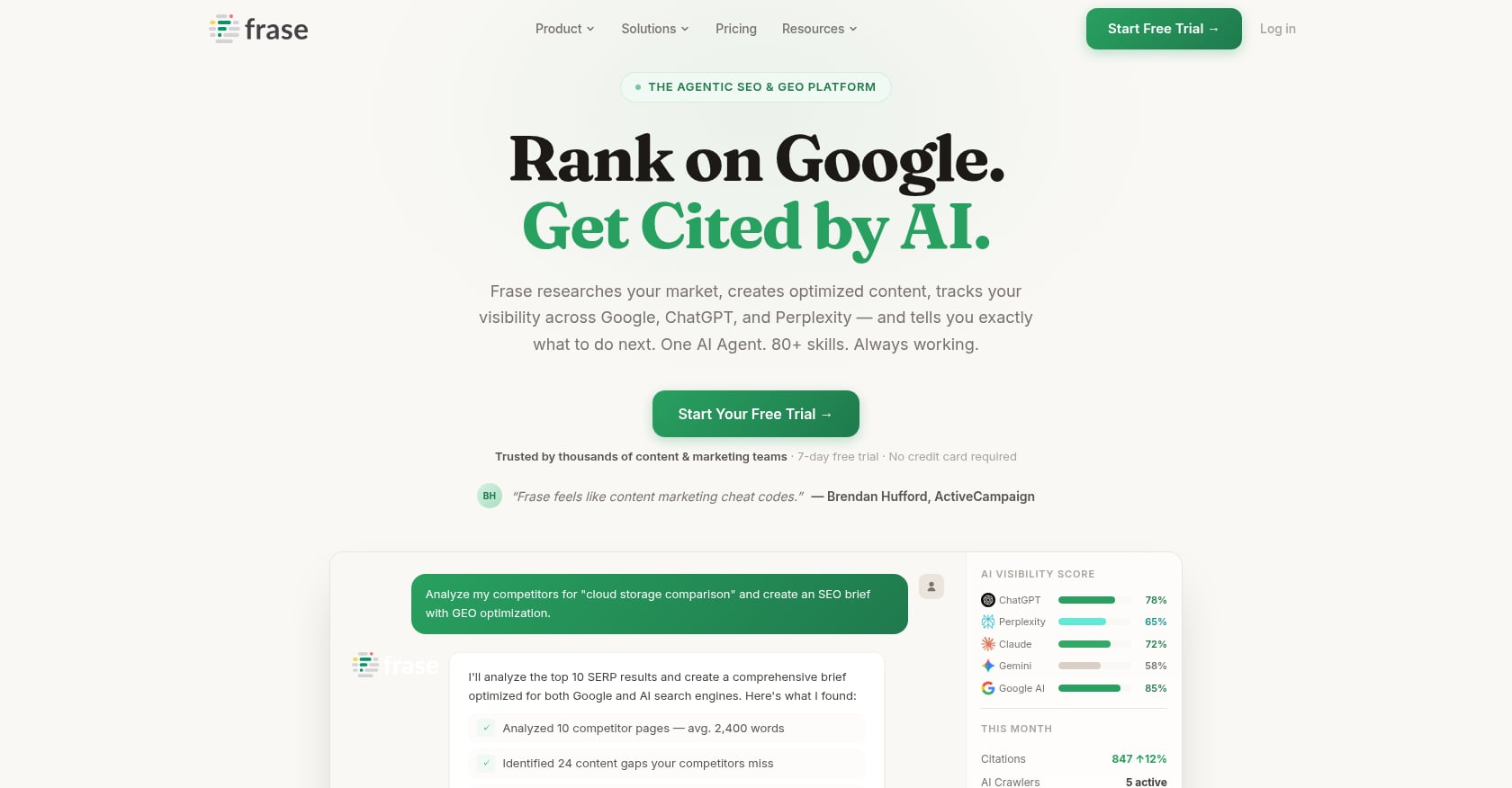
Best for: Small teams, bloggers, and freelance writers who want quick SERP research, outlines, and AI-assisted drafting without enterprise pricing.
Pricing:
- Starter: $45/month
- Professional: $115/month
- G2 rating: 4.8/5 from 302 reviews
Key planning features:
- SERP analyzer for competitive research
- Brief builder and outline generator
- Topic research dashboard
- AI writing assistant
- Content optimization scoring
- Content opportunity dashboard using Google Search Console data
What users report:
A G2 reviewer said Frase’s SERP analyzer and Outline Builder turn hours of research into minutes, but noted some features sit behind an SEO add-on and the AI writing assistant can hallucinate or use outdated data. A small-business reviewer praised it for analyzing top-ranking content and suggesting headings and keywords, but said suggestions felt repetitive for specialized industries. Practitioners on Reddit and AppSumo forums have also raised concerns about shifting pricing and feature gating over time.
Limitations:
- Better for briefs and research than end-to-end SEO execution
- Niche-specific suggestions often need human correction
- AI output still requires fact-checking and editing
- Feature gating behind add-ons can frustrate smaller teams
Verdict: Frase is a practical, lower-cost entry point for creating SEO briefs and reducing research time. It should not replace content strategy, and the output needs human review. For guidance on what briefs should contain, see this walkthrough on writing SEO content briefs.
5. Clearscope
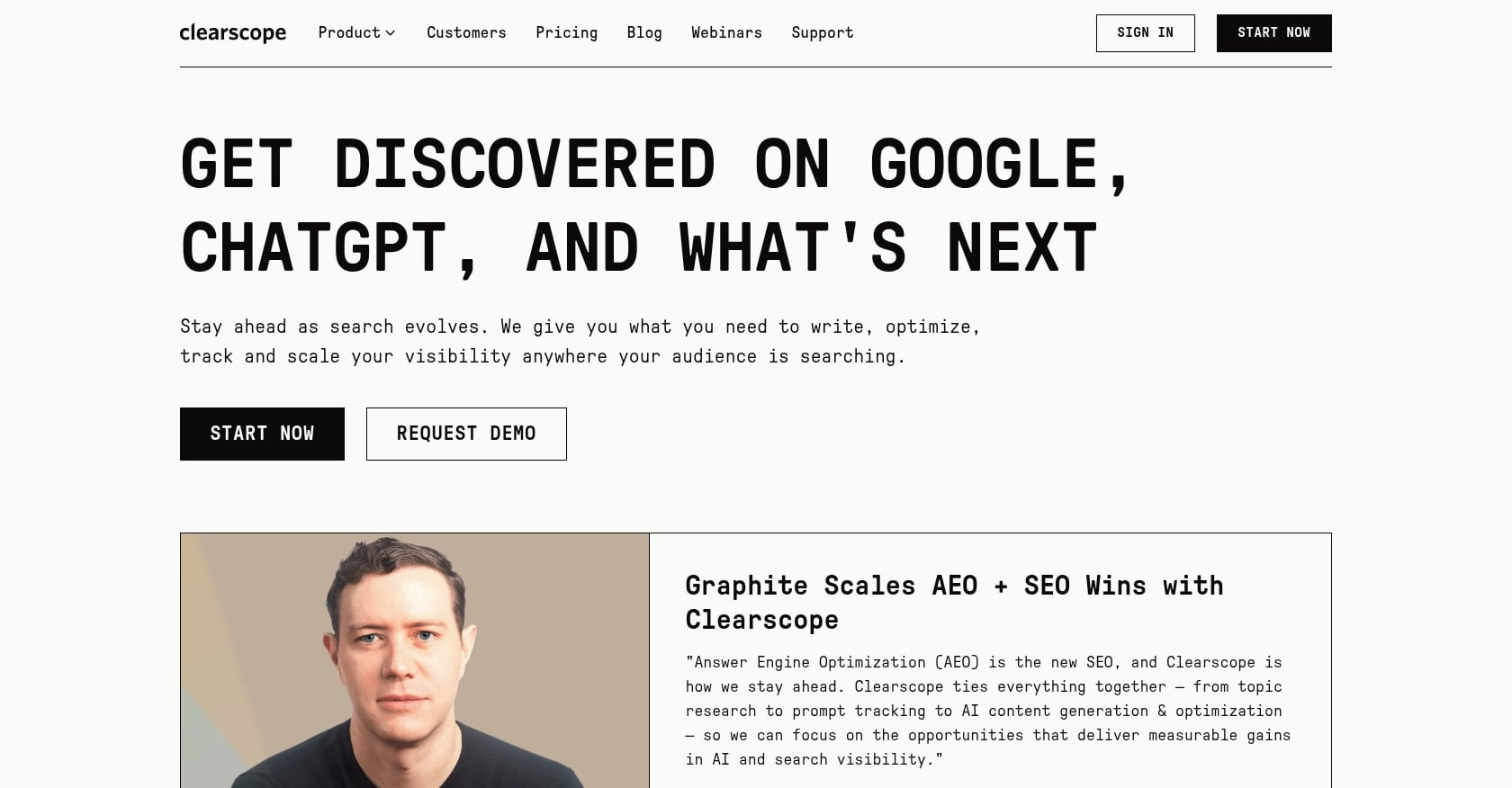
Best for: Editorial teams and agencies that already have writers and want reliable semantic optimization with Google Docs workflows.
Pricing:
- Essentials: $129/month
- Business: $399/month
- G2 rating: 4.9/5 from 92 reviews
Key planning features:
- Real-time content grading against keyword and entity targets
- Google Docs integration so writers see SEO stats while drafting
- Content inventory and refresh support
- Topic exploration and tracked topics
- AI draft capabilities on current paid tiers
What users report:
G2 reviewers consistently praise Clearscope for ease of use and its Google Docs integration. The main complaint is pricing, which several reviewers say is a barrier for smaller teams and freelancers. One reviewer also noted that keyword suggestions sometimes recommend terms a writer would rather leave out, like competitor names in product review content.
Limitations:
- Premium pricing makes it hard for small teams or solo operators to justify
- Does not plan or publish content for you
- More optimization-focused than calendar-focused
- Keyword suggestions occasionally miss the mark for specific content types
Verdict: Clearscope is the best choice when your content team already has a strategy and a publishing rhythm but needs higher-quality optimization standards. It is an editor’s guardrail, not a strategist’s tool.
6. Semrush
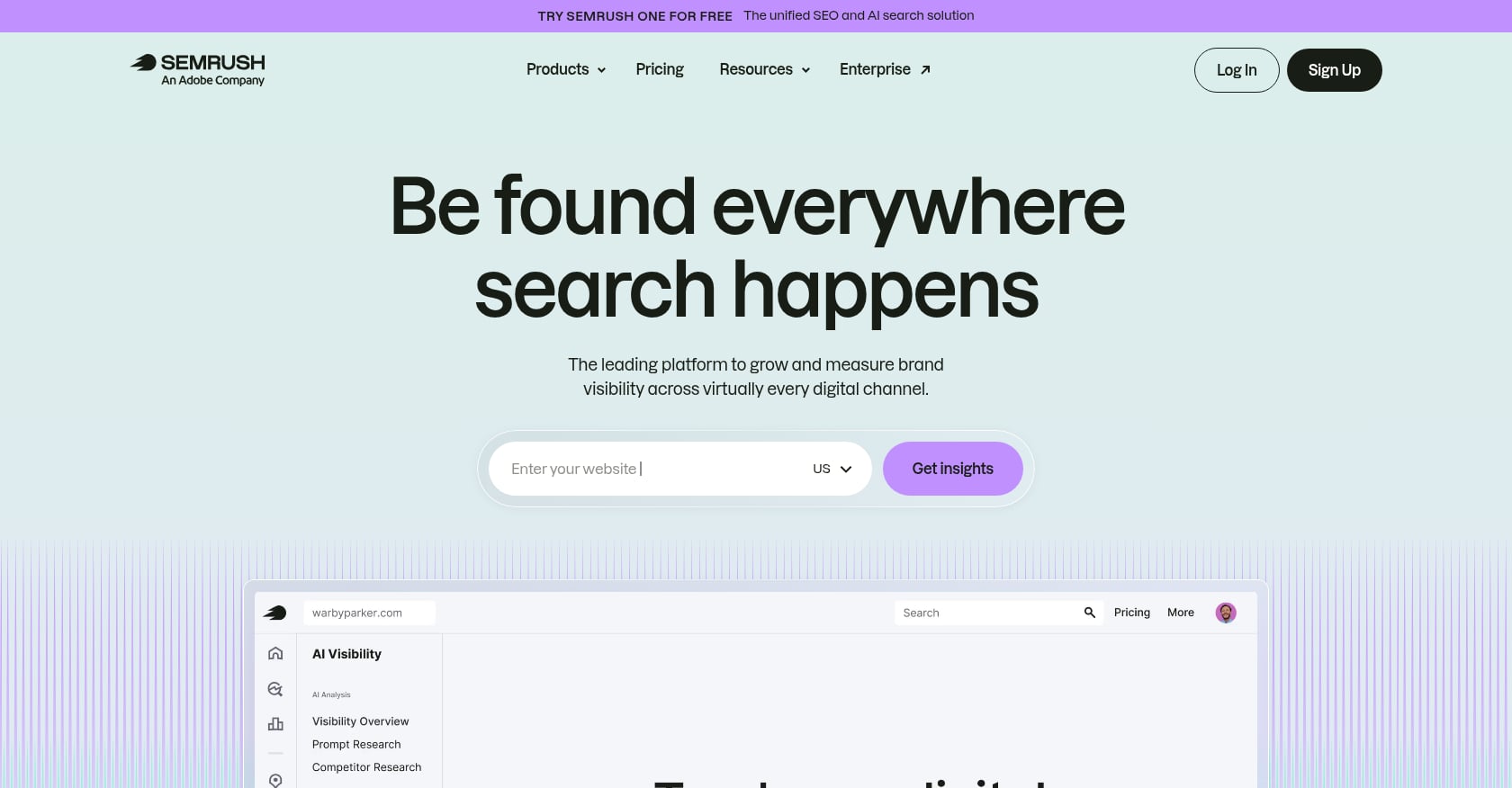
Best for: SEO teams, agencies, and experienced marketers wanting keyword research, competitive analysis, rank tracking, audits, and content tools in one suite.
Pricing:
- Free plan available
- Pro: $139.94/month
- Guru: $249.95/month (includes Content Marketing Toolkit)
- Business: $499.95/month
- Enterprise: custom
- G2 rating: 4.5/5 from 3,381 reviews
Key planning features:
- Keyword research and competitive gap analysis
- Topic Research tool for cluster ideation
- SEO Content Template and SEO Writing Assistant (Guru tier and above)
- Site audits and rank tracking
- AI Visibility Toolkit for monitoring brand presence across ChatGPT, Google AI Overviews, Gemini, and Perplexity
What users report:
A G2 reviewer described Semrush as powerful and comprehensive but said it was not suitable for a solo small business owner because it required too much time and technical knowledge to turn the data into action. Reddit users commonly cite Semrush’s cost and the manual workload it creates, with one 2026 thread questioning whether the tool remains justifiable for smaller operations at current pricing.
Limitations:
- Overwhelms beginners with its breadth and complexity
- Content planning features require Guru tier or above
- Additional users, add-ons, and AI visibility features increase total cost
- All the data in the world still requires someone to execute
Verdict: Semrush is the strongest command center for SEO data. It is not the right choice if you need someone to turn that data into published, optimized content every month.
7. Jasper
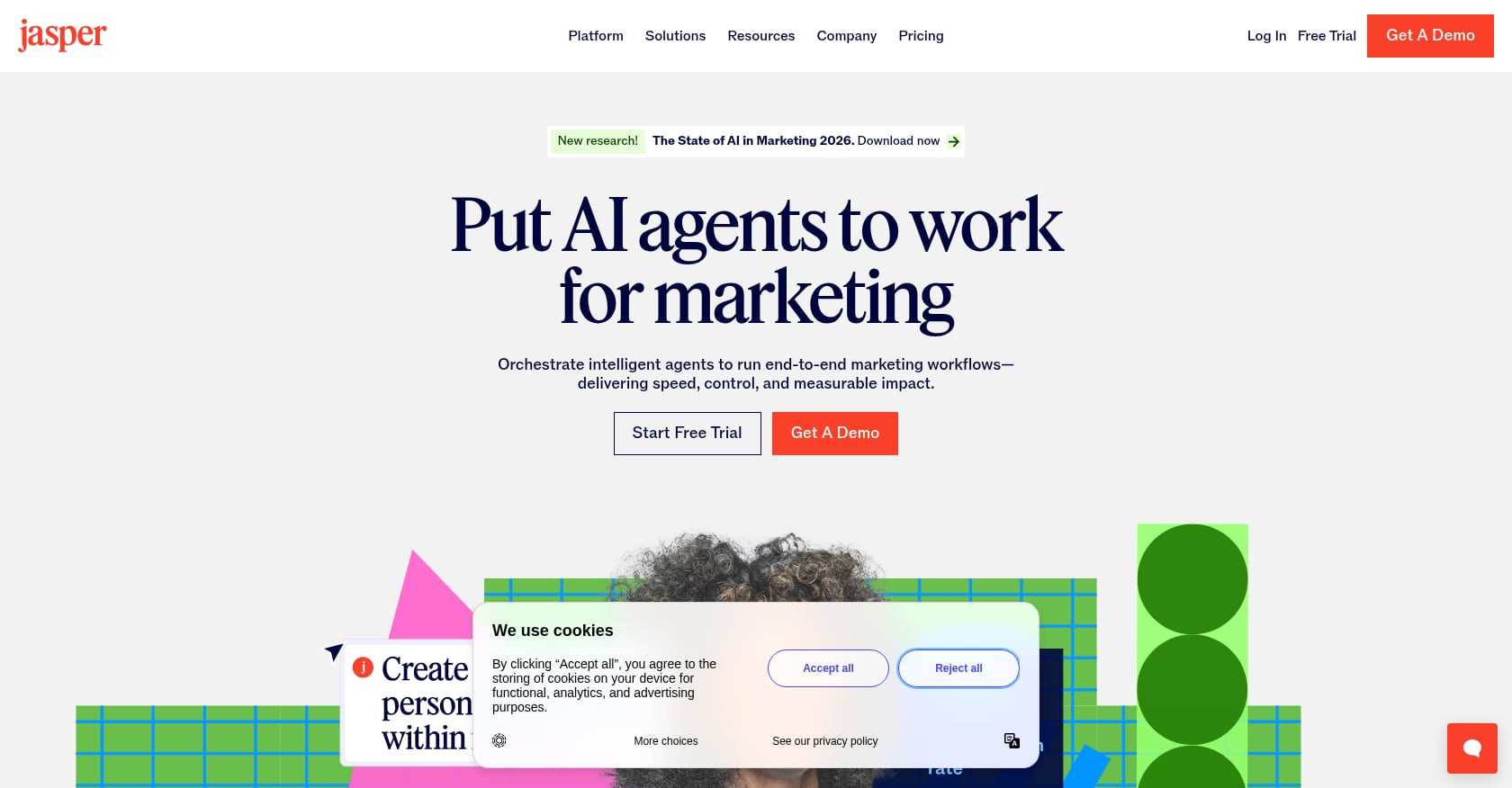
Best for: Marketing teams that need AI-assisted brand voice, campaign copy, and multi-format content workflows.
Pricing:
- Pro: $59/seat/month (1 seat, core workflows, 2 Brand Voices, 5 Knowledge assets)
- Business: custom pricing (marketing agents, governance, API)
- G2 rating: 4.7/5 from 1,270 reviews
Key planning features:
- Brand voice configuration for consistent messaging
- Campaign content templates and workflows
- Multilingual content support (30+ languages)
- Team collaboration on Business tier
- No-code AI App Builder on Business tier
What users report:
G2 reviewers find Jasper expensive but worthwhile when used consistently for regular marketing and blog content. It is less cost-effective for occasional users. Reddit sentiment is more skeptical: one 2026 post argued Jasper worked better for ideation than finished content and that ChatGPT Plus could handle much of the same