

A page I loved that quietly underperformed
I once spent the better part of a week on a landing page I was proud of. I read it aloud, it sounded clean, and I shipped it. Then it quietly underperformed for months and I could not work out why.
On a whim I pasted the text into a keyword density checker. The result was uncomfortable. My main keyword and my brand name were repeated far more than anything else on the page, while the related concepts I genuinely should have covered barely appeared at all. The writing was not bad. It was unbalanced, and there was no way I could see that by eye.
The lesson was humbling and obvious in hindsight. You cannot judge keyword density by reading. A page can feel natural to you and still over emphasize a few terms while missing the surrounding topics that search engines and AI models use to understand what it is really about. To fix it, you have to measure it.
Why keyword density still matters
There was a time when people chased a magic keyword density percentage. That era is over. There is no ideal target number, and stuffing a keyword to hit one will hurt you. But the underlying signal still matters, just in a more modern way.
- Overuse reads as keyword stuffing and makes your writing feel forced to readers, search engines, and AI models alike.
- Underuse and thin topical coverage leave engines unsure what your page is about, so they are less likely to rank or cite it.
Modern search and AI answer engines reward natural language, semantic breadth, and clear topical focus. A density check is simply the fastest way to see whether your wording supports the topic or just repeats a phrase.
The Keyword Density Checker measures what your eye cannot
Our team at RankAI built a Keyword Density Checker, free to run.
You paste your text and instantly get term frequency, density, and overuse signals. It lists your top terms so you can judge whether your wording supports intent without sounding forced.
How to check keyword density for free, step by step
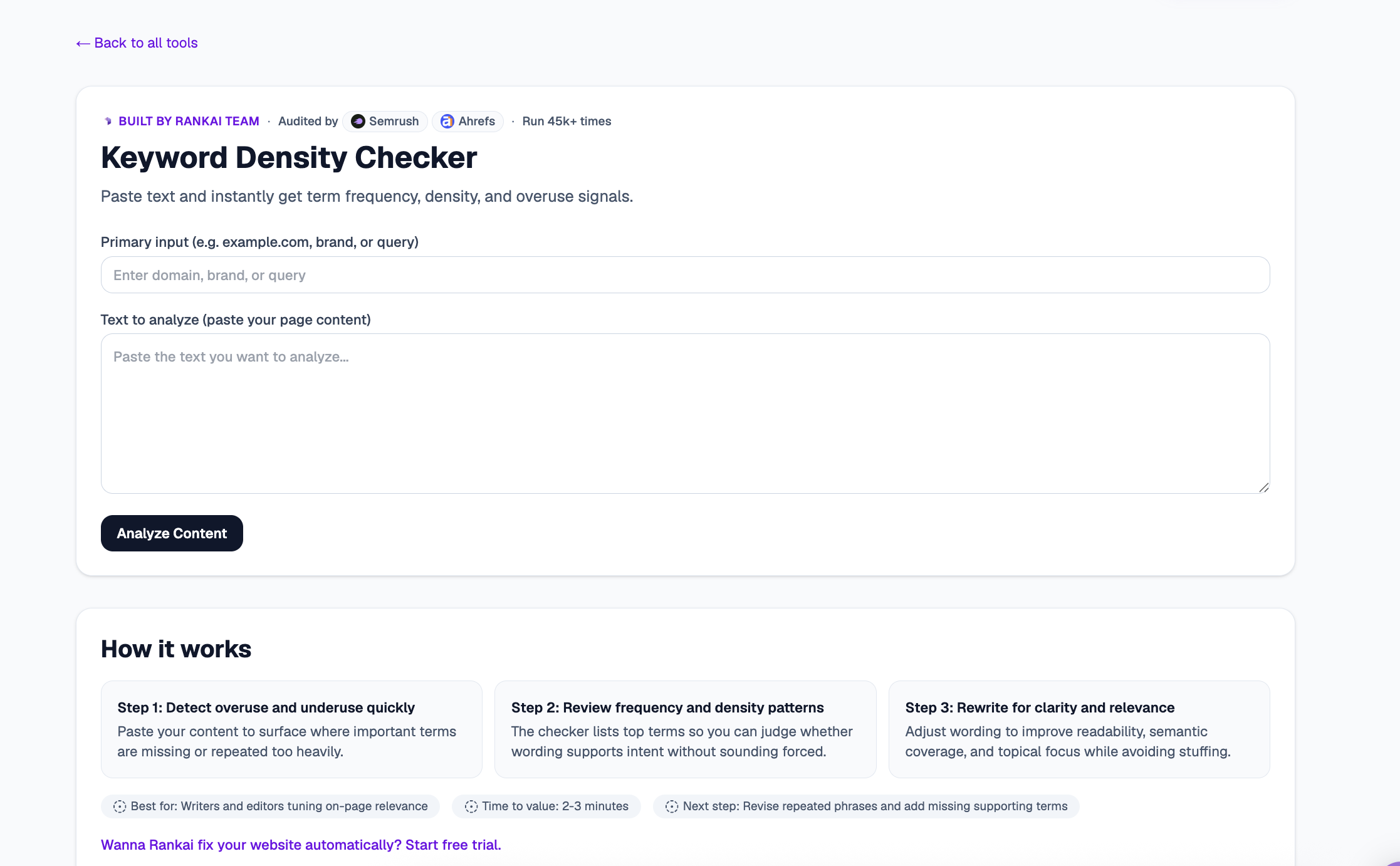
Step 1. Open the free tool
Go to rankai.ai/tools/keyword-density-checker. It is free and you can start in seconds. The page also explains its three step approach: detect overuse and underuse, review frequency and density patterns, and rewrite for clarity and relevance.
Step 2. Add your topic and paste your content
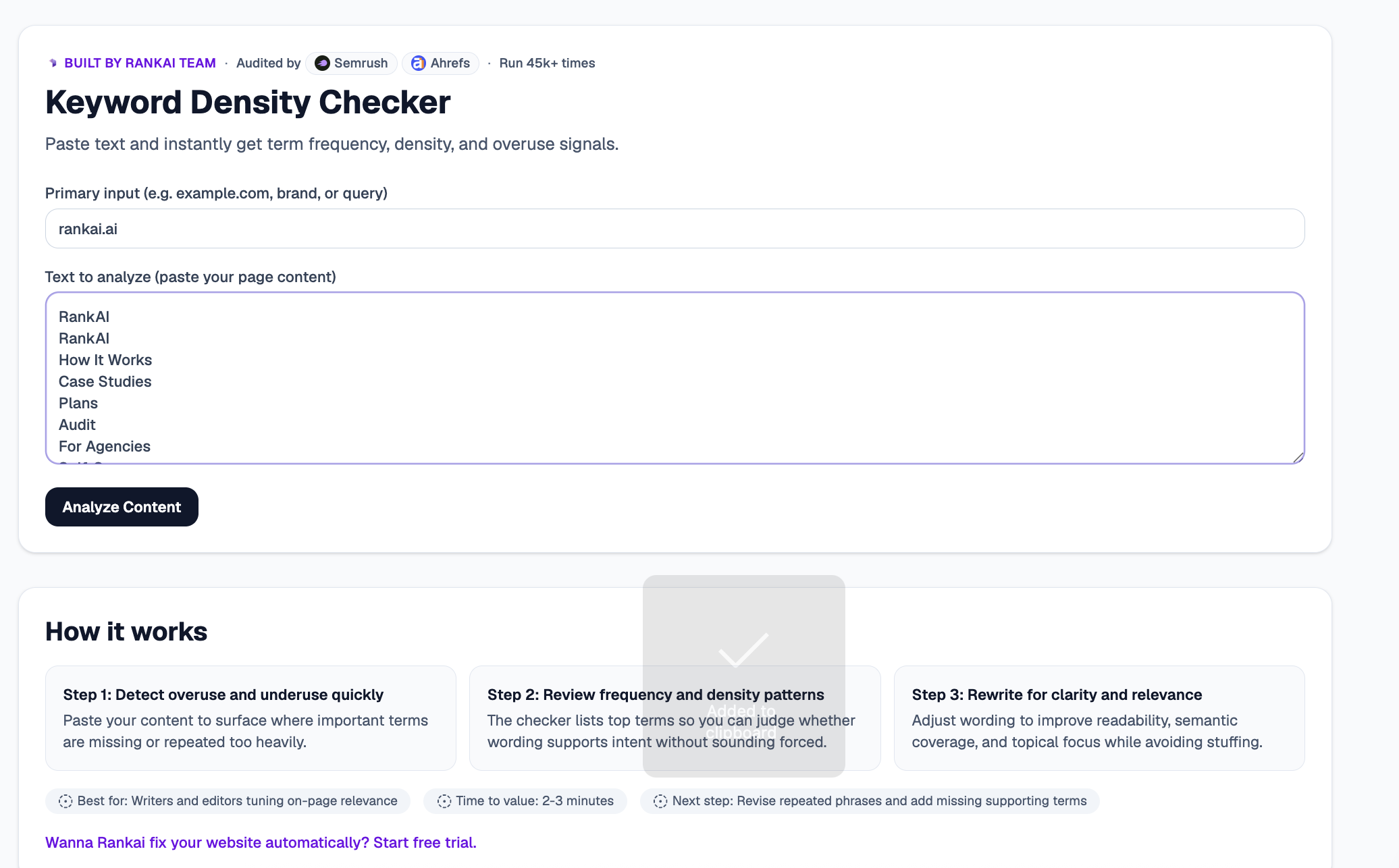
In the Primary input box, type your domain, brand, or target query (for example, rankai.ai). Then paste the page content you want to review into Text to analyze and click Analyze Content.
Step 3. Read your Quick Verdict and Top 3 insights
In a couple of seconds you get a plain English Quick verdict on whether your copy stays below common keyword stuffing thresholds, plus the Top 3 insights. These typically flag which brand and core terms recur most, and suggest synonyms and related concepts to add for stronger topical coverage.
Step 4. Expand "Raw details" for the full term breakdown
Click Raw details to open a structured breakdown: total words, unique terms, and a ranked list of your top terms with their counts and density.
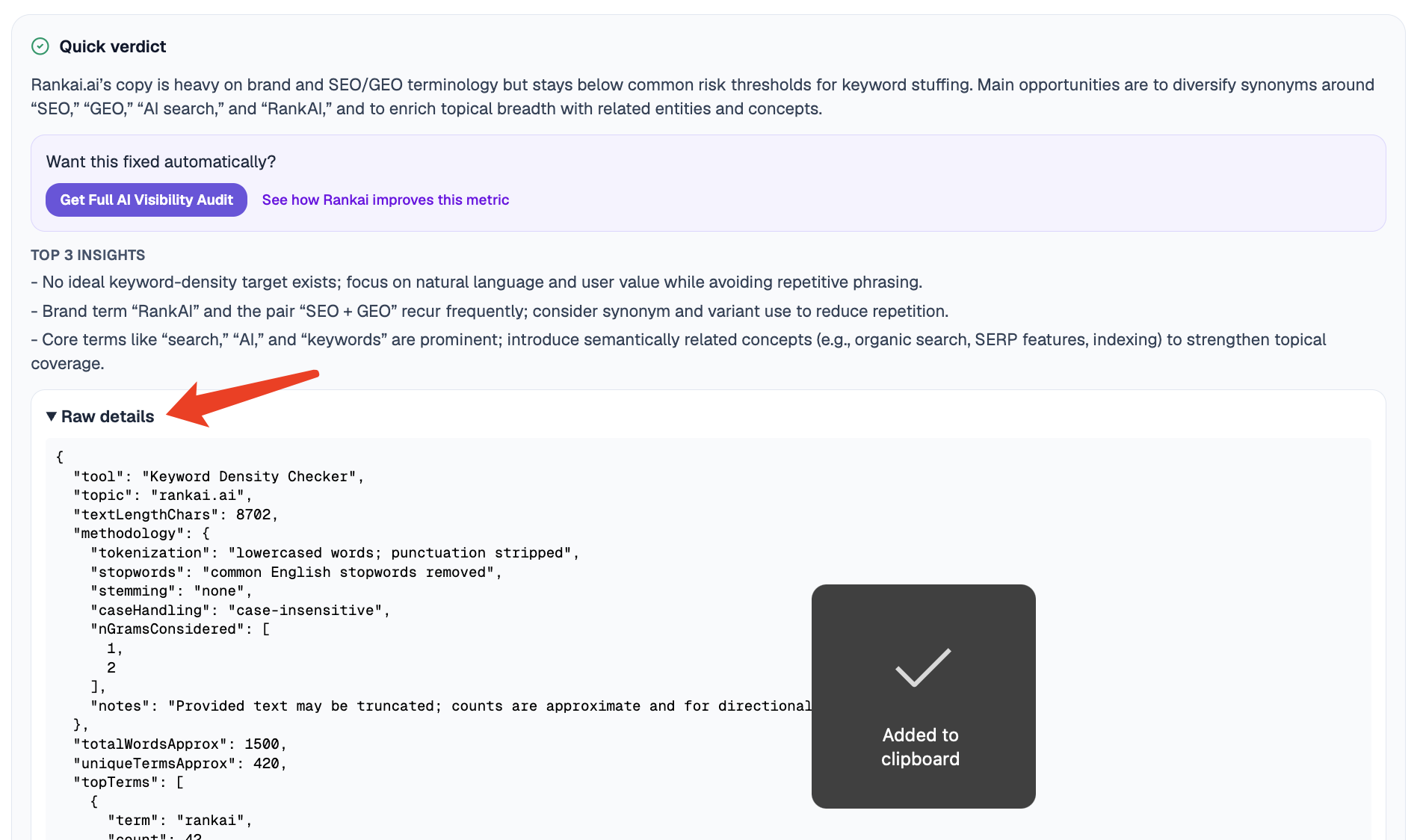
Step 5. Want to go deeper? Get the Full AI Visibility Audit
For a much more detailed analysis of your whole site, not just one page, click Get Full AI Visibility Audit.
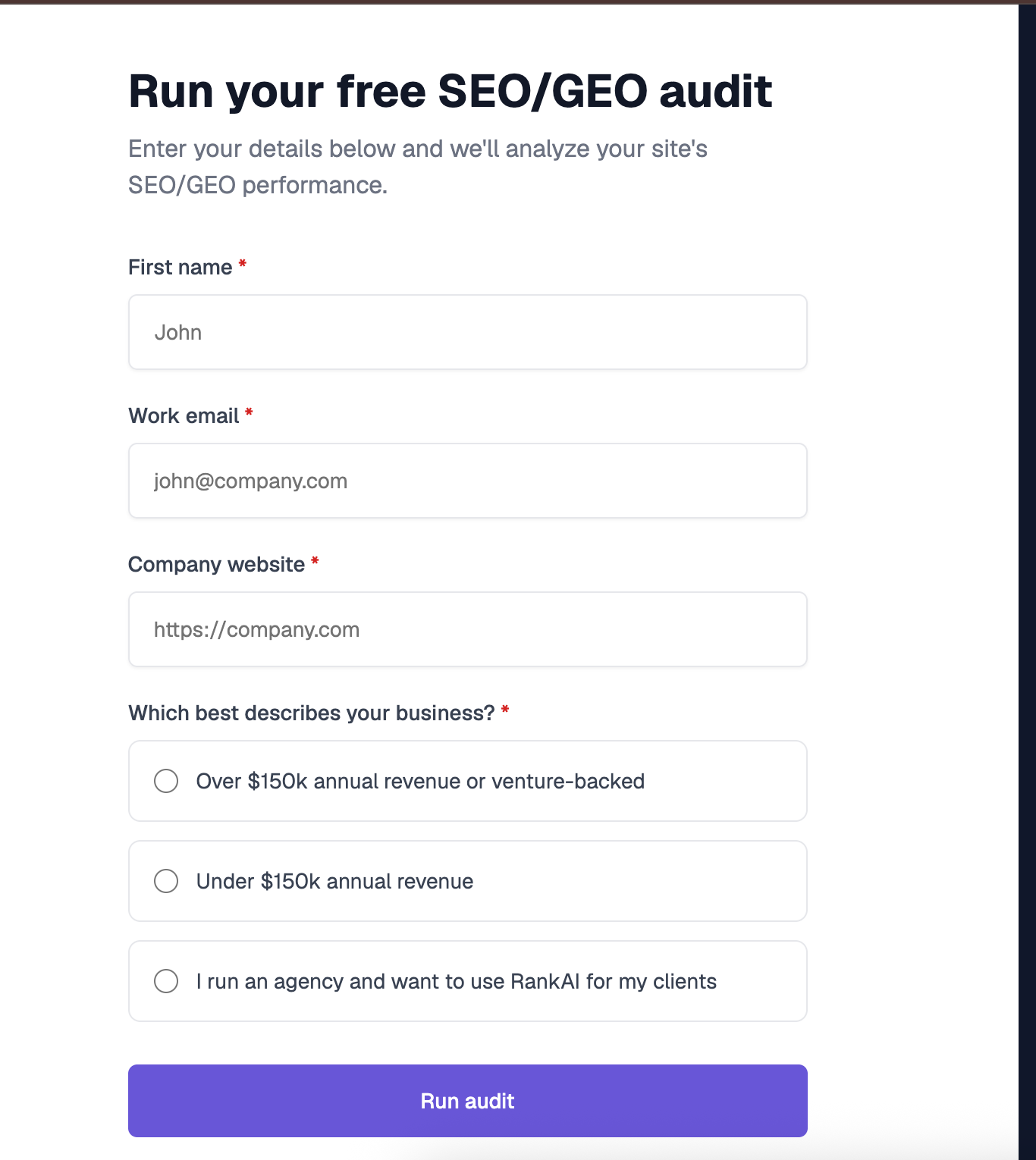
Step 6. Fill in your details to unlock the full audit (still free)
Enter your first name, work email, and company website, pick the option that best describes your business, and click Run audit. You get a far more detailed AI visibility analysis, still completely free, including a full, prioritized SEO and GEO optimization checklist.
What to do with your results
Once you can see your term frequency clearly, the highest impact moves are usually:
- Revise repeated phrases. Where a term is over used, swap in natural synonyms and variants so the writing reads cleanly.
- Add missing supporting terms. Introduce semantically related concepts so engines understand the full topic, not just one keyword.
- Keep it natural. Do not write to a target percentage. Write for the reader, then use the checker to catch imbalance.
Re run the checker after editing to confirm your wording is balanced.
