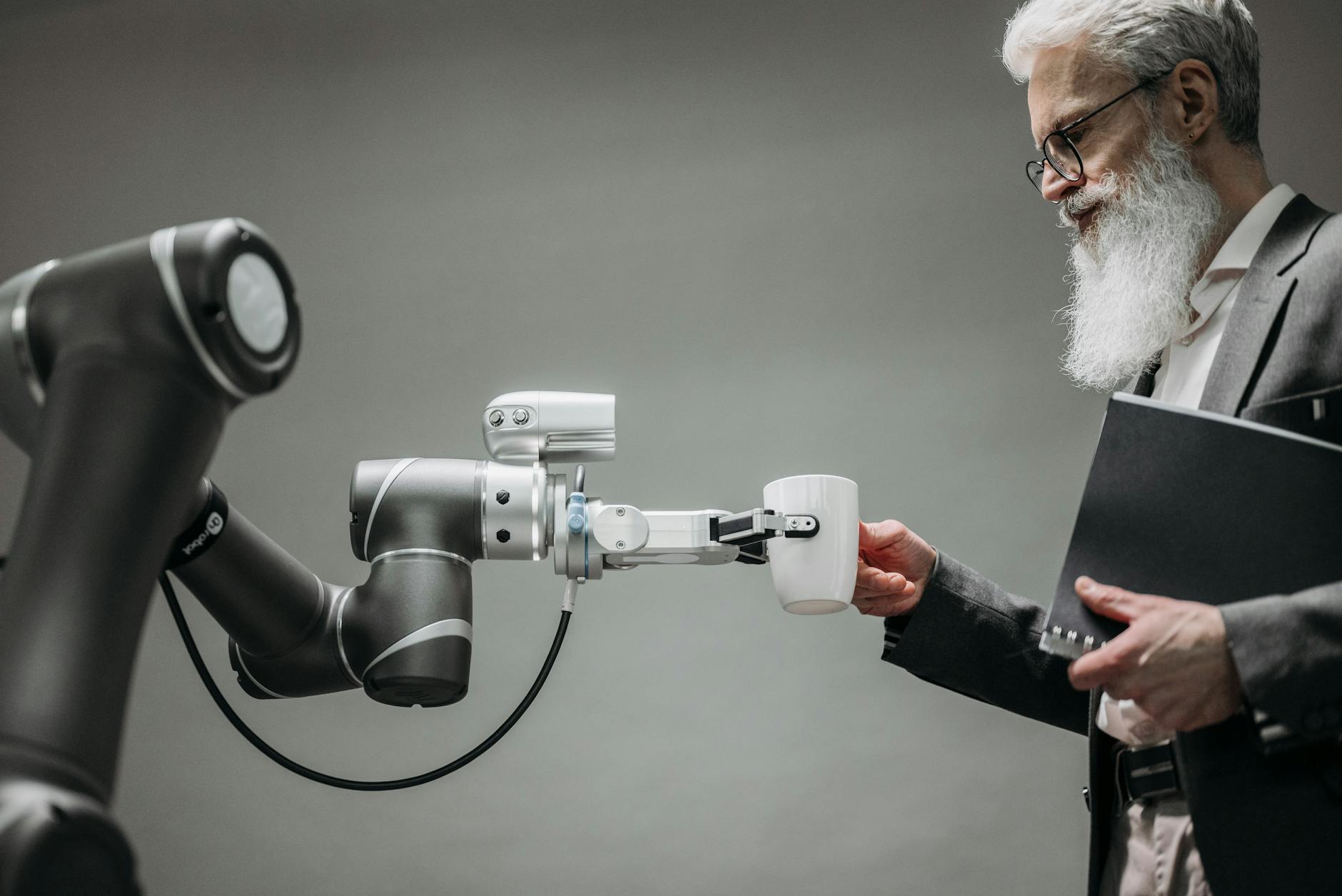
The rise of AI has completely changed how we create content. With tools that can write and edit in seconds, it’s easy to wonder if we’ve reached a new era. This leads to a critical question for anyone publishing content online: is automated content enough or do I need human editors to ensure quality?
While AI editing tools are incredibly powerful for catching basic errors and speeding up workflows, they have significant limitations. Human editors provide a layer of nuance, creativity, and strategic thinking that algorithms can’t replicate. This guide explores the strengths and weaknesses of both, helping you decide when to lean on AI, when to invest in a person, and how a hybrid approach might be the perfect solution for you.
AI vs. Human Editors: What’s the Real Difference?
At a glance, the main difference is speed versus depth. An AI can scan an entire document for grammar and spelling in seconds, a task that would take a human editor much longer. But the value of editing goes far beyond finding typos.
What AI Copyediting Tools Do Well
An AI copyediting tool is software that analyzes text and suggests edits automatically. Tools like Grammarly or ProWritingAid are great at handling basic copyediting concerns; if you’re choosing tooling, explore our guide to SEO automation tools. They excel at correcting the fundamentals:
- Grammar and Syntax: AI is great at spotting incorrect verb tenses, subject verb agreement issues, and fragmented sentences. Top tools can boast near 100% accuracy on these basic checks.
- Spelling and Punctuation: They rarely miss a typo or a misplaced comma in a simple sentence.
- Consistency: AI can enforce consistent capitalization and formatting rules across a long document without getting tired.
For a quick first pass to clean up obvious mistakes, AI is an incredibly efficient assistant. It acts as a first line of defense, catching the low hanging fruit so that human effort can be focused on more complex issues.
Where Human Editors Provide Deeper Value
A human editor does more than just correct your writing; they improve it. They bring skills that algorithms are still struggling to master. A person provides an objective lens that goes beyond rules to focus on impact and clarity. Humans can:
- Understand Context and Nuance: An editor understands sarcasm, irony, and subtext. They know that the sentence “Visiting relatives can be annoying” has two different meanings and can clarify it based on the surrounding text, something an AI might miss.
- Preserve the Author’s Voice: One of the biggest risks with automated tools is that they can “flatten” your writing, making a unique and engaging voice sound generic. A good human editor refines your text while ensuring it still sounds like you.
- Focus on Creativity and Storytelling: Great writing tells a story. A human editor ensures your narrative flows logically, your arguments are persuasive, and your message has an emotional impact. They might suggest reordering paragraphs for a better reveal or adding an anecdote to make your introduction more powerful, edits that require a deep understanding of storytelling. They also help you create authoritative content for Google that balances expertise with readability.
So, when considering is automated content enough or do I need human editors, the answer often depends on how much these deeper qualities matter for your specific piece of content.
The Risks of Relying Only on AI Editing
Going with an AI only editing approach is tempting because it’s fast and cheap. However, this path is filled with potential pitfalls that can harm your content’s quality and credibility.
When AI Priorities Clash with Your Goals
AI platforms are programmed to follow rules and patterns. Their priority is often to enforce a formal, standardized version of English because that’s what dominates their training data. In fact, one analysis found that over 68% of English data in leading grammar checkers came from U.S. sources, creating a bias toward American conventions.
This can create a conflict with your goals as a writer. You might intentionally use a sentence fragment for impact or a regional spelling like “realised” for a UK audience. An AI might flag these as errors, not understanding they are deliberate stylistic or cultural choices. This is why you must maintain vigilance when reviewing AI suggestions and not blindly accept every change.
The Dangers of Factual Errors and Overlooked Mistakes
A significant concern with automated content is factual accuracy. AI models are known to “hallucinate,” meaning they can confidently state incorrect information or even invent sources. The Nielsen Norman Group highlighted this as a persistent issue that cannot be fully eliminated. An AI will not verify that the statistic you quoted is correct or that the historical date is accurate. A human editor, especially in fields like journalism or academia, will check facts as part of their process. To reinforce trust signals, add clear bylines and implement author schema alongside rigorous human fact‑checking.
Furthermore, AI can overlook errors that are grammatically correct but logically nonsensical. A human editor will notice that a sentence accidentally implies mountains can fly, while an AI might see no issue with the sentence structure itself.
The Strategic Advantage of Investing in a Human Editor
For content that truly matters (think key marketing pages, published articles, or business proposals), a human editor is an investment that pays for itself in quality and performance.
Getting Comprehensive, Actionable Feedback
When you’re unsure about your work’s quality or trying a new type of copy for the first time, you need more than just corrections. You need comprehensive feedback. A human editor provides this by explaining why a change was made and offering guidance on structure, flow, and tone. This feedback is a learning experience that helps you grow as a writer. An AI might label a sentence “wordy,” but a human can explain that your tone might alienate a specific audience and suggest how to rephrase it to be more inclusive.
Personalizing Content for Your Audience and Industry
Effective content speaks directly to a specific audience. Human editors excel at target audience personalization. Start with content mapping to align topics, intent, and funnel stage. They can adjust the reading level, terminology, and tone to match the reader’s expectations. For example, they know to simplify complex jargon for a general audience (the average American reads at an 8th grade level) while using precise technical language for an expert one.
This extends to industry specific knowledge. An editor familiar with the legal, medical, or tech field will catch subtle errors in terminology that a generalist AI would miss. This ensures your content is not only correct but also credible to an audience of specialists.
How a Human Editor Can Actually Save You Time
It might sound counterintuitive, but hiring an editor can save you a significant amount of time. Instead of you spending hours on multiple rounds of self editing, a professional can deliver a polished draft in a single, efficient pass. This frees you up to focus on what you do best: creating more content or running your business. A good editor streamlines your workflow, reducing the need for endless revisions with clients or stakeholders.
For businesses looking to scale their content without sacrificing quality, services that blend AI with human expertise (and leverage programmatic SEO) offer a compelling solution. For example, a modern SEO service like Rankai’s $499/month program uses AI to generate content at a high volume (20+ pages per month) but has human experts guide the strategy, edit the output, and even rewrite pages until they rank. This hybrid model provides the speed of AI with the quality assurance of human oversight.
Making the Right Choice: A Practical Guide
Deciding is automated content enough or do I need human editors comes down to a realistic assessment of your goals, resources, and the stakes of each project.
When Can You Skip a Human Editor?
Not every piece of writing needs a professional edit. You can likely skip it under certain conditions:
- Low Stakes Content: For internal memos, casual social media posts, or personal notes, an AI grammar check is often sufficient.
- Tight Budget Constraints: If you simply can’t afford an editor, you have to rely on the best available tools and your own proofreading skills. Use our step-by-step guide on how to do SEO yourself.
- Extreme Deadline Challenges: When a piece has to be published in the next hour, there may not be time for a human review. In these cases, a quick AI pass is better than nothing, but it’s a risky habit.
When Should You Absolutely Hire a Human Editor?
- High Stakes Content: Your website’s homepage, a sales landing page, a published book, or an academic paper.
- When Your Reputation is on the Line: Any content that represents your brand or your professional expertise.
- When You Need to Ensure Factual Accuracy: For any content involving data, research, or sensitive information.
- When You Submit AI Generated Copy: Raw AI drafts often require a heavy edit or a full rewrite to fix awkward phrasing, add a human touch, and verify facts. An editor can turn a mediocre AI draft into a high quality piece.
Ultimately, the best strategy for many content creators is a balanced one. Use AI tools for what they do best (quick checks and first drafts) but rely on human editors for the final polish and strategic oversight that ensures your content truly connects with your audience.
If you’re looking for a “done for you” solution that provides this balance, consider exploring a service that handles the entire process from keyword research to publishing and optimization. Check out how Rankai can help you scale your content creation with a human touch.
Frequently Asked Questions
1. Is automated content enough or do I need human editors for SEO?
For modern SEO, relying only on automated content is risky. While AI can produce keyword‑rich text quickly, search engines like Google are increasingly focused on content quality, topical authority, and user experience. Human editors ensure the content is accurate, engaging, and genuinely helpful to the reader, which are key ranking factors. They also improve flow and readability, keeping users on the page longer. To understand how helpful content is surfaced today, see our guide to Google AI Overview.
2. Can AI editing tools catch every single mistake?
No. AI tools are excellent at catching common grammatical errors, typos, and punctuation issues. However, they often miss mistakes related to context, nuance, tone, and factual accuracy. They might not catch a logically flawed argument or a culturally insensitive phrase.
3. How much does a human editor cost compared to an AI tool?
Human editing is more expensive upfront. Freelance copyeditors might charge around 2 to 3 cents per word, meaning a 1,000 word article could cost $20 to $30. In contrast, premium AI editing tools typically operate on a subscription model around $20 to $30 per month for unlimited use.
4. What is the biggest risk of using only AI for editing?
The biggest risk is publishing content that is factually incorrect, tonally inappropriate, or difficult to read, which can damage your credibility. AI models can “hallucinate” false information, and they struggle to adapt content for specific audiences or cultural contexts, potentially alienating your readers.
5. Are there situations where just using an AI editor is fine?
Yes. For low stakes, informal writing like internal emails, personal blog posts with a casual audience, or first drafts that will be reviewed later, an AI editor is often good enough to catch major errors and improve basic clarity.
6. Does submitting a poor quality draft to an editor cost more?
It can. Editors often charge based on the time and effort required. A draft with severe structural and grammatical issues may be considered a “heavy edit” or rewrite, which typically costs more than a standard copyedit of a well written draft.
7. How does a hybrid AI and human editing model work?
A hybrid model uses AI for speed and efficiency in the initial stages (like drafting or basic proofreading) and then involves a human editor for higher level tasks like refining the tone, improving the flow, verifying facts, and ensuring the content meets strategic goals. Services like Rankai use this model to produce high quality content at scale.