

This guide explains what google maps seo services include, how Maps ranking really works, and how to scale local visibility for one location or hundreds. It is written for owners and marketers at service businesses, retail, restaurants, healthcare, multi location brands, and agencies that need consistent results without wasting time or budget. If hands off execution is the goal, consider a flat monthly program like Rankai that plans topics, fixes issues, and rewrites pages until they rank.
What is Google Maps SEO compared to traditional SEO
Google Maps SEO focuses on earning visibility inside the Maps interface and the Local Pack on Search. The core unit is your Google Business Profile, not just your website. Traditional SEO centers on organic blue link results. Maps ranking relies on profile completeness, proximity, reviews, and real world prominence, then connects to landing pages that match local intent. Google documents three primary factors for local results, relevance, distance, and prominence. (support.google.com)
Why Google Maps visibility matters for local businesses
Maps is where purchase intent turns into visits and calls. Two data points show why it is worth prioritizing now. Google reports that 76 percent of people who search on a smartphone for something nearby visit a business within a day and 28 percent of those searches result in a purchase. (thinkwithgoogle.com) Google also finds that 70 percent of consumer journeys involve a Google touchpoint like Search, YouTube, or Maps, so your profile is often in the path to revenue. (thinkwithgoogle.com)
Reviews drive decisions inside Maps. In BrightLocal’s 2024 survey, 88 percent of consumers would use a business that replies to all reviews, compared with 47 percent who would use a business that does not respond. The same study shows Google remains the most used site for reading local reviews at 81 percent in 2024 and only 3 percent say they never read reviews. (brightlocal.com)
Photos influence actions. Google cited that businesses with photos receive 42 percent more requests for directions and 35 percent more clicks to their websites than those without photos, which BrightLocal’s analysis summarizes. (brightlocal.com)
How Google ranks in Maps, Relevance, Distance, Prominence
Google confirms three signals determine local results. Relevance is how well your profile matches the query, distance is how close you are to the searcher, and prominence is how well known and trusted your business is online. More reviews and positive ratings can help your local ranking and links from other sites also contribute to prominence. There is no way to pay for a better local ranking. (support.google.com)
Independent annual studies by local experts show the same pattern. Grouped factors from the well known Local Search Ranking Factors survey indicate Google Business Profile signals drive roughly a third of Local Pack performance, with reviews the next largest group. (brightlocal.com)
If competition is dense, proximity caps how far you rank. Practitioners often see strongest visibility within a few miles in cities and a wider radius in rural areas, which reinforces the need to build prominence and relevance over time. (reddit.com)
Align your profile with local search intent
Google Maps users want nearby, open, and relevant options. Align content to that intent.
- Choose the correct primary category and add supporting categories to clarify services.
- Write a concise business description that mirrors your services and locations.
- Keep hours, holiday hours, and attributes updated since Google calls these out as quality signals in its own guidance. (support.google.com)
- Add photos that show exterior and interior, staff, products, menu, and before and after shots. The photo engagement lift cited above is meaningful for google maps seo services tactics. (brightlocal.com)
- Publish Posts for offers and events and add Products or Services where relevant so the profile answers questions without extra clicks.
Build prominence, reviews, NAP consistency, and behavioral signals
Prominence grows from sustained reputation and brand mentions across the web.
- Reviews matter for both ranking and conversion. BrightLocal shows reply behavior correlates with usage and trust. Build a request system that drives steady, compliant reviews and always respond. (brightlocal.com)
- NAP consistency on key directories reduces confusion and reinforces trust. Whitespark’s grouped factors place citations as a supporting signal, useful for quality control across platforms. (brightlocal.com)
- Behavioral signals like clicks, calls, and direction requests rise when profiles stay fresh. The photo statistic from Google and BrightLocal’s review response finding highlight practical ways to lift those actions, which supports google maps seo services outcomes. (brightlocal.com)
Multi location challenges and why monitoring and automation are essential
At scale, small errors compound. A wrong suite number or outdated hours can ripple across dozens of listings and hurt conversion. Experts track that Local Pack success is dominated by Business Profile signals and reviews, which means centralizing categories, hours, attributes, and review responses is non negotiable. (brightlocal.com)
Enterprise teams should standardize naming conventions, UTM tags for URLs, and photo schedules. Set alerts for user suggested edits since Google can change live info and require owners to revert changes. To keep publishing velocity high without bloating headcount, some teams lean on AI assisted workflows and partners that manage google maps seo services end to end. If you prefer a done for you model that also produces and rewrites web pages to support each location, consider Rankai.
AI and automation assisted scaling for enterprise and local first brands
AI can triage and draft review responses, generate location pages, and flag listings that slip below a benchmark. BrightLocal’s 2024 data even found consumers sometimes preferred an AI written review response when compared side by side, which shows how quality assistance can save time without hurting trust when used carefully. This approach also enables programmatic SEO for multi-location scale.
Use automation to
- Detect category mismatches and missing attributes
- Schedule seasonal hour updates and Posts
- Route negative reviews to humans and draft replies for routine cases
- Monitor rank by grid so you see coverage, not just a single average position
If you want a single partner that brings AI content, human editing, and iterative rewriting for location pages together with google maps seo services, look at Rankai.
Top 15 Google Maps SEO Services
Building on the strategy above, this section translates local search principles into 15 concrete services you can deploy right away. They’re grouped to cover the full lifecycle: foundational setup, relevance and trust signals, content and engagement, and performance tracking, so you can execute as an integrated program rather than isolated tasks. Use it to spot quick wins and assemble a repeatable playbook for single or multi-location growth.
1. Claim and verify your Google Business Profile
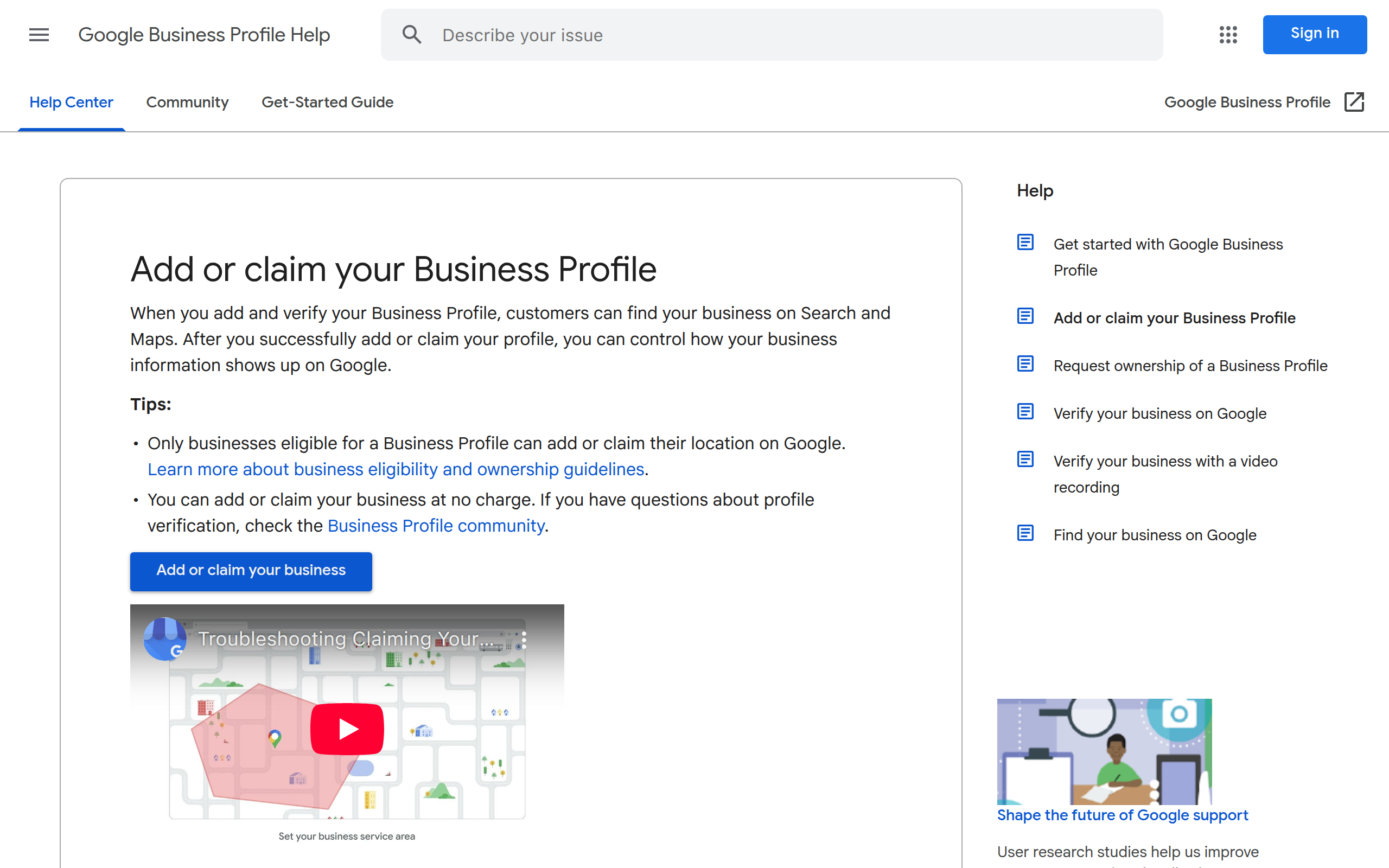
Without verification, you’re invisible in the places local buyers make decisions. Securing and optimizing your Google Business Profile proves ownership, unlocks features, and lets you publish accurate data that drives the Local Pack and Maps. Dialed-in categories, precise address or service areas, and an active presence (photos, posts, reviews) amplify relevance, distance, and prominence, converting nearby searches into calls, clicks, bookings, and foot traffic.
Bottom line: Verified control of your GBP is the key that opens Maps visibility and turns “near me” intent into revenue.
What we’ll execute
- Claim and verify the listing; select accurate primary and secondary categories.
- Configure business type (storefront, service-area, hybrid), address visibility, and realistic service area.
- Complete NAP, description, services/products, attributes, website, opening date, and hours (including holidays).
- Plan/execute video verification or alternates; manage resubmissions and user access.
- Stand up reviews workflow: request automation, response templates, Q&A monitoring.
- Upload high-quality logo, cover, interior/exterior, team, and product photos; set a Google Posts cadence.
- Build local landing pages (NAP + map), clean up citations, implement UTM and call tracking, rank tracking, and reporting.
Buyer notes
- Keep NAP consistent everywhere, with no exceptions.
- Respond to every review within 48 hours; add fresh media regularly.
- Avoid keyword stuffing and thin location pages.
- Multi-location: maintain unique fields and pages per location.
KPIs to watch
- GBP views and searches; Maps/Local Pack rankings.
- Calls, direction requests, website clicks.
- Review volume and sentiment; UTM conversion rate.
- Bookings and lead form completions.
2. Use relevant Google Business Profile categories
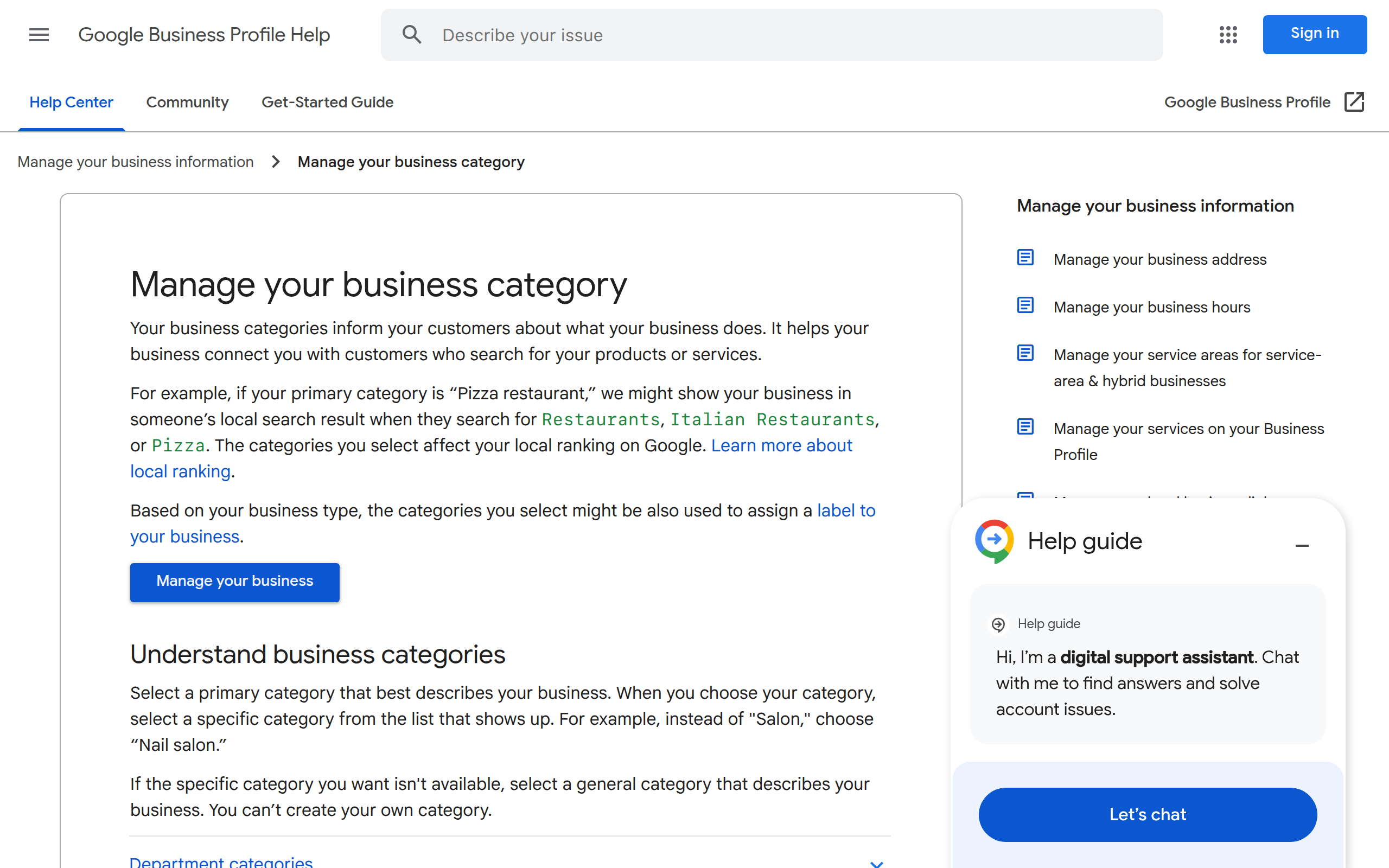
Categories are the strongest instant signal of what you do. Choosing the most specific primary category (with a tight set of secondary ones) raises your relevance for profitable local queries and unlocks features like services, booking, and products that boost engagement. Combined with proximity and prominence, accurate categories help you surface where it counts and turn views into calls, direction requests, bookings, and walk-ins.
Bottom line: The right categories put you in the right searches and win the click when buyers are ready.
What we’ll execute
- Category audit across your listing(s), target queries, and top competitors to identify a winning primary and supporting set.
- Selection of a revenue-aligned primary plus concise, relevant secondaries, with documented rationale.
- Implementation in GBP; confirm propagation to Search/Maps; manage any re-verification.
- Feature activation tied to categories: Services, Booking, Menu, Products with structured items and pricing.
- On-site reinforcement via local pages, NAP, internal links, and schema.
- Measurement and quarterly iteration based on rankings, engagement, and leads.
Buyer notes
- Keep NAP consistent across all assets.
- Respond to reviews within 48 hours to lift prominence.
- Don’t overload categories or stuff keywords.
- Multi-location: tailor categories per market.
KPIs to watch
- GBP views, Local Pack rankings, calls, direction requests.
- Website clicks, messages, bookings.
- Review volume/sentiment and UTM conversion rate.
- Goal completions and revenue impact.
3. Optimize key business information on Google Maps listings
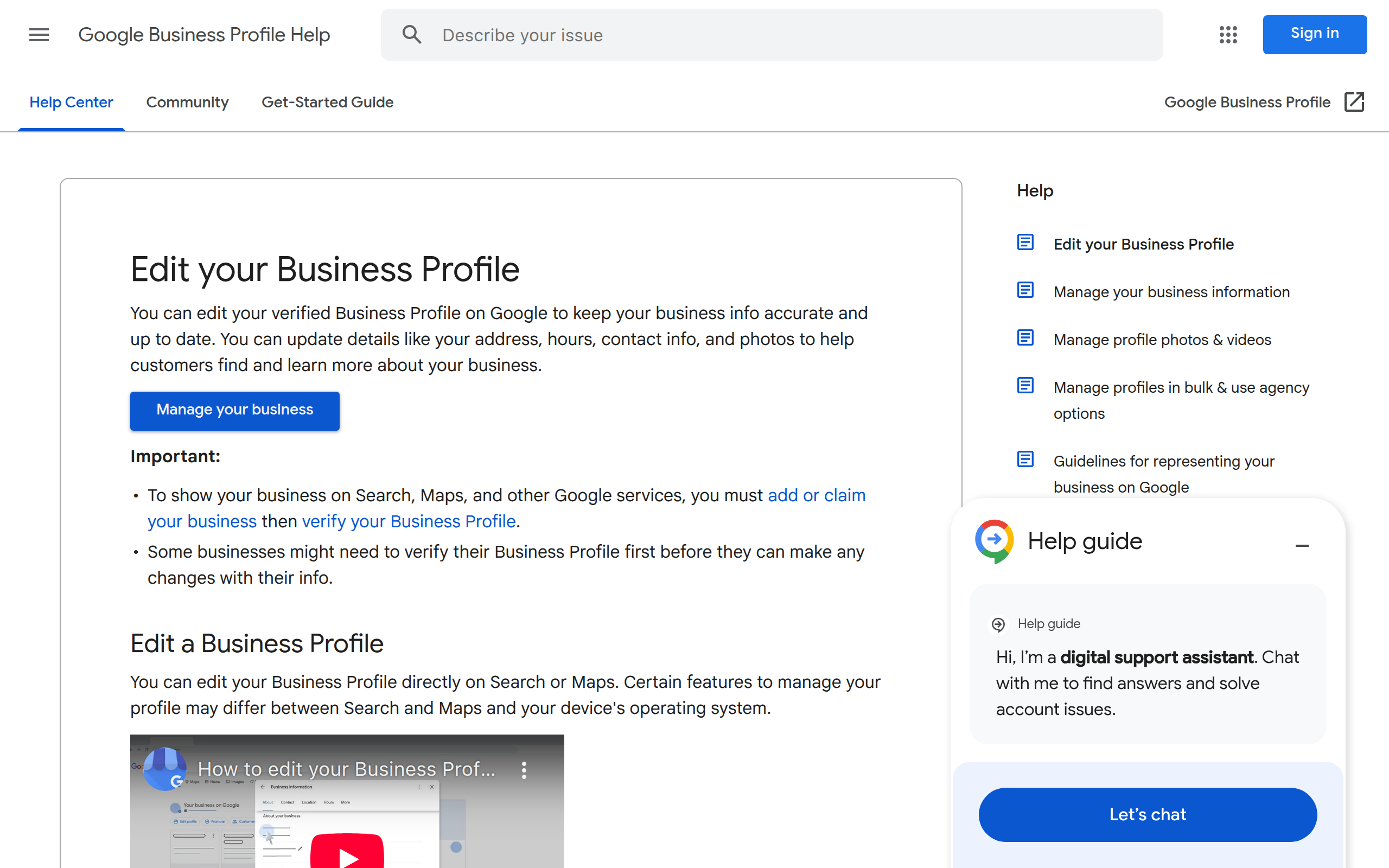
When every detail is correct and complete, Google trusts your listing, and customers do too. Clean NAP, accurate categories, precise pins, dialed-in hours (especially holidays), and robust services/products strengthen relevance and prominence while reducing friction. The result is more “open now” visibility, justifications that justify clicks, and higher conversion to calls, directions, bookings, and store visits.
Bottom line: Precision beats guesswork. Accurate data fuels rankings and turns discovery into action.
What we’ll execute
- Claim/verify GBP; merge duplicates; fix pin/service areas.
- Set primary/secondary categories, attributes, opening date.
- Add services/products with descriptions, pricing, and menu/product links.
- Optimize description; configure website, appointment, order, quote links with UTM.
- Standardize NAP; use a local primary phone; add tracking as secondary; enable call history.
- Configure regular/special hours; preload holidays; mark temporary closures when needed.
- Media plan: photo/video standards, seasonal refresh, consistent Posts cadence.
- Align location pages (mirrored NAP/hours/services), embedded map, internal links, LocalBusiness schema, and run a technical SEO audit to catch site-wide issues that suppress Maps conversions.
- Monitor Q&A and Suggested Edits; respond fast; review categories/services monthly.
Buyer notes
- Keep NAP identical across GBP, site, and citations.
- Maintain up-to-date regular and holiday hours.
- Avoid keyword stuffing and excessive categories.
- Multi-location: unique pages, fields, and photos.
KPIs to watch
- GBP views and Local Pack rankings.
- Calls, direction requests, website clicks.
- Review volume, sentiment, and response rate.
- UTM conversion rate, bookings, and revenue.
4. Maintain NAP consistency across all locations
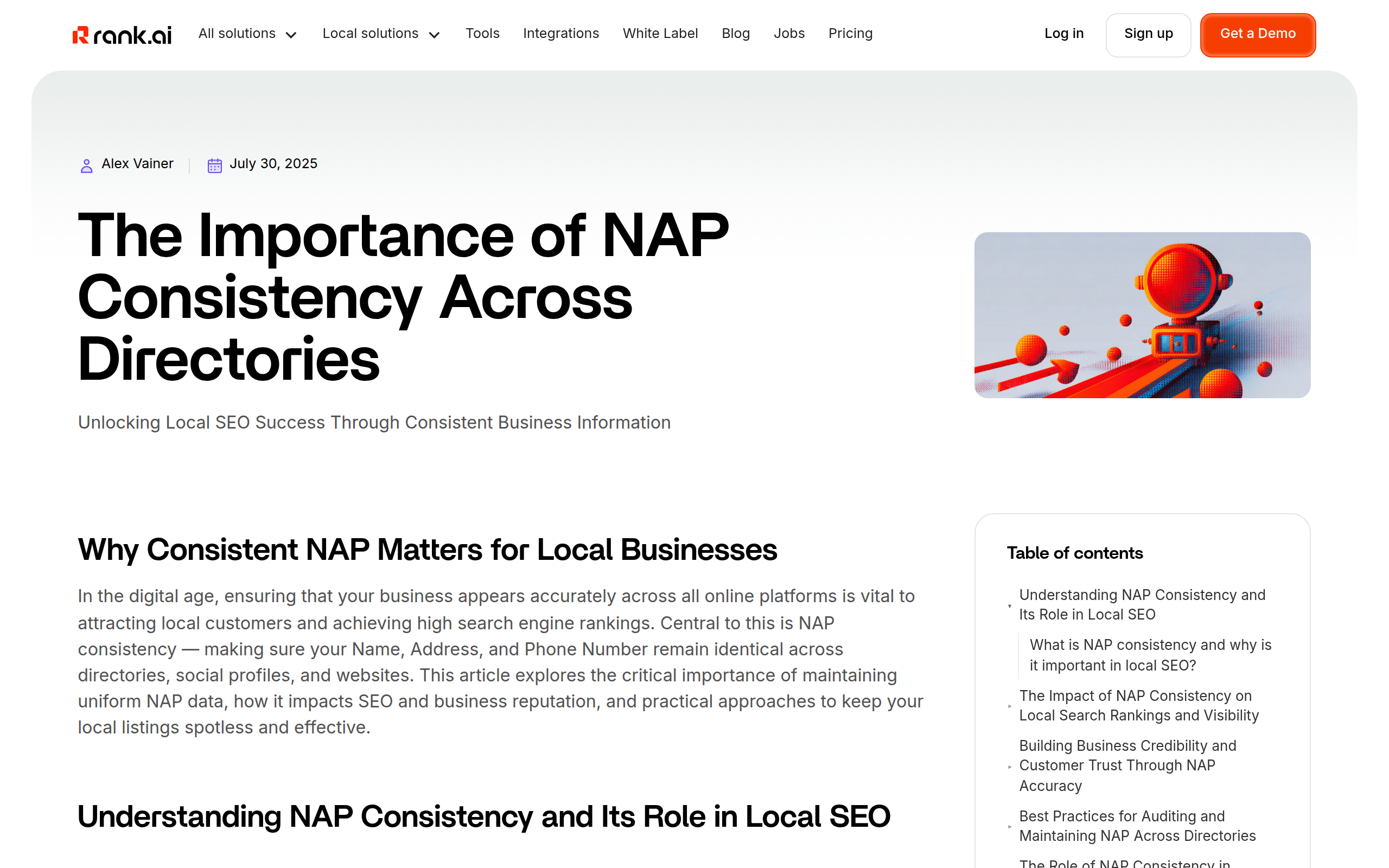
In local search, certainty wins. A unified Name, Address, and Phone across Google, Apple, Bing, your website, and core directories strengthens entity confidence and geocoding, reinforcing relevance and prominence. Consistency prevents duplicate/split profiles and makes it effortless for customers to call, click, or get directions, lifting Local Pack rankings and conversion for each location.
Bottom line: One business, one canonical identity, everywhere.
What we’ll execute
- Establish brand-approved NAP standards: name format, USPS-standardized addresses, single local phone.
- Audit and standardize each location’s GBP: name, address, pin, phones, categories; add store codes.
- Align your website: crawlable NAP on location pages, consistent schema, footer, and titles.
- Correct citations across Google, Apple, Bing, social, top directories, and core data providers.
- Detect/suppress duplicates; request merges, “moved/closed” actions; monitor suggested edits.
- Move/rename playbook: update platforms in order, re-verify if needed, 301 old pages.
- Enable tracking safely: DNI on site; tracking number as GBP primary, local number as additional.
Buyer notes
- Use real-world names and never use keyword stuffing.
- Standardize suite numbers and phone formats.
- For tracking, set GBP primary to tracking; local as additional.
KPIs to watch
- Citation accuracy rate across priority sites.
- Duplicates suppressed or merged.
- GBP views, actions, and calls.
- Local Pack rankings per location.
5. Manage and encourage positive Google reviews
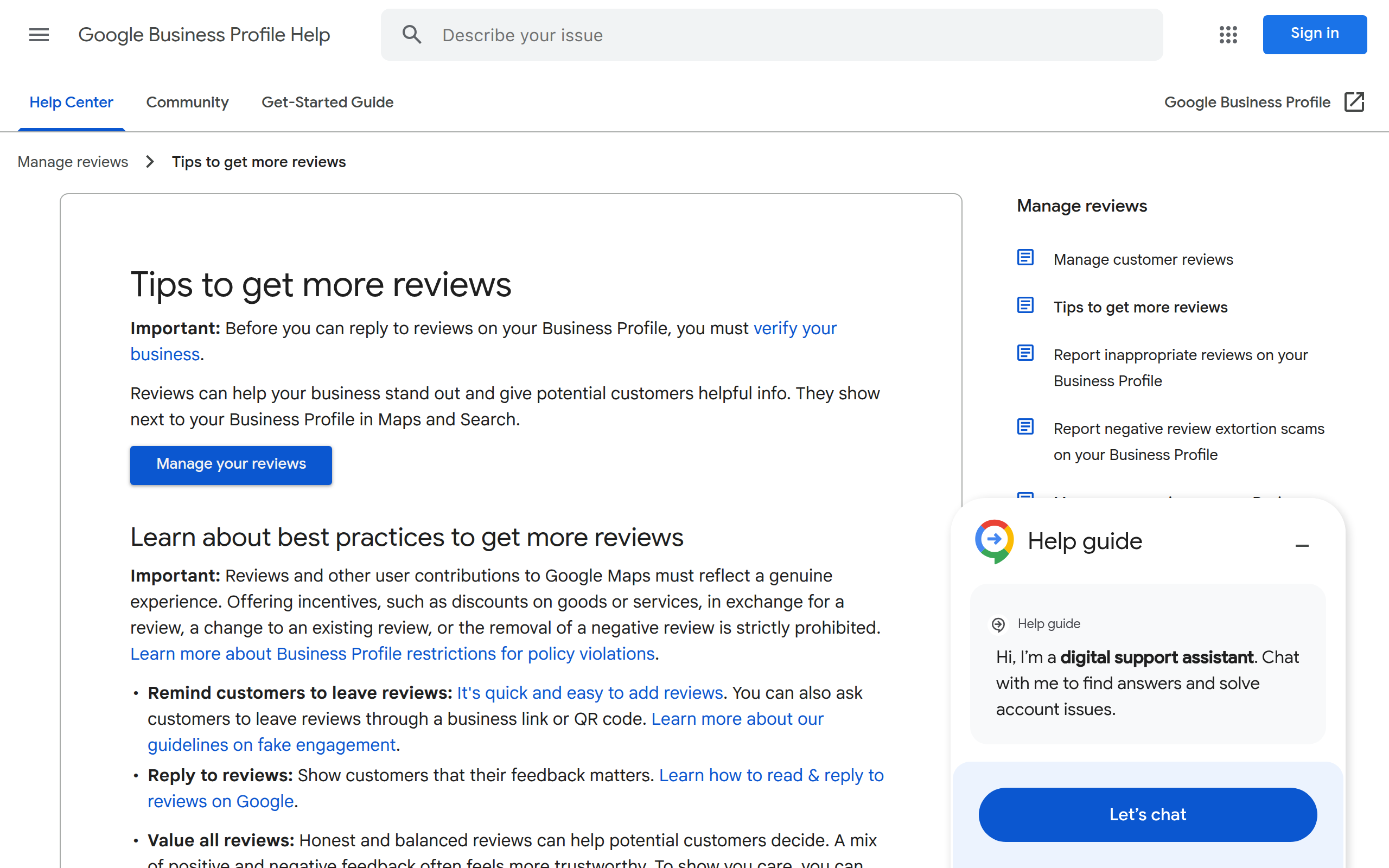
Fresh, high-quality reviews are rocket fuel for local visibility. Volume, velocity, and rating push prominence; helpful content in reviews creates justifications that boost CTR. Consistent, human responses build trust and nudge prospects to call, book, or visit, especially on mobile. For SMBs and startups, a disciplined reputation program can be the difference between obscurity and a full calendar.
Bottom line: Earn praise, answer fast, and let social proof sell for you.
What we’ll execute
- Review audit: rating, volume, recency, response time; sentiment themes; competitor benchmark; flag policy violations.
- Acquisition program: short link/QR on signage and receipts; email/SMS requests 24 to 72 hours post-service.
- Staff training: ethical, non-incentivized asks; scripts; escalation for unhappy customers and service recovery.
- Automation: CRM/POS triggers; double opt-in; TCPA-compliant SMS (U.S.).
- Response management: monitor daily; personalize replies to all reviews within 1–2 days; escalate issues.
- Reputation flywheel: showcase snippets on site/social; add review schema; follow FTC rules.
- Reporting/governance: monthly growth, sentiment, response SLAs, ranking impact; multi-location playbooks.
Buyer notes
- Keep NAP consistent.
- Respond to every review within 48 hours.
- Avoid incentives, gating, or keyword-stuffed replies.
- Multi-location: unique links and enforced SLAs.
KPIs to watch
- GBP views, Local Pack rankings, website clicks.
- Calls, direction requests, tracked bookings.
- Review volume, rating, sentiment, response time.
- UTM-tagged conversions.
6. Get high-quality backlinks and local citations
Prominent businesses earn mentions, and Google notices. Authoritative local links and accurate NAP citations boost entity confidence, widen your ranking radius, and reinforce topical relevance. For SMBs and startups, a targeted mix of editorial links, niche directories, and clean listings delivers more Local Pack impressions and the actions that matter: calls, directions, clicks, and bookings.
Bottom line: Build local authority where your customers (and Google) already trust.
What we’ll execute
- Backlink/citation quality audit; create a canonical NAP and categories source of truth.
- Unify NAP across GBP, Apple, Bing, Yelp, Facebook, BBB, and aggregators (Data Axle, Localeze, Foursquare).
- Claim top directories plus 30 to 100 niche listings; suppress duplicates and old addresses.
- Acquire local editorial links via sponsorships, city PR, partnerships, and community orgs.
- Reclaim unlinked mentions; fix 404s; produce linkable assets (city guides, data studies, event calendars).
- On-site alignment: update location pages, embed map, refresh schema with sameAs profiles.
- Track with UTM tags, GBP call-tracking best practices, and transparent monthly propagation logs.
Buyer notes
- Keep NAP identical everywhere, always.
- Skip bulk, low-quality directories.
- Use call tracking correctly and consistently.
- Multi-location: unique NAP and pages per location.
KPIs to watch
- Local Pack/Maps rankings by geo-grid.
- GBP views, calls, direction requests.
- Website clicks and UTM conversion rate.
- New referring domains and citation accuracy.
7. Use local keywords in your Google Business Profile and website content
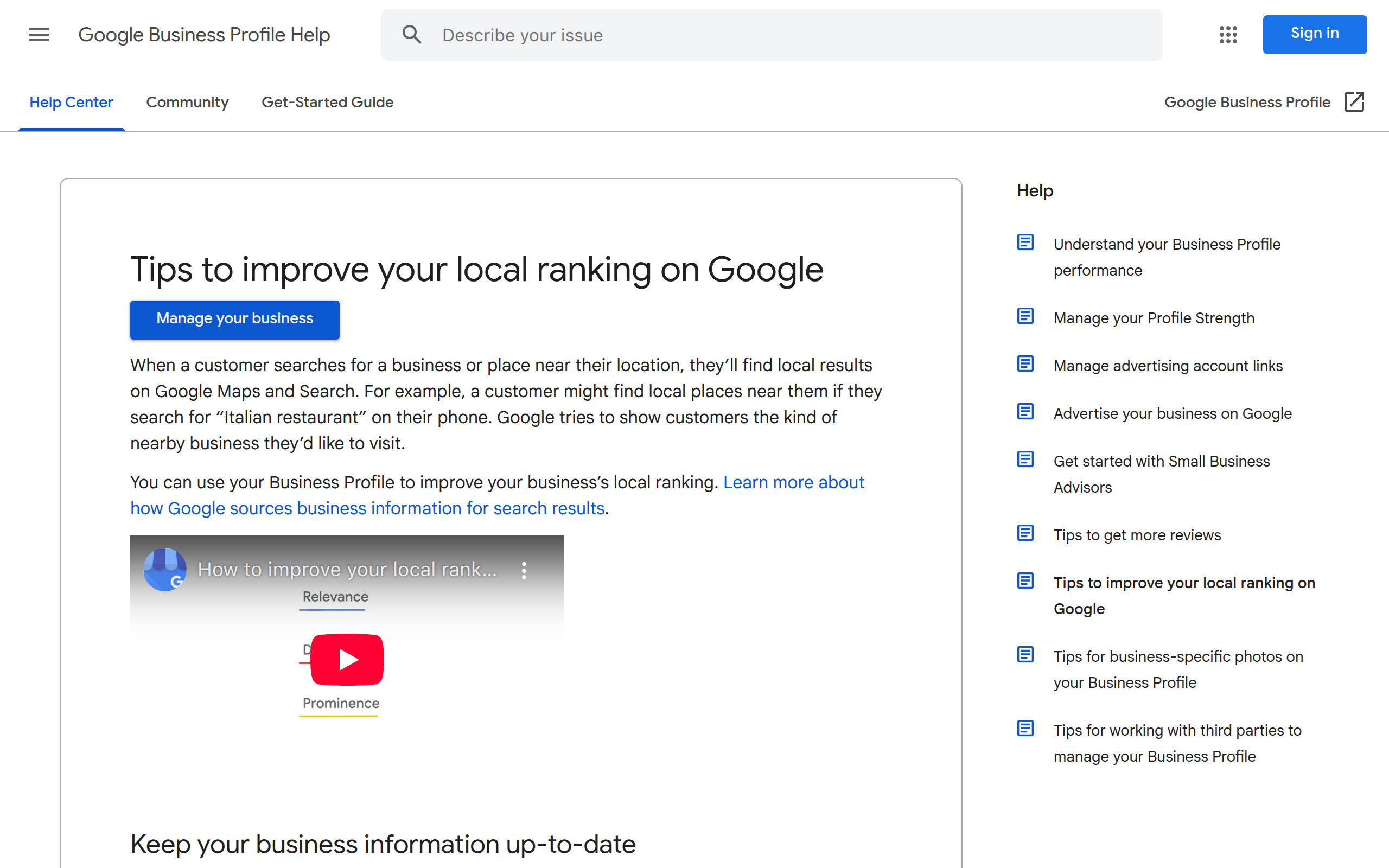
Speak your customers’ language and their neighborhoods. Localized keywords align your services with nearby intent, strengthening relevance so your profile appears in Local Pack and Maps. When your GBP and site mirror how people search by city, ZIP, or landmark, engagement spikes, including calls, direction requests, and site visits that feed prominence and revenue.
Bottom line: Right words, right place, right distance equals more qualified leads.
What we’ll execute
- Discovery and geo-footprint intake: services, priority cities/ZIPs, neighborhoods, landmarks.
- Local keyword research: service/city clusters, keyword intent modifiers, seasonal and bilingual variants.
- Competitor gap analysis across top GBPs and location pages to find missed intents.
- Keyword-to-asset mapping for GBP description, services, posts, Q&A, and site pages.
- 750-character GBP description rewrite with proof points; category calibration.
- Clean, localized services/products; Q&A seeding to cover areas served and speed.
- Weekly GBP posts with localized offers; UTM-tagged CTAs.
- On-site updates: follow an on-page SEO checklist covering titles, H1s, FAQs, unique location pages, schema, internal links, and image optimization.
Buyer notes
- Keep NAP fully consistent everywhere.
- Write naturally, no keyword stuffing.
- Don’t add city names to business titles.
- Multi-location: unique pages and GBPs.
KPIs to watch
- Geo-grid Local Pack rankings.
- GBP views and clicks.
- Calls and direction requests.
- Review volume/sentiment and UTM conversions.
8. Add attributes to your business listing
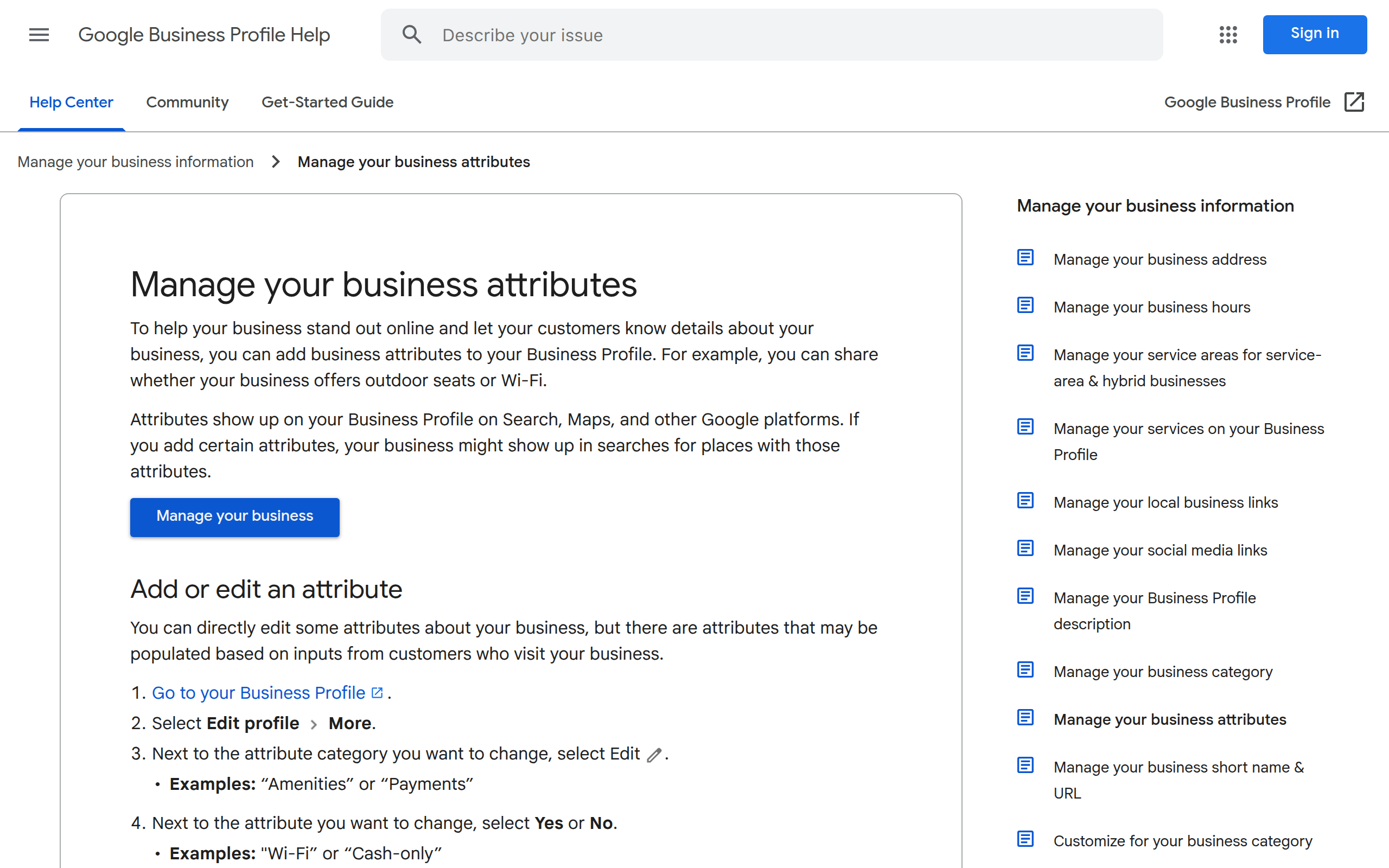
Attributes help buyers find what matters and help you qualify for filtered results. From delivery and wheelchair access to women-owned and pet-friendly, the right toggles refine relevance and can surface as highlights in the Pack, lifting CTR. When attributes match reality (and photos back them up), conversions climb: calls, orders, bookings, and directions.
Bottom line: Check the boxes your customers actually search and filter for.
What we’ll execute
- Attribute audit and gap analysis by category and country.
- Map customer-searched filters; benchmark top competitors.
- Configure relevant attributes per location; use bulk sheets/API for chains.
- Prioritize high-intent toggles (Delivery, Curbside pickup, Appointment required, Accessibility, Ownership, Payments).
- Add appointment/order/reservation links with UTMs.
- Upload proof photos (outdoor seating, ramp, EV charger); align site FAQs and schema.
- Monthly monitoring: accept/decline Google Updates, adopt new attributes, remove outdated items.
- Governance matrix with documented exceptions per location.
Buyer notes
- Enable only attributes you can fulfill; support with photos.
- Do not use keyword stuffing; use official toggles.
- Keep NAP consistent; apply tracking properly.
KPIs to watch
- GBP views; calls; direction requests.
- Local Pack rankings for attribute filters.
- Website clicks; orders/bookings.
- UTM conversion rate; review volume/sentiment.
9. Optimize photos and videos for Google Maps
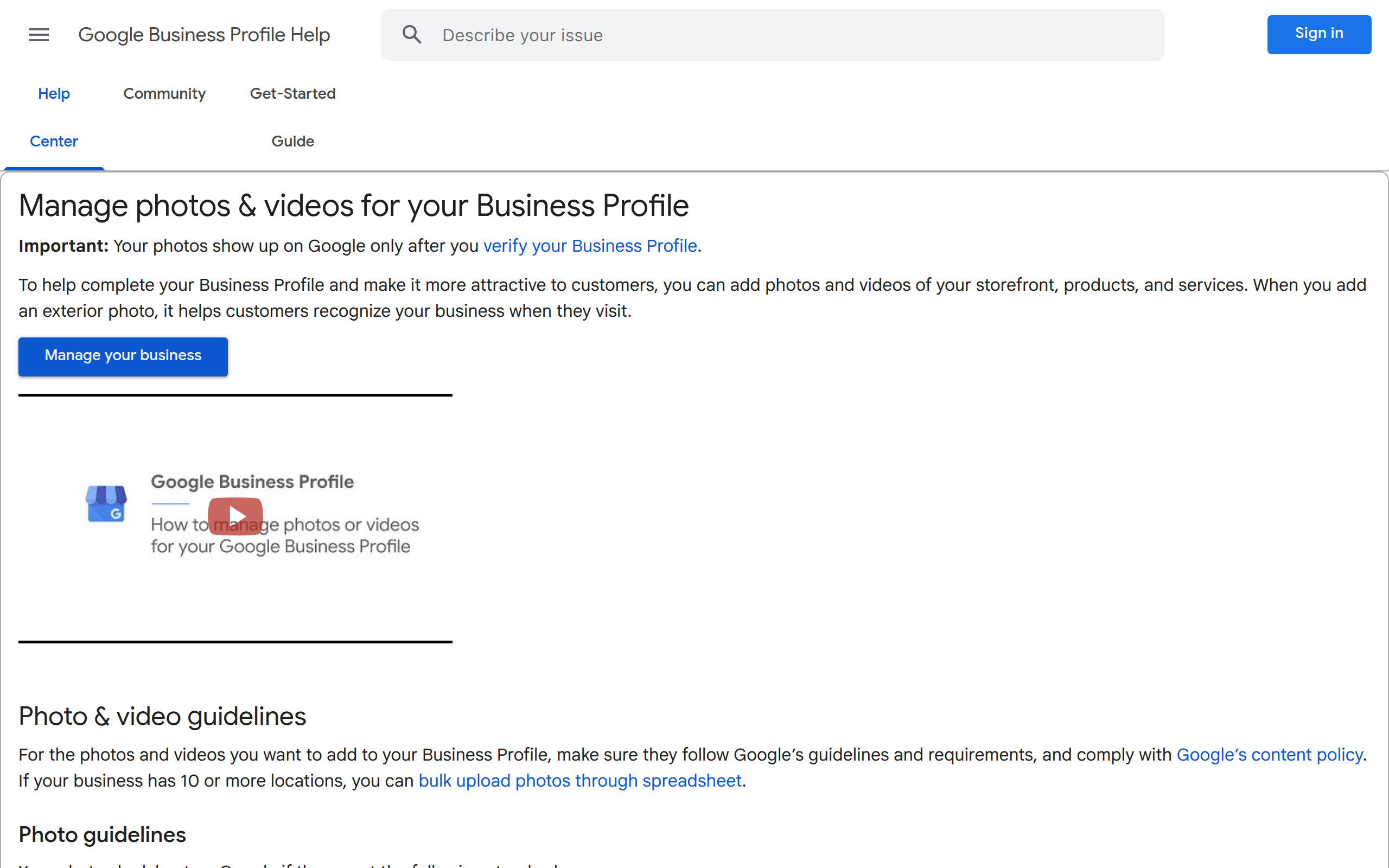
Visuals sell trust. Crisp, on-brand photos and short videos increase engagement signals that influence Local Pack visibility and sway potential customers to call, get directions, or book. A steady stream of authentic media showcases your people, products, and place, outshining stocky competitors and fueling review-worthy experiences.
Bottom line: Show up beautifully and you’ll get picked more often.
What we’ll execute
- Visual audit of your GBP gallery and competitors.
- Shot list by business type: exterior, interior, team, products/services, accessibility, trust cues.
- Pro photo/video production or remote direction; smartphone shooting playbook for staff.
- Editing to Google-friendly specs (square, 4:3, 16:9; ≥720px; 720p; ≤30s/75MB).
- Short-form video set: intro, walkthrough, demo, testimonial, seasonal promos.
- Optional 360 imagery/virtual tour via Street View-compatible workflow.
- Upload cadence: 10–25 images to start, then 1–3 weekly; tagging and captions.
- Cover image testing, UGC monitoring/flagging, and UTM and call-tracking experiments tying media to actions.
Buyer notes
- Keep NAP consistent; avoid stock or composite images.
- Post well-lit, in-focus media weekly; no text overlays; follow GBP policies.
KPIs to watch
- GBP views, Local Pack rankings, calls, direction requests, website clicks.
- UTM sessions and conversion rate; review volume/sentiment.
- Media-driven engagement growth trends.
10. Enable and manage Q&A on your Google Business Profile
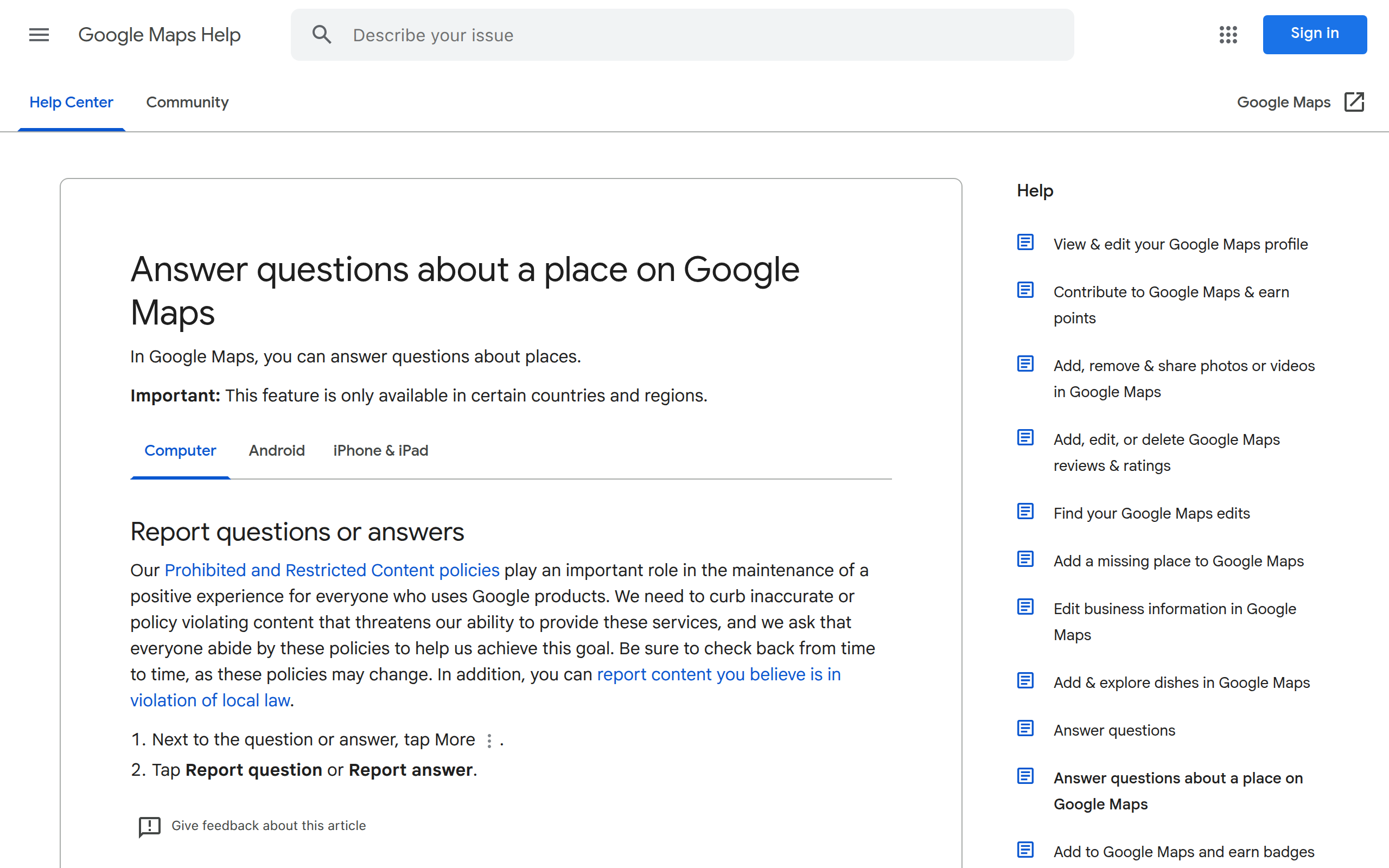
Questions reveal intent; fast, authoritative answers remove doubt. Managed Q&A boosts relevance for long-tail queries, builds trust, and shortens the path to calls, bookings, and visits. When you seed helpful FAQs and respond quickly, engagement rises, sending positive signals that can strengthen prominence in Local Pack and Maps.
Bottom line: Be the helpful local expert where buyers are already looking.
What we’ll execute
- Q&A audit: fix inaccuracies, merge duplicates, remove policy violations, and map gaps to real objections.
- Notifications and workflow: enable alerts; set 12 to 24 hour SLAs, escalation paths, tone guidelines.
- Ethical seeding: 12 to 30 location-specific FAQs with concise, clear answers.
- Response management: daily monitoring; prompt, actionable replies with booking options.
- Moderation: flag off-topic, abusive, or promotional posts; request removals; maintain a log.
- Multi-location rollout: central FAQ library; standardized SLAs with local nuance.
- Reporting: monthly volume, response time, removals, top questions, call/click impact.
Buyer notes
- Answer fast; owner-asked FAQs are acceptable.
- Avoid keyword stuffing, sensitive details, canned replies.
- Keep NAP/hours updated; localize FAQs per location.
KPIs to watch
- GBP views, Local Pack rankings, website clicks.
- Calls, direction requests, UTM-tagged conversions.
- Q&A volume, median response time, removal rate, sentiment.
11. Use Google Posts for local visibility
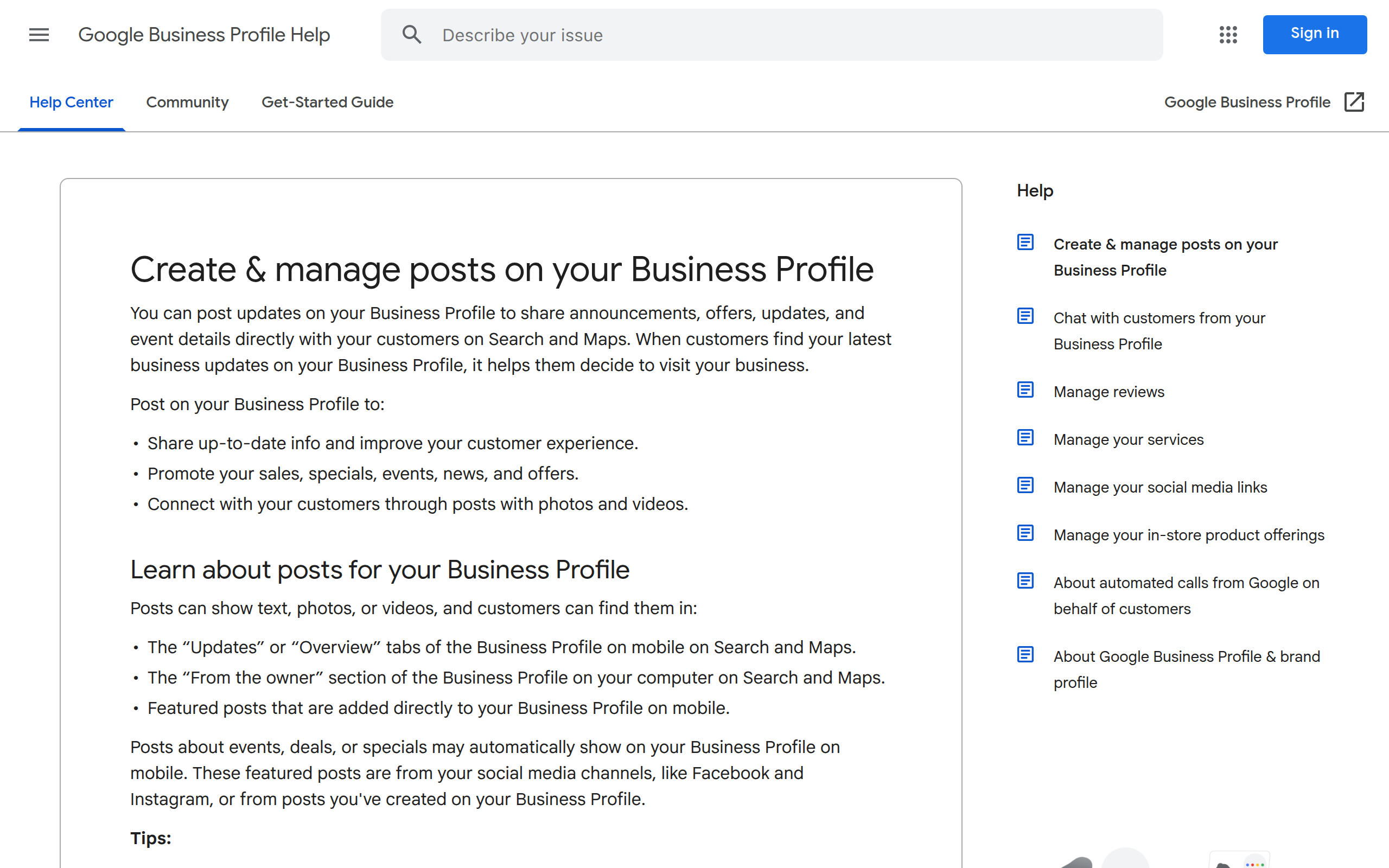
Posts keep your profile fresh and persuasive where decisions happen. Timely offers, events, and updates expand topical relevance and signal real-world activity, which supports prominence. When your creative is clear and localized, Posts nudge qualified prospects to call, click, or book, capturing demand without ads.
Bottom line: Publish with purpose and turn impressions into action.
What we’ll execute
- GBP readiness: verification, category selection, and competitor post audit.
- Topic map to services, neighborhoods, and intents; description, hours, attributes refined.
- Review workflow integrated; message/call prompts enabled; offer/event dates, terms, and codes set.
- Creative standards for photos/videos; weekly or bi-weekly cadence.
- Publish “What’s New,” “Offer,” and “Event” posts with strong headlines, value props, and CTAs.
- UTM-tagged links aligned to GA4 goals; call tracking integration; approvals and brand guidelines.
- Rank tracking, CTR/conversion testing, weekly reporting; multi-location templates with local customization.
Buyer notes
- Keep NAP consistent across all assets.
- Respond to every review quickly.
- Avoid keyword stuffing; use original photography.
- Multi-location: localize posts and stagger timing.
KPIs to watch
- GBP views and CTR.
- Local Pack rankings.
- Calls, directions, and clicks.
- UTM conversions and conversion rate; review lift.
12. Track and analyze Google Maps performance across locations
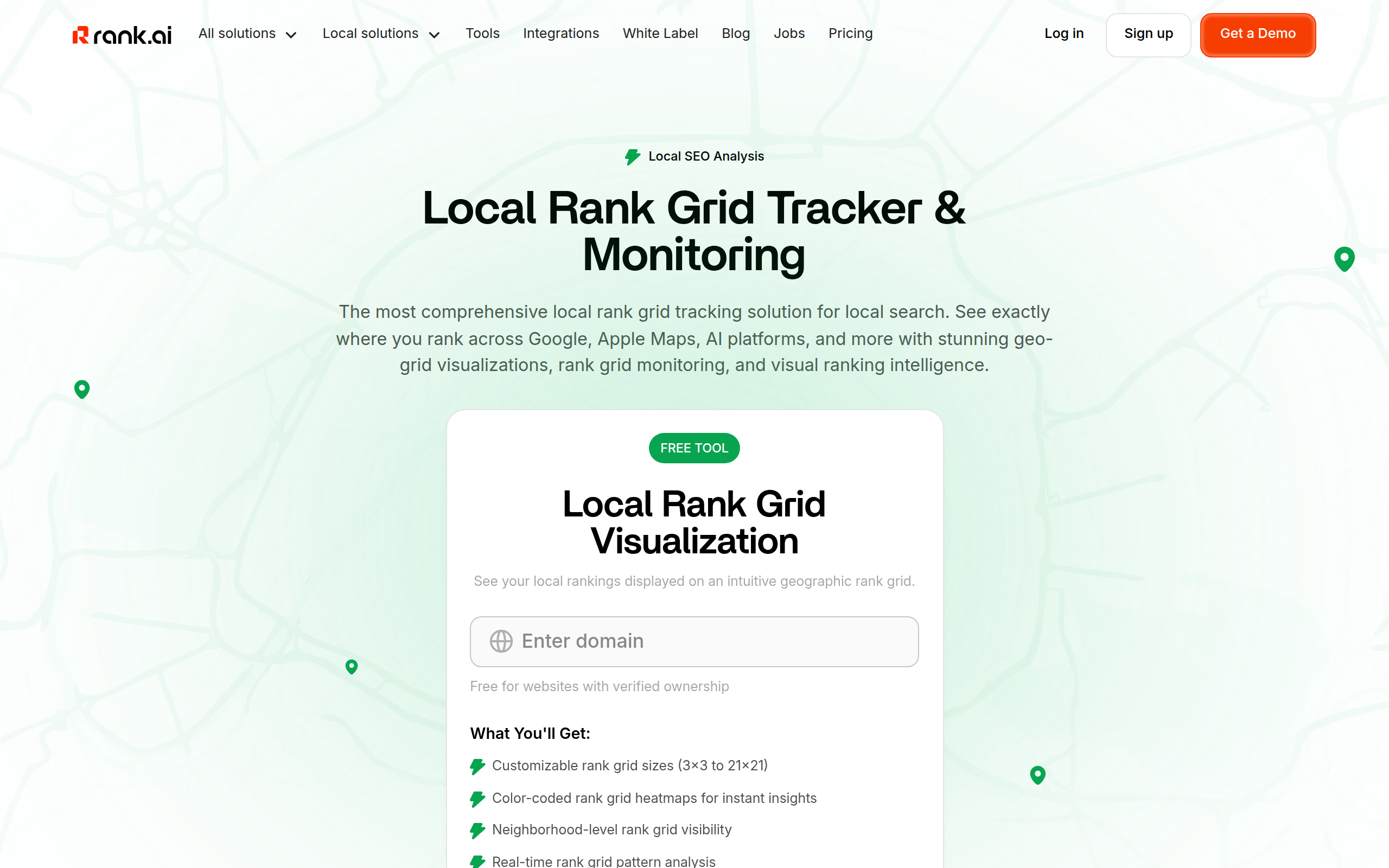
What gets measured gets improved. Location-level tracking shows how relevance, distance, and prominence translate into outcomes. By unifying GBP Performance, engagement metrics, geo-rank coverage, and conversion data, you’ll see which keywords and optimizations drive calls, bookings, direction requests, and revenue, so you can double down on what works and fix what doesn’t.
Bottom line: Turn Maps data into a roadmap for growth for each location.
What we’ll execute
- KPI framework per location with monthly targets: views, interactions, calls, directions, clicks, bookings, messages, reviews, geo-coverage.
- Normalize GBP Performance data (interface/API), time zones, and IDs; standard naming for roll-ups.
- Consistent UTM taxonomy across website/appointment/menu/order URLs.
- Call tracking while preserving NAP: tracking as primary, real local as additional; routing and outcome tagging; DNI on site.
- Geo-grid rank tracking; visualize coverage and proximity; GA4 maps UTM traffic to conversion events and assists.
- Engagement, reputation, and competitor analytics; alerts/diagnostics; dashboards with insights and test plans.
Buyer notes
- Standardize UTMs and store codes everywhere.
- Use tracking as primary in GBP; keep the local number as additional.
- Optimize toward qualified leads, not just views.
- Maintain unique pages and GBP fields.
KPIs to watch
- GBP views: Search vs. Maps.
- Local Pack rankings and geo-grid coverage.
- Calls, directions, clicks, bookings.
- Reviews, sentiment, response time, conversion rate.
13. Localize and optimize business descriptions
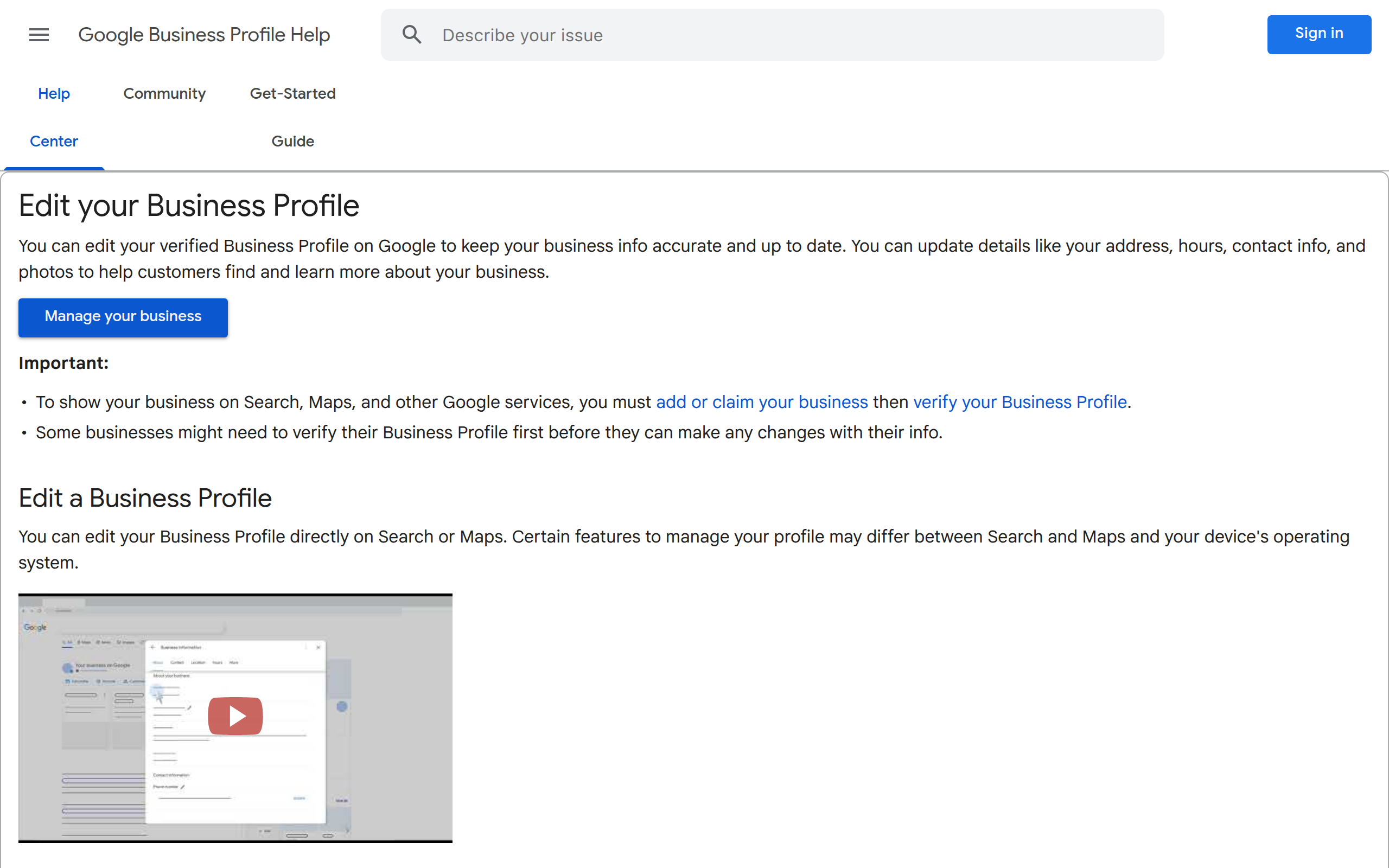
Your “From the business” description is a quick pitch in the right place. Clear, localized copy states who you serve, where you operate, and why you’re the best choice. While not the top ranking factor, it reinforces relevance and supports prominence with proof points, nudging buyers to call, book, or get directions.
Bottom line: Say what you do, where you do it, and why you’re trusted in 750 characters that convert.
What we’ll execute
- Discovery interview to surface services, target neighborhoods/cities, audience, differentiators, and compliance needs.
- Competitive scan to benchmark Local Pack leaders’ messaging and identify gaps.
- Keyword/locality mapping: 1–2 primary service terms and 2–4 secondary terms with natural city/neighborhood modifiers.
- Write a 750-character, plain-language GBP description with coverage area, value props, proof points, and CTA.
- Create unique variants per location; optional bilingual/localized copy.
- Cross-platform alignment for Apple Business Connect, Bing Places, Yelp; mirror key claims on-site.
- Compliance, QA, implementation; quarterly refreshes.
Buyer notes
- Keep NAP identical everywhere.
- Write naturally, avoid keyword stuffing.
- Add quality photos and answer reviews.
- Use unique, localized copy per location.
KPIs to watch
- GBP views, discovery vs. branded share.
- Local Pack rankings across neighborhoods.
- Calls, direction requests, website clicks.
- Review sentiment and UTM conversion rate.
14. Leverage user-generated content on Google Maps
Customers’ voices carry far, and Google listens. UGC like photos, reviews, Q&A, and suggested attributes signal freshness and authenticity, strengthening prominence and relevance. High-quality contributions create compelling justifications and visuals that boost CTR and persuade prospects to call, book, or visit.
Bottom line: Make it easy for happy customers to tell your story and amplify it.
What we’ll execute
- UGC audit: baseline review volume, recency, Q&A completeness, photo mix, gaps.
- Review acquisition: deep links on receipts, emails/SMS, signage/QRs; staff scripts; response SLAs.
- Photo program: design photo-worthy moments; prompts on-premise; shot lists; flag off-topic or policy-violating images.
- Q&A: seed owner-asked FAQs with concise answers; weekly monitoring and fast responses.
- Attributes/edits: review user-suggested edits and crowdsourced attributes; correct inaccuracies quickly.
- Compliance: no incentives or gating; adhere to Google/FTC policies; privacy review.
- Measurement: UTM-tagged links, call tracking, monthly UGC impact reporting with per-location dashboards.
Buyer notes
- Keep NAP consistent; respond to reviews within 48 hours.
- Avoid keyword stuffing, stock photos, and gating.
- Publish unique per-location pages to reinforce context.
KPIs to watch
- GBP views, Local Pack rankings, calls, directions, website clicks.
- Review volume, rating/sentiment, response time.
- UTM conversion rate, CTR, and photo views.
15. Define and promote service areas
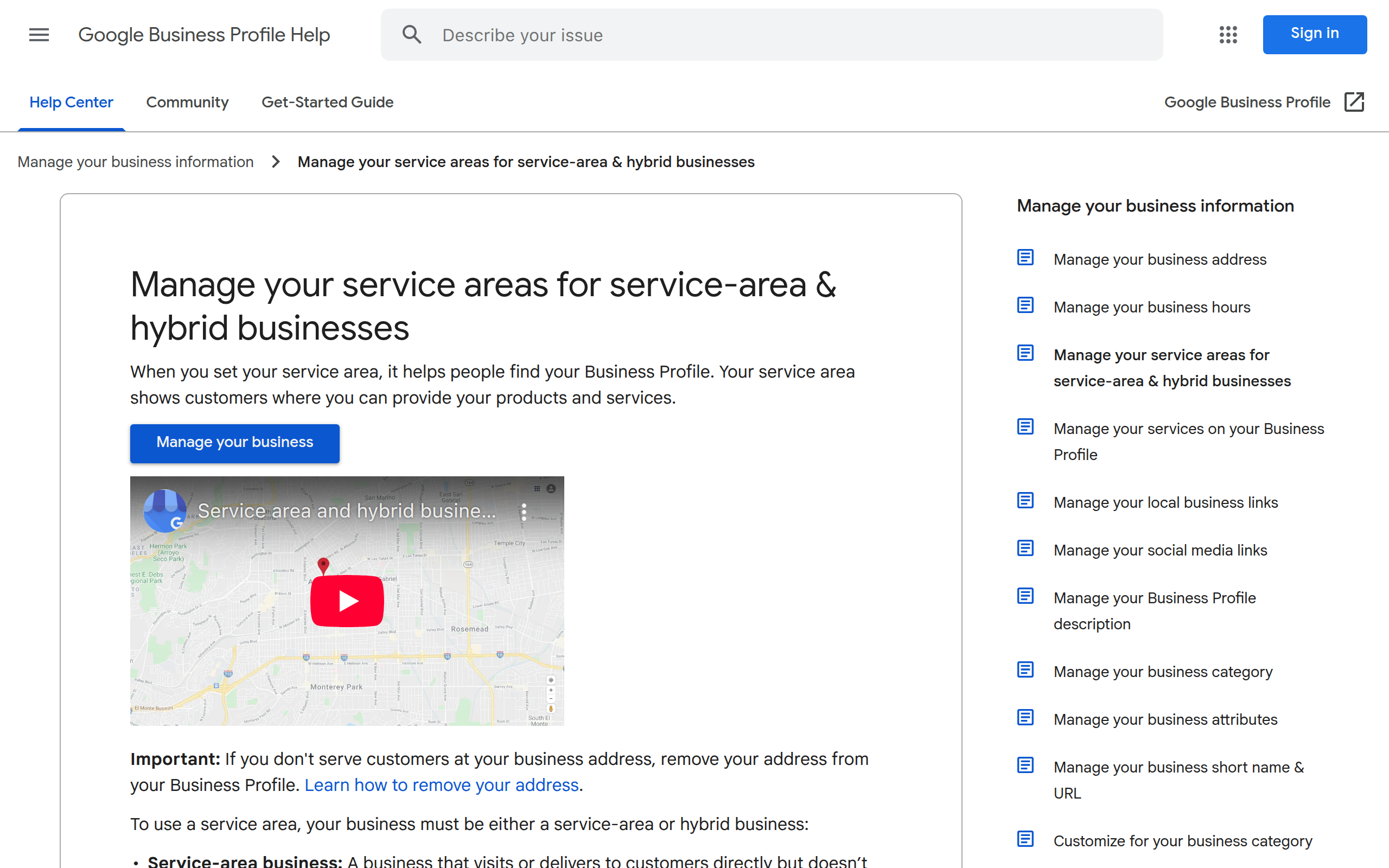
For service-area businesses, clarity about where you go wins the job. Realistic city/ZIP coverage in GBP reinforces relevance without fighting distance, while city pages, reviews, and localized media build prominence. Together, they lift Local Pack/Maps visibility and drive calls, messages, and booked work in your most profitable neighborhoods, without risking policy violations.
Bottom line: Define your footprint, then market into it with proof.
What we’ll execute
- Confirm SAB vs. storefront; correct categories; hide address when appropriate.
- Data-driven coverage plan using jobs, margins, and travel times; prioritize cities/ZIPs.
- Configure GBP service areas; remove unrealistic regions; quarterly adjustments and competitor monitoring.
- Build optimized city landing pages: NAP, embedded map, service copy, testimonials, local FAQs, pricing cues, CTAs.
- Implement LocalBusiness schema with areaServed; granular services with city-specific messaging.
- Reviews program: automate requests, respond fast; upload on-site photos/videos; city-focused Google Posts.
- Tracking: UTM links, call tracking, geo-grid monitoring, weekly reporting by city/ZIP.
Buyer notes
- Service areas clarify where you operate; they don’t override proximity.
- Hide addresses for SABs, always.
- Prioritize close, profitable zones first.
- Multi-location: distinct GBPs and unique pages.
KPIs to watch
- GBP views and profile actions.
- Local Pack rankings across ZIPs.
- Calls, directions, qualified website clicks.
- Review sentiment and UTM conversion rate.
Treat listings as living assets, ongoing optimization cadence
A healthy cadence beats sporadic bursts. Create a simple monthly checklist that compounds results from your google maps seo services.
- Week 1, check category accuracy, attributes, and hours
- Week 2, publish a Post and upload new photos
- Week 3, review Q and A, add FAQs to the profile, and answer new questions
- Week 4, audit reviews, respond to all, and trigger a compliant request campaign
Support your profile with matching on site pages. Location landing pages that reflect your categories, services, and city terms improve conversion and can influence prominence through content quality and internal links. Combined with the relevance, distance, prominence model Google shares, this cycle strengthens the signals that matter. (support.google.com)
Measure what matters, track ROI and prove lift
Tie Maps activity to revenue. See our guide to SEO results for the KPIs and benchmarks to watch.
- Use UTM parameters on the website link and appointment link inside your profile so Analytics shows calls to action from Maps separately.
- Track actions from the profile, calls, website clicks, direction requests, and messages. Many listings see direction requests and website visits as the majority of actions, which aligns with photo and review best practices. (sqmagazine.co.uk)
- Build a simple dashboard that marries rank by grid, actions, and store traffic or bookings. The 76 percent visit within a day data point justifies why these actions correlate with in person sales for local intent queries. (thinkwithgoogle.com)
If you need weekly reporting that focuses on rankings, traffic, and rewrite status while your team stays focused on operations, an execution partner like Rankai can help.
Conclusion, centralize, automate, benchmark, and scale
Winning in Maps comes from consistent execution on fundamentals. Google is clear on relevance, distance, and prominence and independent studies keep showing Business Profile signals and reviews do the heavy lifting. Treat listings like living assets, not set and forget pages. Centralize data, automate routine updates, publish steadily, and benchmark performance grid by grid. For teams that want google maps seo services plus fast content production and technical fixes in one place, book a quick walkthrough with Rankai.
FAQ
What are the key ranking factors for Google Maps
Google confirms relevance, distance, and prominence. More complete profiles, high quality reviews, and links to your site can improve prominence. (support.google.com)
How often should we post or upload photos to our profile
Aim for weekly photos and at least one Post per month. Google cited that listings with photos get more direction requests and website clicks, which supports steady updates. (brightlocal.com)
Do reviews really influence ranking and conversions
Yes. In 2024, 88 percent of consumers would use a business that replies to all reviews, and Google’s help doc notes reviews and ratings can help local ranking. (brightlocal.com)
How does Google Maps SEO relate to our website SEO
They reinforce each other. Your profile earns visibility in Maps and the Local Pack, then your landing pages convert that demand. Studies group Google Business Profile signals as the largest Local Pack driver, followed by reviews and on page quality. (brightlocal.com)
What is the fastest way to start with google maps seo services
Fix the basics first. Correct categories, hours, and attributes, refresh photos, enable messaging, and set up a review request flow. Then expand to location pages and internal linking that mirror your profile. For a done for you option, explore Rankai.
How do we prove ROI from google maps seo services
Use UTM tags on profile links, track calls, website visits, and direction requests, and compare against store visits or bookings. The visit within a day data point for local searches helps tie Maps actions to real sales. (thinkwithgoogle.com)
What about multi location brands that need consistency across cities
Centralize data and permissions, standardize naming and tracking, and automate monitoring for edits and category drift. Many brands rely on a partner to run google maps seo services across locations so teams can focus on operations. Consider Rankai.