

Startups operate in a high stakes environment where rapid, scalable growth isn’t just a goal, it’s a survival mechanism. While paid channels offer initial traction, they become expensive quickly. This is where organic search shines, offering a sustainable engine for customer acquisition. The challenge? Traditional SEO is slow and costly. Enter SEO driven by artificial intelligence, a strategy that radically changes the game. By examining a compelling AI startup SEO case study, founders can uncover a repeatable playbook for dominating search results and building a powerful inbound marketing channel without the typical agency price tag.
What an SEO Case Study Is and Why Startups Should Care
An SEO case study is a detailed report showing how a specific strategy or set of actions improved a website’s search engine performance. It’s not just about vanity metrics. A great case study connects SEO activities directly to business outcomes like increased traffic, leads, and revenue.
For startups, these studies are more than just interesting stories. They are blueprints for success. Here’s why they matter:
- Validation: They prove that a particular strategy actually works. Seeing another startup achieve a 400% traffic increase provides concrete evidence.
- Actionable Insights: A detailed AI startup SEO case study breaks down the exact steps taken, from keyword selection to content creation and technical fixes. This provides a roadmap you can adapt.
- Benchmarking: Case studies help you set realistic goals. If a similar SaaS company achieved six figure visitor numbers in under a year, it gives you a tangible target to aim for.
- De risking Investment: Deciding where to put your limited marketing budget is tough. Reviewing a successful SEO case study can build confidence that investing in an AI driven approach is a sound financial decision.
Key Lessons from AI Startup SEO Case Studies
Analyzing multiple AI startup SEO case study examples reveals common threads that lead to explosive organic growth. These aren’t secrets, but principles executed with relentless consistency, often powered by a hybrid of smart AI and human expertise.
Lesson 1: Velocity is a Competitive Advantage
Startups that win in search publish content at a much higher velocity than their competitors. While traditional agencies might produce a handful of articles a month, AI powered services can generate 20 or more high quality pages. This volume allows startups to target more keywords, build topical authority faster, and accelerate their learning cycle. One study found that companies publishing 16 or more blog posts per month get almost 3.5 times more traffic than those publishing zero to four articles.
Lesson 2: Iteration Outperforms Perfection
The old model of “publish and pray” is dead. A core theme in any successful AI startup SEO case study is continuous optimization. Top performing teams don’t just create content, they monitor its performance obsessively. If a page isn’t ranking after a few weeks, it gets flagged, analyzed, and completely rewritten. This iterative process, what some call “rewriting until it ranks,” dramatically increases the odds of success for every piece of content published.
Lesson 3: Technical SEO is Not Optional
You can have the best content in the world, but if search engines can’t crawl or index your site properly, it won’t matter. Successful startups ensure their technical foundation is solid. This includes optimizing site speed, fixing broken links, managing metadata, ensuring a clean site structure, and running a periodic technical SEO audit. AI tools can now automate much of the diagnostic work, allowing teams to identify and implement technical fixes that unblock ranking potential without needing a separate, costly specialist. Services like Rankai bundle these technical fixes into their core offering.
Lesson 4: Human Strategy Guides AI Execution
The most successful outcomes don’t come from AI alone. They come from a smart collaboration where human SEO experts set the strategy. This includes vetting keywords for business relevance, analyzing competitor gaps, and planning content topics into keyword clusters. The AI then handles the heavy lifting of drafting and production, which human editors refine for quality and brand voice. This hybrid model ensures content is not only optimized for search engines but also resonates with the target audience. Every impactful AI startup SEO case study has this human element at its core.
Top 5 AI Startup SEO Case Study Examples
To see how these principles perform in competitive environments, we have curated a selection of real-world examples that showcase the transformative power of artificial intelligence in search optimization. These case studies represent a broad spectrum of applications, ranging from large-scale content automation to niche authority building, providing a roadmap for various business models. By analyzing these diverse success stories, you can identify the specific AI-driven tactics that best align with your own growth objectives and technical capabilities.
1. Case Study 1: Bankrate – Driving Traffic with AI-Generated Content
In the high stakes YMYL arena of personal finance, Bankrate pursued scale without sacrificing trust by using AI to accelerate drafts while doubling down on human expertise and E E A T.
The playbook (AI + SEO): An in house AI drafting system produced first passes for evergreen topics, always followed by human editorial review and public disclosure. Templates powered programmatic SEO, data driven pieces and systematic refreshes, while a Financial Review Board safeguarded accuracy. Robust internal linking funneled readers toward high intent calculators and tools to reinforce authority signals.
TL;DR: Hybrid AI plus expert oversight delivered velocity, then tightened governance after early QA misses.
Key wins and lessons:
- Visibility: Maintained top rankings for core money terms; estimated 9.1M monthly visits
- Governance: Paused AI content in early 2023 after publicized errors; clarified policy
- Policy: Mandatory human fact checking and AI use disclosure on all assisted content
Replicate it (SMBs/startups):
- Do this first: Pilot AI assisted drafts on low risk definitions; require SME review and clear disclosures.
- Watch out for: Automation over accuracy. Prioritize E E A T, especially in regulated or sensitive niches.
2. Case Study 2: Alton Lex’s 1,000 Articles via GPT API
On a low authority niche site and a shoestring budget, indie dev Alton Lex went all in on content velocity to capture thousands of long tail informational queries fast.
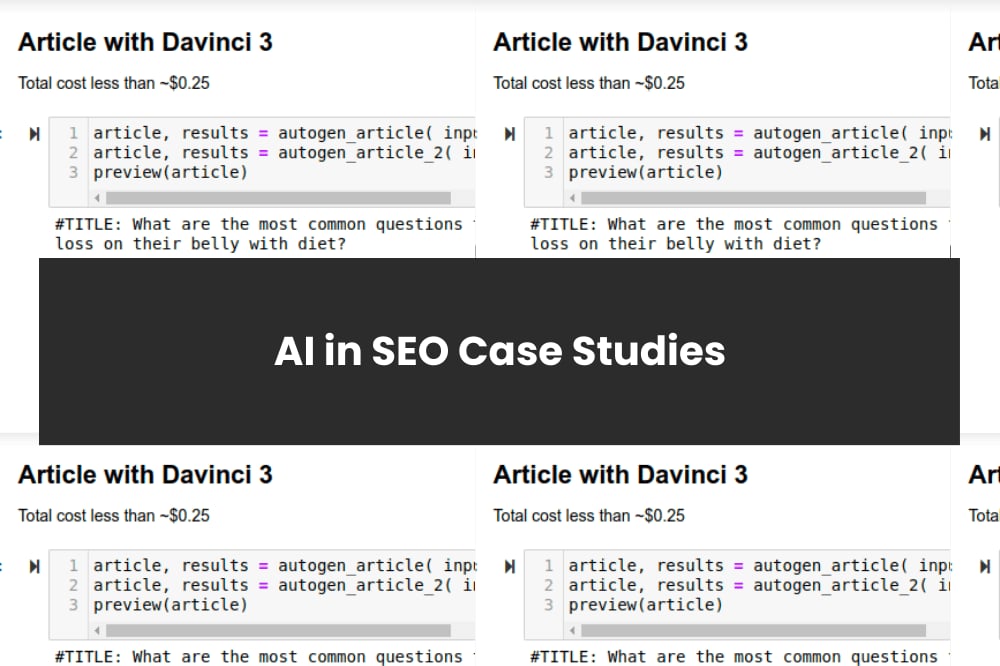
The playbook (AI + SEO): Open source Python scripts connected to the GPT 3 API generated nearly 3,000 templated articles programmatically. The strategy optimized for speed and breadth of coverage over manual polishing, while monitoring domain health and indexing. After a Google update hit performance, Alton shared a transparent recovery path (pruning, consolidating, and iterating) to stabilize growth.
TL;DR: Extreme content velocity can work if you instrument risk, watch the SERPs daily, and course correct when updates land.
Key wins:
- Scale: ~3,000 AI generated articles shipped
- Cost efficiency: Production costs dropped to pennies per post
- Visibility: GSC showed a clear growth → drop → rebound pattern
- Community value: Open sourced notebooks so others can replicate
Replicate it (SMBs/startups):
- Do this first: Pilot 50 posts; validate indexing, CTR, and early clicks before scaling.
- Operate weekly: Publish in controlled batches; prune/consolidate laggards; refresh top performers.
- Watch out for: Algorithm volatility. Layer human review and intent alignment to harden quality, and understand if Google penalizes AI generated content.
3. Case Study 3: Rocky Brands: Boosting Search Revenue with AI Tools
With no formal SEO motion before 2018, Rocky Brands set out to make their multi brand footwear catalog discoverable and turn searchers into buyers at scale.
The playbook (AI + SEO): Using BrightEdge, the team mapped real customer queries to the right PDPs and category pages, implemented on page improvements (titles, metas), and wrote conversion minded copy blocks explaining boot features and use cases. They strengthened internal links with relevant anchors and rolled the process across Rocky, Georgia Boot, and Durango, operationalizing SEO as a repeatable revenue lever.
TL;DR: Research led, AI assisted optimization turned product language into customer language and unlocked compounding revenue.
Key wins:
- Organic search revenue: +30% since January 2018
- Rankings: +1,479 page one keywords in 2018
- Holidays: November YoY +73.6% revenue and +13.3% new users
Replicate it (SMBs/startups):
- Do this first: Choose one product cluster; align queries to pages; ship complete on page elements (titles, H1s, FAQs, schema).
- Operate weekly: Publish/optimize 5–10 pages and track page level clicks and revenue attribution.
- Watch out for: Chasing volume over value. You should prioritize high intent, high margin terms.
4. Case Study 4: STACK Media: Enhancing Web Traffic with AI-Driven Keyword Analysis
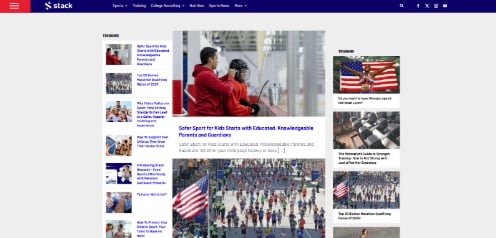
STACK Media, the sports-performance publisher for young athletes, needed fast wins on an established domain. The goal was to surface underperforming fitness queries and turn them into high engagement traffic, quickly and at scale.
The playbook (AI + SEO): An AI platform triaged 120 high value keywords already close to ranking, then informed a unified article template that baked in performance tips, embedded videos, and clear headings. The team refreshed and consolidated content, shipped redirects, and tightened internal links. This was all done in a focused one month sprint designed for speed to impact.
TL;DR: A single, AI assisted template plus ruthless prioritization turned “almost there” queries into a surge of qualified traffic within weeks.
Key wins:
- Organic visits: +61% to the optimized page set post launch
- Engagement: Average bounce rate down 73% across targeted pages
- Rankings: From unranked to #1 for “hip thrust” in ~2 months
- Coverage: 120 target keywords identified and addressed
Replicate it (SMBs/startups):
- Do this first: Pull 100+ near rank keywords (positions 8–30) and score SERP intent/features to isolate quick wins.
- Operate weekly: Run four week sprints that brief, produce, publish, and interlink; then repeat.
- Watch out for: SERPs dominated by ads, video carousels, and rich Google SERP features that cap organic CTR. Prioritize where blue links still win.
5. Case Study 5: Randy Selzer’s Real Estate: Enhancing Authority with AI SEO
Toronto area realtor Randy Selzer needed to win in hyper competitive local SERPs. The answer was to build undeniable topical authority with structured data and entity driven content.
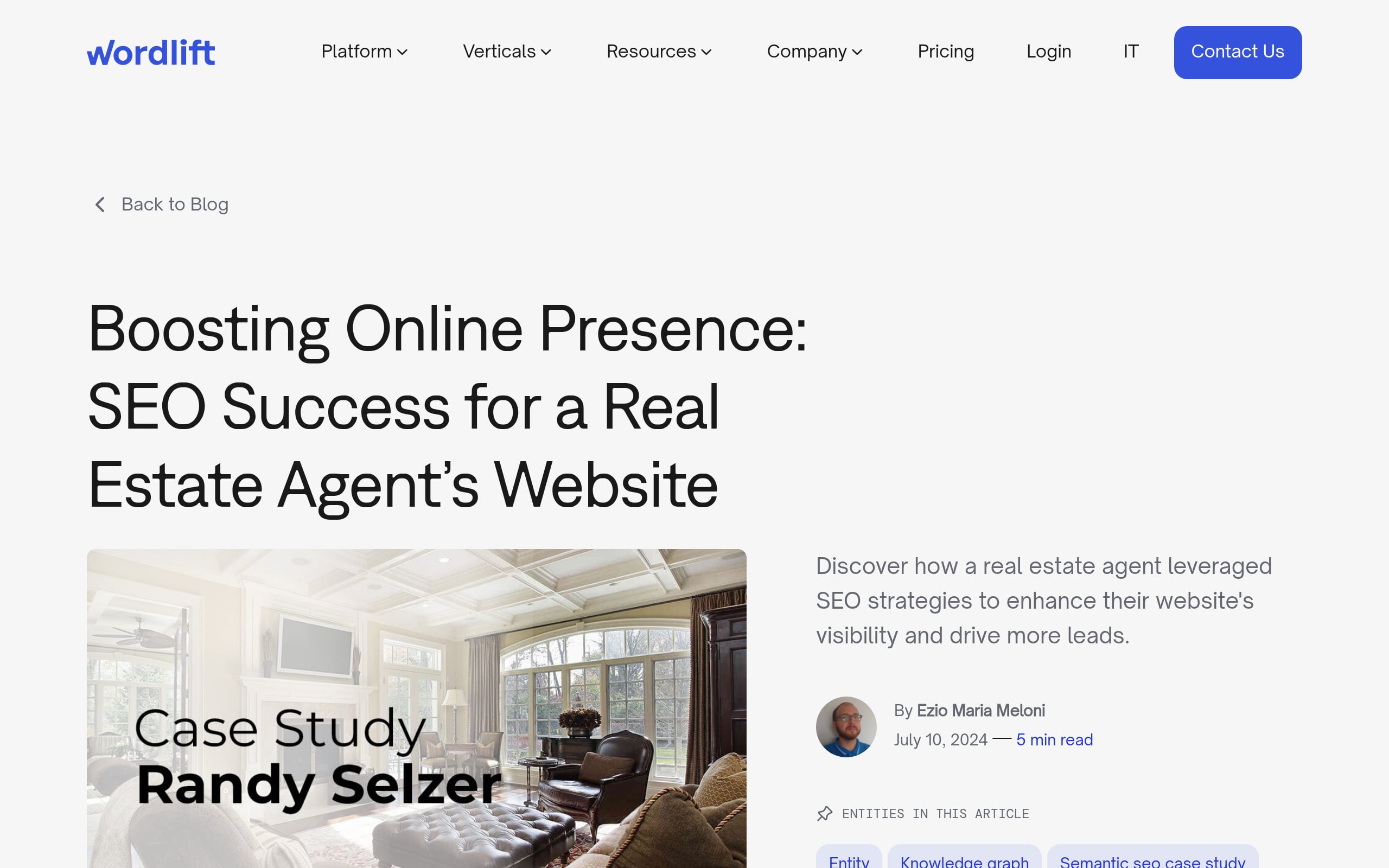
The playbook (AI + SEO): WordLift’s AI enriched pages with a private knowledge graph that annotated neighborhoods, schools, and services using schema to improve machine understanding and internal linking. An AI SEO agent guided hub and spoke content planning and refreshes on WordPress, prioritizing depth and usefulness over sheer volume to win consistent local intent.
TL;DR: Entities, schema, and disciplined hubs turned local expertise into search authority.
Key wins:
- Organic sessions: 2,381 → 5,442 in 12 months (2×)
- Rankings: +700 first page keywords for high value local terms
- Authority: Deep, refreshed local hubs (e.g., school rankings) powering long tail discovery
Replicate it (SMBs/startups):
- Do this first: Inventory your core entities (people, places, services) and add structured data; validate schema.
- Operate weekly: Update one hub and two spokes guided by search demand and internal link gaps.
- Watch out for: Thin, unverified AI copy. Anchor claims in real listings, citations, and reviews.
How to Get Started: Apply AI Driven SEO at Your Startup
Ready to build your own AI startup SEO case study? You don’t need a massive team or a venture capital sized budget. The key is to implement a systematic process that leverages AI for scale and human oversight for strategy.
- Define Your Goals: Start with business objectives. Do you need more demo requests, free trial signups, or direct sales? Your SEO goals should directly support these outcomes.
- Strategic Keyword Research: Use AI tools for idea generation but have a human vet the final list. Focus on keywords with clear keyword intent and achievable difficulty. Look for gaps your competitors are ignoring.
- Establish High Velocity Publishing: Commit to a consistent, high volume content schedule. This is where AI assisted content creation becomes essential. A service that can produce 20 or more pages a month, like Rankai, can build momentum far faster than a traditional approach.
- Integrate Technical Health Checks: Make technical SEO a routine part of your process. Use automated tools to monitor your site and address issues like slow page speed or indexing errors as they arise.
- Implement a Rewrite Workflow: Don’t let content underperform. Track keyword rankings for new posts after about three or four weeks. If a page isn’t gaining traction, schedule it for a full rewrite. This commitment to iteration is a non negotiable part of modern SEO.
Conclusion: AI + Human Collaboration, Guided by Revenue, Wins
The future of startup marketing belongs to those who can move the fastest and adapt the quickest. As we’ve seen from the key lessons, SEO driven by AI provides the engine for that speed, enabling a velocity and scale of execution that was previously unimaginable for small teams. But technology alone isn’t the answer.
The most powerful growth stories emerge from a smart partnership between artificial intelligence and human expertise. AI handles the scale, the data processing, and the repetitive tasks. Human strategists provide the context, the creativity, and the crucial link back to business revenue. This combination allows startups to build a formidable organic growth machine, turning their website into a predictable source of customers. By learning from each AI startup SEO case study, you can build a system that compounds value over time, delivering sustainable growth long after the paid ad campaigns have been turned off.
If your startup is ready to implement a high velocity, done for you SEO program, explore how Rankai combines AI efficiency with expert human strategy.
Frequently Asked Questions
What is an AI startup SEO case study?
An AI startup SEO case study is a detailed analysis of how a startup used SEO strategies powered by artificial intelligence to achieve significant organic growth. It typically outlines the challenges, the solutions implemented (like high velocity content and technical fixes), and the measurable results, such as increases in traffic, keyword rankings, and leads.
How can AI help with startup SEO?
AI can dramatically accelerate SEO efforts for startups. It assists with keyword research at scale, generates first drafts of content quickly, automates technical SEO audits, and helps analyze performance data to identify pages that need improvement. This allows small teams to execute at the level of a much larger company.
Is AI SEO expensive for a startup?
It doesn’t have to be. While some enterprise level AI tools are costly, new service models make AI driven SEO highly affordable. For instance, services like Rankai offer a flat monthly fee around $500 for a comprehensive program including content creation, technical fixes, and continuous optimization, making it more accessible than traditional agencies which often cost thousands.
How fast can you see results from an AI SEO strategy?
While SEO is a long term strategy, using AI to increase content velocity can accelerate results. Startups may begin to see positive movement in keyword rankings and traffic within 3 to 6 months. A good AI startup SEO case study will show a clear growth trajectory over a 6 to 12 month period.
Can AI replace human SEO experts?
No, the best approach is a hybrid one. AI is a powerful tool for execution and analysis, but it lacks the strategic thinking, creativity, and business context of an experienced human SEO expert. The most successful strategies use human experts to guide the AI, ensuring the work is aligned with business goals.
What should I look for in an AI startup SEO case study?
Look for transparency and clear metrics. A strong case study will show before and after data from trusted sources like Google Search Console. It should detail the specific actions taken, the volume of content produced, and connect SEO results back to tangible business outcomes like user growth or revenue.