Partnering with an SEO agency isn't just another line item on your budget; it's a strategic investment in sustainable, long-term growth. When you're a startup, this choice is even more critical. You're not just buying tactics—you're building a competitive moat based on what your specific audience is searching for, laying a strong organic foundation right from the start.
Why Your Startup Needs a Specialized SEO Partner

In the startup world, speed and agility are everything. You're building the plane while flying it, often with limited resources and immense pressure to show traction. This is exactly why a generic, one-size-fits-all SEO approach is practically guaranteed to fail. Big-box agencies are built for established clients with predictable sales cycles and deep pockets—a universe away from the startup grind.
A true startup SEO agency gets it. They operate with a founder's mindset, focusing on lean, high-impact strategies that deliver measurable results fast. They understand that your goals aren't just about "traffic"; they're about driving demo requests, landing early adopters, and proving your product-market fit.
The Startup Ecosystem Demands a Different Playbook
Traditional agencies often propose lengthy, six-month strategies before any real work even begins. A startup can't afford to wait that long for results. A specialized partner prioritizes actions that build momentum from day one.
- Agility and Pivots: They build flexible strategies that can adapt when your product, messaging, or target market inevitably pivots.
- Budget Constraints: They focus on ROI-driven activities, avoiding costly, low-impact tactics that drain precious cash flow.
- Speed to Market: Their goal is to secure early wins and build a foundation for compounding growth, not just chase long-term authority.
This focused approach is crucial. The broader SEO and internet marketing industry is massive; in the United States alone, its market size is projected to hit $119.4 billion in 2025 after a year-over-year growth of 14.1%. This huge investment shows how vital professional SEO is, reinforcing why startups must prioritize it early. You can find more insights on this growing market over at IBISWorld.
A great startup SEO partner doesn't just "do SEO." They integrate organic search into your go-to-market strategy, ensuring every piece of content and technical fix directly supports your core business objectives.
Startup SEO Needs vs Generic Agency Offerings
The disconnect between what a startup needs and what a generic agency provides is often huge. A specialized partner is built to fill that gap.
| Startup Requirement | Generic Agency Approach | Specialized Startup Agency Approach |
|---|---|---|
| Speed & Early Wins | Long-term, 6-12 month roadmaps with slow initial results. | Focus on "low-hanging fruit" and quick wins to build immediate momentum. |
| Budget Flexibility | Rigid, high-cost monthly retainers with fixed scope. | Scalable, performance-based pricing models; pilot projects to prove ROI. |
| Pivots & Agility | Prefers stable clients; slow to adapt to product or market changes. | Expects and plans for pivots; builds adaptable, modular strategies. |
| Market Validation | Focus on ranking pre-defined, high-volume keywords. | Uses search data to validate demand, uncover pain points, and inform strategy. |
| Business-Goal Alignment | Reports on traffic, rankings, and impressions (vanity metrics). | Reports on qualified leads, demo requests, sign-ups, and user acquisition cost. |
This table makes it clear: choosing the right kind of partner is essential for a startup that needs to move fast and make every dollar count.
Beyond Keywords to Market Validation
Ultimately, a specialized agency does more than just rank keywords. They use search data as a powerful tool for market intelligence. By understanding what your potential customers are searching for, you gain priceless insights into their pain points, needs, and language. This data can inform product development, refine your messaging, and give you a real competitive edge.
Many founders wonder why traditional SEO agencies are often a poor fit for smaller businesses. Their rigid structures and high overhead often clash with a startup's need for flexibility and direct results. You can learn more about how modern solutions are shaping the future of SEO for SMBs. This specialized partnership ensures your investment translates directly into growth that matters to you and your investors.
Defining Your Startup’s Unique SEO Blueprint
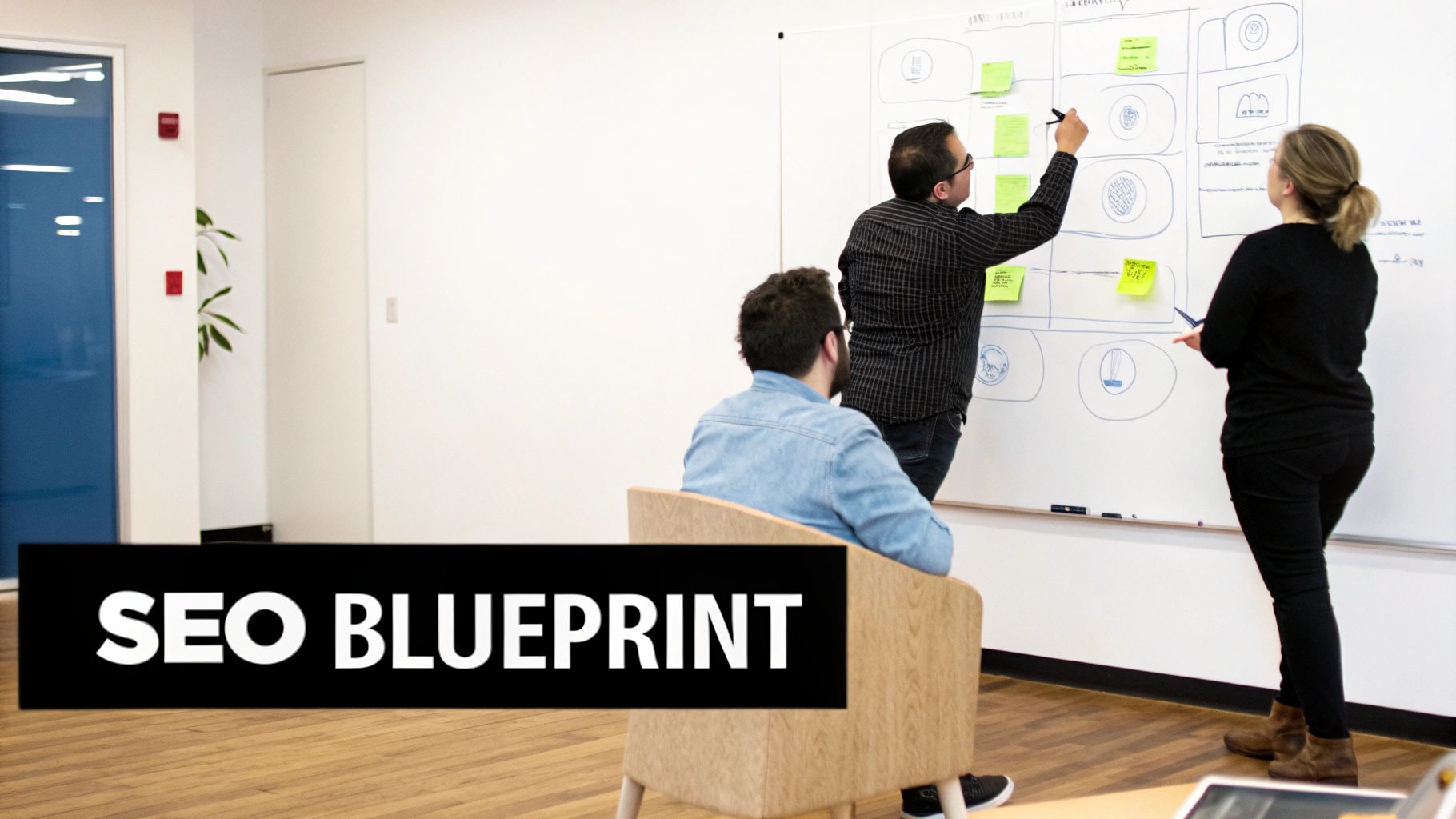
Before you even start Googling for an SEO agency for startups, you need to have a serious talk with yourself. Seriously.
Walking into a discovery call with a vague goal like "we need more traffic" is the fastest way to waste a lot of money and end up with a partner who doesn't get you. The best agencies—the ones you actually want to work with—can spot a founder who has done their homework from a mile away. They're drawn to leaders who can clearly articulate what they need organic growth to do for the business.
This prep work is all about turning that fuzzy feeling of "we should do SEO" into a concrete, actionable brief. You'll need to look inward at where your business is right now, outward at what the competition is doing, and forward to the specific milestones you need to hit. This document becomes your North Star, guiding your entire search and setting the stage for a killer partnership.
First, Diagnose Your Business Stage
Your startup’s current maturity level dictates your SEO priorities more than anything else. A strategy that makes sense for a company raising a Series B is completely wrong for a pre-launch venture. Figure out where you are, and you'll know what to ask for.
- Pre-Launch / MVP: Forget about massive traffic. Your goal is market validation. SEO here is purely foundational. It's about grabbing the low-hanging fruit—identifying core "problem-aware" keywords, getting the technical basics right, and maybe writing a few pillar posts to see if anyone cares.
- New to Market (Post-Launch): You have a product, maybe a few early customers. Now the focus shifts to capturing commercial intent. You want to rank for keywords that scream "I'm ready to buy or sign up!" It's all about building authority around your specific use case.
- Scaling for Growth: Product-market fit is locked in. Now it's time to pour fuel on the fire. This means expanding your reach by targeting broader, top-of-funnel topics, scaling up content, and starting a strategic link-building program to build a real competitive moat.
Knowing this distinction helps you have a much smarter conversation. If an agency suggests an aggressive backlink campaign when you're still pre-launch, you know they don't understand the startup game.
Run a Scrappy Competitive Analysis
You don't need a fat budget for fancy tools just yet. A quick, down-and-dirty manual review of your competitors can tell you almost everything you need to know to get started.
- Pinpoint 3-5 Competitors: Make a list. Include the direct players (who offer a similar product) and the indirect ones (who solve the same problem in a different way).
- See What's Working for Them: Start searching for your dream keywords. What kind of content is already on page one? Are they blog posts? Landing pages? In-depth comparison guides?
- Map Their Keyword Territory: Look at the topics they write about over and over again. This shows you the ground they're trying to own. This process is a key part of content mapping. If you want to dive deeper, you can learn more about creating a practical guide for growth in our detailed article.
This quick audit will immediately highlight gaps in the market—places where you can swoop in and provide value that no one else is. It also shows a potential agency partner that you’re not just winging it.
A well-defined blueprint doesn't just attract the right agency; it empowers them. When you provide clear goals, business context, and competitive insights, you enable your future partner to skip the generic discovery phase and start building a high-impact strategy from day one.
Set Real Goals That Aren't Just "More Traffic"
Finally, you have to connect SEO to actual business outcomes. Vanity metrics like impressions and traffic look nice on a slide, but they don't mean a thing to your bottom line.
Instead of saying "increase organic traffic," get specific. Aim for things like:
- "Generate 20 qualified demo requests per month from organic search within six months."
- "Reduce our organic channel customer acquisition cost (CAC) by 15% next quarter."
- "Own the top-five rankings for our three most critical, bottom-of-funnel keywords."
These are goals an agency can sink their teeth into. It ties their work directly to what your investors (and your bank account) care about.
It's no surprise the global SEO software market is exploding—it's expected to jump from USD 74.6 billion in 2024 to USD 154.6 billion by 2030, with small and medium-sized businesses leading the charge. This just goes to show how accessible and critical these strategies have become for startups looking to scale. (Find out more about SEO software market trends on Grand View Research)
How to Vet and Select the Right Agency Partner
Once you've mapped out your internal needs, you can start the hunt for the right growth partner. This is where the real work begins. You’re not just buying a service; you're looking for a team that can plug into your own and act as a genuine extension of your startup.
Vetting an SEO agency for startups is more art than science. It means looking past the slick sales decks and asking the kind of questions that cut to the heart of their expertise and whether they’ll be a good cultural fit.
Look for Relevant Case Studies, Not Just Big Logos
Any agency can throw a slide up with logos from big, impressive companies. For a startup, that's almost meaningless. What you really need to see is proof they understand your specific challenges.
When you're digging into their portfolio, ask for case studies that feel familiar:
- Similar Business Model: Have they worked with other SaaS, e-commerce, or marketplace startups? You want to see that their experience matches your go-to-market strategy.
- Comparable Growth Stage: Look for stories of them taking a company from pre-seed to Series A, not just tweaking the SEO for a massive, established brand. The skillsets are worlds apart.
- Tangible Business Results: The case study should be about driving leads, user sign-ups, or lowering customer acquisition cost (CAC). A 300% jump in vanity traffic doesn't pay the bills.
A great agency will be genuinely excited to talk about helping a company just like yours beat the odds. If all they have are enterprise examples, they probably don't have the scrappy, agile mindset a startup needs.
Ask the Right Questions on the Discovery Call
That first call is your golden opportunity to see how deep their strategic thinking goes. Don't let them drive the entire conversation with a pre-baked presentation. Come armed with questions that make them think on their feet.
Here are a few I always recommend:
- "Looking at our site and goals, what would be your top priority for the first 90 days?" This is a great test of their ability to diagnose and prioritize. A good answer will be specific, actionable, and tied directly to your business stage.
- "How do you measure success beyond rankings and traffic?" This is a big one. It shows whether they're focused on what actually matters to your business or just chasing SEO vanity metrics.
- "Can you walk me through your communication and reporting process?" You need clarity on how often you'll hear from them, what the reports actually show, and who your day-to-day contact will be.
- "What's your approach to link building for a new startup?" Their answer here is telling. Does it sound like they focus on genuine, authority-building digital PR, or are they hinting at spammy, outdated tactics?
The way they answer these questions will tell you pretty much everything you need to know about their process, their transparency, and their strategic chops.
A top-tier agency partner won't just tell you what they'll do; they'll explain why it's the right move for your startup at this exact moment. Their strategy should feel like a direct response to the blueprint you've already created.
Platforms like Clutch are a good starting point for building a shortlist, offering curated lists and real client reviews.
Using directories like this lets you filter by location, budget, and industry focus, making it much easier to find agencies with proven experience in the startup world.
Exposing the Red Flags
Knowing what to look for is only half the battle; you also need to know what to run away from. Some promises and behaviors are giant red flags that signal you’re headed for trouble.
- Guaranteed #1 Rankings: This is the oldest, most tired trick in the book. No one can guarantee rankings on Google. Agencies that do are either clueless or using black-hat tactics that will eventually get your site penalized.
- Vague or Secretive Strategy: If they’re unwilling to explain their methods and hide behind a "proprietary process," they're probably hiding something. A real partner is an open book.
- One-Size-Fits-All Packages: Your startup is unique. If an agency immediately tries to push you into a generic "gold" or "platinum" package without a deep dive into your business, they're not interested in a custom strategy.
- Lack of Direct Startup Experience: If their whole team comes from a background of marketing for massive corporations, they might not be able to adapt to the speed, budget constraints, and constant pivots of a startup.
Pulling the trigger on an agency is a big commitment, and it pays to weigh your options carefully. For a deeper analysis, you might want to explore the pros and cons of keeping SEO in-house versus outsourcing to see what truly fits your budget and long-term goals.
Ultimately, choosing the right partner is about finding a team that not only has the skills but also shares your vision and understands the unique pressures of the startup journey.
Let's Talk Money: Agency Pricing and the Smart Way to Start
For any startup, cash flow is everything. It's not just a line on a spreadsheet; it's the oxygen that keeps your business alive. This makes the conversation about SEO agency pricing absolutely critical. You need a partner whose financial model fits your growth stage, not one that’s going to drain your runway before you see a single result.
The good news is that SEO services are often more accessible than you might think. On average, you can find experts charging between USD 25-199 per hour, with USD 150 being a common rate. For project-based work, agencies typically land in the USD 2,501-5,000 range. When you consider that organic traffic is now responsible for 46.98% of all website traffic, this investment opens up a huge channel for growth that doesn't rely on pouring money into paid ads. You can find more insights on these SEO statistics to see the full picture.
What Do SEO Agencies Actually Charge For?
Agency pricing isn't a dark art; it usually falls into a few predictable buckets. Each one is built for different startup needs and budget realities. Getting familiar with them means you can pick a path that supports your financial strategy instead of clashing with it.
Here's a breakdown of the most common pricing models you'll encounter.
SEO Agency Pricing Model Breakdown
| Pricing Model | Best For... | Typical Cost Range (Monthly) | Pros | Cons |
|---|---|---|---|---|
| Monthly Retainer | Startups ready for consistent, long-term growth and predictable budgeting. | $2,500 - $10,000+ | Predictable costs, deep agency integration, ongoing strategy. | Less flexibility, can be a large fixed cost for early-stage companies. |
| Project-Based | Startups needing a specific, one-time fix like a technical audit or content strategy. | Varies by scope ($1,000 - $7,500+) | Clear deliverables, defined timeline, no long-term commitment. | Not suitable for ongoing SEO needs; scope creep can be an issue. |
| Hourly Consulting | Startups with an in-house team needing expert guidance or ad-hoc support. | $100 - $300+ per hour | Pay only for what you need, access to specialized expertise. | Can be hard to budget, lacks the consistency of a retainer. |
| Performance-Based | Well-established startups with clear conversion metrics and a higher risk tolerance. | Higher base + % of results | Ultimate alignment of goals, you pay for what you get. | Rare to find, complex contracts, often requires a higher initial investment. |
Choosing the right model is about matching the agency's structure to your startup's financial reality and immediate goals.
For an early-stage startup, signing a long-term retainer is a massive gamble. You're locking in a major expense before you've even proven the partnership works. This is where the pilot project becomes your secret weapon.
The Power of the Paid Pilot Project
Committing to a 12-month contract with an agency you just met is like getting married after one date. It's a huge risk. A much smarter move is to propose a paid, short-term pilot project. Think of it as the ultimate low-risk way to test-drive the relationship, see their skills in action, and get a feel for their process before you sign on the dotted line.
Let's be clear: a pilot project isn't asking for "free work" or a "test." It's a focused, paid engagement with a clear beginning, middle, and end. It lets you evaluate not just their technical chops but also their communication style, strategic thinking, and whether they're a good culture fit for your team.
How to Structure a Pilot That Actually Tells You Something
A successful pilot needs a tight, focused structure. You're not trying to boil the ocean here; you’re trying to see if the agency can deliver real value on a specific, high-impact task.
Here’s how you can frame it:
Pick One Focused Goal: Don't ask them to "fix our SEO." Give them a specific, manageable challenge. Good examples include, "Conduct a full technical audit and implement the top five critical fixes," or "Develop a content strategy for one core product feature and produce three pillar articles."
Set a Tight Timeline: Keep it short and sweet, usually 30 to 60 days. This is just enough time to see real work get done but short enough to limit your financial exposure and keep everyone focused.
Demand Specific Deliverables: Be crystal clear about what you expect to have in your hands at the end of the project. This removes any gray areas and gives you a concrete way to measure their performance.
Establish Realistic Success Metrics: How will you know if it worked? You won't see a massive traffic spike in 30 days, and that's okay. Instead, measure things that matter for this stage: the quality and insight of their audit, the strategic depth of their content plan, or initial ranking improvements for the specific content they created.
By starting with a paid pilot, you turn hiring an agency from a leap of faith into a data-driven decision. You get immediate value from the work they do, and you can move forward with a full-blown retainer feeling confident you’ve found a partner who can actually help you grow.
The First 90 Days: A Roadmap for Success
Signing the contract is just the starting line. The real work begins now, and those first 90 days with your new SEO agency are absolutely crucial. This initial sprint sets the tone for the entire partnership, builds momentum, and lays the groundwork for sustainable growth. A solid, well-communicated plan for this period is the best way to avoid misunderstandings and get everyone pulling in the same direction from day one.
Think of it as a three-act play. The first month is all about discovery and technical housekeeping. The second is about execution and bagging some early wins. And the third is focused on refining what works and locking in a transparent reporting rhythm. Each phase builds on the last, designed to show clear, measurable progress along the way.
Month 1: The Discovery and Foundation Phase
The first 30 days are a whirlwind of information sharing and foundational setup. Your new agency is essentially a detective, digging deep into your business, your market, and the technical guts of your website. The goal here isn't to see a massive traffic spike; it's to build the strategic launchpad for everything that comes next.
Your main job during this phase is to provide access and context. The agency needs the keys to the kingdom to do its job right.
- Onboarding and Access: Get them hooked up to your Google Analytics, Google Search Console, CMS, and any other marketing tools you use. The faster they get access, the faster they can get to work.
- Deep Dive Strategy Sessions: Be prepared for some intense calls. They should be asking sharp questions about your ideal customers, core business goals, and who you’re up against. This is where all that prep work you did before hiring them really pays off.
- Technical SEO Audit: The agency will crawl your entire site, hunting for problems that are holding you back—things like slow page speed, broken links, or major indexing issues.
By the end of this first month, you shouldn't have more traffic, but you should have a lot more clarity. You'll get a comprehensive tech audit, a prioritized list of fixes, and a shared understanding of the strategic path forward.
Month 2: Implementation and Early Wins
With the blueprint in place, month two is all about action. The agency will start chipping away at the fixes from the audit and begin rolling out the initial content strategy. This is when you should start to see the first glimmers of positive movement, even if they're small and targeted.
This is the "low-hanging fruit" phase. They’ll focus on changes that can deliver the quickest impact to build momentum and prove the strategy is sound. This timeline gives you a sense of how a pilot or initial project should flow—from planning and implementation to actually measuring what happened.

This structured approach is perfect for a fast-moving startup because it ensures your initial efforts are focused, executed well, and evaluated with clear metrics.
The deliverables this month should be tangible and directly tied to the opportunities they uncovered in the first 30 days.
- Technical Fix Implementation: The agency will work with your dev team (or handle it themselves) to resolve the highest-priority issues from the audit.
- Initial Content Creation: They’ll start producing the first few pieces of high-intent content—think blog posts or landing pages targeting keywords you can realistically win.
- On-Page SEO Optimization: This involves tweaking title tags, meta descriptions, and internal links on your most important pages to make them more relevant in Google's eyes.
Month 3: Optimization and Reporting Cadence
By the time you hit the 90-day mark, the partnership should feel like a well-oiled machine. The initial technical snags are fixed, the first wave of content is live, and the focus shifts to analysis, optimization, and communication. This is where you start connecting SEO activity to actual business outcomes.
This month is less about starting new things and more about refining what’s already in motion. It's about looking at the early data and doubling down on what’s working. The conversations should become more detailed and forward-looking.
The main goal here is to establish a system for ongoing success.
- Initial Performance Review: You'll get your first real report. It should go way beyond vanity metrics and show you keyword ranking improvements, organic traffic to the new content, and any early lead indicators.
- Content Calendar Finalization: Armed with initial data, the agency should present a solid content calendar for the next quarter, outlining topics, formats, and publishing dates.
- Backlink Analysis: They’ll likely have a good look at your backlink profile by now and can start pinpointing the first opportunities for building authority with high-quality links.
This 90-day roadmap turns a new vendor relationship into a strategic growth engine. It creates alignment, sets clear expectations, and gives you a framework for measuring the kind of progress that actually matters to your startup.
Measuring SEO ROI That Matters to Investors
Let's be blunt: vanity metrics are a startup killer. Your board and investors don't pop the champagne over a 300% spike in impressions if that number doesn't lead to actual business growth. Reporting on raw traffic and keyword rankings alone is a rookie mistake, and it's the fastest way to make everyone question the money you're spending on SEO.
To build a real, long-term partnership with your SEO agency for startups, you have to change the conversation. It’s not about "how much traffic did we get?" It needs to be about "what did that traffic do for us?" Every single SEO effort has to tie back to the things that keep the lights on: revenue, user acquisition, and proving your market fit.
Look Past the Vanity Metrics
First things first, we need to redefine what a "win" actually looks like. Sure, rankings are part of the game, but they’re just a step along the path, not the destination itself. Your reporting and your conversations need to focus on metrics that tell a story of real business impact.
Here are the KPIs that actually move the needle:
- Organic Lead Conversion Rate: Of all the people who find you through a search, what percentage are actually signing up, requesting a demo, or buying something? This is the ultimate gut-check for traffic quality.
- Customer Acquisition Cost (CAC) from Organic Search: How much are you spending to get one new customer through SEO? A great agency will be obsessed with driving this number down over time, making organic your most profitable channel.
- Rankings for High-Intent Keywords: It’s not about ranking for a million different terms. It’s about owning the top spots for those "bottom-of-the-funnel" keywords that scream, "I'm ready to buy."
- Share of Voice (SOV): When people search for your most important topics, how often do they see your brand versus your competitors? This is a powerful way to measure your growing authority in the market.
I've found the most productive performance reviews happen when the agency understands the startup's business model as deeply as the founder. They should be reporting on how their work is impacting user sign-ups, not just search positions.
Build a Dashboard That Tells a Story
A great report doesn't just dump data on you; it gives you insight. You should work with your agency to build a custom dashboard that clearly connects their SEO activities to your business goals. For a startup, this means visualizing the entire journey, from top-of-funnel awareness right down to bottom-line results.
A dashboard for a B2B SaaS startup, for example, could be structured like this:
| Metric Category | Primary KPI | Secondary KPIs |
|---|---|---|
| Top-of-Funnel | Organic Sessions | New Users, Top Landing Pages |
| Mid-Funnel | Demo Request Conversions | Conversion Rate (Organic), Goal Completions |
| Bottom-of-Funnel | MQLs from Organic | SQLs from Organic, Organic CAC |
| Keyword Performance | #1-3 Rankings (Commercial Intent) | Clicks, CTR on Target Keywords |
This kind of setup grounds every conversation in outcomes. You can see precisely how a jump in traffic is (or isn't) translating into qualified leads and, eventually, paying customers.
Use the Data to Make Smarter Decisions
Reporting isn't just about looking back; it’s about figuring out what to do next. A true agency partner won't just show up with a spreadsheet full of numbers. They'll come with analysis and concrete recommendations.
Here’s how you can use that data to make better strategic choices:
- Find Your Winning Content: Dig into your analytics. Which blog posts and landing pages are driving the most sign-ups? Double down on those topics and formats.
- Fix the Leaks: If a page gets a ton of traffic but almost no one converts, you've got a problem. That's a clear signal to work with the agency to improve the user experience, tweak the calls-to-action, or clarify the messaging.
- Sharpen Your Keyword Targeting: Are your target keywords actually bringing in the right people? If leads from a specific keyword group tend to churn quickly, it might be time to shift your focus to a different audience segment.
Ultimately, measuring ROI comes down to a partnership built on transparency and shared goals. When your SEO agency for startups is as obsessed with your CAC and conversion rates as you are, you know you've found a partner who's in it for the long haul.
Ready to stop chasing vanity metrics and start driving real business outcomes? Rankai blends expert strategy with powerful automation to deliver SEO that's built for startup growth. Get agency-level results at a fraction of the cost, with transparent reporting and a model that scales with you. See how it works at https://rankai.ai.