In 2024, winning the local search game isn't an advantage-it's essential for survival. With over 46% of all Google searches seeking local information, your potential customers are looking for you right now, in your neighborhood. But are they finding you, or your competitors? Mastering local SEO best practices is the only way to connect with these high-intent buyers, drive foot traffic, and secure your position as the go-to provider in your service area.
This guide moves beyond generic advice to deliver a comprehensive, actionable playbook. We will break down the ten most critical strategies that separate businesses that thrive locally from those that get lost in the digital noise. You will learn precisely how to transform your online presence into a powerful local growth engine.
We will cover everything from the foundational pillars to advanced tactics, including:
- Google Business Profile (GBP): Turning your profile into a customer-conversion machine.
- Citations & On-Page SEO: Building consistent signals that Google trusts.
- Reviews & Reputation: Creating a strategy to build social proof and authority.
- Local Content & Link Building: Earning relevance through community-focused content and partnerships.
- Technical SEO: Implementing structured data and ensuring mobile-first indexing for local search.
Each section is designed to be a practical, step-by-step guide, packed with real-world examples and expert insights. This isn't just a list; it's a blueprint for dominating your local market. Forget abstract theories-let's dive into the specific actions that will get your business seen, chosen, and visited.
1. Google Business Profile Optimization
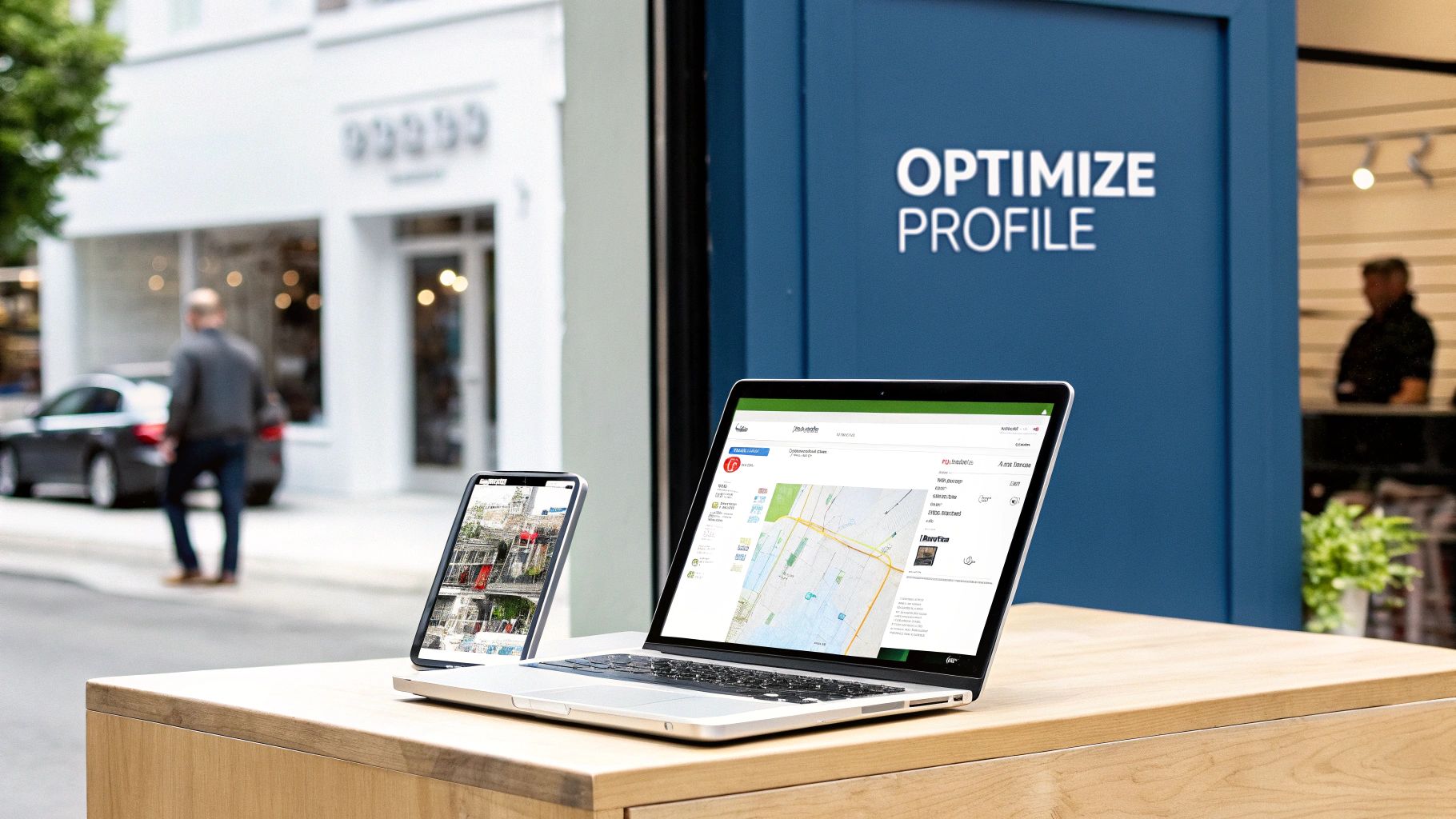
Claiming, verifying, and meticulously optimizing your Google Business Profile (GBP) is the cornerstone of any successful local SEO strategy. This free tool from Google acts as your digital storefront, allowing you to manage how your business appears on Google Search and, most importantly, Google Maps. For local customers searching for products or services "near me," a well-optimized GBP is often their first interaction with your brand, making it a non-negotiable component of modern local seo best practices.
Why It’s the Foundation of Local SEO
A complete GBP provides Google with strong, verifiable signals about your business’s location, services, and legitimacy. This information directly influences your ranking in the "Local Pack" or "Map Pack," the block of three local business listings that appears at the top of many local search results. A robust profile builds trust with both Google and potential customers by offering immediate answers to their most pressing questions, such as hours, location, and service availability.
Actionable Optimization Tips
To transform your GBP from a simple listing into a powerful customer acquisition tool, focus on these key areas:
- Complete Every Section: Fill out every available field, including services, products, accessibility attributes, and special hours. The more information you provide, the more opportunities you have to rank for relevant queries.
- Leverage Google Posts: Use Google Posts to share updates, offers, events, and new products. Posting 2-4 times per week signals to Google that your business is active and engaged.
- Build a Visual Portfolio: Regularly upload high-quality photos and videos of your storefront, team, products, and services. Aim for a minimum of 15-20 images to give customers a comprehensive view of your business.
- Engage with Q&As: Proactively populate the Questions & Answers section with common customer inquiries and provide clear, helpful answers. This pre-empts customer questions and allows you to control the narrative.
For businesses looking to dominate the map pack, a deep dive into GBP management is essential. For an in-depth walkthrough, explore this comprehensive guide to Google Maps SEO services.
2. Local Citation Building and Consistency
Beyond your own website and Google Business Profile, your digital footprint across the web plays a crucial role in local search visibility. Local citations are mentions of your business's Name, Address, and Phone number (NAP) on other websites, such as online directories, social media platforms, and industry-specific portals. Building a strong and consistent citation profile is a fundamental pillar of local seo best practices, sending powerful trust signals to search engines.
Why It’s a Foundational Trust Signal
Consistent NAP information across multiple reputable sources validates your business's existence and location for search engines like Google. When Google's crawlers find the same accurate information about your business on Yelp, your local Chamber of Commerce site, and an industry-specific directory, it reinforces the data in your GBP. This consistency builds authority and directly contributes to higher rankings in the local pack and on Google Maps, as it reduces uncertainty about your business's legitimacy and physical location.
Actionable Optimization Tips
To build a citation profile that boosts your local authority, focus on accuracy, relevance, and consistency:
- Audit Existing Citations: Before building new ones, use a tool like BrightLocal or Moz Local to find all existing mentions of your business online. Identify and correct any inconsistencies in your business name, address, or phone number.
- Prioritize High-Authority Directories: Start with the most impactful platforms. Ensure you have accurate and complete listings on foundational sites like Apple Maps, Yelp, Facebook, and Bing Places.
- Focus on Niche Relevance: Seek out directories and websites specific to your industry and city. For example, a law firm should be on Avvo and FindLaw, while a contractor should target listings on HomeAdvisor and Houzz.
- Maintain Scrupulous Consistency: Your NAP must be identical across every single platform. Even minor variations, like "St." versus "Street" or "Co." versus "Company," can create confusion and dilute your local authority. Establish one official format and stick to it everywhere.
For a deeper understanding of how citation management tools can streamline this process, exploring a platform like Whitespark can provide valuable insights into both building and cleaning up your business listings.
3. Local Keyword Research and Implementation
Conducting keyword research with a hyper-local focus is essential for connecting with customers actively seeking your services in a specific geographic area. This process involves identifying the exact phrases and geo-modifiers people use, such as "near me" or "[service] in [city]," and strategically integrating them across your digital assets. This targeted approach is a fundamental pillar of local seo best practices, ensuring your business appears for the searches that matter most.
Why It’s Critical for Local Visibility
Targeting broad, non-localized keywords pits you against national competitors with massive budgets. Local keyword research levels the playing field by focusing on searcher intent with high commercial value. For example, a user searching for "emergency plumber in Brooklyn" is a far more qualified lead than someone searching for "plumbing tips." By optimizing for these specific terms, you tell search engines exactly where and for whom your business is relevant, directly boosting your chances of appearing in the Local Pack and organic results for ready-to-buy customers.
Actionable Optimization Tips
To uncover and implement valuable local keywords, focus on these tactical steps:
- Mine Search Autocomplete: Start typing your core services followed by "in" or "near" into Google Search and Maps. The autocomplete suggestions are a goldmine of popular, real-world search queries.
- Analyze "People Also Ask": Perform searches for your primary local keywords and analyze the "People Also Ask" section. This reveals long-tail keyword opportunities and the specific questions your content should answer.
- Create Dedicated Location Pages: If you serve multiple neighborhoods or cities, build unique, optimized landing pages for each one. For instance, a law firm might have separate pages for "personal injury lawyer in downtown" and "personal injury lawyer in the suburbs."
- Integrate Keywords Naturally: Weave your target local keywords into your page titles, H1 tags, meta descriptions, body content, and image alt text. The key is to make it sound natural for a human reader, not just for a search engine.
Harnessing the right tools can significantly streamline this process. To discover how modern technology can enhance your strategy, check out this guide to AI keyword research tools.
4. Local Link Building and Local Citations
While a Google Business Profile is foundational, building local authority requires earning trust signals from other entities in your community. Local link building and citation management are how you demonstrate this digital relevance. Acquiring links from other local businesses, news outlets, and community organizations acts as a powerful vote of confidence, signaling to search engines that your business is a legitimate and valued part of the local ecosystem.
Why It Builds Local Authority
Search engines view links as endorsements. A link from a highly-respected local source, like a city’s chamber of commerce or a popular local news blog, passes significant authority and relevance to your website. These locally-themed links are a critical differentiator that tells Google you aren't just located in a community, but you are an active participant of that community. This distinction is a key component of advanced local seo best practices that can separate you from competitors.
Actionable Optimization Tips
To build a portfolio of high-impact local links and citations, focus on genuine community engagement rather than just link acquisition:
- Sponsor Local Events: Sponsor a local youth sports team, a community festival, or a charity run. In return, ensure your business gets a link from the event’s website, sponsorship page, or press materials.
- Partner with Neighbors: Collaborate with non-competing, complementary local businesses on a joint promotion or guide. For example, a real estate agent could partner with a local moving company and a home inspector to create a "New Homeowner's Guide to the City," with each business linking to the others.
- Create Newsworthy Content: Develop content that is inherently valuable to your local area. This could be a detailed analysis of local housing market trends, a guide to the best dog-friendly parks, or a feature on local history. Promote this content to local journalists and bloggers.
- Join Local Associations: Become a member of your local Chamber of Commerce, Better Business Bureau (BBB), or other industry-specific business associations. These memberships almost always come with a listing and a link from their high-authority directory.
5. Review Generation and Management Strategy
Systematically generating customer reviews and actively managing your online reputation is a powerful local ranking factor and a critical trust signal. Potential customers rely heavily on the experiences of others, making reviews on platforms like Google, Yelp, and industry-specific sites a cornerstone of their decision-making process. A proactive approach to earning and responding to feedback is an essential component of any list of local seo best practices.
Why It’s a Key Trust Signal
Google’s algorithm views a steady stream of positive reviews as a strong indicator of a business's quality, relevance, and authority within its local market. High review volume, velocity, and ratings directly impact your visibility in the Local Pack. Beyond search engines, reviews build social proof, giving prospective customers the confidence to choose your business over a competitor with fewer or lower-quality testimonials.
Actionable Optimization Tips
To build a robust review profile that drives both rankings and revenue, implement a structured strategy:
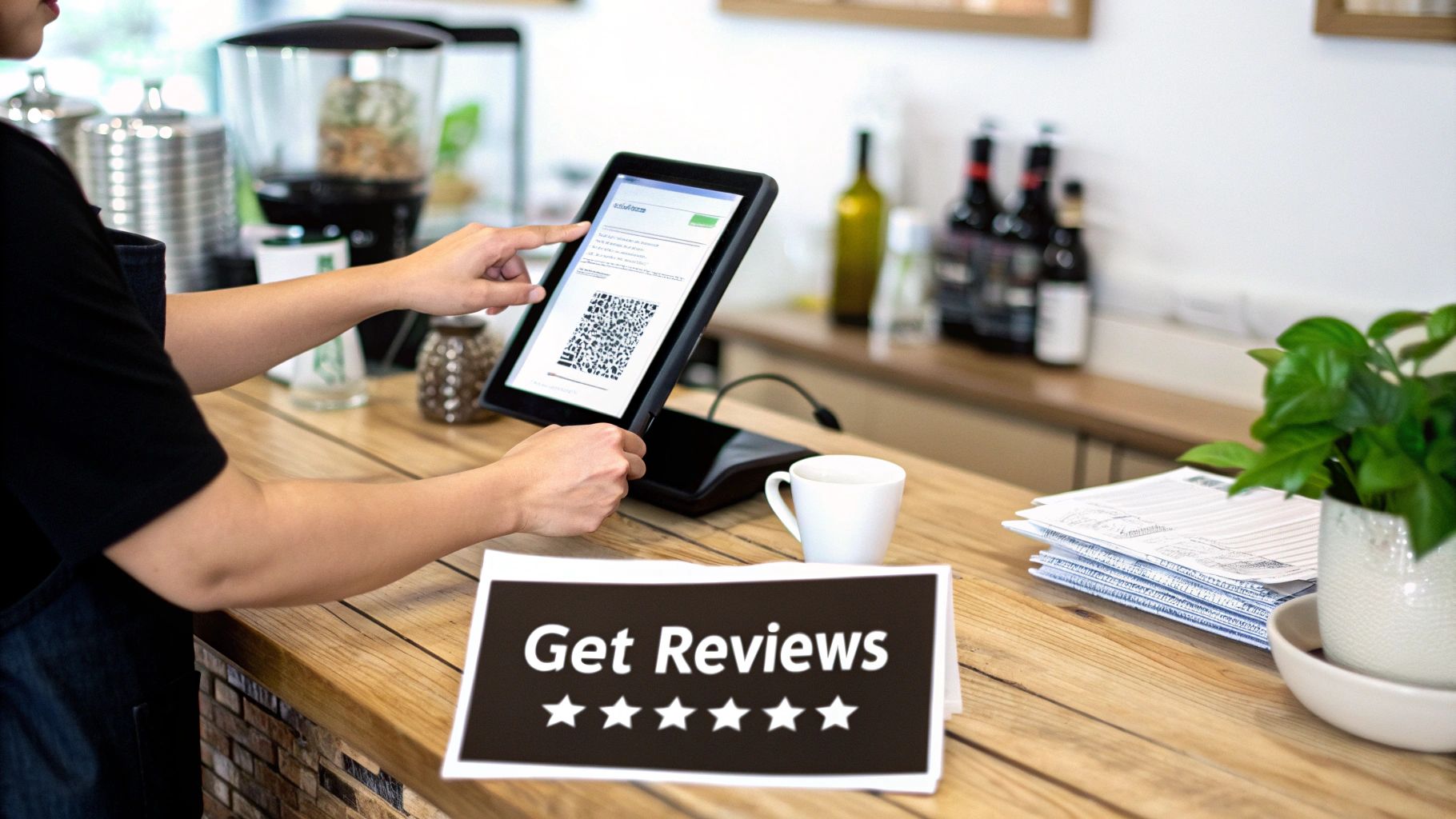
- Make It Easy: Simplify the review process for your customers. Use QR codes at your place of business, send direct review links via email or SMS post-purchase, or add a prominent review link on your website. The fewer clicks required, the higher the conversion rate.
- Time Your Request: Ask for a review at the peak of customer satisfaction. For a service business, this could be immediately after a successful job completion. For an e-commerce brand, it might be a week after the product has been delivered and used.
- Respond to Everything: Engage with every review, both positive and negative, ideally within 24-48 hours. Thank happy customers and address the concerns of unhappy ones professionally and empathetically. This shows you value all feedback and are committed to customer service.
- Showcase Your Best Reviews: Leverage positive feedback as marketing collateral. Feature glowing testimonials on your website's homepage, service pages, and social media profiles to reinforce your credibility.
For businesses looking to automate and scale their reputation management, platforms like Podium or Reputation.com can streamline the process of requesting and monitoring reviews across multiple sites.
6. Location-Specific Landing Pages and Content
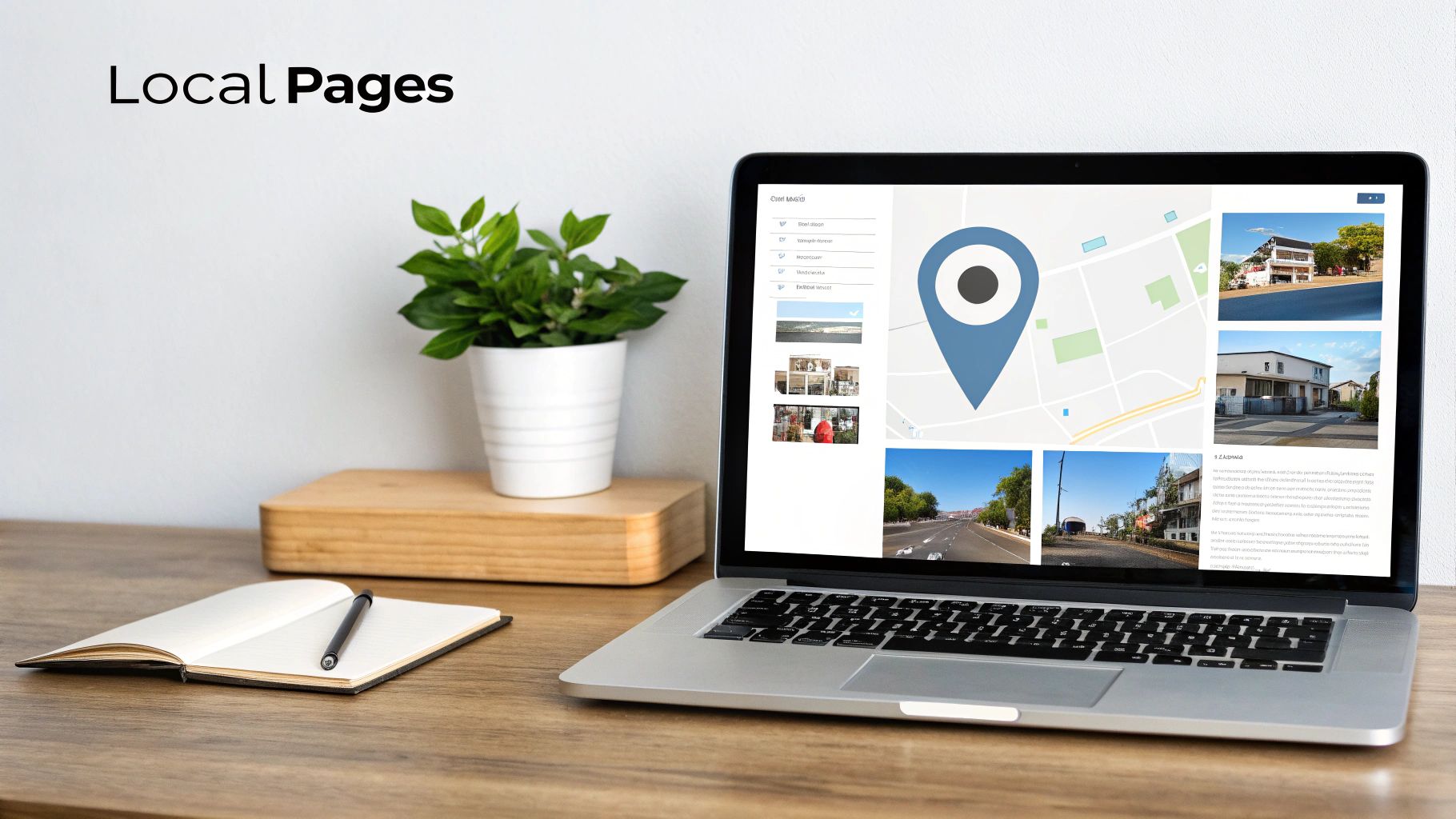
For multi-location businesses or service-area businesses, creating dedicated landing pages for each physical location or key service area is a crucial strategy. This approach allows you to create highly relevant, hyper-local content that directly speaks to customers in a specific geographic market. By developing unique pages, you send strong signals to Google that you are a legitimate authority in that area, significantly improving your chances of ranking for "near me" and city-specific searches.
Why It’s a Scalable Local SEO Tactic
A generic, one-size-fits-all website struggles to rank across multiple towns or neighborhoods. Location-specific pages provide a targeted platform to showcase unique information like local store hours, staff, promotions, and customer testimonials. This relevance is a key factor in Google’s local algorithm, helping you capture search traffic that would otherwise go to competitors with a physical address closer to the searcher. This tactic is one of the most effective local seo best practices for scaling your presence across different regions.
Actionable Optimization Tips
To build powerful location pages that rank effectively, you must go beyond simply swapping out the city name. Focus on creating unique value for each page:
- Develop Substantial, Unique Content: Each location page should have at least 300-500 words of original content. Discuss local landmarks, neighborhood-specific challenges your service solves, or team involvement in community events.
- Embed Location-Specific Proof: Include photos of the local storefront or team, customer testimonials from that specific area, and an embedded Google Map for the location.
- Implement LocalBusiness Schema: Add structured data to each page with the correct Name, Address, and Phone number (NAP) details. This helps search engines understand and display your information accurately.
- Optimize On-Page Elements: Ensure each page has a unique meta title and description incorporating the city or neighborhood name (e.g., "Expert HVAC Repair in Brooklyn" vs. "Expert HVAC Repair in Queens").
7. Structured Data Markup Implementation (Schema Markup)
Implementing structured data, commonly known as Schema markup, is like adding a translator to your website for search engines. It's a vocabulary of code that you add to your site's HTML to provide explicit context about your business information, services, and location. This allows search engines like Google to not just crawl your content but to truly understand it, leading to more informative and visually appealing search results, known as rich snippets. Correctly applying schema is a critical component of advanced local seo best practices that can give you a significant competitive edge.
Why It’s a Differentiator in Local Search
While on-page content tells a story to human visitors, schema tells that same story to search engine bots in their native language. For local businesses, this is immensely powerful. It helps solidify the connection between your website and your physical location by explicitly defining your NAP (Name, Address, Phone Number), business hours, and service area. This clarity helps Google display accurate information in the Local Pack and Knowledge Panel, increasing user trust and the likelihood of a click-through or a physical visit.
Actionable Optimization Tips
To leverage structured data effectively, focus on precision and relevance. Start by choosing the most appropriate schema types for your local business:
- Implement
LocalBusinessSchema: This is the most crucial type for any local entity. Be specific by using subtypes likeDentist,Restaurant, orPlumber. Include properties forname,address,telephone,openingHours, andgeocoordinates. - Use JSON-LD Format: This is Google's recommended format for structured data. It’s implemented as a script in your page’s
<head>or<body>, making it easier to add and manage without altering your existing HTML. - Add
ReviewandAggregateRatingMarkup: If you display reviews on your site, use this schema to make them eligible for star ratings in search results. This can dramatically improve click-through rates. - Validate and Monitor: Always use Google's Rich Results Test to validate your code before deploying it. After deployment, regularly check Google Search Console for any structured data errors or warnings to ensure it remains effective.
8. Local Link Building Through Community Involvement
Earning high-quality backlinks is a pillar of SEO, but for local businesses, the most valuable links often come from their own backyard. Local link building through community involvement focuses on creating authentic relationships with nearby organizations, events, and businesses to earn natural, contextually relevant backlinks that Google's algorithm loves. This approach transforms your community engagement into a powerful asset, solidifying your digital presence as a genuine local authority and representing one of the most effective local seo best practices.
Why It’s a Powerful Local Signal
Links from other local entities, like a little league team, a charity, or the chamber of commerce, send strong geographic relevance signals to search engines. These are not just any backlinks; they are hyperlocal endorsements that verify your business’s physical connection to the community it serves. This strategy enhances your backlink profile’s authority and builds invaluable brand trust and goodwill with local customers, creating a moat of local credibility that competitors find difficult to replicate.
Actionable Optimization Tips
To turn your community spirit into a link-building machine, integrate these tactics into your local marketing plan:
- Sponsor a Local Team or Event: Sponsoring a local sports team, a community festival, or a school fundraiser often comes with a thank-you link from the organization’s website. This is a classic, high-impact tactic.
- Partner with Non-Profits: Collaborate with a local charity or non-profit whose mission aligns with your brand values. This can lead to features on their partner pages, in press releases, or in annual reports, all with valuable link opportunities.
- Join Business Associations: Become a member of your local Chamber of Commerce or other industry-specific business groups. These memberships almost always include a listing and a link from a highly trusted local directory.
- Host or Participate in Local Events: Hosting a free workshop, a community cleanup day, or participating in a local market creates newsworthy content that other local blogs, news outlets, and organizations may link to.
9. Mobile Optimization and Local Search Mobile Strategy
With the vast majority of local searches happening on smartphones, a mobile-first approach is no longer optional; it's a fundamental requirement. Mobile optimization ensures your website provides a seamless, fast, and user-friendly experience for customers on the go. This focus on mobile performance directly impacts user engagement and conversions, serving as a critical signal to Google that your business caters to the modern local searcher, making it one of the most vital local seo best practices.

Why It’s Critical for Local Search
Google's mobile-first indexing means it primarily uses the mobile version of your content for indexing and ranking. A slow, hard-to-navigate mobile site creates a poor user experience, leading to high bounce rates and lost customers. Conversely, a site optimized for mobile makes it effortless for users to find what they need, like your phone number or directions, which translates into more calls, foot traffic, and sales. For a local service business, a prominent click-to-call button on a mobile site can be the difference between getting a new lead and losing them to a competitor.
Actionable Optimization Tips
To ensure your digital storefront is as accessible on a smartphone as it is on a desktop, implement these mobile-centric strategies:
- Prioritize Speed and Core Web Vitals: Use Google's PageSpeed Insights to test your site's mobile performance. Focus on improving key metrics like Largest Contentful Paint (LCP), First Input Delay (FID), and Cumulative Layout Shift (CLS) to ensure a fast, responsive experience.
- Implement Click-to-Call Functionality: Make your phone number a clickable link on all mobile pages, especially in the header and footer. This allows users to contact you with a single tap, removing a significant barrier to conversion.
- Design for Thumb-Friendly Navigation: Ensure buttons and other interactive elements are large enough (at least 48x48 pixels) and spaced appropriately to prevent accidental clicks. Keep menus simple and intuitive for mobile users.
- Keep Forms Short and Simple: For lead generation, strip mobile forms down to the absolute essentials. Use larger input fields and mobile-friendly keyboards (e.g., number pads for phone fields) to streamline the process.
10. Regular Local SEO Audits and Monitoring
Treating local SEO as a "set it and forget it" activity is a guaranteed way to fall behind competitors. Regular local SEO audits and continuous monitoring are essential for maintaining and improving your search visibility. This systematic process involves evaluating your performance, tracking competitor movements, and adjusting your strategy based on hard data, ensuring your efforts remain effective in the ever-changing search landscape. Implementing a routine audit is one of the most crucial local seo best practices for long-term success.
Why It’s Key to Sustained Growth
The local search environment is dynamic; Google updates its algorithms, competitors change their tactics, and new reviews can alter customer perception overnight. Regular audits allow you to catch issues before they escalate, from a sudden drop in rankings to a negative review trend. This proactive approach helps you identify new opportunities, diagnose problems, and ensure your investment continues to generate a positive return.
Actionable Optimization Tips
To build a sustainable monitoring and auditing rhythm, integrate these tasks into your monthly and quarterly workflow:
- Establish a Reporting Cadence: Create a monthly report tracking key metrics. Focus on Google Business Profile Insights (views, clicks, calls), local keyword rankings across different service areas, and conversion data from local traffic sources.
- Monitor Competitor Activity: On a quarterly basis, analyze the GBP profiles and websites of your top local competitors. Look for changes in their service descriptions, new photos, recent reviews, and Google Posts to understand their strategy.
- Track Key Performance Indicators (KPIs): Don't just track rankings. Monitor a focused list of 20-30 important local keywords, but also track review sentiment, response times, and click-through rates from the Local Pack.
- Conduct Technical Checks: A quarterly technical SEO audit ensures your site remains healthy. Check for mobile-friendliness issues, local schema errors, and page speed, as these factors directly impact local search performance.
For businesses ready to implement a structured evaluation process, this ultimate guide to performing a technical SEO audit provides a comprehensive framework.
10-Point Local SEO Best Practices Comparison
| Item | Implementation Complexity 🔄 | Resource Requirements ⚡ | Expected Outcomes 📊⭐ | Ideal Use Cases 💡 |
|---|---|---|---|---|
| Google Business Profile Optimization | Moderate 🔄 — verification + ongoing updates | Low ⚡ — time-intensive, no platform cost | High 📊⭐ — strong local visibility & review impact | All local businesses; essential first step |
| Local Citation Building and Consistency | Moderate–High 🔄 — audit + ongoing maintenance | Medium ⚡ — time or paid management tools | Medium-High 📊⭐ — improved authority and local rankings | Businesses needing broad directory presence |
| Local Keyword Research and Implementation | Low–Medium 🔄 — research + on‑page updates | Low ⚡ — keyword tools and content time | High 📊⭐ — targeted, high‑intent local traffic | Service-area and multi-location sites targeting queries |
| Local Link Building and Local Citations | High 🔄 — outreach and content-based acquisition | Medium-High ⚡ — outreach, PR, content effort | Medium-High 📊⭐ — stronger local authority over time | Businesses seeking referral traffic and local signals |
| Review Generation and Management Strategy | Medium 🔄 — systems + timely response workflows | Low–Medium ⚡ — automation tools + staff time | High 📊⭐ — trust, CTR uplift, ranking influence | Customer-facing businesses reliant on reputation |
| Location-Specific Landing Pages and Content | High 🔄 — create unique, localized pages | High ⚡ — content creation and maintenance | High 📊⭐ — ranks in multiple locales; better UX | Multi-location businesses and service-area coverage |
| Structured Data Markup Implementation (Schema) | Medium-High 🔄 — technical markup & validation | Low–Medium ⚡ — developer time and validation tools | Medium 📊⭐ — potential rich snippets and higher CTR | Sites wanting enhanced SERP features and clarity |
| Local Link Building Through Community Involvement | High 🔄 — relationship & event coordination | Medium-High ⚡ — time, sponsorship budget | Medium 📊⭐ — sustainable links, PR and goodwill | Businesses investing in long-term community presence |
| Mobile Optimization and Local Search Mobile Strategy | Medium 🔄 — responsive design and speed work | Medium ⚡ — development, testing, performance tools | High 📊⭐ — better mobile rankings, conversions | Any business with significant mobile local traffic |
| Regular Local SEO Audits and Monitoring | Medium 🔄 — recurring audits and analysis | Medium-High ⚡ — tools subscription and analyst time | High 📊⭐ — issue detection and data-driven gains | Established businesses tracking and optimizing results |
Putting It All Together: Your Blueprint for Local Success
Navigating the landscape of local SEO can feel like assembling a complex puzzle. You have all the pieces: a Google Business Profile, citation management, on-page content, reviews, and technical markup. However, true success doesn't come from focusing on a single piece. The real power emerges when you connect them into a cohesive, self-reinforcing system that consistently signals your local relevance and authority to search engines.
The ten local SEO best practices detailed in this guide are not just a checklist; they are the interconnected pillars of a dominant local search presence. A meticulously optimized Google Business Profile (GBP) acts as your digital storefront, but its impact is amplified by a strong review management strategy. Your location-specific landing pages draw in targeted traffic, but they rank higher and convert better when supported by local link-building and precise Schema markup. Each element feeds into the next, creating a flywheel effect.
From Individual Tactics to a Holistic Strategy
It's easy to get bogged down in the specifics of a single tactic, like citation consistency or keyword placement. The critical shift in mindset is moving from isolated actions to a holistic, ongoing strategy. Think of it this way: your GBP, citations, and on-page signals establish your relevance for a local search. Your reviews, community-based links, and high-quality local content build trust and authority. Finally, your mobile optimization and technical audits ensure a seamless user experience, which Google heavily rewards.
This integrated approach is what separates businesses that merely appear in local searches from those that dominate the local pack and map results. When a potential customer searches for a service you offer, this synergy ensures your business is not just an option, it's the most compelling and trustworthy choice.
Your Actionable Path Forward
The journey to mastering local search is a marathon, not a sprint. The most crucial step you can take is the first one. Don't feel overwhelmed by the need to perfect everything at once. Instead, use this guide to build a roadmap.
- Start with an Audit: Begin with a comprehensive local SEO audit. Identify your biggest gaps. Is your GBP incomplete? Are your citations a mess? Do you lack location-specific content?
- Prioritize the Foundation: Focus on the foundational elements first. A fully optimized Google Business Profile and consistent NAP (Name, Address, Phone Number) information across the web are non-negotiable.
- Build Momentum: Once your foundation is solid, move on to proactive strategies. Systematize your review generation process, create a content calendar for local topics, and start engaging with your community to earn natural, authoritative local links.
- Measure and Adapt: Implement tracking for key performance indicators like local pack rankings, GBP clicks-to-call, and website traffic from local organic search. Use this data to refine your approach, doubling down on what works and adjusting what doesn't.
Mastering these local SEO best practices is more than a marketing exercise; it's a direct investment in your business's growth and connection to the community it serves. By consistently applying these principles, you are not just optimizing for algorithms; you are building a resilient digital presence that attracts, engages, and converts your ideal local customers, ensuring your business thrives today and is prepared for the search innovations of tomorrow.
Ready to accelerate your local SEO efforts and outpace the competition? The strategies outlined here require consistent effort, but Rankai can automate the heavy lifting of creating optimized, location-specific content at scale. Visit Rankai to see how our AI-powered platform can build your local authority and drive measurable results, faster.