Navigating the crowded market of content marketing software can be overwhelming. From ideation and creation to distribution and analytics, the right technology stack is critical for executing a successful strategy that drives organic traffic and conversions. A disjointed workflow, relying on a patchwork of inefficient or overpriced platforms, wastes valuable resources and hinders your ability to measure ROI effectively. This guide is designed to cut through the noise and provide a clear, practical roadmap to building your perfect content marketing toolkit.
We have curated a comprehensive list of the best content marketing tools available, tailored for startups, SaaS companies, and SMBs focused on scalable growth. Instead of generic feature lists, you'll find an in-depth analysis of each platform, organized into clear categories covering the entire content lifecycle: SEO and keyword research, content creation, distribution, analytics, and team collaboration.
For each tool, we provide:
- Honest pros and cons based on real-world usage.
- Detailed pricing breakdowns to match your budget.
- "Best for" recommendations to help you choose based on your specific business needs.
- Practical how-to snippets and integration insights to get you started quickly.
This resource eliminates the guesswork, helping you select platforms that integrate seamlessly and deliver measurable results. Whether you're looking to refine your keyword strategy, streamline content production, or prove the value of your marketing efforts, the solutions are right here. Let’s dive into the tools that will power your content engine.
1. Rankai
Best for: High-Velocity, ROI-Driven Content Production
Rankai is not a traditional tool but an AI-powered service that functions like a full-scale content marketing agency, delivering remarkable organic growth at a fraction of the cost. It stands out by combining human SEO expertise with the power of automation, making it one of the best content marketing tools for businesses needing to scale their search presence efficiently. This hybrid model focuses on high-volume, intent-mapped content production to rapidly build topical authority and capture qualified traffic.
For businesses that find themselves bogged down by the content creation treadmill, Rankai offers a "done-for-you" solution. It handles everything from keyword strategy, vetted by human SEOs to ensure ROI potential, to publishing over 20 fully optimized articles per month directly to your site. This allows teams to offload the entire content workflow and focus on core business operations while still achieving aggressive SEO goals.

Key Features & Advantages
- High-Volume, Optimized Output: Rankai publishes 20+ pages monthly, each complete with metadata, internal links, visuals, and CTAs. This high velocity is designed to achieve compounding visibility and faster ranking signals.
- Human + AI Strategy: It leverages AI for content creation but relies on human strategists for keyword selection and competitive gap analysis. This ensures content is not only scalable but also strategically aligned with valuable search demand.
- Rewrite-Until-It-Ranks Guarantee: A standout feature is the continuous improvement loop. Any content that underperforms after three weeks is automatically flagged and rewritten or rebuilt until its search performance improves, ensuring you don't pay for assets that don't deliver.
- LLM-Ready Optimization: Content is structured with AI-ready schema and citation-friendly formatting, preparing your site for visibility in generative AI search engines like ChatGPT, Gemini, and Perplexity.
Pricing and Onboarding
Rankai simplifies the agency model with a single, transparent plan.
- Pricing: $499 per month, cancel anytime.
- Includes: Human-vetted keyword strategy, 20+ articles per month, on-page optimization, LLM optimization, and continuous content rewrites.
- Onboarding: The process is straightforward. After signup, you connect your Google Search Console, and Rankai's team begins the keyword and competitive analysis, with the first content pieces typically going live within days.
| Feature Comparison | Rankai | Traditional SEO Agency | In-House Content Team |
|---|---|---|---|
| Monthly Output | 20+ articles | 2-5 articles | 4-8 articles |
| Monthly Cost | $499 | $3,000 - $10,000+ | $5,000+ (salary) |
| Strategy | Human-led, AI-executed | Fully human-led | Fully human-led |
| Performance | Rewrite-until-it-ranks | Performance varies | Performance varies |
| Contract | Month-to-month | 6-12 month minimum | N/A |
Limitations to Consider
While powerful for content velocity, Rankai’s model may not suit every need. The highly automated process might result in a less bespoke brand voice compared to a boutique agency. Furthermore, its service is hyper-focused on content and on-page SEO; businesses requiring deep technical SEO audits, complex backlink acquisition campaigns, or high-touch strategic consulting will need to supplement Rankai with other services.
Website: https://rankai.ai
2. HubSpot Marketing Hub
HubSpot Marketing Hub is an all-in-one platform designed to manage the entire content marketing funnel, from creation to conversion. It stands out by tightly integrating its powerful content tools (blogging, landing pages, email, social media) with a robust CRM at its core. This unified data model is its biggest differentiator, allowing marketers to track a lead's entire journey from their first blog post view to becoming a customer, all within one system.
This platform excels for teams that need to demonstrate direct ROI from their content efforts. The native blog and landing page builders include on-page SEO suggestions and AI-powered writing assistance, streamlining the creation process. For many businesses, HubSpot is one of the best content marketing tools because it eliminates the need to stitch together multiple disparate applications for SEO, email, social scheduling, and analytics.
Key Features & Use Cases
- Integrated Content & CRM: Create a blog post, embed a call-to-action (CTA), and build a lead nurturing sequence using the Workflows tool that automatically segments contacts based on their on-site behavior.
- Multi-Touch Revenue Attribution: At higher tiers, you can directly connect content pieces like blog posts and pillar pages to revenue, answering the critical question, "Which content is actually driving sales?"
- Social Media Management: Schedule and monitor social campaigns and link engagement directly back to CRM contact records to see which leads are interacting with your brand on social platforms.
- Comprehensive Analytics: Build custom dashboards that report on everything from individual blog post performance to overall marketing campaign influence.
| Pros | Cons |
|---|---|
| Unified platform reduces integration headaches. | Mandatory onboarding fee for Pro/Enterprise tiers. |
| Extensive training resources and strong support. | Costs scale quickly with marketing contact list size. |
| Large marketplace for templates and integrations. | Can be overly complex for very small teams. |
Website: https://hubspot.com/products/marketing
3. Semrush
Semrush is a comprehensive digital marketing toolkit best known for its powerful SEO and competitive analysis capabilities. It transitions from a pure SEO tool into a full-fledged content marketing platform by connecting deep keyword and competitor data directly into the content creation workflow. Its primary differentiator is the sheer breadth and depth of its data, allowing marketers to reverse-engineer competitor strategies and identify high-value content opportunities based on massive SERP and keyword databases.
This platform excels at the planning and measurement stages of content marketing. For teams focused on driving organic traffic, Semrush is one of the best content marketing tools because it provides an end-to-end solution, from initial topic ideation with the Topic Research tool to on-page optimization with the SEO Writing Assistant. It helps answer critical questions like "What are my competitors ranking for that I'm not?" and "How can I structure my content to outperform them?"
Key Features & Use Cases
- Content & Topic Research: Use the Topic Research tool to generate content ideas based on a seed keyword, then build a data-driven content brief in the SEO Content Template that outlines word count, semantic keywords, and competitor sources to target.
- Keyword Gap Analysis: Identify keywords that competitors rank for but you don't. This allows you to create targeted content to capture valuable market share and close the gap in search visibility. If you're looking for different options, you can find a breakdown of Semrush alternatives on rankai.ai.
- SEO Writing Assistant: Get real-time feedback on your content's SEO, readability, tone of voice, and originality directly within your Google Docs or WordPress editor, ensuring every piece is optimized before it goes live.
- Position Tracking & Analytics: Monitor your content's keyword rankings daily and measure its visibility, estimated traffic, and overall performance against key competitors to prove ROI.
| Pros | Cons |
|---|---|
| Broad tool coverage in one platform with vast data sets. | Pricing can become expensive with multiple users or add-ons. |
| Excellent for in-depth competitive analysis. | Steep learning curve for teams new to comprehensive SEO suites. |
| Active educational resources and content workflow templates. | Some specialized features are less robust than dedicated tools. |
Website: https://semrush.com
4. Ahrefs
Ahrefs is a powerhouse SEO suite that excels in competitive research and uncovering data-driven content opportunities. Its core strength lies in its massive backlink index and robust crawler, allowing marketers to reverse engineer competitor successes and identify content gaps with precision. Instead of guessing what might work, Ahrefs provides the raw data needed to build a content strategy based on proven search demand and link-building potential.
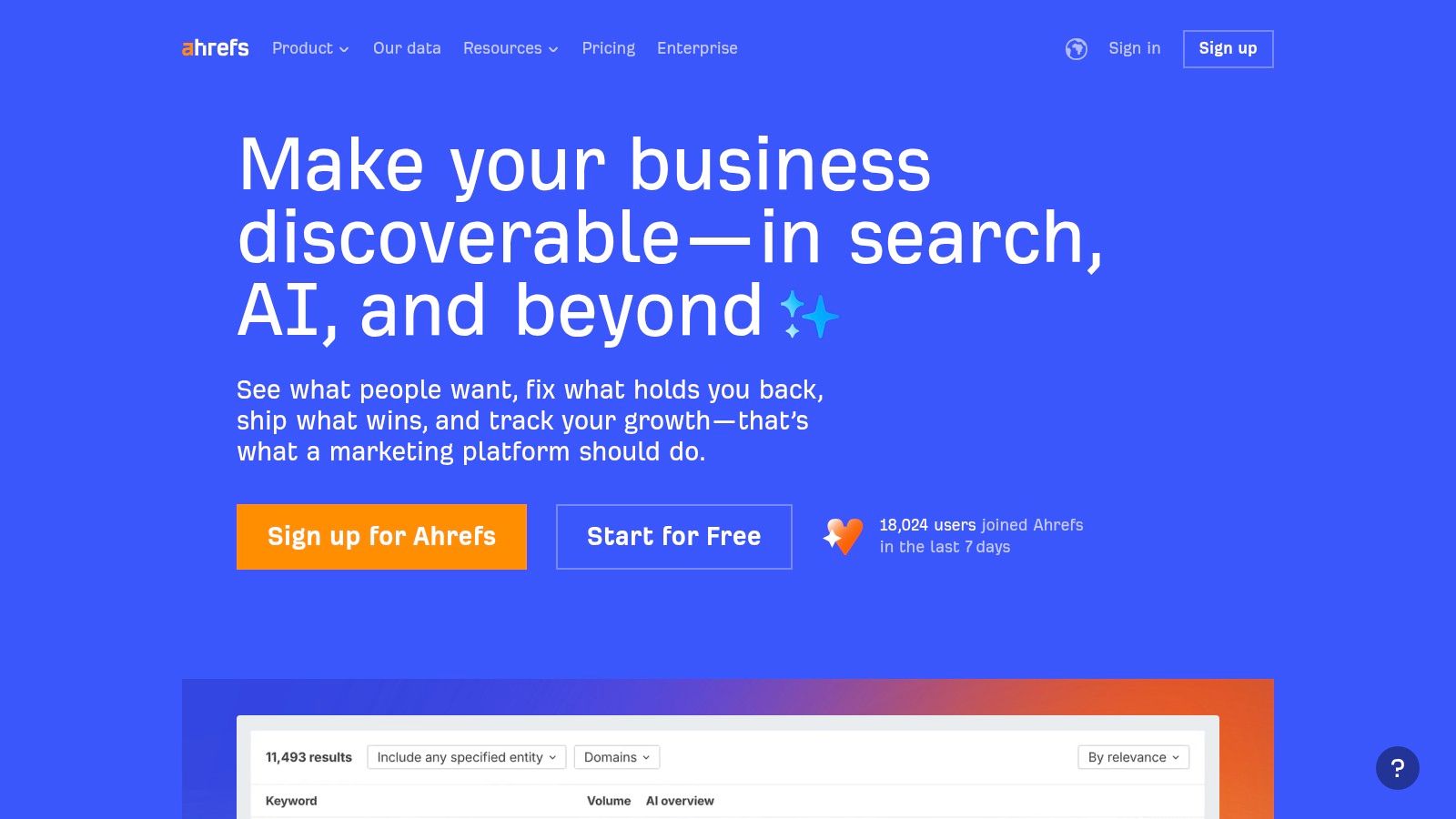
The platform is indispensable for teams whose content strategy is deeply intertwined with organic search performance. Tools like Content Explorer help find the most shared and linked-to content on any topic, while the Keywords Explorer provides reliable search volume and difficulty metrics. For many, Ahrefs is one of the best content marketing tools because it grounds ideation and strategy in hard data, moving content creation from an art to a science.
Key Features & Use Cases
- Content Gap Analysis: Use the Site Explorer to compare your domain against several competitors, instantly revealing keywords they rank for that you don't. This is a direct roadmap for new content creation.
- Keyword & Topic Ideation: Use Keywords Explorer to find parent topics and question-based queries related to a seed keyword, helping you build comprehensive pillar pages and cluster content.
- Backlink-Driven Strategy: Analyze the backlink profiles of top-ranking articles for a target keyword to understand the link-building effort required to compete, informing your promotion and outreach strategy.
- Technical Content Audits: The Site Audit tool crawls your website to find technical SEO issues that could be holding your content back from ranking, such as broken links, slow pages, or metadata problems.
| Pros | Cons |
|---|---|
| Excellent backlink database and intuitive UI. | Entry pricing and per-user fees can be costly. |
| Finds clear, actionable content opportunities. | Deeper historical data requires higher-tier plans. |
| API access and PAYG credits at higher tiers. | Learning curve for leveraging all advanced features. |
Website: https://ahrefs.com
5. BuzzSumo
BuzzSumo is a powerful research and monitoring platform that helps marketers discover engaging content ideas and identify key influencers for amplification. It excels at answering the crucial first question in any content strategy: "What content is already performing well for my audience?" By analyzing billions of articles and social media posts, it provides data-driven insights into what topics are trending, what questions people are asking, and who is leading the conversation.
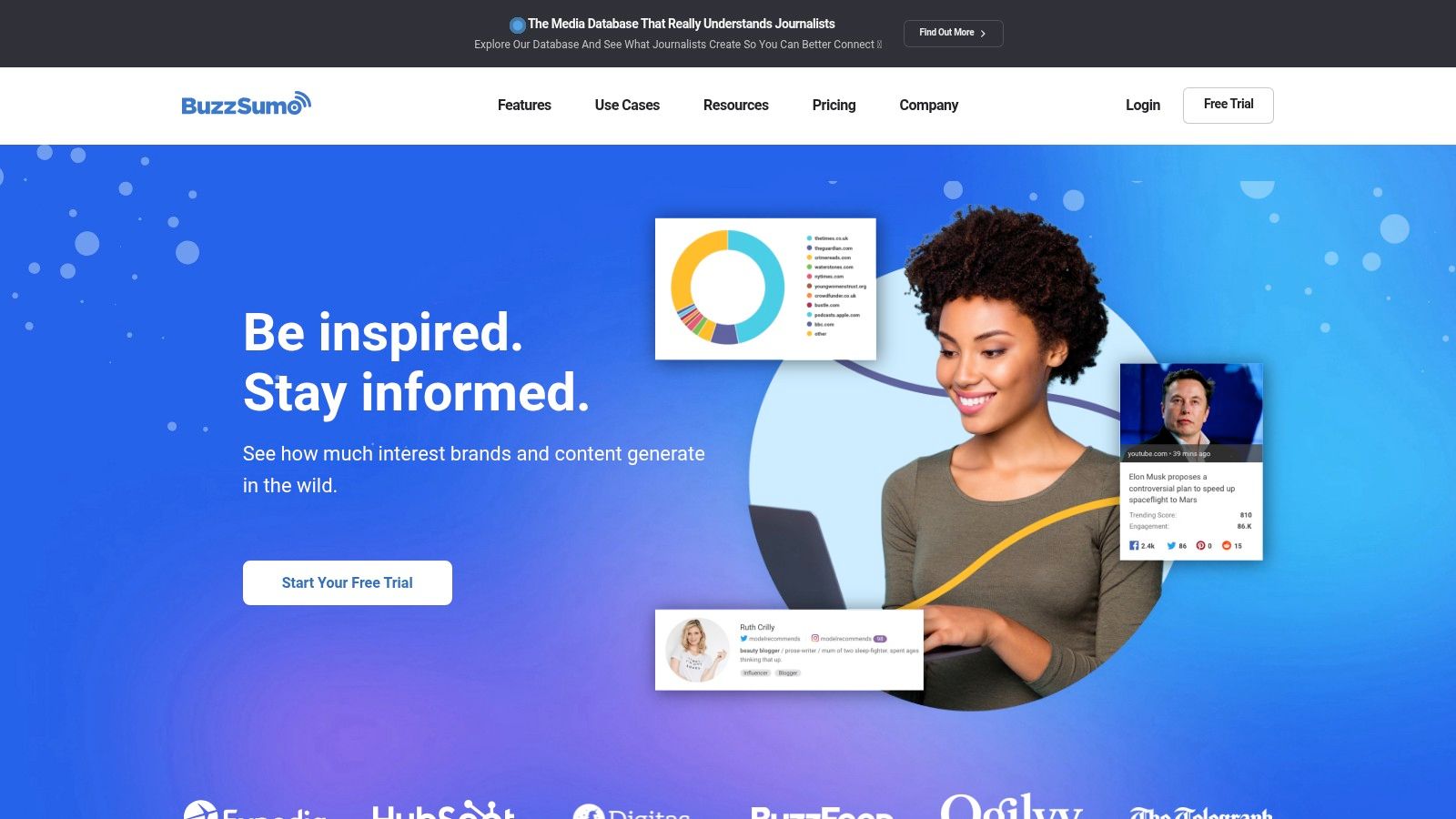
This platform is invaluable for teams focused on creating content with a high probability of earning social engagement and media mentions. Instead of guessing, you can validate ideas by seeing which headlines and formats have historically generated the most shares on platforms like Facebook, Twitter, and Pinterest. For many strategists, BuzzSumo is one of the best content marketing tools because it bridges the gap between content creation and digital PR, providing the data needed for effective outreach and distribution.
Key Features & Use Cases
- Content Analyzer & Trending Feeds: Enter a keyword or domain to see the most shared content from the last 24 hours to the last five years. Use this to reverse-engineer successful headlines, find proven topic clusters, and spot emerging trends.
- Question Analyzer: Discover real questions people are asking on forums like Quora and Reddit related to your keywords. This is a goldmine for creating bottom-of-funnel content, FAQs, and "how-to" guides.
- Influencer & Journalist Search: Find authors, reporters, and influencers who have shared content similar to yours or cover your industry. You can build outreach lists directly within the platform for amplification.
- Brand Monitoring & Alerts: Set up alerts to track mentions of your brand, competitors, or key topics. This allows you to monitor your content's coverage and find backlink opportunities in real-time.
| Pros | Cons |
|---|---|
| Unmatched data for content ideation and competitor analysis. | Can be expensive for small teams needing Suite or Enterprise features. |
| Excellent for identifying journalists and outreach targets. | Less focused on technical SEO compared with dedicated SEO suites. |
| Strong for earned media and social engagement insights. | The interface can feel data-heavy for new users. |
Website: https://buzzsumo.com
6. Jasper
Jasper is a marketing-focused AI platform engineered to streamline the entire content lifecycle, from ideation and writing to repurposing. Its key differentiator is its emphasis on creating on-brand, consistent content at scale. By feeding it specific brand voice attributes, product knowledge, and target audience personas, Jasper learns to generate copy that is not just algorithmically sound but also contextually aligned with a company’s unique identity.
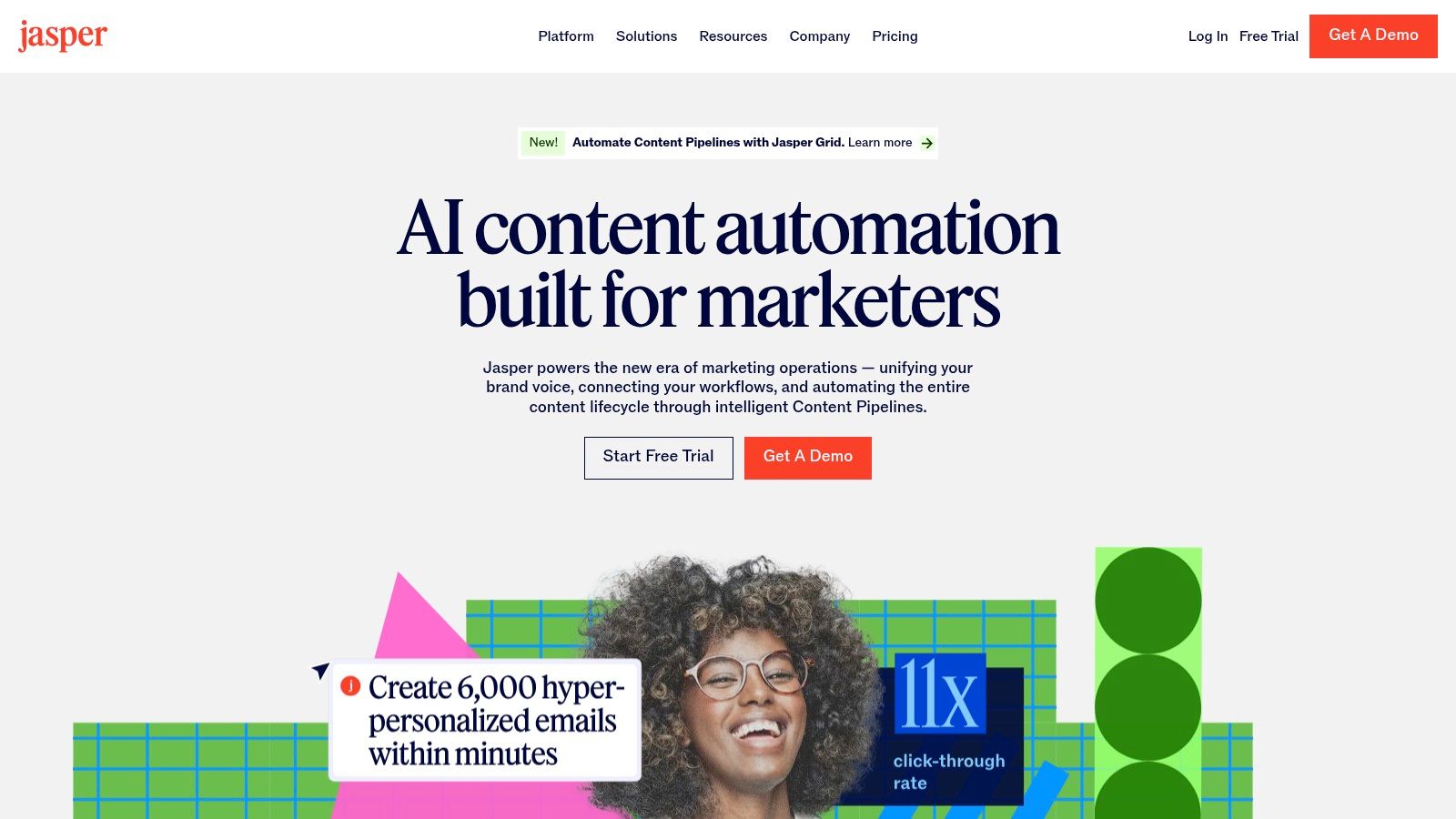
This platform is a powerful asset for marketing teams that need to maintain brand integrity across numerous channels without sacrificing speed. Unlike general-purpose AI writers, Jasper provides marketing-specific apps and a collaborative "Canvas" workspace, making it one of the best content marketing tools for teams that require repeatable, brand-safe AI workflows. Its focus on enterprise-grade governance, like SOC 2 compliance on higher tiers, also makes it a viable choice for larger organizations with strict security requirements. As we explore in our Jasper AI review, it's a tool built with the marketer's workflow in mind.
Key Features & Use Cases
- Brand Voice & Knowledge: Upload style guides, product catalogs, and audience personas to train the AI, ensuring all generated content from blog posts to social media captions consistently reflects your brand.
- Marketing-Specific AI Apps: Utilize a library of pre-built templates for tasks like writing ad copy, generating video scripts, creating email campaigns, or outlining long-form articles.
- Canvas Workspace: A flexible, document-style interface that allows users to seamlessly blend their own writing with AI-generated content, run commands, and structure complex pieces in one place.
- Enterprise Governance & Collaboration: Manage team access, set permissions, and collaborate on content projects with features designed for organizational oversight and security.
| Pros | Cons |
|---|---|
| Designed specifically for marketers with brand safety. | Best results require time to set up brand assets. |
| Enterprise governance and controls on higher tiers. | Seat-based pricing can scale up costs for larger teams. |
| Strong collaboration and workflow features. | Can have a steeper learning curve than simpler tools. |
Website: https://www.jasper.ai
7. Surfer
Surfer is a specialized content optimization tool that bridges the gap between SEO data and content creation. It analyzes top-ranking pages for a target keyword and generates a data-driven blueprint for writers, including key topics, NLP-derived terms, ideal word count, and structural suggestions. Its core differentiator is translating complex SERP analysis into a simple, actionable scoring system within its Content Editor, making it easy for writers to optimize content in real-time without deep SEO knowledge.
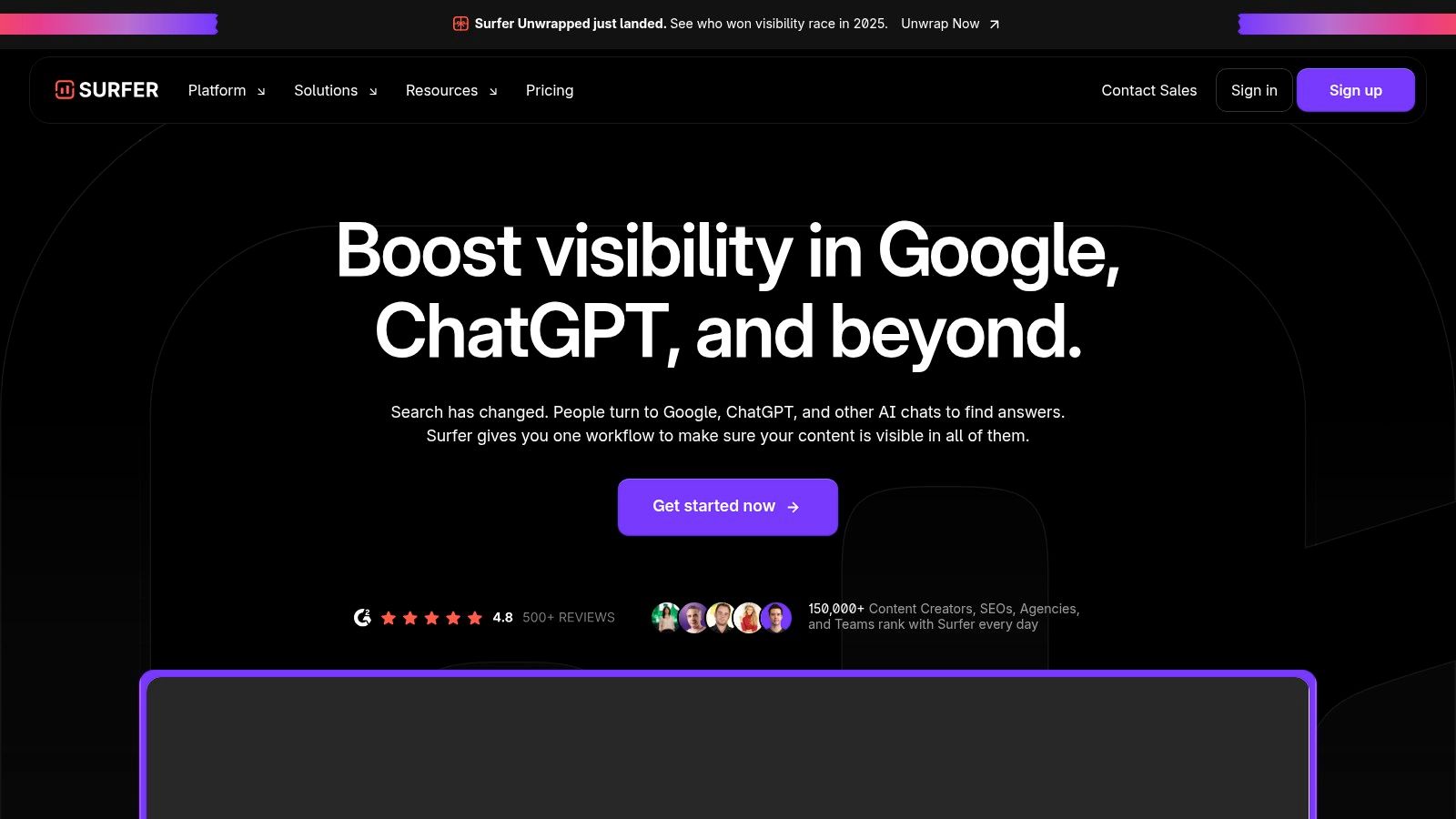
This platform excels at improving on-page SEO for new articles and identifying high-impact refresh opportunities for existing content. For teams focused on scaling their output, Surfer provides clear, objective guidelines that ensure every piece of content meets a baseline for search performance. This focus on practical, SERP-driven guidance makes Surfer one of the best content marketing tools for executing an effective on-page SEO strategy without overwhelming writers with raw data.
Key Features & Use Cases
- Content Editor: Write or paste your draft into the editor and receive a live "Content Score" based on how well your article incorporates recommended NLP terms, headings, and questions compared to top competitors.
- Audit Tool: Run existing URLs through the Audit feature to get a prioritized list of actionable SEO improvements, such as missing terms, internal link opportunities, and page speed issues.
- AI Outline Builder: Generate a comprehensive, SEO-friendly article outline complete with unique headings and potential questions to answer, significantly speeding up the content briefing process.
- Brand Knowledge: Ensure AI-generated content is consistent and factually accurate by providing Surfer with specific information about your brand, products, and target audience.
| Pros | Cons |
|---|---|
| Highly pragmatic and writer-friendly for on-page SEO. | Not a full SEO suite; best paired with Ahrefs or Semrush. |
| Streamlines the creation of detailed content briefs. | Costs can increase with add-ons like the AI Tracker. |
| Excellent for content refresh workflows and quick wins. | The content score can sometimes encourage keyword stuffing if not used carefully. |
Website: https://surferseo.com
8. Canva
Canva has democratized design, evolving into an indispensable platform for content marketers who need to produce high-quality visual assets quickly and without a steep learning curve. It is a fast design suite ideal for creating everything from social media posts and blog header images to infographics and short videos. Its core strength lies in its accessibility, allowing non-designers to produce professional-looking content that aligns with brand standards.
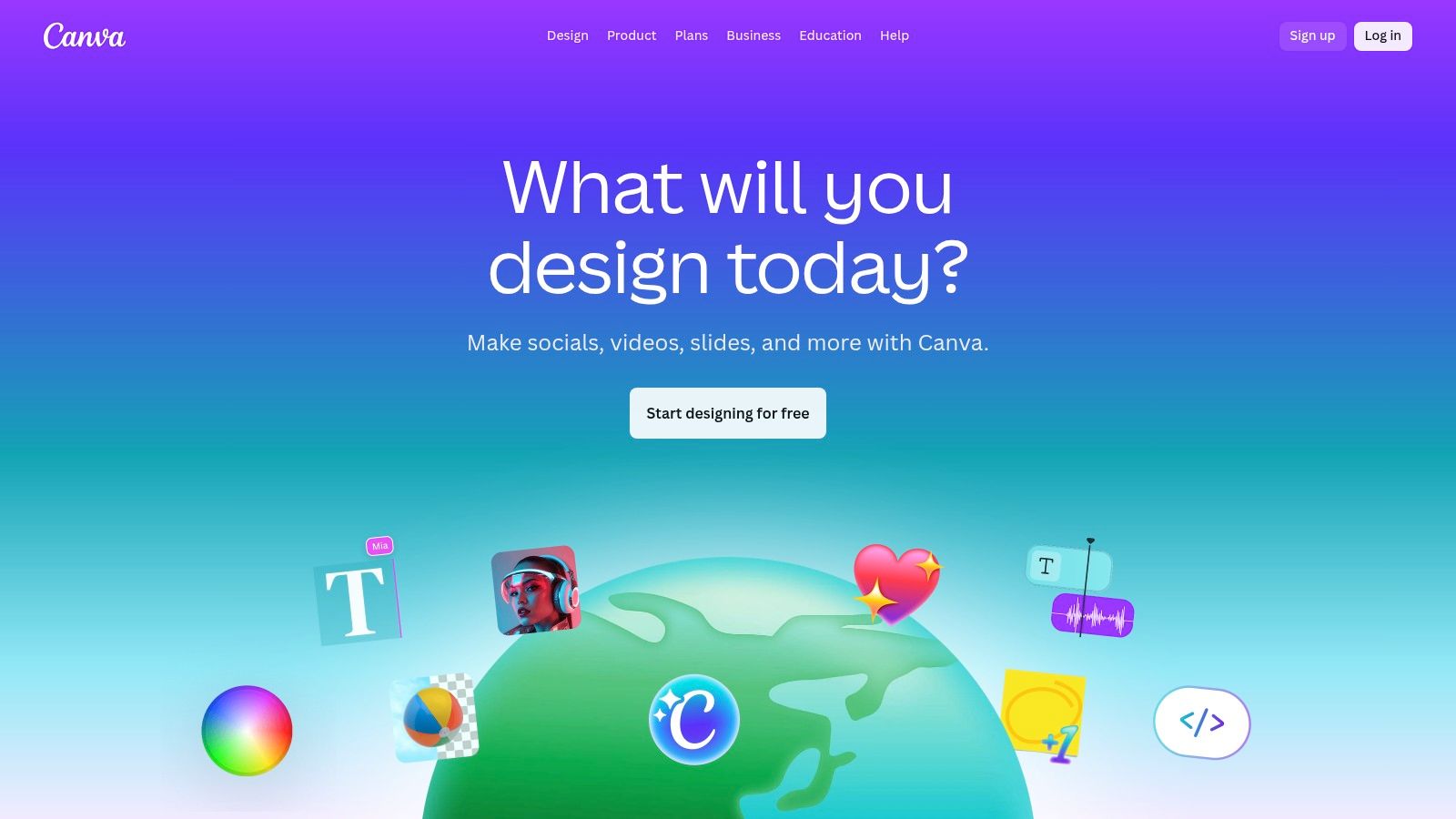
The platform is especially powerful for marketing teams that need to maintain brand consistency across numerous channels at scale. The Brand Kit feature ensures every team member uses the correct logos, fonts, and color palettes, while the vast template library kickstarts the creative process. For many marketers, Canva is one of the best content marketing tools because it centralizes the creation of nearly all visual content, eliminating the need for more complex and expensive design software for day-to-day tasks.
Key Features & Use Cases
- Templates and Asset Ecosystem: Instantly create a branded carousel post for Instagram, a thumbnail for a YouTube video, or a header graphic for a blog post using thousands of customizable templates.
- Brand Kits & Team Collaboration: Centralize brand assets (logos, colors, fonts) to ensure consistency. Team members can collaborate on designs in real-time, leave comments, and get approvals within the platform.
- Magic Studio AI Features: Use AI tools like Magic Write for copy, text-to-image for unique visuals, or the Background Remover to quickly isolate product shots or headshots for use in various marketing materials.
- Content Calendar & Scheduling: Design social media content and schedule it to publish directly to platforms like Instagram, Facebook, and LinkedIn without leaving Canva.
| Pros | Cons |
|---|---|
| Extremely fast and easy for non-designers to produce polished visuals. | Teams pricing has increased materially; budget accordingly. |
| Large template and asset library with team collaboration features. | Advanced video or print needs may require more powerful creative suites. |
| Powerful AI features streamline the creative process. | The massive template library can sometimes feel overwhelming to navigate. |
Website: https://canva.com
9. WordPress.com
WordPress.com offers a streamlined, managed hosting solution for launching and scaling a content hub. It provides the power of the world's most popular CMS without the technical overhead of server management, making it an ideal starting point for businesses focused purely on publishing blogs, resource centers, and landing pages. Its primary advantage is speed to launch, with managed hosting, a library of themes, and the intuitive block editor included out of the box.
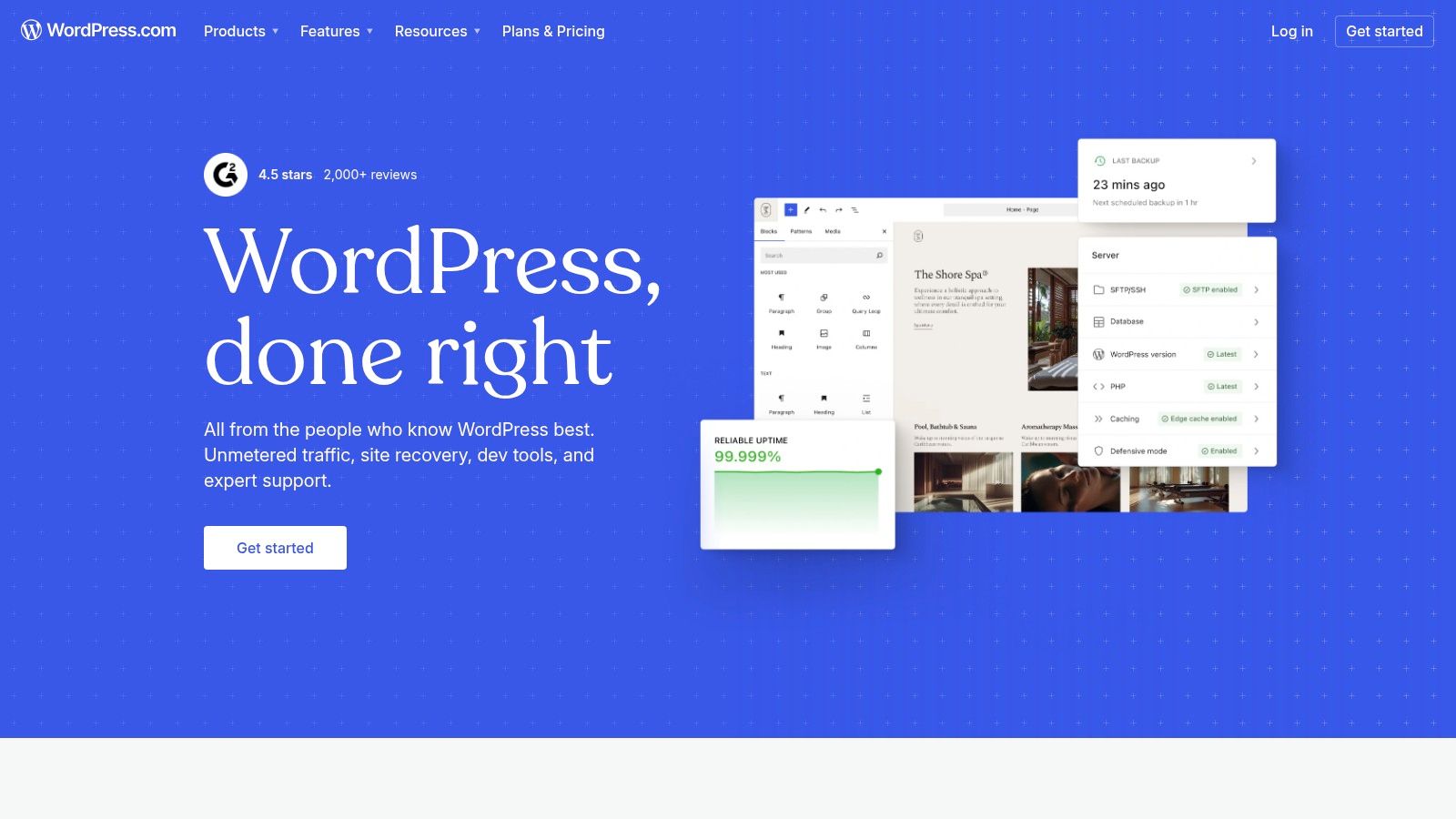
For companies that want to grow, the platform scales effectively. While many platforms lock you into their ecosystem, WordPress.com’s Business and higher plans unlock access to the vast plugin library. This allows you to integrate some of the best content marketing tools for SEO, analytics, and lead generation directly into your site. The new AI site builder (currently in early access) further accelerates the process by generating an initial site structure and starter copy.
Key Features & Use Cases
- Managed Content Hub: Launch a professional-looking blog or resource center in minutes without worrying about hosting, security, or core updates, focusing all your effort on content creation.
- Plugin & Theme Ecosystem: On higher-tier plans, install essential plugins like Yoast SEO for on-page optimization, MonsterInsights for analytics, or HubSpot for lead capture to build a powerful marketing machine.
- AI Site Builder: Use the AI assistant to quickly prototype a new microsite or landing page, complete with relevant sections and placeholder text to guide your content strategy.
- Built-in Content Editor: The native block editor is a flexible and intuitive tool for creating visually rich, multimedia-heavy articles and pages without needing to code.
| Pros | Cons |
|---|---|
| Fast path to a managed WordPress content hub. | Plugin access requires a more expensive Business plan. |
| Large ecosystem for scaling functionality. | Some teams prefer self-hosted for full control. |
| No server management headaches. | Can be more costly than self-hosted options. |
Website: https://wordpress.com
10. Buffer
Buffer is a streamlined social media management platform focused on making content distribution simple and reliable. It excels at scheduling and publishing content across various social channels, serving as a critical final step in the content marketing workflow. Its standout feature is an intuitive, queue-based system that allows marketers to load up content and have it automatically published at predetermined times, ensuring a consistent presence without constant manual effort.
This platform is ideal for small to medium-sized teams who need an efficient way to get their blog posts, videos, and other assets in front of their social audiences. For many, Buffer is one of the best content marketing tools because it focuses on doing one thing exceptionally well: scheduling. It avoids the feature bloat of larger suites, providing a clean, easy-to-use interface for planning, collaborating on, and analyzing social media posts without a steep learning curve.
Key Features & Use Cases
- Queue-Based Scheduling: Load a queue with evergreen content and set a publishing schedule (e.g., twice a day on weekdays) to automate your social media baseline.
- Content Distribution & Planning: Use the calendar view to plan campaigns, coordinate post-publication promotion for new blog articles, and ensure a balanced content mix across channels.
- Team Collaboration: On paid plans, invite team members to draft posts for approval, preventing errors and maintaining a consistent brand voice across all social media accounts.
- Basic Analytics & Reporting: Track key metrics like engagement, reach, and clicks to understand which content resonates most with your audience on each platform and refine your distribution strategy.
| Pros | Cons |
|---|---|
| Simple, reliable scheduler with a clear UI. | Per-channel billing can add up as you scale. |
| Generous free tier for light, personal use. | Limited deep social listening or enterprise features. |
| Transparent pricing with 14-day trials. | Analytics are less robust than dedicated tools. |
Website: https://buffer.com
11. Mailchimp
Mailchimp is a cornerstone platform for email marketing and automation, making it an essential tool for content distribution and audience nurturing. While primarily known for its newsletter capabilities, its strength lies in connecting content with an audience through sophisticated, yet user-friendly, email campaigns and automated journeys. It allows marketers to segment their audience based on engagement and deliver targeted content, effectively moving leads through the marketing funnel.
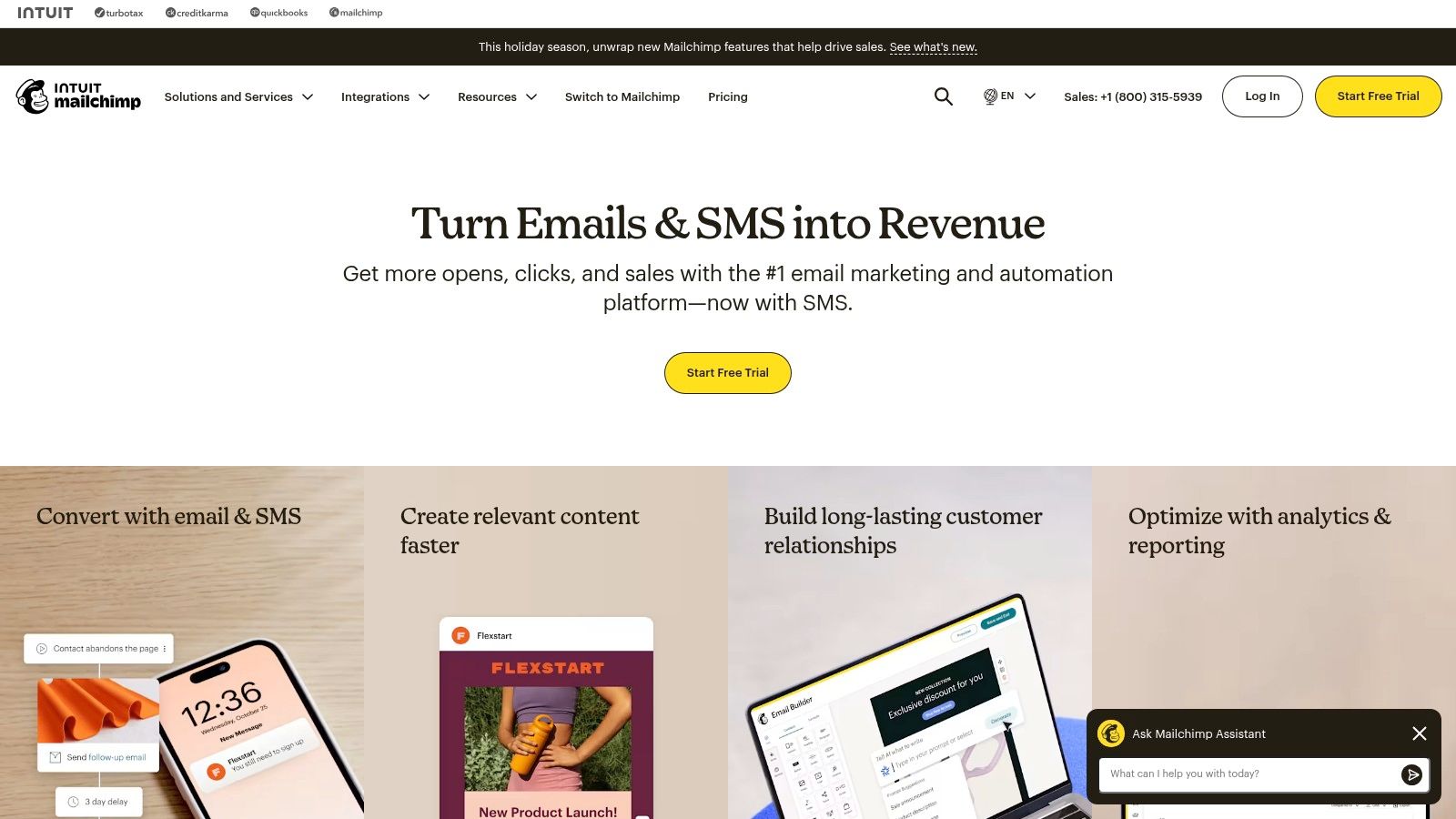
This platform excels for businesses focused on building a direct line of communication with their readers. For many teams, Mailchimp is one of the best content marketing tools because it simplifies turning blog subscribers into a loyal community. Its intuitive drag-and-drop builder, combined with robust reporting, provides a clear view of how email efforts are performing, from open rates to click-throughs on content links.
Key Features & Use Cases
- Content Distribution: Promote new blog posts, case studies, or whitepapers directly to your subscribers' inboxes using beautifully designed, on-brand email templates.
- Automated Nurturing Journeys: Create multi-step drip campaigns that trigger based on user actions, such as signing up for a lead magnet, to deliver a series of relevant content over time.
- Audience Segmentation: Group contacts based on their interests, engagement level, or purchase history to send highly personalized content that resonates and drives action.
- Performance Analytics: Track key email metrics to understand which content topics and formats perform best, allowing you to refine your content strategy based on real audience data.
| Pros | Cons |
|---|---|
| Mature ecosystem and very easy-to-use tools. | Pricing scales with contact count and add-ons can add up. |
| Clear guardrails on contact tiers for budgeting. | Advanced automation may require higher tiers. |
| Excellent pre-built templates and a user-friendly editor. | Can be less powerful for complex multi-channel campaigns. |
Website: https://mailchimp.com
12. G2
G2 is not a content marketing tool itself but an essential software marketplace and peer review platform for discovering them. It serves as a critical first step in the research process, allowing marketers to compare hundreds of solutions based on verified user reviews, feature sets, and company size. Its key differentiator is the "G2 Grid," which visually maps out market leaders, contenders, niche players, and high performers in specific categories like Content Creation or SEO.
This platform excels at helping teams build a shortlist of potential tools tailored to their specific needs and budget. By filtering results and reading detailed reviews, you can quickly move from a broad search for the best content marketing tools to a curated list of a few top candidates for demos or trials. G2 demystifies the crowded software landscape, providing social proof and detailed data to inform your purchasing decisions.
Key Features & Use Cases
- Category Grids & Reports: Use the Content Marketing category grid to quickly identify market leaders based on user satisfaction and market presence, then drill down into specific subcategories like Content Analytics or Content Distribution.
- Verified User Reviews: Read in-depth reviews from real users that often detail specific pros, cons, and the problems the software solved for their business, providing context beyond a simple feature list.
- Head-to-Head Comparisons: Select up to four different tools and compare them side-by-side on features, pricing information, and user satisfaction ratings across various metrics.
- Advanced Filtering: Filter tools by company size, user rating, specific features (e.g., "AI-assisted writing"), and pricing models (e.g., "Free Trial") to find the perfect fit for your team.
| Pros | Cons |
|---|---|
| Fast way to shortlist tools with peer reviews. | Recommendations should be validated with demos. |
| Surfaces niche tools alongside market leaders. | Pricing snapshots may lag behind vendor changes. |
| Detailed filters for granular search results. | Reviews can sometimes feel biased or overly positive. |
Website: https://g2.com/categories/content-marketing
Top 12 Content Marketing Tools Comparison
| Tool | Core features (✨) | UX / Quality (★) | Value / Price (💰) | Target audience (👥) |
|---|---|---|---|---|
| Rankai 🏆 | ✨ 20+ fully optimized pages/mo; human‑vetted keywords; LLM‑ready schema; auto‑rewrites | ★★★★★; weekly GSC reports; rewrite‑until‑it‑ranks loop | 💰 $499/mo flat — includes rewrites, technical & LLM optimization | 👥 Startups, SMBs, SaaS, e‑commerce, local businesses |
| HubSpot Marketing Hub | ✨ CMS/blog + SEO tips, CRM‑tied workflows, landing pages & automation | ★★★★☆; unified data model; robust support | 💰 Tiered; can be expensive at Pro/Enterprise (contact‑based) | 👥 Mid‑market & enterprise marketing teams |
| Semrush | ✨ Keyword research, content briefs, position tracking, competitive toolkits | ★★★★☆; large datasets; steeper learning curve | 💰 Tiered; toolkits/add‑ons can raise cost | 👥 SEO teams, content strategists, agencies |
| Ahrefs | ✨ Backlink DB, Site/Keywords Explorer, content gap & site audit | ★★★★★; excellent crawl & backlink data | 💰 Tiered; moderate entry, higher tiers for API/historical data | 👥 SEO analysts, link‑focused teams & agencies |
| BuzzSumo | ✨ Content discovery, trending feeds, influencer & PR monitoring | ★★★★☆; strong for ideation & earned media | 💰 Mid–high; Suite/Enterprise priced higher | 👥 PR, content strategists, social teams |
| Jasper | ✨ AI writing workspace, brand voice controls, no‑code AI apps | ★★★★☆; marketer‑focused, needs brand setup | 💰 Tiered; seat/usage pricing can scale | 👥 Marketing teams needing on‑brand AI writing |
| Surfer | ✨ SERP‑driven editor, NLP term suggestions, audits & refresh alerts | ★★★★☆; writer‑friendly briefs & quick wins | 💰 Mid; add‑ons (AI Tracker) increase cost | 👥 Content writers & SEO optimizers |
| Canva | ✨ Templates, brand kits, Magic Studio AI (image/video), social assets | ★★★★☆; very fast for non‑designers | 💰 Freemium → Teams paid plans | 👥 Marketers, small teams, social creators |
| WordPress.com | ✨ Managed WordPress, themes, plugin support (Business+), AI site builder | ★★★★☆; easy managed publishing | 💰 Freemium → Business/Enterprise for plugins | 👥 Content hubs, SMBs, publishers |
| Buffer | ✨ Queue scheduling, calendar view, basic analytics, team features | ★★★★☆; simple, reliable scheduler | 💰 Low–mid; per‑channel costs as you scale | 👥 Small teams, social managers |
| Mailchimp | ✨ Drag‑drop email builder, Journeys automation, segmentation | ★★★★☆; mature & easy for non‑technical users | 💰 Freemium → scales with contact count | 👥 SMBs, email‑first marketers |
| G2 | ✨ Verified reviews, category grids, filters & vendor links | ★★★★☆; fast shortlist tool; reviews can be noisy | 💰 Free to use; vendor pricing varies | 👥 Buyers shortlisting software, procurement teams |
Final Thoughts
Navigating the expansive landscape of content marketing software can feel overwhelming, but building the right technology stack is a critical step toward achieving scalable, predictable growth. We've explored a comprehensive suite of the best content marketing tools, from all-in-one powerhouses like HubSpot to specialized platforms like Semrush for SEO and Canva for visual creation. The key takeaway is that no single tool is a magic bullet; success lies in strategically combining solutions to create a seamless workflow that aligns with your specific goals, budget, and team structure.
The journey from ideation with BuzzSumo to creation with Jasper, optimization with Surfer, and distribution with Buffer represents a connected ecosystem. Each tool solves a distinct piece of the content puzzle. The true power is unlocked when data from one platform informs the strategy for another, creating a flywheel effect where insights from analytics tools like Google Analytics (integrated via WordPress) refine future content ideas, leading to a cycle of continuous improvement.
Building Your Custom Content Marketing Toolkit
Selecting the right tools is less about finding the "best" in a vacuum and more about finding what's best for you. Your ideal toolkit will be unique to your business model, team size, and growth stage.
Here's a simple framework to guide your decision-making process:
- For Startups and Solopreneurs: Your focus should be on efficiency and impact. A lean stack is essential. Start with a foundational CMS like WordPress, layer on an SEO tool that covers multiple bases like Semrush or Ahrefs for research and tracking, and use a versatile design tool like Canva for quick visual assets. For creation, an AI writer like Jasper can significantly accelerate output.
- For Growing SMBs and SaaS Companies: As your team expands, collaboration and process become paramount. This is where integrated platforms like HubSpot Marketing Hub shine, unifying your CRM, email, and content management. Supplement this with advanced SEO and ideation tools to maintain a competitive edge and a robust social media scheduler like Buffer to manage a more complex distribution calendar.
- For E-commerce and Local Businesses: Your needs are often tied directly to transactional outcomes and local visibility. A powerful CMS is non-negotiable. SEO tools are vital for keyword research targeting purchase-intent and local queries. Email marketing platforms like Mailchimp become central to driving repeat business and nurturing leads generated through your content.
Key Factors for Successful Implementation
Beyond just picking tools, successful adoption requires a strategic mindset. Before you commit to a subscription, consider these crucial factors:
- Integration Capabilities: How well does a new tool fit into your existing workflow? A powerful tool that creates data silos can be more of a hindrance than a help. Prioritize solutions with robust API access or native integrations with the software you already use daily.
- Scalability and Pricing: Your needs will evolve. The budget-friendly tool that works today might be restrictive tomorrow. Analyze the pricing tiers of any potential tool. Does the cost scale reasonably with your projected growth in team members, contact lists, or feature requirements?
- Team Adoption and Training: The most feature-rich platform is useless if your team finds it difficult to use. Look for tools with intuitive interfaces, comprehensive knowledge bases, and responsive customer support. Factor in the time and resources required to train your team properly to ensure you get the maximum return on your investment.
Ultimately, the best content marketing tools are the ones that empower your team to work smarter, not harder. They should eliminate repetitive tasks, provide actionable data, and clear the path for your team to focus on what humans do best: creativity, strategic thinking, and building genuine connections with your audience. Use this guide as a starting point, take advantage of free trials, and build a tech stack that not only supports your current strategy but also propels you toward your future growth ambitions.
Feeling overwhelmed by the need to manage multiple tools and still not seeing the SEO results you need? Rankai offers a streamlined, AI-powered solution that combines content creation, optimization, and publishing into a single, automated workflow. Get a free, instant SEO audit and see how our service can build your content engine for you at Rankai.