Optimizing for search engines has moved beyond manual keyword tracking and backlink analysis. The integration of artificial intelligence is no longer a novelty; it's a fundamental requirement for achieving competitive, scalable, and ROI-driven results. Manual processes are too slow to keep pace with algorithm updates, user intent shifts, and the sheer volume of data required for effective SEO. This is the core problem AI powered SEO tools are built to solve: they automate complex analysis, generate data-backed content strategies, and provide predictive insights that were previously unattainable.
This guide is designed to cut through the noise and provide a comprehensive, practical comparison of the top platforms available. We'll move past the marketing hype to deliver an in-depth analysis of tools like Semrush, Surfer, and Rankai, among others. Our goal is to equip you with the information needed to make a strategic investment, whether you're a startup, a SaaS company, an e-commerce brand, or a local service business.
Inside this resource, you will find:
- Detailed breakdowns of each tool’s core AI features.
- Honest assessments of pros, cons, and specific limitations.
- Practical use cases tailored to different business models.
- Direct links and up-to-date screenshots for a clear look at each platform.
We will also explore the critical decision of when to use these standalone tools versus when it makes more sense to partner with an AI-powered agency. By the end of this list, you will have a clear roadmap for selecting the right AI powered SEO tools to increase your organic traffic, improve rankings, and drive measurable growth.
1. Rankai
Best for: Scalable, ROI-focused content marketing with human oversight.
Rankai distinguishes itself from other AI powered SEO tools by operating as an AI-driven agency, blending high-volume automated content production with essential human strategic oversight. This hybrid model is engineered for businesses that need the velocity of AI without sacrificing the quality and directional accuracy provided by experienced SEO professionals. It delivers a comprehensive, done-for-you service that handles everything from keyword research to content creation and performance-based revisions.

Unlike standalone tools that require a steep learning curve and constant user input, Rankai’s workflow is designed for maximum impact with minimal client effort. For a flat monthly fee, the platform publishes over 20 fully optimized articles directly to your site, each vetted by a human strategist to ensure it targets high-intent, ROI-driving keywords.
Standout Features & Workflow
The platform's core strength lies in its performance-first guarantee. If a published page fails to gain traction within three weeks, it is automatically flagged, rewritten, and re-optimized until it ranks. This continuous optimization loop is a powerful differentiator, removing the guesswork and manual effort typically associated with underperforming content.
Key capabilities include:
- High-Volume Publishing: 20+ search-optimized pages per month, complete with metadata, internal links, images, and CTAs.
- Human-Vetted Strategy: AI handles the scale, but human experts map out the keyword strategy to ensure content aligns with business goals.
- LLM & AI Search Optimization: Content is structured with AI-ready schema and citation-friendly formatting to improve visibility in Google, ChatGPT, Gemini, and Perplexity.
- Transparent Reporting: Performance is tracked via Google Search Console and delivered in weekly, easy-to-understand reports showing direct impact on rankings and traffic.
Pricing and Use Case
Rankai’s transparent pricing of $499/month with a cancel-anytime policy makes it an accessible, high-value option for startups, SMBs, SaaS, and e-commerce businesses. It’s an ideal solution for teams that lack the internal resources to execute a robust content strategy but need the consistent output of a full-scale agency.
| Feature Comparison | Rankai ($499/mo) | Traditional SEO Agency | Standalone AI Writer |
|---|---|---|---|
| Monthly Output | 20+ fully optimized pages | 4-8 pages | User-dependent |
| Strategy | Human-vetted | Human-led | User-led |
| Performance Guarantee | Automatic rewrites until rank | Varies, often extra cost | None |
| LLM Optimization | Included | Often an add-on | Manual implementation |
Pros:
- High-volume, ROI-focused content output.
- Combines AI speed with human strategic expertise.
- Performance-based rewrites ensure content effectiveness.
- Transparent, flat-rate pricing with no long-term contracts.
Cons:
- The standard plan does not include backlink outreach.
- Significant results are cumulative and require several months of consistent publishing.
Website: https://rankai.ai
2. Semrush
Semrush is an industry-leading, all-in-one visibility management platform that has evolved into a powerhouse among ai powered seo tools. While known for its massive keyword and backlink databases, its recent integration of AI through features like the AI SEO Toolkit and Semrush One bundles solidifies its position for users needing enterprise-grade breadth and data-driven workflows in a single login. It excels at combining traditional, robust SEO data with AI-driven content creation and strategic analysis.
What sets Semrush apart is its ability to centralize nearly every aspect of a digital marketing campaign. It’s not just an AI writer; it's a comprehensive suite for competitive research, position tracking, backlink audits, and now, AI-enhanced content optimization. This integration allows users to move seamlessly from data analysis to content execution without leaving the platform, making it ideal for large teams and agencies managing complex projects. The user experience is data-rich, which can present a steeper learning curve than single-purpose tools, but the depth of information is unparalleled.
Core AI Features & Use Cases
- AI SEO Toolkit: An add-on designed for advanced domain-level analysis, helping to identify semantic keyword gaps and opportunities for AEO (Answer Engine Optimization).
- ContentShake AI: Generates content ideas, drafts articles, and rewrites copy based on competitive data, ensuring content is both creative and strategically sound.
- App Center Integration: Connects with specialized AI tools for tasks like Jasper for content creation or Surfer for on-page optimization, expanding its capabilities.
Pro Tip: Use Semrush's "Keyword Magic Tool" to generate initial ideas, then feed those keywords into ContentShake AI to build out topic clusters. This workflow leverages both Semrush's data accuracy and its AI generation capabilities for a highly effective content strategy. For a deeper dive into this process, explore these AI keyword research tools.
| Feature | Best For | Limitation |
|---|---|---|
| Enterprise-Grade Data | In-depth competitive and market analysis | Can be overwhelming for beginners |
| AI Content Tools | Scaling content production with SEO focus | AI writing requires human oversight and editing |
| All-in-One Suite | Agencies and large in-house marketing teams | Higher cost; add-ons increase the price |
3. Ahrefs
Ahrefs has long been celebrated for its best-in-class backlink index and powerful keyword research capabilities, and it has strategically integrated AI to maintain its edge as one of the top ai powered seo tools. Rather than a complete overhaul, Ahrefs offers specific, high-impact AI features as add-ons, allowing users to augment its core, data-rich platform. This approach is ideal for SEO professionals who trust Ahrefs' foundational data but want to layer in AI for enhanced efficiency and modern optimization tactics like AEO (Answer Engine Optimization).
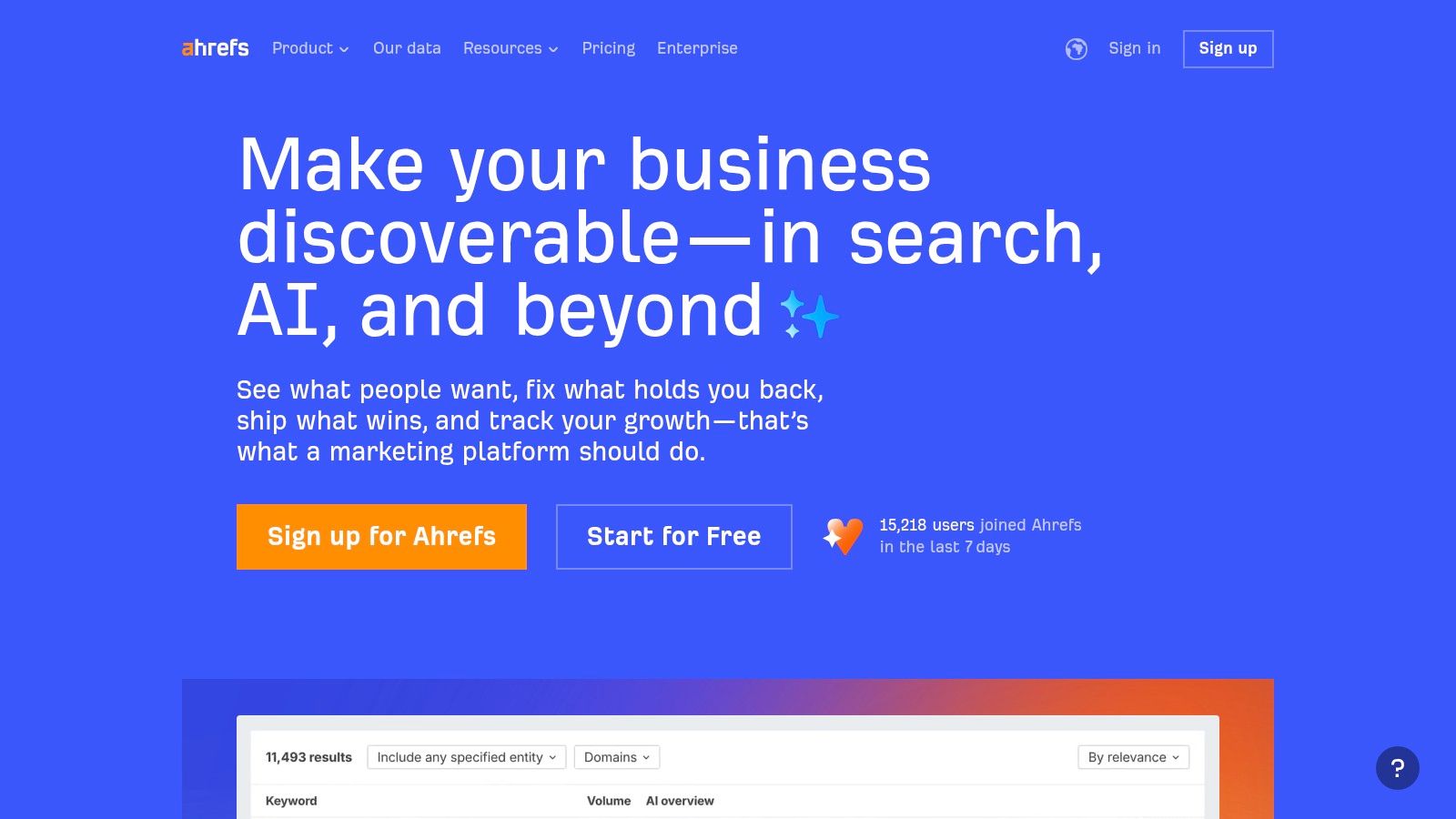
What distinguishes Ahrefs is its focus on using AI to solve emerging SEO challenges, such as brand visibility within generative AI responses. Its a la carte model for AI features allows teams to invest only in the capabilities they need, preventing feature bloat and keeping costs manageable. The user experience remains focused on deep data analysis, with a clean interface that makes its massive datasets accessible. This blend of traditional SEO power and targeted AI innovation makes it a strong contender for data-driven teams. For those evaluating its cost and feature set, it's worth considering these Ahrefs alternatives and their tradeoffs.
Core AI Features & Use Cases
- Brand Radar AI: A forward-thinking tool that tracks brand mentions and visibility across AI assistants like ChatGPT, Gemini, and Google AI Overviews, providing crucial data for AEO strategies.
- AI Content Helper & Grader: Integrated within its editor to help generate outlines, paragraphs, and ideas, then scores the content against top-ranking competitors to guide optimization.
- AI Signals in Site Audit: Leverages AI to identify and prioritize technical SEO issues that have the highest potential impact, moving beyond simple checklists to offer strategic recommendations.
Pro Tip: Use the "Keywords Explorer" to identify questions people ask, then use the AI Content Helper to generate comprehensive answers for those questions. This workflow directly targets AEO opportunities and helps position your content for inclusion in AI-generated summaries and featured snippets.
| Feature | Best For | Limitation |
|---|---|---|
| Industry-Leading Crawler | Deep backlink analysis and historical data | Some AI features are paid add-ons |
| Brand Radar AI | Tracking visibility in AI assistants and AEO | AI add-ons increase the overall subscription cost |
| A La Carte AI Add-ons | Teams wanting to add specific AI capabilities | Pricing can be confusing as it is listed in GBP |
4. Surfer
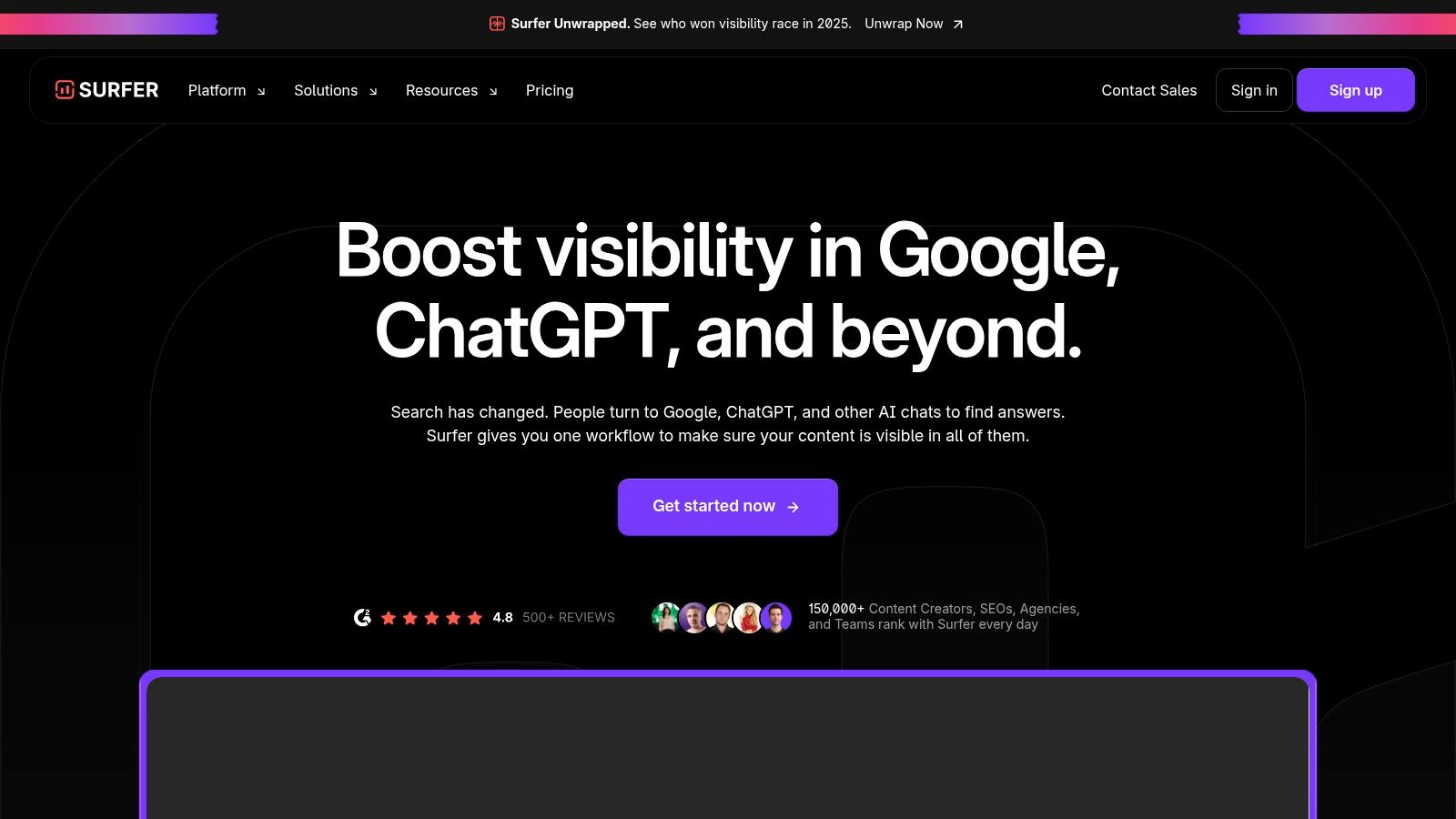
Surfer is a specialized content intelligence platform that has carved out a niche among ai powered seo tools by focusing squarely on on-page optimization. Its core strength lies in using AI and NLP to analyze top-ranking pages for a target keyword and generating a data-driven blueprint for creating content that can compete. Rather than offering a full suite of SEO tools, Surfer dedicates its resources to helping writers and marketers create perfectly optimized articles from the ground up.
What sets Surfer apart is its seamless workflow from keyword to a "ready-to-rank" draft. The platform's Surfer AI feature can generate a complete, well-structured article in minutes, complete with headings and NLP-optimized terms. This makes it exceptionally valuable for teams looking to scale content production without sacrificing on-page SEO quality. The user experience is highly intuitive, centered around its Content Editor, which provides real-time feedback and scoring, making it accessible even for those new to SEO.
Core AI Features & Use Cases
- Surfer AI: Generates a complete, one-click article draft based on SERP analysis, including structure, tone of voice, and NLP keywords.
- Content Editor: A real-time optimization tool that scores content based on factors like word count, keyword density, and semantic terms, guiding writers to create comprehensive content.
- Audit Tool: Analyzes existing pages to identify on-page SEO gaps and provides actionable recommendations for improvement.
- Integrations: Offers direct integrations with Google Docs, WordPress (via a plugin), and Jasper, allowing teams to use Surfer's insights within their existing writing workflows.
Pro Tip: Before using Surfer AI to generate an article, customize the outline it suggests. Add unique subheadings or adjust the structure to better match your brand's voice and add more value than the current top-ranking pages. This extra step helps avoid creating generic-feeling content.
| Feature | Best For | Limitation |
|---|---|---|
| Data-Driven Content Editor | Content teams and freelance writers needing clear optimization guidance | Relies heavily on correlational data from current SERPs |
| Surfer AI Article Generation | Rapidly scaling content production for blogs and affiliate sites | High-volume teams may need to purchase extra AI article credits |
| Workflow Integrations | Teams using Google Docs or WordPress as their primary editor | Is not a full-stack SEO platform; lacks rank tracking or backlink tools |
5. Clearscope
Clearscope is a premium, content-first platform that has become a gold standard for editorial teams looking to leverage ai powered seo tools for on-page optimization. It uses advanced NLP to analyze top-ranking content, providing a clear "content grade" and a list of semantically relevant terms to include. This focus on quality and topical authority makes it a favorite among high-volume content teams at companies like Adobe and HubSpot who prioritize editorial excellence over a sprawling feature set.
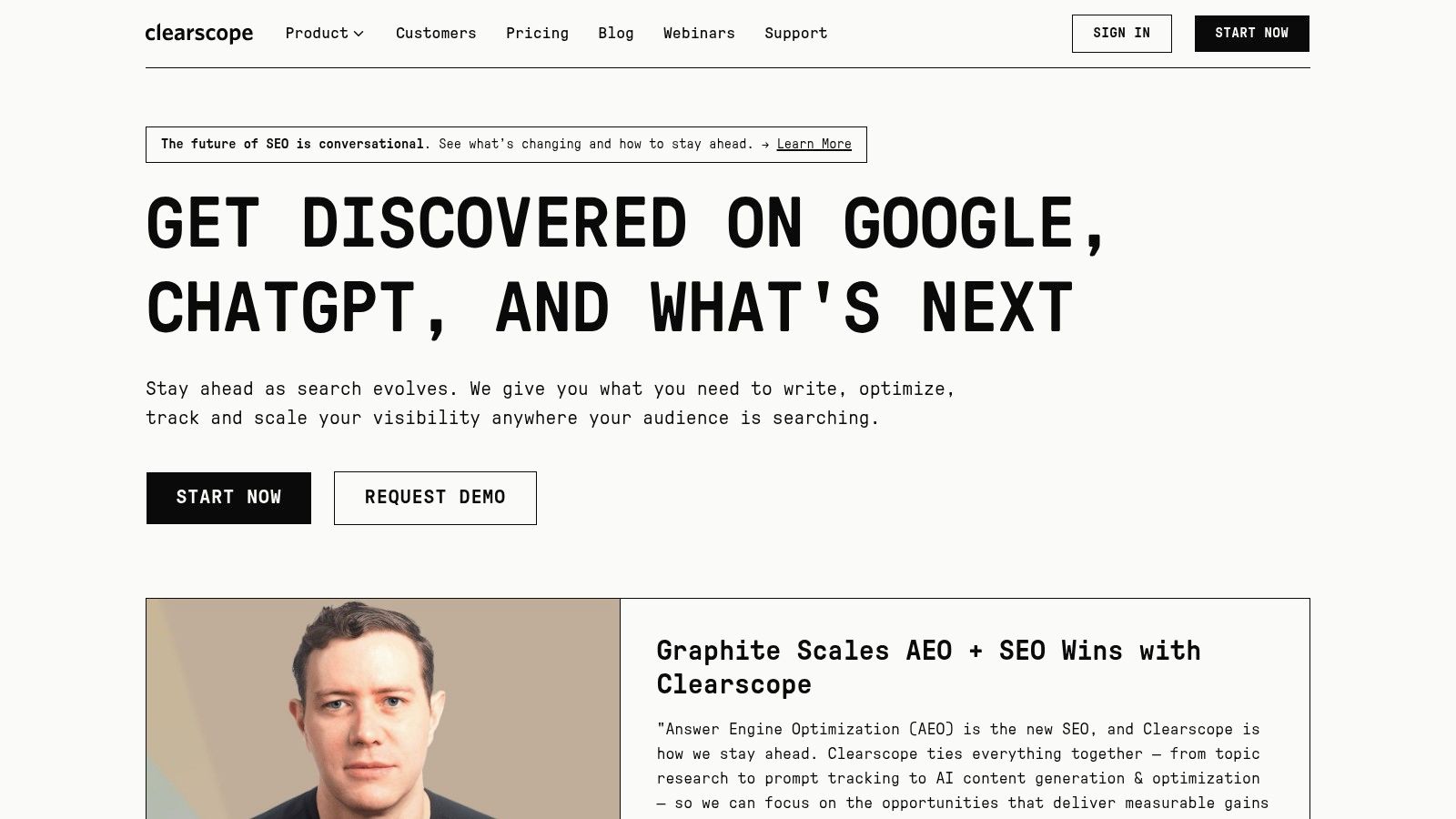
What sets Clearscope apart is its unparalleled user experience designed specifically for writers and editors. Instead of burying its recommendations in complex dashboards, it offers a clean, intuitive interface and a seamless Google Docs add-on. This allows content creators to optimize their work directly within their existing workflow. The platform is not trying to be an all-in-one SEO suite; it excels at one thing: helping teams create the most comprehensive, high-ranking content possible through AI-driven insights. Its transparent pricing and unlimited user seats per account make it highly scalable for growing teams.
Core AI Features & Use Cases
- Content Grading & Topic Modeling: Analyzes SERPs to generate a report with a target score and a list of important terms, guiding writers to cover a topic comprehensively.
- AI Drafts: Creates structured, SEO-optimized outlines and initial drafts based on a target keyword, significantly speeding up the content creation process.
- Google Docs & WordPress Integrations: Allows writers and editors to access Clearscope's optimization recommendations directly within their primary writing environments.
Pro Tip: Use the "Content Inventory" feature to monitor your existing content's grades over time. As SERPs evolve, a previously high-scoring article might need a refresh. This proactive approach helps maintain and improve rankings for your most valuable pages.
| Feature | Best For | Limitation |
|---|---|---|
| Top-Tier Editorial UX | Content teams prioritizing usability and workflow | Lacks broad SEO features like rank tracking |
| Transparent Pricing | Growing teams needing scalable, predictable costs | Higher starting price point than some competitors |
| Content-First Focus | On-page optimization and topical authority | Not an all-in-one technical or off-page SEO tool |
6. MarketMuse
MarketMuse is a sophisticated content intelligence platform that goes beyond single-page optimization, positioning itself as one of the premier ai powered seo tools for enterprise-level content strategy. Instead of focusing solely on keywords, its patented AI models analyze your entire website to build a topical authority map. This allows it to generate data-driven content briefs and strategic plans designed to fill content gaps and establish expertise across your entire domain.
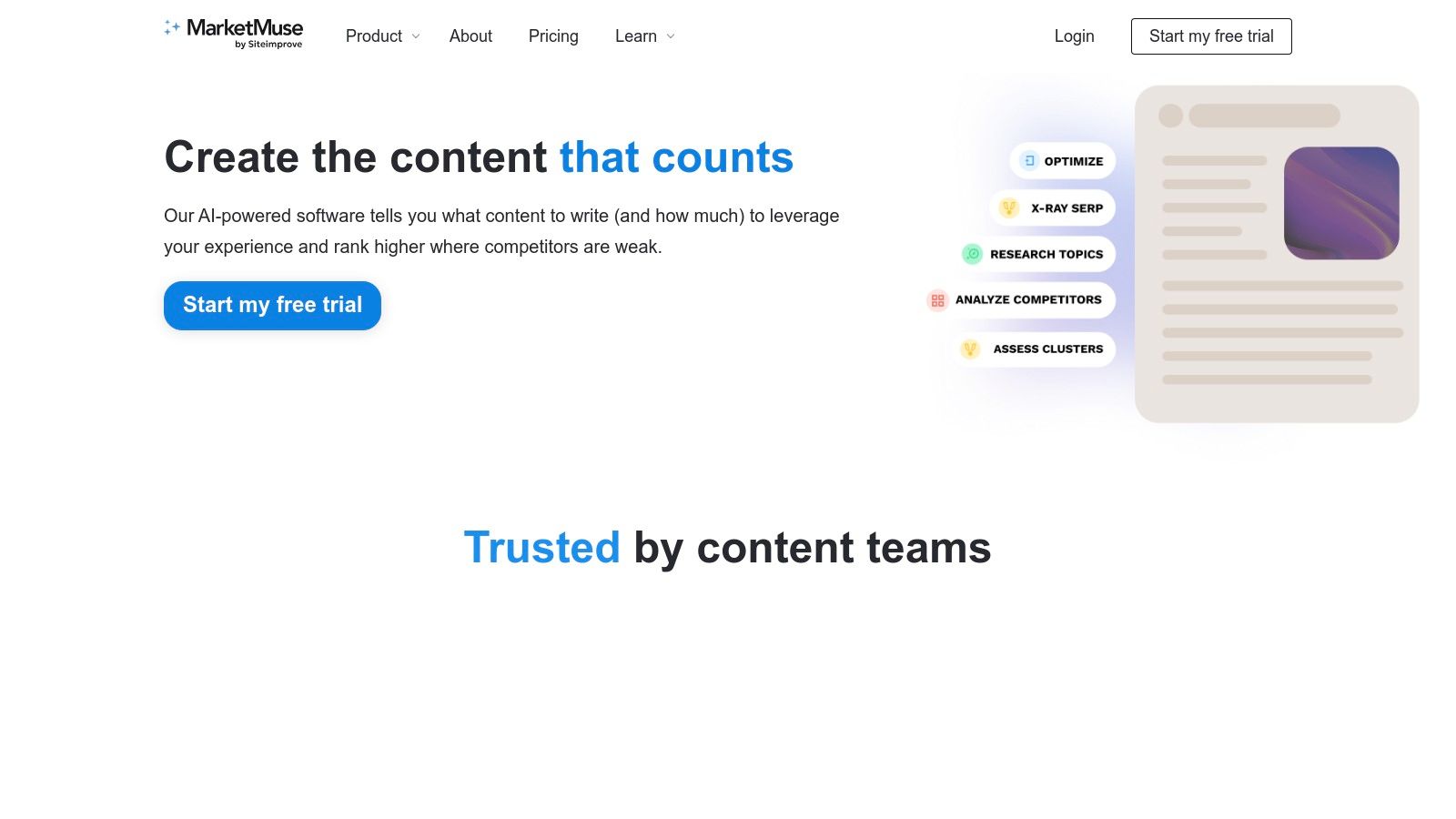
What sets MarketMuse apart is its strategic, top-down approach. It's not a simple AI writer; it's a content strategist that helps large editorial teams plan, execute, and track their content's performance at a topical level. The platform's Content Inventory and planning tools are specifically built for managing complex content ecosystems, making it ideal for large sites that need to coordinate efforts across multiple writers and editors. The user experience is geared toward in-depth planning, which makes it a heavier tool for small businesses or solo users who might only need to optimize a few pages.
Core AI Features & Use Cases
- Patented Topic Modeling: Its core AI analyzes vast amounts of content to identify related topics and questions, building a model of expertise for any given subject.
- Content Inventory & Audits: Automatically inventories and scores your existing content, identifying pages to update, consolidate, or create to build topical authority.
- AI-Generated Content Briefs: Creates detailed, actionable briefs for writers that include target word count, subheadings, internal/external links, and questions to answer.
Pro Tip: Use the Content Inventory feature first to get a baseline of your site's current authority on a topic. This will help you prioritize which content briefs to generate and which existing articles to optimize, ensuring your efforts have the greatest impact on your overall topical relevance.
| Feature | Best For | Limitation |
|---|---|---|
| Topical Authority Modeling | Building long-term domain expertise and strategy | Overkill for single-page optimization tasks |
| Content Inventory | Large websites with hundreds or thousands of pages | Can be complex and data-heavy for smaller sites |
| Strategic Content Briefs | Large editorial teams needing consistent quality | Pricing is less transparent; often requires a sales call |
7. Frase
Frase has carved out a niche as one of the most practical and accessible ai powered seo tools by tightly integrating SERP analysis with AI-powered content creation. It is specifically designed to streamline the workflow from content brief to final draft, focusing on optimizing content against top-ranking competitors. Its core strength lies in analyzing the top search results for a target keyword and generating detailed, data-driven content briefs that guide the writing process.
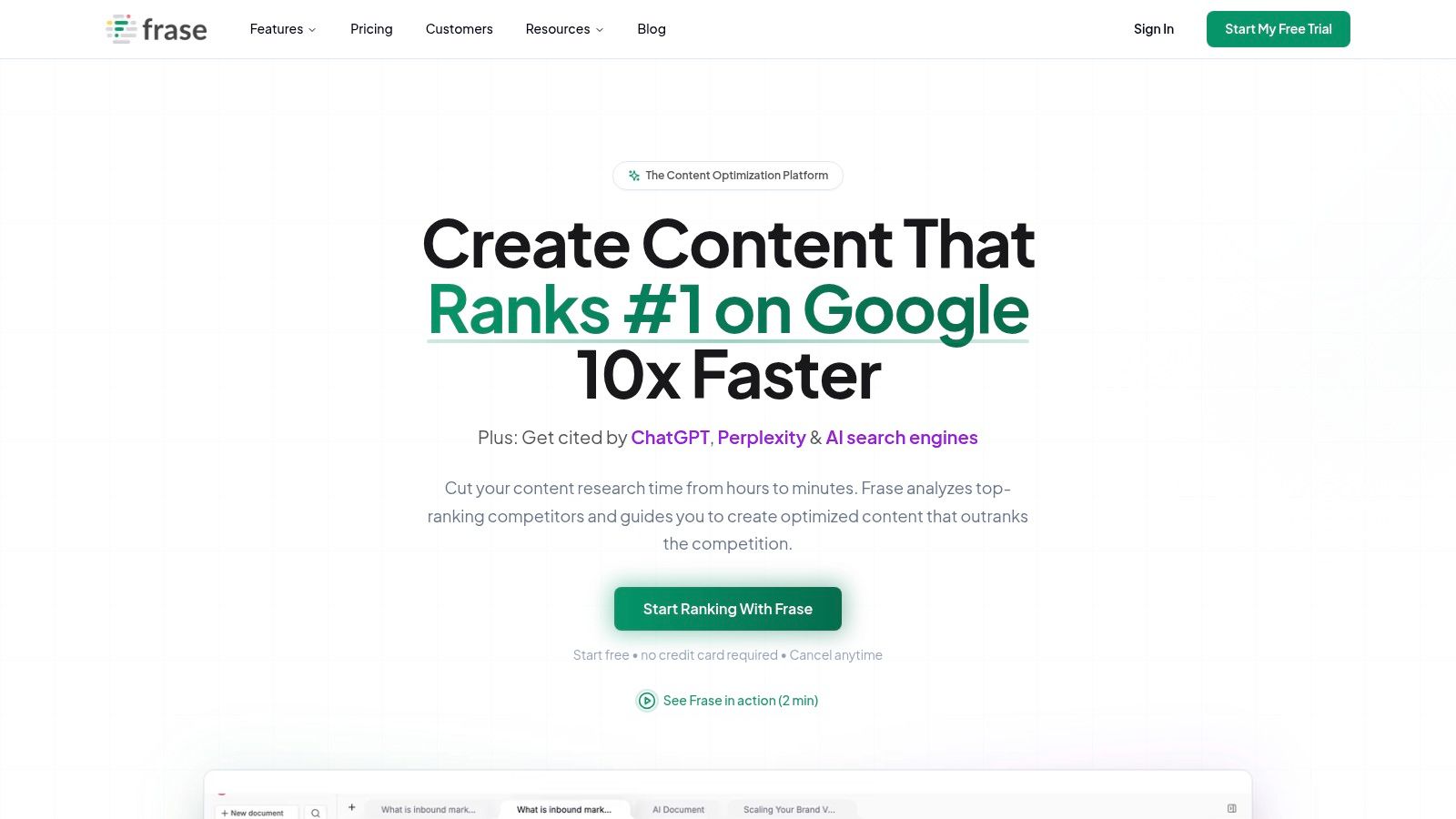
What makes Frase stand out is its document-centric approach. Instead of offering a broad suite of disconnected tools, it centers the entire user experience around creating a single, high-performing piece of content. This makes it incredibly efficient for content teams and solo creators who need to produce optimized articles at scale. The user interface is clean and focused, guiding users through outlining, writing, and optimizing in a single editor, which simplifies the process significantly compared to juggling multiple platforms for research and writing. Its affordable entry plans and pay-as-you-go document options also make it highly attractive for small teams and startups.
Core AI Features & Use Cases
- Content Briefs & Outlines: Automatically analyzes the top 20 SERP results to generate detailed briefs, including key topics, headers, questions, and statistics to cover.
- AI Writer & Optimization: Features an AI writer that can generate full drafts or expand on points within the content editor, which includes a real-time optimization score.
- Answer Engine Optimization: Identifies and helps answer questions sourced from SERP features like People Also Ask, Quora, and Reddit to improve topical authority.
Pro Tip: Start every article in Frase by creating a "New Document" from your target keyword. Let it build the initial SERP-driven outline and topic model first. Then, use the AI writer to flesh out each section based on the recommended headings and keywords. This ensures your content is structurally sound and optimized from the very beginning. For more on this, check out their official website.
| Feature | Best For | Limitation |
|---|---|---|
| Integrated SERP Analysis | Creating data-driven content briefs and outlines | Lower data depth compared to enterprise suites |
| Content Optimization Editor | On-page SEO and improving content scores | AI writer requires significant human editing |
| Affordable Pricing | Small teams, freelancers, and startups | Advanced AEO tracking is an add-on |
8. Scalenut
Scalenut is an end-to-end content marketing platform that masterfully combines AI content generation with sophisticated SEO features. It positions itself as one of the most value-driven ai powered seo tools for teams needing to scale their entire content workflow, from initial planning to final optimization. Its standout "Cruise Mode" streamlines long-form content creation into a guided, five-minute process, making it highly efficient for producing SEO-ready articles at volume.
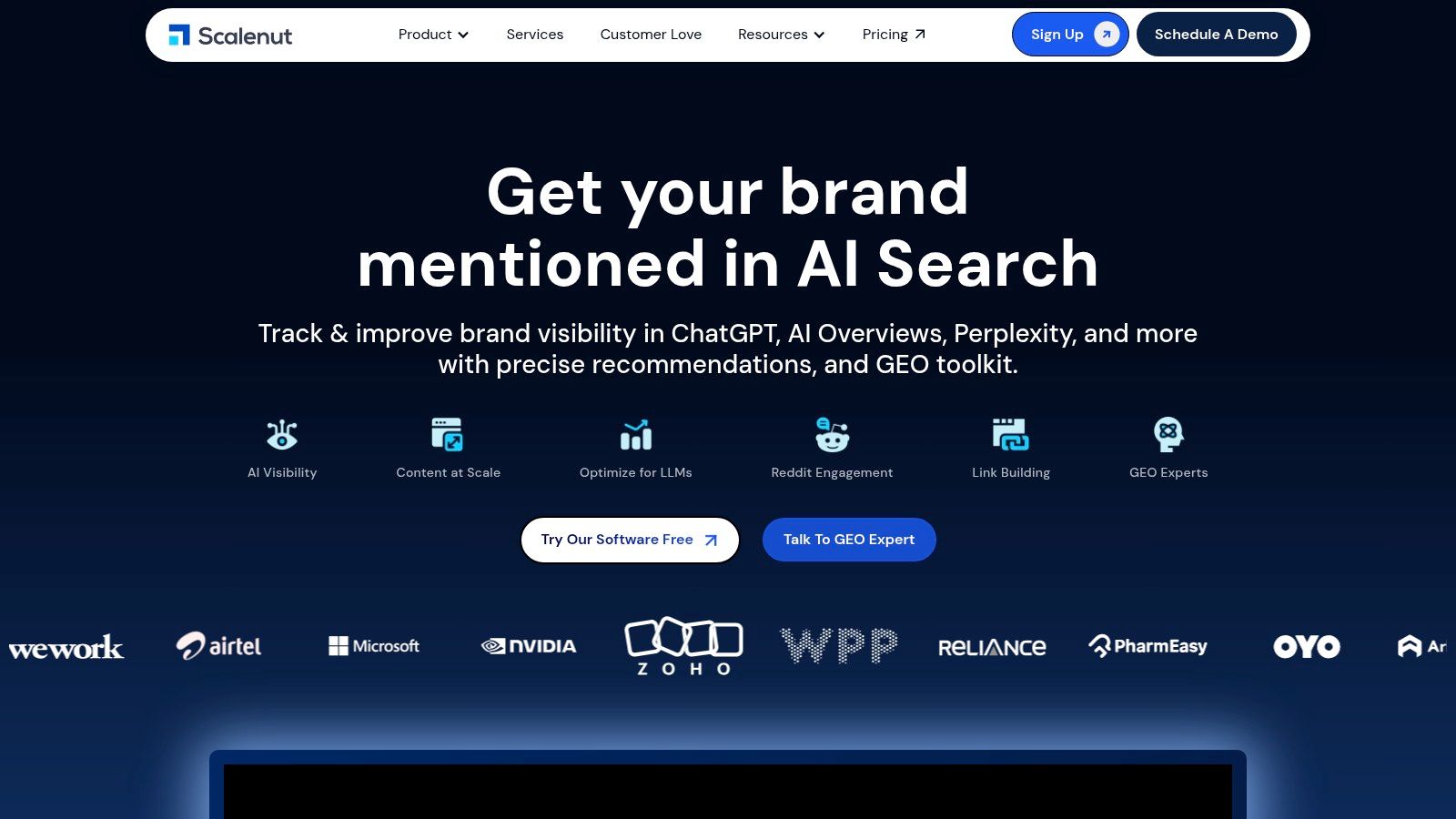
What truly differentiates Scalenut is its integration of keyword clustering and content planning directly into the AI writing environment. Users can generate an entire content plan around a primary keyword, complete with clusters of related topics, before writing a single word. This strategic-first approach ensures that content isn't just created, but that it's part of a cohesive, authority-building strategy. While the interface can feel denser than single-purpose AI writers, it centralizes tasks that would otherwise require multiple subscriptions.
Core AI Features & Use Cases
- Cruise Mode: An automated workflow that generates a full-length, SEO-optimized blog post from a single keyword, including title, outline, writing points, and first draft.
- Keyword Planner & Topic Clusters: Leverages AI to group related keywords into thematic clusters, helping users build topical authority and plan content pillars effectively.
- Content Optimizer: A real-time content editor that provides NLP-driven term suggestions, grading your content against top-ranking competitors to improve on-page SEO.
Pro Tip: Use the Keyword Planner to build out a topic cluster, then use Cruise Mode to generate a pillar page for the main keyword. Afterward, create supporting blog posts for the related cluster keywords, internally linking them back to the pillar page to establish strong topical authority. Learn more at Scalenut.
| Feature | Best For | Limitation |
|---|---|---|
| Cruise Mode Generation | Rapidly producing SEO-focused first drafts | Requires human editing to add brand voice and nuance |
| Topic Cluster Planning | Building comprehensive, authority-driven content | UI can be more complex than dedicated keyword tools |
| Integrated SEO & AI | Teams wanting an all-in-one content workflow | Plan names and pricing can change frequently |
9. SEO.ai
SEO.ai positions itself as an "AI colleague," offering a highly automated, end-to-end content workflow that makes it one of the more accessible ai powered seo tools for smaller teams. It is designed to handle the entire content lifecycle: from planning and research to writing, internal linking, image generation, and direct publishing. This tight integration of tasks makes it a compelling choice for users who want to streamline operations and minimize manual intervention.
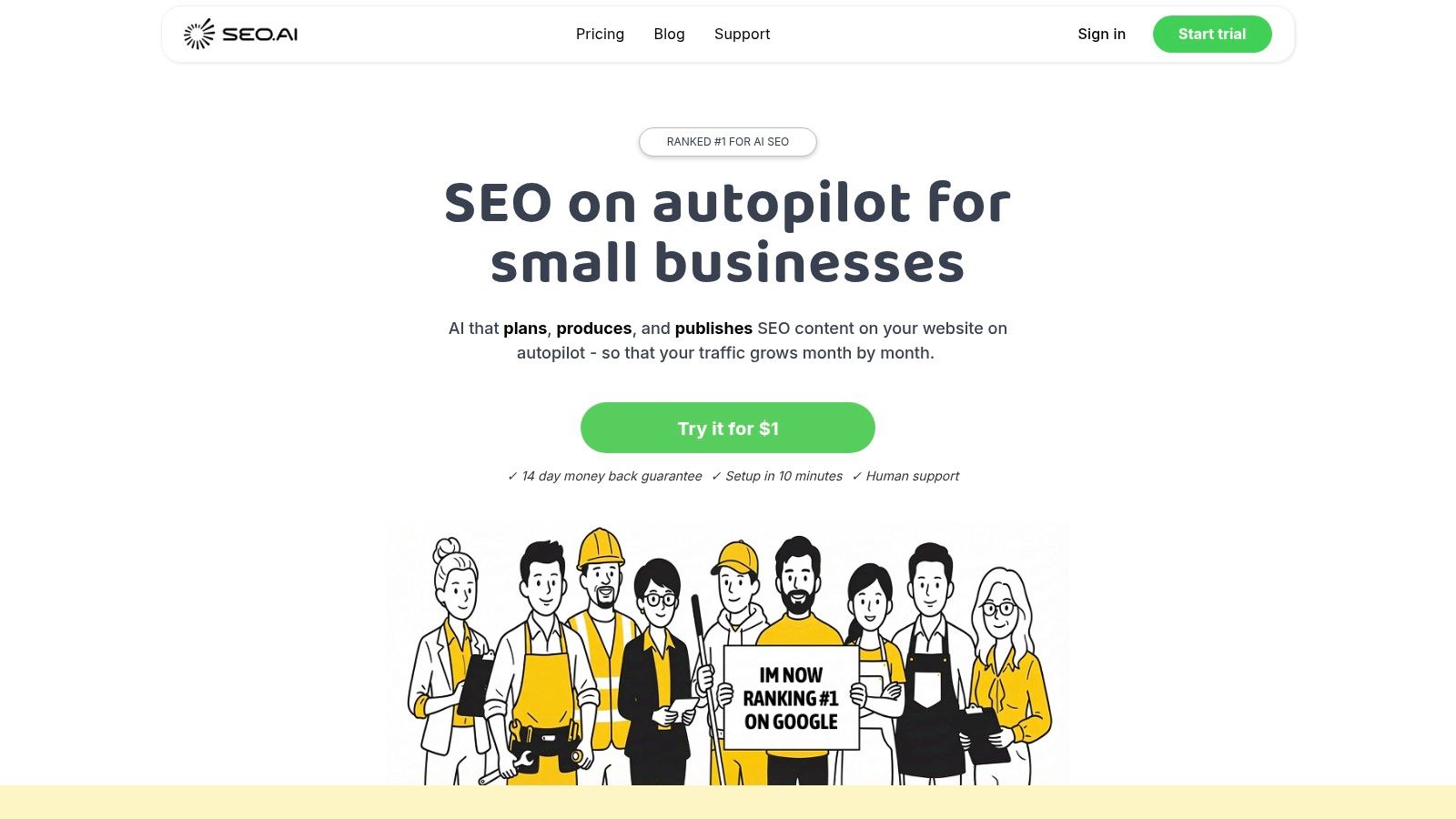
What sets SEO.ai apart is its focus on becoming a true content automation engine rather than just a writing assistant. By automatically analyzing content gaps, generating publication plans, and handling technical details like internal links, it removes significant operational overhead. The user experience is straightforward, prioritizing speed and efficiency. This makes it ideal for startups or solopreneurs who need to scale their content output without the complexity or cost of enterprise-level platforms. The ability to set and maintain a specific brand voice ensures consistency across all AI-generated content.
Core AI Features & Use Cases
- End-to-End Content Automation: Performs content gap analysis, creates a publication plan, and generates full articles, reducing the need for multiple single-purpose tools.
- Automated Internal Linking & Images: Scans your site to suggest relevant internal links and generates featured images for each article, saving significant time during the editing phase.
- Direct Publishing & Brand Voice Controls: Integrates directly with CMS platforms like WordPress for one-click publishing while adhering to predefined brand voice and style guidelines.
Pro Tip: Use the brand-voice feature to upload examples of your best-performing content. This trains the AI to mimic your tone, style, and structure, drastically reducing editing time and ensuring new articles align perfectly with your existing content. To understand how this fits into the broader landscape, explore this complete guide to AI SEO.
| Feature | Best For | Limitation |
|---|---|---|
| Full Content Automation | Small teams and solopreneurs seeking efficiency | Less comprehensive analytics than larger suites |
| Internal Linking & Publishing | Streamlining the entire publication workflow | Multi-site plan costs scale per site/language |
| Affordable Trial | Users wanting to test a full-featured tool with low risk | Feature depth may not suit advanced SEO pros |
10. NeuronWriter
NeuronWriter has carved out a niche as one of the most budget-friendly yet effective ai powered seo tools for content optimization. It combines AI-driven writing assistance with deep semantic SEO analysis, making it an excellent choice for solo professionals, bloggers, and small agencies who need powerful features without the enterprise-level price tag. The platform focuses on creating content that aligns perfectly with search intent by analyzing top-ranking competitors for NLP-based term recommendations.
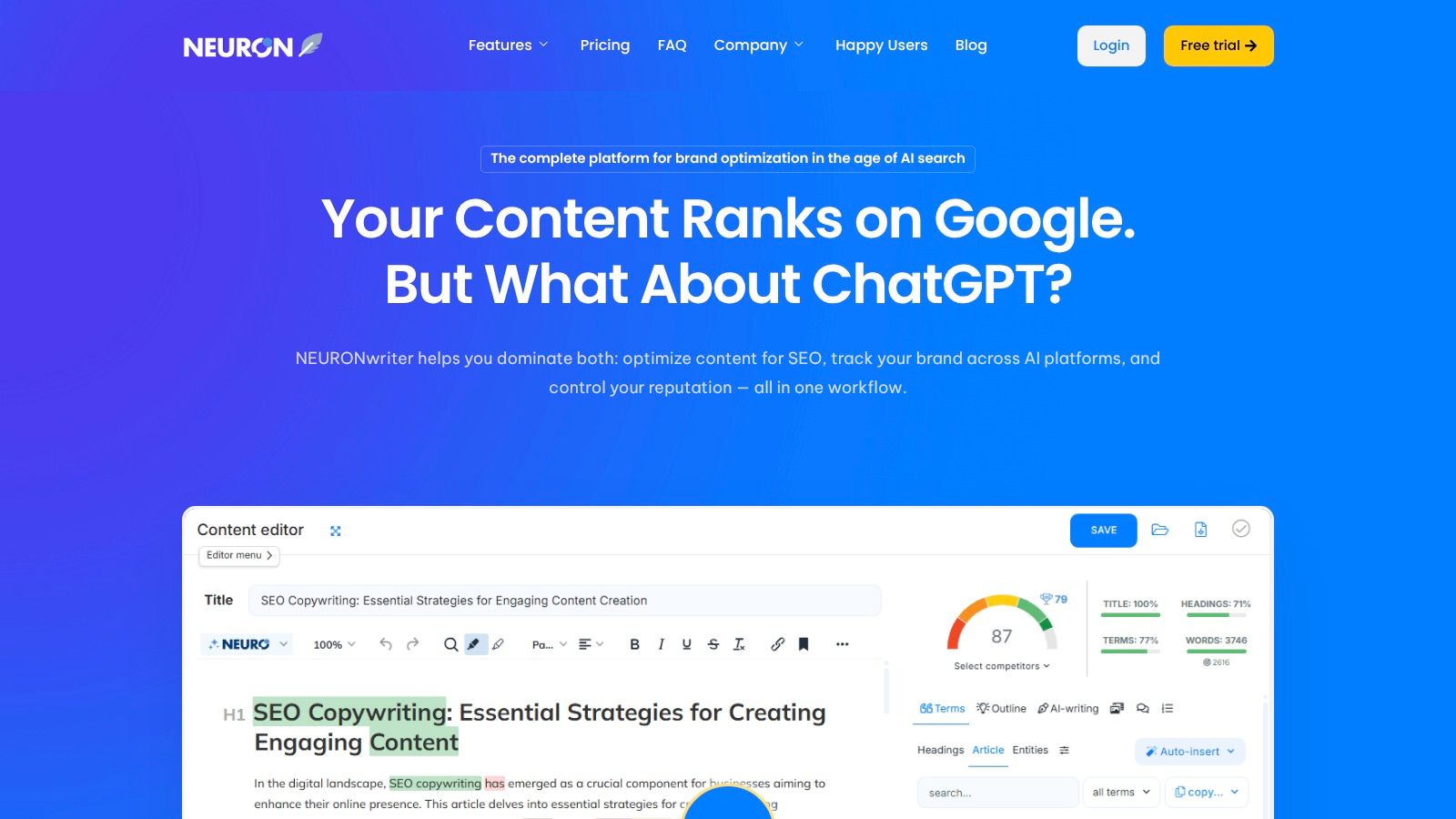
What sets NeuronWriter apart is its exceptional value and straightforward user experience. While larger suites offer broader off-page analytics, NeuronWriter hones in on the content creation and optimization workflow. It seamlessly moves users from content planning and SERP analysis to AI-assisted drafting and on-page scoring, all within a clean interface. The inclusion of a plagiarism checker and direct integrations with WordPress, Shopify, and Google Search Console simplifies the entire content lifecycle from idea to publication.
Core AI Features & Use Cases
- Content Editor with NLP Suggestions: The core of the tool analyzes top SERPs to provide a list of semantically related terms and topics to include in your content, with a real-time optimization score.
- One-Click Article Designer: Utilizes advanced AI templates to generate a complete, SEO-optimized article draft based on just a title, including an outline, H1-H3 headings, and relevant content.
- Content Planning & Idea Generation: Helps users map out entire topic clusters and internal linking strategies, ensuring content is built for topical authority from the start.
Pro Tip: Before writing, use the "Content Ideas" feature to discover related long-tail keywords and user questions. Build your article outline around these questions using the AI designer, ensuring your content directly addresses user intent and is optimized for AEO (Answer Engine Optimization).
| Feature | Best For | Limitation |
|---|---|---|
| Competitive Pricing | Freelancers, small businesses, and agencies | Less comprehensive off-page SEO analytics |
| Semantic Content Editor | Creating highly relevant, long-form content | UI is functional but less polished than premium tools |
| Direct Integrations | Streamlining publishing to WordPress & Shopify | Ecosystem is smaller compared to all-in-one suites |
11. Ubersuggest (Neil Patel)
Ubersuggest has carved out a niche as one of the most accessible ai powered seo tools for small businesses, bloggers, and solopreneurs. Spearheaded by Neil Patel, it strips away the complexity of enterprise-level suites, focusing on core SEO functionalities and integrating a practical AI Writer. Its major differentiator is its pricing model, which includes a highly competitive lifetime deal, making it an attractive option for users seeking to avoid recurring monthly subscriptions.
What sets Ubersuggest apart is its straightforward, user-friendly interface combined with a surprisingly robust set of features for its price point. While it doesn't offer the data depth of tools like Semrush or Ahrefs, it provides more than enough power for keyword research, site audits, rank tracking, and competitive analysis for smaller projects. The addition of the AI Writer allows users to move directly from keyword discovery to content creation within a single, easy-to-navigate dashboard, streamlining the entire SEO content workflow for those with limited time and resources.
Core AI Features & Use Cases
- AI Writer: Generates blog sections, paragraphs, and entire articles based on keyword inputs, directly integrated with its keyword research tools.
- Keyword & Content Ideas: Uses AI to suggest new keyword opportunities, content topics, and headline variations based on competitor data and search trends.
- SEO Data Analysis: AI algorithms help process and present complex data from site audits and competitor analysis in a digestible format for non-experts.
Pro Tip: Use the "Keyword Visualization" feature to understand semantic relationships and user intent. Take the most relevant long-tail keywords from the visualization and feed them directly into the AI Writer to create highly targeted paragraphs or FAQ sections for your articles, ensuring you cover a topic comprehensively.
| Feature | Best For | Limitation |
|---|---|---|
| Lifetime Deal Option | Solopreneurs and SMBs on a tight budget | Lower data limits compared to monthly plans |
| Integrated AI Writer | Quick content drafting and idea generation | Higher volume usage requires paid add-ons |
| Simple User Interface | Beginners and those new to SEO tools | Lacks advanced filtering and enterprise features |
12. G2 (Generative/Answer Engine Optimization categories)
While not a tool itself, G2 serves as an essential aggregator and research platform for anyone evaluating ai powered seo tools. As the digital landscape evolves, G2 has introduced dedicated categories like Generative Engine Optimization (GEO) and Answer Engine Optimization (AEO), making it a critical first stop for comparing the market. It provides a structured environment to filter and vet solutions based on real user reviews, business size, and specific feature sets, cutting through marketing hype.
What makes G2 invaluable is its reliance on crowdsourced, verified user feedback. Instead of just reading vendor claims, you can see how tools perform in real-world scenarios for businesses similar to yours. Its side-by-side comparison feature is particularly useful for shortlisting top contenders like Surfer, Frase, or Semrush based on satisfaction ratings, feature availability, and pricing models. This meta-level view helps you make a more informed purchasing decision without signing up for dozens of free trials.
Core AI Features & Use Cases
- Dedicated AI SEO Categories: Use the new GEO and AEO categories to discover emerging and established tools specifically built for modern search algorithms.
- Feature-Based Filtering: Drill down to find tools with specific capabilities, such as AI-driven content brief generation, semantic keyword clustering, or SERP analysis.
- User Review Analysis: Read in-depth reviews from verified users to understand the practical pros, cons, and user experience of each platform.
Pro Tip: When shortlisting tools on G2, pay close attention to the "ease of use" and "quality of support" scores. A powerful tool is ineffective if your team struggles to implement it, and strong support is crucial when navigating new AI-driven workflows.
| Feature | Best For | Limitation |
|---|---|---|
| User-Verified Reviews | Pre-purchase validation and shortlisting tools | Sponsored listings can appear at the top |
| Comparison Engine | Evaluating 2-3 top contenders side-by-side | Pricing information may not be real-time |
| Emerging Categories | Discovering new and niche AEO/GEO tools | Reviews may be sparse for brand-new tools |
Top 12 AI-Powered SEO Tools — Feature Comparison
| Product | Core features | UX / Quality ★ | Value / Price 💰 | Target audience 👥 | Unique selling point ✨ |
|---|---|---|---|---|---|
| 🏆 Rankai | 20+ fully optimized pages/mo, human‑vetted keywords, LLM & technical optimization, continuous rewrites, GSC tracking | ★★★★☆ weekly plain‑language reports | 💰 $499/mo — transparent, cancel‑anytime, agency outcomes | 👥 Startups, SMBs, SaaS, e‑commerce, agencies | ✨ High‑volume, ROI‑focused content + continuous rewrites until pages rank |
| Semrush | All‑in‑one visibility suite, large keyword/backlink DB, AI toolkits, cross‑channel tracking | ★★★★☆ enterprise‑grade | 💰 Tiered; add‑ons raise total cost | 👥 Enterprises & in‑house SEO teams | ✨ Broad data + cross‑platform AEO/GEO tracking |
| Ahrefs | Web‑scale crawler, deep link & keyword data, AI add‑ons (Brand Radar AI, Content Helper) | ★★★★☆ deep data & fast crawler | 💰 Mid–high; AI add‑ons extra (GBP pricing) | 👥 Agencies, researchers, link‑focused teams | ✨ Market‑leading crawler & link depth |
| Surfer | SERP‑based AI drafts, NLP content editor, on‑page audits, Docs/WordPress integrations | ★★★★☆ fast content workflow | 💰 Mid; AI credit bundles for scale | 👥 Content teams & writers | ✨ One‑click SERP‑driven drafts → ready‑to‑rank |
| Clearscope | Content grading, AI drafts, topic modeling, Google Docs add‑on | ★★★★☆ premium editorial UX | 💰 Higher starting price (premium) | 👥 Editorial teams & agencies | ✨ Top‑tier editorial UX and onboarding |
| MarketMuse | Topic modeling, content briefs, content inventory & strategy tools | ★★★★☆ strategic/enterprise focus | 💰 Enterprise pricing — contact sales | 👥 Large sites, editorial strategy teams | ✨ Deep topic strategy & content planning |
| Frase | Rank‑Ready AI docs, outlines/briefs, SERP analysis, optional AEO/GEO tracking | ★★★☆☆ affordable & functional | 💰 Affordable entry; pay‑as‑you‑go docs | 👥 Small teams & solo creators | ✨ Pay‑as‑you‑go Rank‑Ready documents |
| Scalenut | Keyword clustering, Cruise Mode long‑form, AI‑SEO editor, GEO Watchtower | ★★★☆☆ good value bundles | 💰 Good value; promo pricing varies | 👥 Growing teams needing combined tools | ✨ Combined content + clustering + visibility |
| SEO.ai | Automated gap analysis, internal linking automation, image gen, direct publishing | ★★★☆☆ end‑to‑end automation | 💰 $1 7‑day trial; costs scale by site/lang | 👥 Small teams wanting full automation | ✨ End‑to‑end publish automation with brand voice |
| NeuronWriter | AI templates, plagiarism checks, GSC/WordPress/Shopify integrations, API | ★★★☆☆ budget‑friendly | 💰 Very competitive pricing & annual discounts | 👥 Solo pros & small agencies | ✨ Affordable with publishing & tracking integrations |
| Ubersuggest (Neil Patel) | Rank tracking, audits, AI Writer w/ credit bundles, lifetime pricing option | ★★★☆☆ beginner‑friendly | 💰 Very affordable; lifetime deals available | 👥 SMBs & beginners | ✨ Lifetime plans + simple, accessible interface |
| G2 (AEO/GEO categories) | Marketplace with vendor pages, reviews, side‑by‑side comparisons, filters | ★★★★☆ crowd‑sourced ratings | 💰 Free browsing; links to vendor pricing | 👥 Buyers shortlisting tools & vendors | ✨ Real user reviews & dedicated AEO/GEO categories |
Final Thoughts: Integrating AI for a Smarter SEO Future
The digital marketing landscape is in a state of constant, rapid evolution, and the driving force behind this transformation is undeniably artificial intelligence. As we've explored throughout this guide, the array of AI powered SEO tools available today is not just a trend; it represents a fundamental shift in how we approach search engine optimization. From comprehensive platforms like Semrush and Ahrefs that have woven AI into their core features, to specialized content optimizers like Surfer and Clearscope, the message is clear: leveraging AI is no longer optional for those seeking a competitive edge.
The journey through tools like MarketMuse, Scalenut, and NeuronWriter has demonstrated that the true power of AI lies in its ability to process vast amounts of data at an unprecedented scale. This capability translates into more accurate keyword research, deeper competitor analysis, and highly targeted content strategies that resonate with both search engines and human audiences. The days of relying solely on manual analysis and intuition are fading, replaced by a new era of data-driven, predictive SEO.
Key Takeaways and Strategic Selection
Choosing the right tool from this extensive list can feel overwhelming, but your decision should be guided by your unique business needs, resources, and strategic goals.
- For all-in-one power and deep analytics, established giants like Semrush and Ahrefs remain top contenders. Their AI-infused features enhance already robust toolkits, making them ideal for agencies and businesses that need a comprehensive solution for technical SEO, backlink analysis, and content strategy.
- For content-centric teams and writers, specialized tools like Surfer, Clearscope, and Frase offer unparalleled optimization guidance. These platforms excel at deconstructing top-ranking content to provide actionable, real-time feedback, ensuring your articles are primed for search visibility from the first draft.
- For scaling content production with AI, platforms such as Scalenut, SEO.ai, and NeuronWriter are built from the ground up to facilitate the entire content lifecycle. They blend research, AI writing, and optimization into a single, streamlined workflow, perfect for businesses aiming for high-volume, ROI-driven content creation.
Ultimately, the best AI powered SEO tools are the ones that integrate seamlessly into your existing workflow and provide a clear return on investment. The goal is not to replace human strategy but to augment it, freeing up your team to focus on high-level creativity, brand building, and strategic decision-making while AI handles the heavy lifting of data analysis and repetitive tasks.
Implementing AI for a Smarter Future
As you move forward, remember that implementation is just as crucial as selection. Start by identifying your most significant SEO challenges. Is it keyword research, content creation, or technical optimization? Use this as your starting point to pilot a tool. Introduce it to your team, establish clear workflows, and most importantly, measure the impact. Track your rankings, organic traffic, and conversion rates to quantify the value the tool is providing.
The rise of Generative Engine Optimization (GEO) underscores the urgency of adapting. Tools are no longer just for ranking on a list of blue links; they are for ensuring your brand is the definitive answer in AI-powered search experiences like Google's SGE and Perplexity. The future of SEO is collaborative, where human expertise guides the immense power of artificial intelligence. By embracing this synergy, you position your business not just to compete, but to lead in the intelligent, dynamic, and ever-evolving world of search.
Ready to unify your entire SEO workflow with a single, powerful AI platform? Rankai was built to address the very challenges discussed in this guide. Instead of juggling multiple subscriptions for keyword research, content creation, and optimization, Rankai combines them into one intelligent, automated system designed to scale your organic growth efficiently.